
Social media is no longer new. Think about it: it has been more than four decades since the official birthday of the Internet on January 1, 1983, and nearly 30 years since the first recognizable online social media site, Six Degrees, was launched in 1997. And yet, the Internet is still growing at a rapid pace. The dynamics of social media demographics don’t show any sign of slowing down either. As marketers, we need to adapt to these changes and adjust our strategy accordingly.
There are tons of different social media channels today. People use different platforms for different reasons. Each platform has its own unique audience that can be segmented into demographic groups. Doing social media for business without knowing the demographics is like flying blind. You might get lucky and reach your destination or somewhere near it, but most of the time you’ll get lost.
If you want to know more about social media demographics and how to turn the numbers into a platform decision you can defend, read on.
Key Takeaways
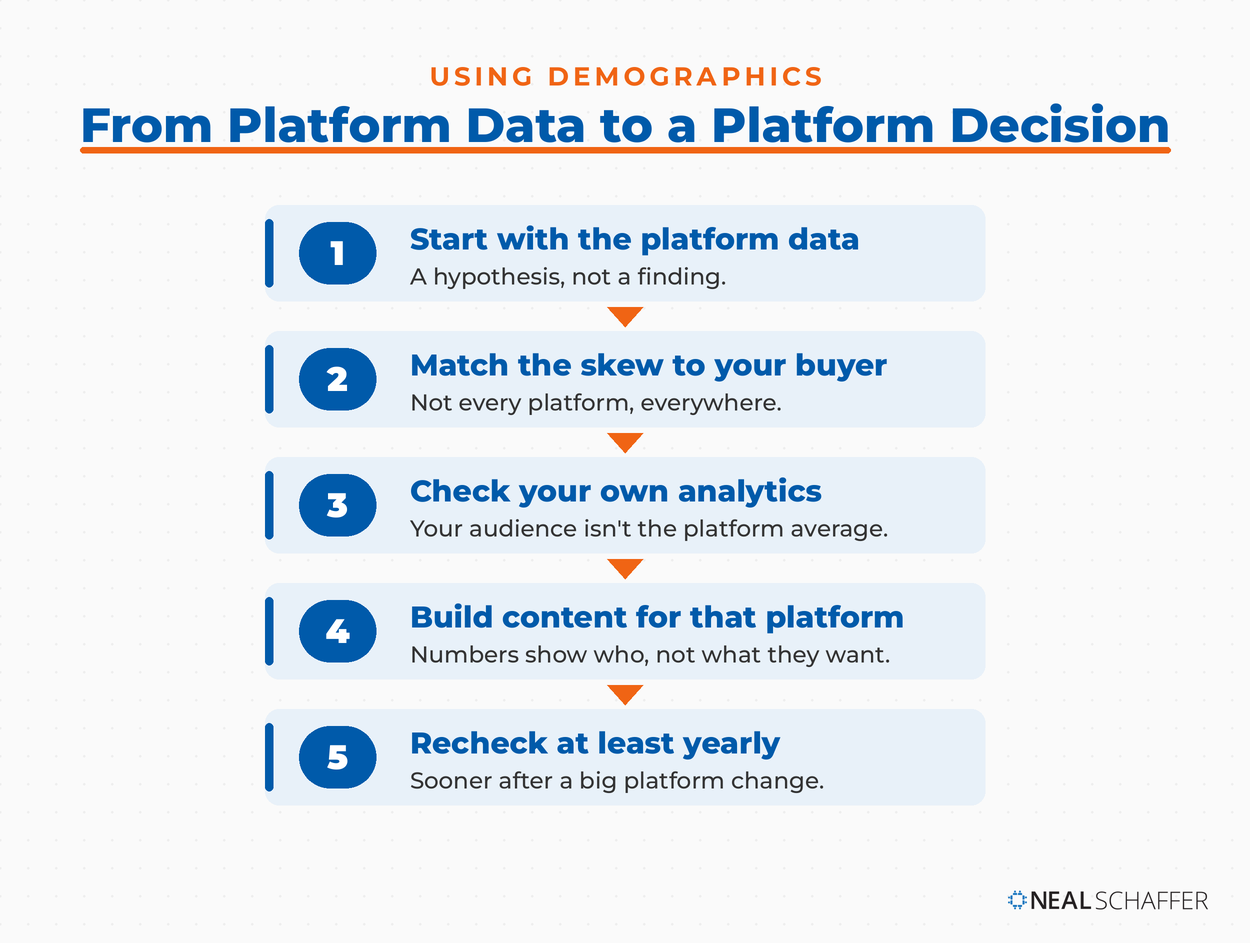
✅ There is no best social network. There is only the network where the people you sell to already spend their time, and demographics is how you find out which one that is.
✅ Age and gender get all the attention, but time spent per day is the number that tells you whether a platform is worth your production effort.
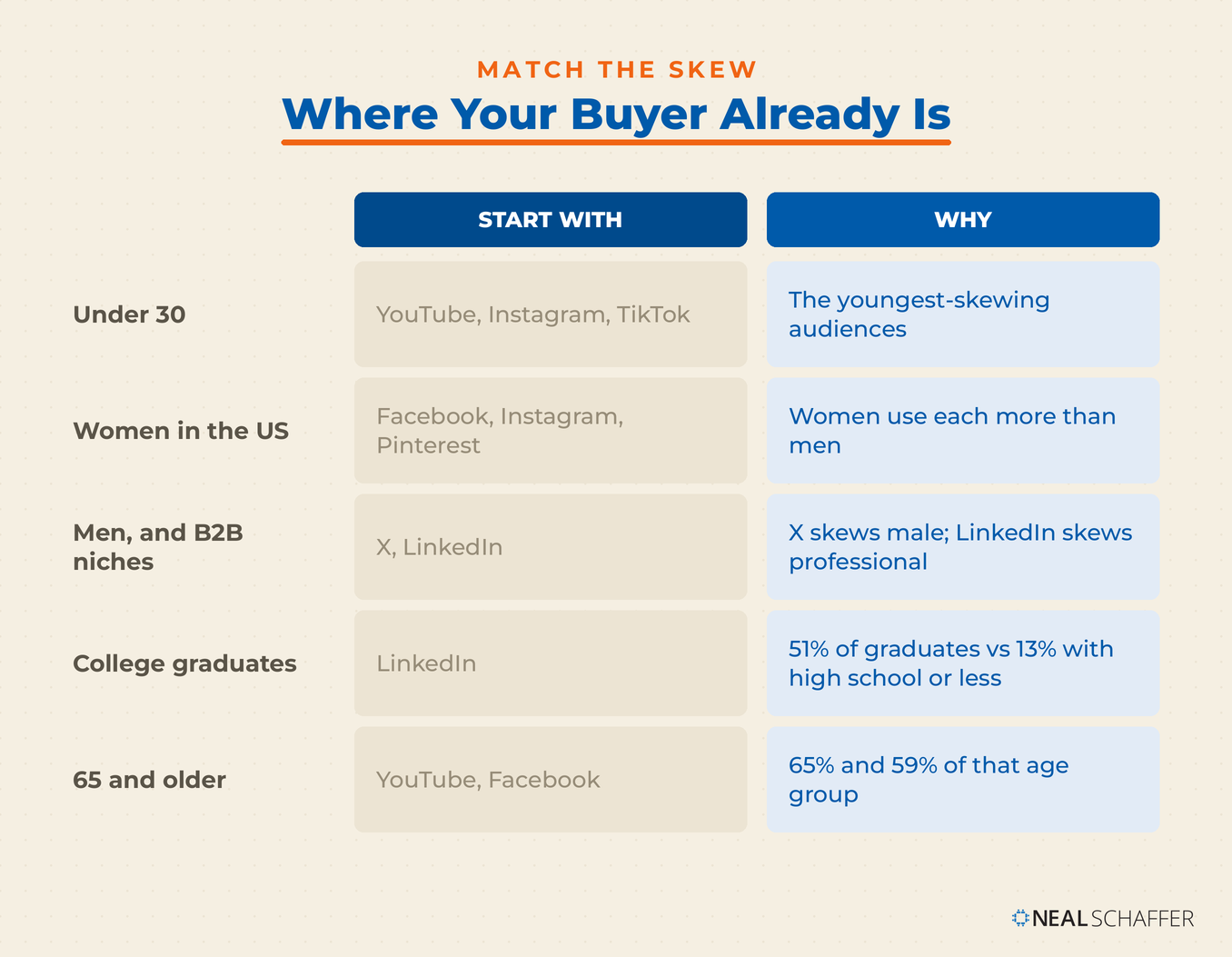
✅ Every major platform skews somewhere. Match the skew to your buyer instead of trying to be present everywhere at once.
✅ Platform-wide demographics are a starting hypothesis, not a finding. Check your own audience data before you commit budget, because your audience is not the platform average.
✅ Demographics tell you who is there. They do not tell you what those people want to see, so pair the numbers with a content approach built for that platform.
The Numbers Behind Social Media Demographics
Demographic data is key to understanding which networks and campaigns deserve your attention. After all, most brands cater to a particular demographic, or set of demographics, more than others. Likewise, each social network has its target market, and different groups resonate better with different sales pitches. Demographics tell you who is on a platform; my roundup of social media marketing statistics covers what those people actually do once they get there, which is the other half of the same decision. The source of the data for this section is the Pew Research Center: pewresearch.org
The Growth of Social Media
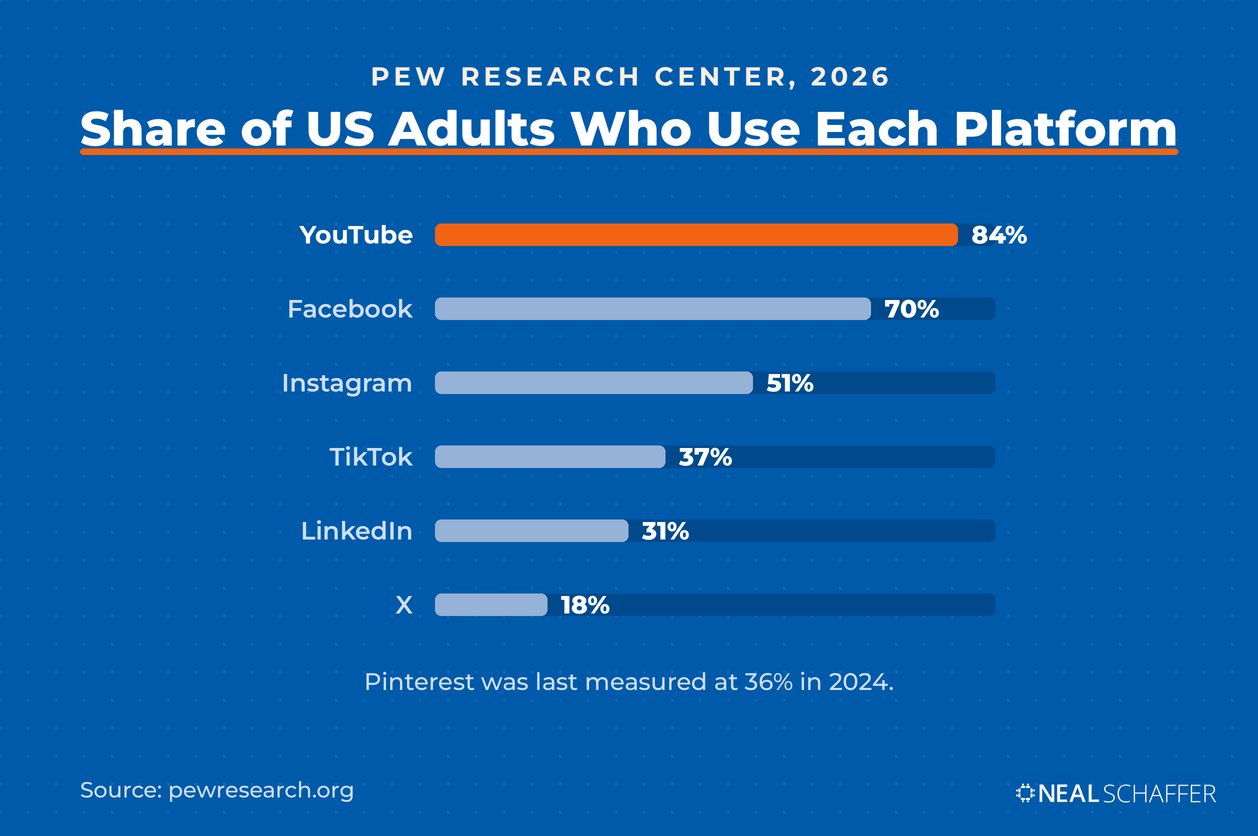
Social media has grown enormously. In 2005, only 5% of American adults used a social media platform. Today, 84% of U.S. adults use YouTube and 70% use Facebook, according to Pew Research Center’s 2026 survey. This isn’t surprising, since social media lets us stay connected even if we live thousands of miles away.
Despite the exponential growth of social media, usage is uneven. Young adults are the largest users, but older adult users are growing. Not only are yesterday’s young users maturing (and staying on social media), but seniors are learning the value of social media to keep track of children, grandchildren, and even old friends.
The Most Common Platforms
Just as social media use is uneven among demographics, it’s also uneven among platforms. Naturally, the “older” platforms have a broader user base, and they are better established for business and recreational users. To that end, the most widely used platforms are YouTube and Facebook.
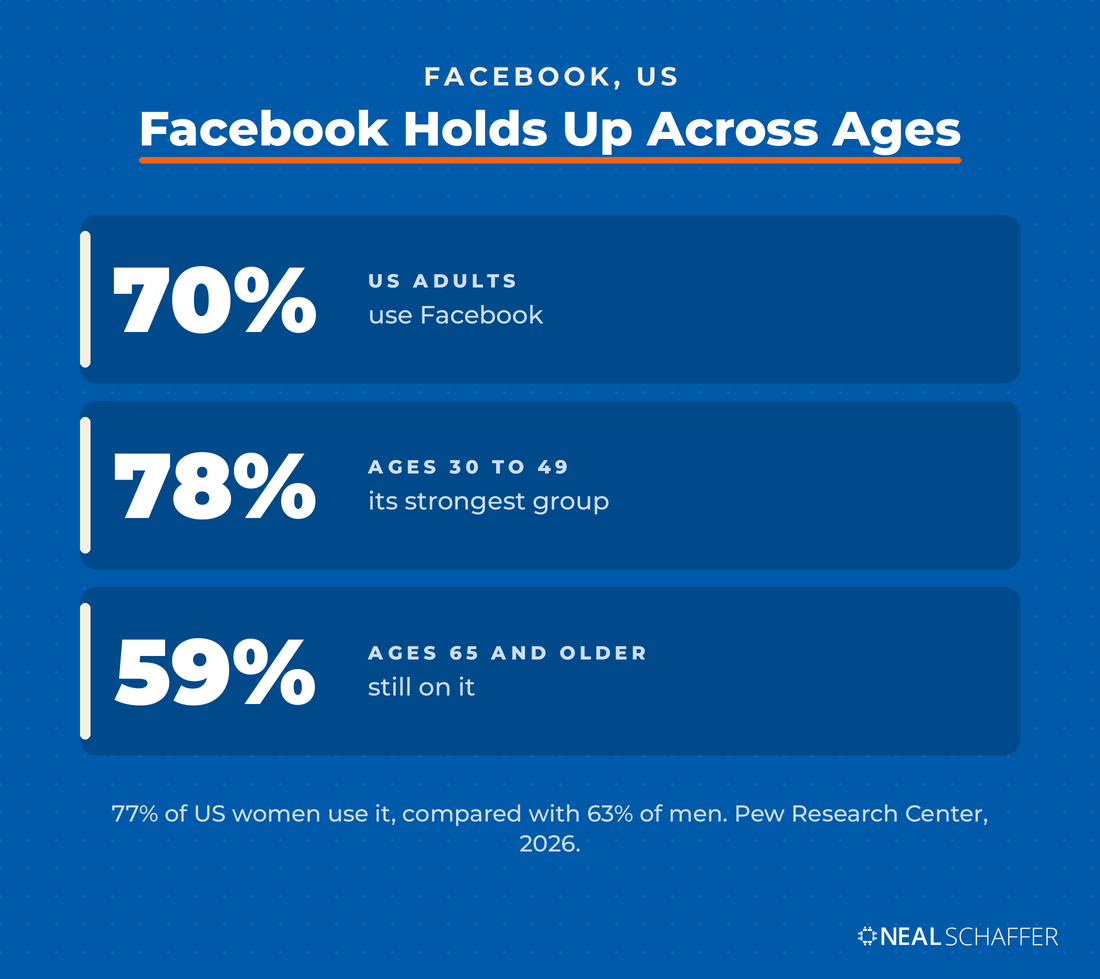
Social media demographics for these social media networks, and for others, are different. For example, Facebook is used most by Americans aged 30 to 49 (78%), and women (77%) use it more than men (63%). That still fits Facebook’s dominant purpose of keeping track of family and friends.
On the other hand, YouTube reaches 95% of Americans aged 18 to 29, and men (85%) and women (83%) use it at almost the same rate. So, if your brand caters to both men and women, this network is equally effective, and if your target audience is young, you’ve likely found a great place to advertise.
Specific Demographics Behind Each Major Social Media Platform
Let’s dig deeper into the numbers. There’s a lot more to social media than Facebook and YouTube and, in addition, you need to know a lot more about a network before you target its users for your next campaign. We all love to get the best possible ROI, and by taking social media demographics into account we can boost our chances of achieving this.
Facebook Demographics and Usage
Facebook is the largest social media network, and it’s also one of the oldest continually operating networks (along with Twitter and LinkedIn). However, that isn’t to say you can blindly post advertisements and hope for the best. Rather, there are still target demographics to consider, even though the audience is widest here. Statistics Statistics courtesy of Statista and Pew Research Center.
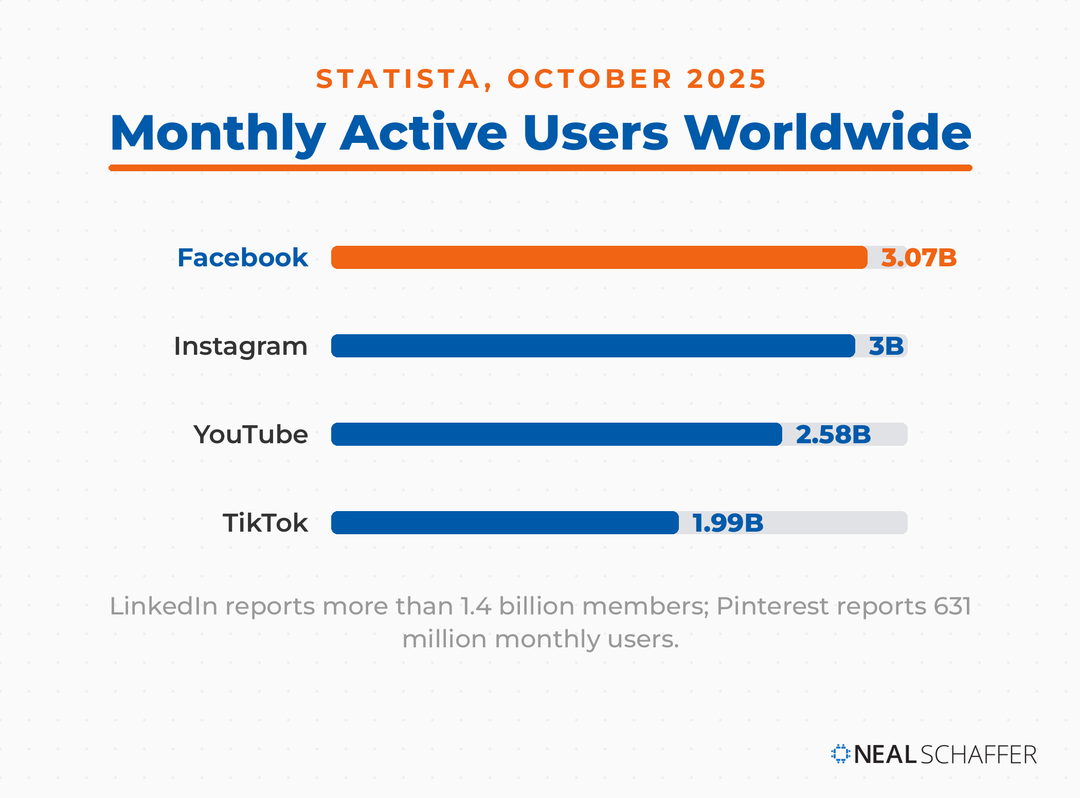
- Monthly active users: 3.07 billion worldwide (Statista, October 2025)
- U.S. adults who use it: 70% (Pew Research Center, 2026)
- Most likely to use it: Americans aged 30 to 49 (78%)
- Gender: 77% of U.S. women use it, compared with 63% of men
As you can see, Facebook has a lot of users, and it is the rare network that holds up across age groups, with 59% of Americans 65 and older still on it. Women use it more than men in the U.S. For this reason, you have a lot of options for campaigns, and you can use a variety of special tools. However, organic reach for brands is limited, so plan on pairing content with ads.
Social Media Strategy Tips for Facebook
Want some tips on how to reach a Facebook audience? Because organic content from companies is notoriously disadvantaged, you’ll have to be more creative by using different techniques.
1. Know your Facebook audience. In this case, your Facebook audience is anyone who you want to reach, and those who follow your pages. Platform-wide numbers get you a hypothesis, but your own social media analytics tell you who is actually showing up, and the two rarely match exactly.
2. Engage proactively with your audience. When people like or comment on your Facebook posts, be sure to respond. This could be a “like” to a comment, or a response to a question, for example. Similarly, you can always be part of the discussion on an industry or topic-related forum.
3. Schedule your Facebook content. Nobody is going to stay on Facebook all day just to post things at the perfect time. Likewise, you shouldn’t post at times when your content is likely to get buried at the bottom of everyone’s feed. The fix, in most cases, is a social media scheduler. I have a list of these tools on my website.
4. Determine your Facebook ads strategy. Whether it’s heavy use of tools like the Meta Pixel or simply targeting certain social media demographics, you should always have a strategy. After all, as the saying goes, a failure to plan is a plan to fail. For social media advertising, it’s critical to know what you want to achieve, and how you want to achieve it before you start.
5. Encourage employee advocacy. It’s important to showcase your employees. Not only do people like to know that you treat them well, but you can even get higher-quality job applicants! Besides this, employees may enjoy being part of the company’s growth: it gives them a sense of purpose.
Instagram Demographics and Usage
If you may recall, both Instagram and Facebook are owned by Meta. However, that isn’t to say that these are the same social networks. There are many differences, both in terms of content type and social media demographics. Let’s look at the numbers for Instagram.
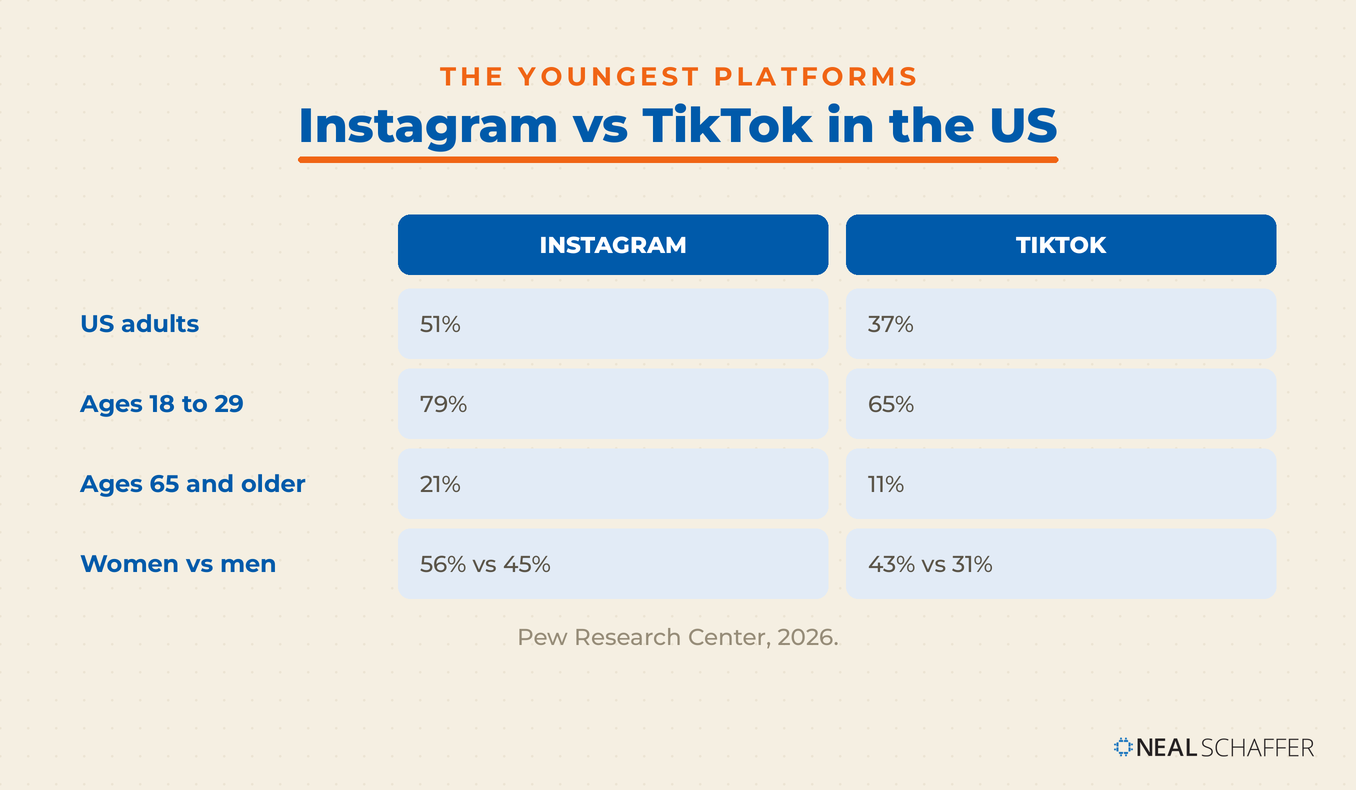
- Monthly active users: 3 billion worldwide (Statista, October 2025)
- U.S. adults who use it: 51% (Pew Research Center, 2026)
- Age: 79% of Americans aged 18 to 29 use it, compared with 21% of those 65 and older
- Gender: 56% of U.S. women use it, compared with 45% of men
Instagram now matches Facebook on worldwide reach, but its audience is much younger, with a steep drop-off after age 50. Women are also more likely than men to use it.
With that said, there’s probably little surprise in these social media demographic differences between Meta products. For instance, many Millennials grew up where there was a lot more written content, and this is where Facebook is stronger. Likewise, Gen Z prefers fast content that you can consume on the fly. Advantage Instagram.
Social Media Strategy Tips for Instagram
As with Facebook, you need a good social media marketing strategy to be successful. In fact, Instagram can get more competitive than Facebook, largely because Facebook is as much of a “keep track of people” network as a place to share your thoughts. On the other hand, people love to make a splash on Instagram. Here are some tips for mastering this network.
1. Use a Link in Bio Tool. One of the challenges of advertising on Instagram (or even being an influencer) is that you get only a handful of links in your bio and none in your captions. To maximize your one link, post one to a landing page on your website. Or, use a tool that gives people a page of links when they click through the bio link.
2. Create Shareable Graphics and Memes. Part of the magic of Instagram is that you can share pictures. For businesses, this often includes graphics and memes that are valuable enough that people share them. Many of the viral memes you’ve seen all over the internet started this way. Besides, it’s a great way to get free impressions.
3. Post to Instagram Reels. Businesses love Reels because they can make a great impression quickly. Not sure what Reels are? They’re a short video format that lets you voice over a bunch of pictures. Think “cool travelogue” or something similar-just for products.
4. Find Your Best Time to Post. Using your analytics from a social media dashboard or other Instagram tools, find out when your audience is most likely to be online. Then, you can post your content at optimal times to help it get reviewed by your audience. Otherwise, the competition might get their eyeballs first, and you don’t want that.
5. Use a Few Precise Hashtags. Instagram now limits posts and Reels to five hashtags, so pick the ones that describe your content precisely rather than stuffing a long list into the caption or the comments.
X (Twitter) Demographics and Usage
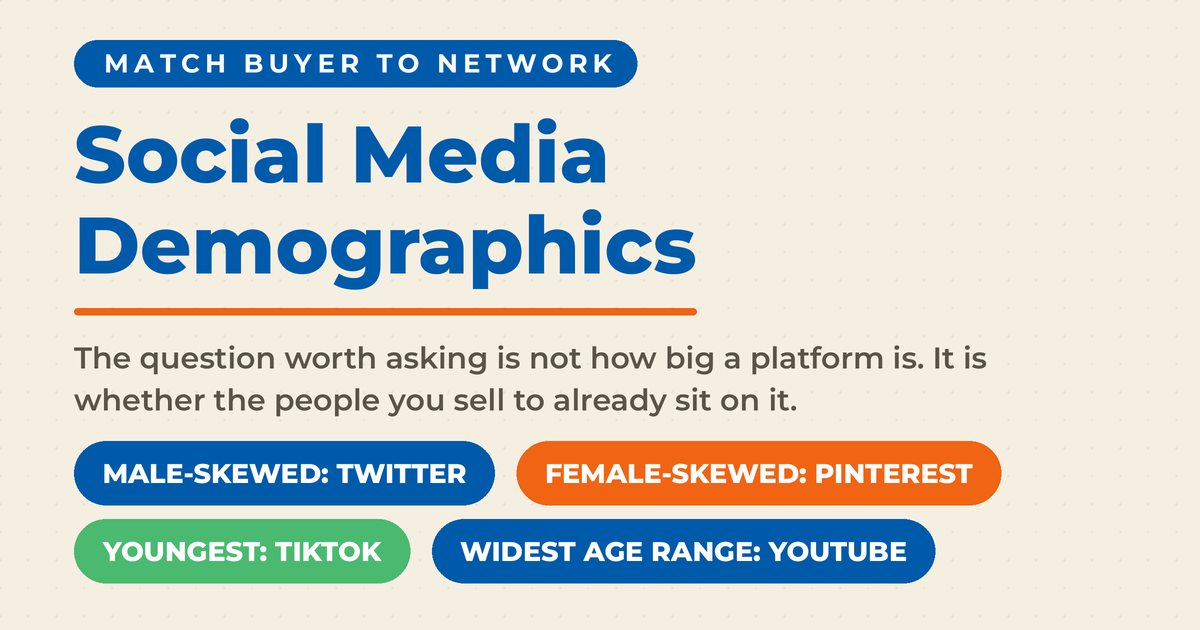
Here’s a revelation: despite its outsized influence on news and politics, X has a much smaller user base than the other major networks. However, that doesn’t mean you should ignore it. If you need to reach the right social media demographics, X might be the place. Here’s who uses X.
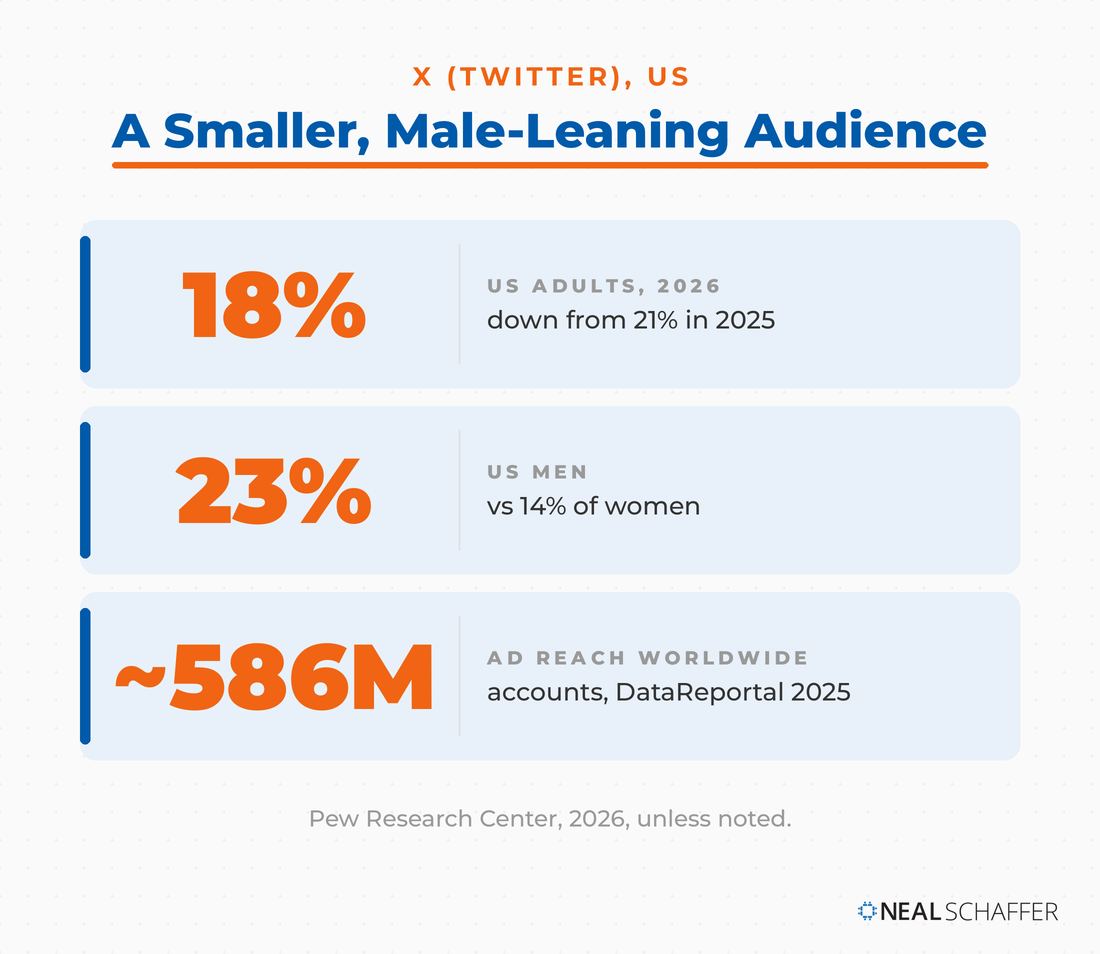
- Ad reach: about 586 million accounts worldwide (DataReportal, January 2025)
- U.S. adults who use it: 18% (Pew Research Center, 2026), down from 21% in 2025
- Age: 31% of Americans aged 18 to 29 use it, compared with 7% of those 65 and older
- Gender: 23% of U.S. men use it, compared with 14% of women
The most important point in the data here is that men are more likely than women to use X, and its U.S. reach is shrinking. So, B2B brands and male-oriented niches should still check out X, but treat it as a supporting channel.
Social Media Strategy Tips for X (Twitter)
Like other social networks, using Twitter for marketing requires some strategy. These include getting found, growing a following, and earning that all-important share. Luckily, these strategy tips will help you get off on the right foot.
1. Use Twitter hashtags and trends. To have winning Tweets, you need winning hashtags. To find the trends, look at your feed where Twitter gives you the top hashtags for the day. Then, use a hashtag research tool to find the best hashtags for your content. Eventually, you’ll create a branded hashtag, too. By following this strategy, you’ll get better visibility in the right affinity groups.
2. Find out when to Tweet. Tweeting at the wrong time is the best way to keep your content from being seen. This is especially true on a fast-moving network like Twitter. Your social media dashboard and other Twitter tools are your best friends here.
3. Schedule Tweets ahead of time. Although there are situations, like Twitter chats, where you’ll need to be online when you Tweet, this isn’t usually appropriate. Instead, use a social media scheduler so you can quit worrying about sending the Tweet at the right time.
4. Engage with your followers. Like other social media networks, Twitter is a community. And in communities, people interact with each other. To build a following, and increase the value of your efforts, be sure to engage with your followers (and other commenters).
5. Utilize Twitter ads. Finally, Twitter ads are a great way to draw attention to your overall profile. That’s in addition to the other benefits of advertising, such as lead generation. Just be sure you set the social media demographics properly for each campaign, or your message can fall on deaf ears.
LinkedIn Demographics and Usage
LinkedIn is a different social media network because it’s focused on business people and jobseekers. And while most social networks can be used for business, such as through company pages, LinkedIn is a place where you don’t go for “personal” stuff unless it’s business-related. However, besides the business focus, the social media demographics aren’t that different from what we’ve seen with the others.
- Members: more than 1.4 billion worldwide (LinkedIn)
- U.S. adults who use it: 31% (Pew Research Center, 2026)
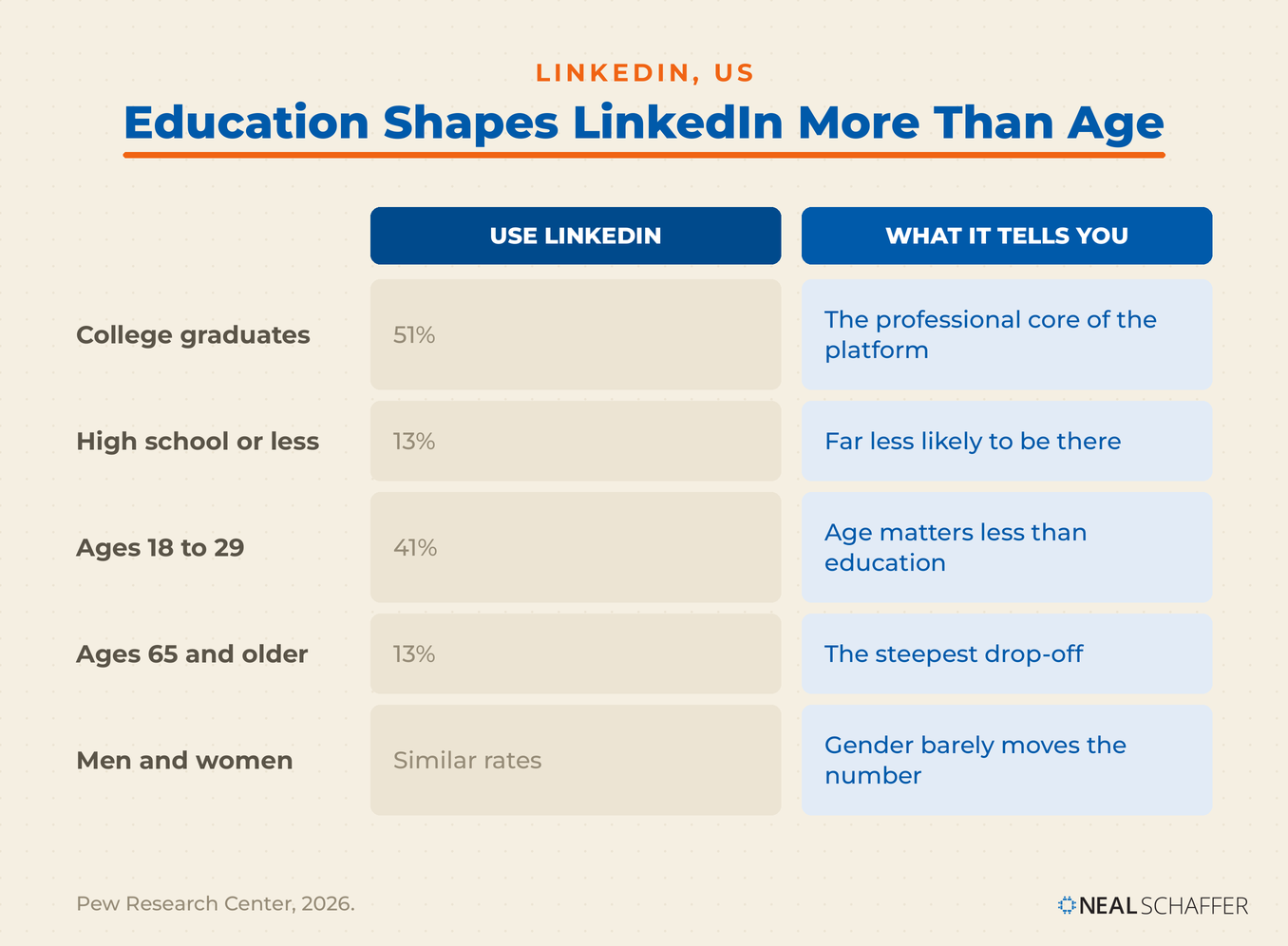
- Age: 41% of Americans aged 18 to 29 and 37% of those 30 to 49 use it, compared with 13% of those 65 and older
- Education: 51% of U.S. college graduates use it, compared with 13% of those with a high school education or less
Perhaps the biggest takeaway from these statistics is that LinkedIn is defined by education and income more than by age or gender: men and women use it at similar rates, and college graduates are far more likely to be there. The obvious heavy users are executives, sales professionals, recruiters, and job seekers. These users present unique opportunities that you shouldn’t ignore, especially if you’re in a B2B company.
Social Media Strategy Tips for LinkedIn
With that in mind, let’s look at some strategy tips specifically for LinkedIn. Some of these seem obvious, but others seem counter-intuitive considering that LinkedIn is a place we brag about our accomplishments.
1. Post regularly but not too often. According to Social Media Today, posting 30 or fewer times per month gets the highest engagement rates.
2. Share Video and Visual Content. Most people are used to a lot of text on LinkedIn, but this isn’t the best way to get high engagement rates. Sure, it works for individuals. But people follow companies for announcements and engaging content.
3. Don’t be salesy. It’s OK to make announcements about company events like getting a new key employee or launching an initiative. But if you come out and say, “check out our new product,” it probably won’t go over well.
4. Tag influencers and employees. LinkedIn will always be a place to see and be seen. If you’re trying to market or recruit on LinkedIn, it’s important to be associated with influencers, because it’ll help you get your foot in the door. In addition, featuring employees is a great way to boost recruitment.
5. Create LinkedIn-specific content. One of the underutilized aspects of LinkedIn is publishing articles and newsletters. Here, you can create thought-leading pieces that showcase your knowledge. In addition, you can create workplace-themed visual content that helps foster community.
Pinterest Demographics and Usage
These days, Pinterest is a weaker sibling to some of the larger social networks. However, it has a special place in the social sphere, because it’s a place where people exchange project ideas. You’ll also see people use Pinterest as a scrapbook for cool pictures that go along with their hobbies and interests. One of the other great things about Pinterest, though, is that it’s less competitive than other networks. Here are the social media demographics for Pinterest.
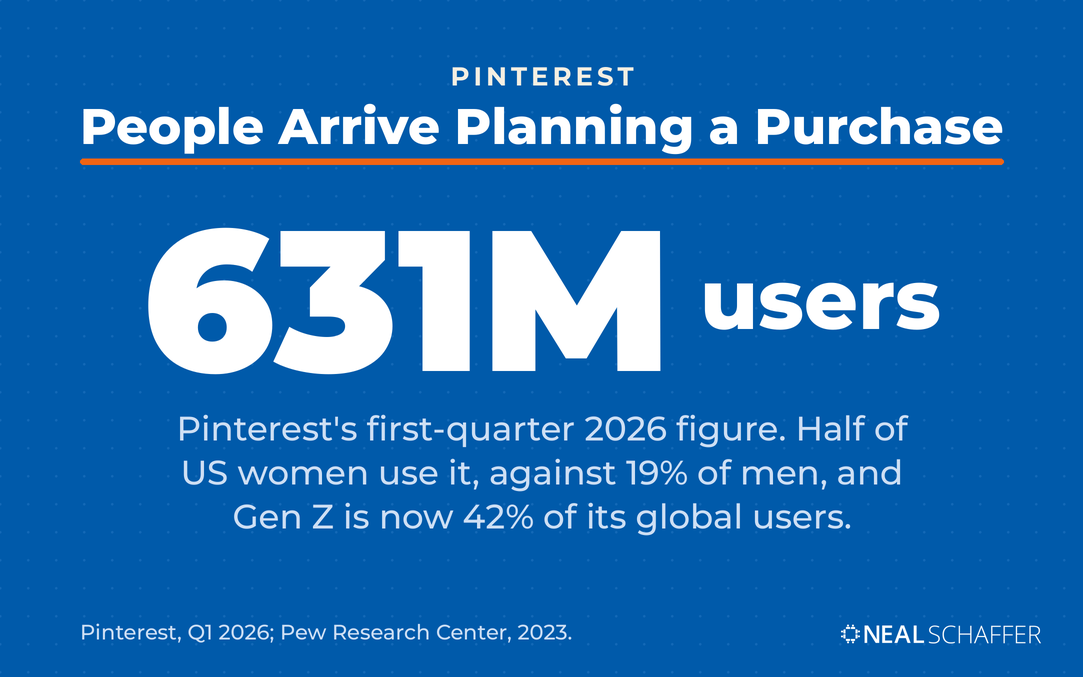
- Monthly active users: 631 million worldwide (Pinterest, first quarter of 2026)
- U.S. adults who use it: 36% (Pew Research Center, 2024, its most recent reading)
- Gender: 50% of U.S. women use it, compared with 19% of men (Pew Research Center, 2023)
- Fastest-growing audience: Gen Z, now 42% of global users (Pinterest)
A few things should pop out at us here. First, users are overwhelmingly female, which counterbalances the male skew we see on X. Second, the audience is getting younger, with Gen Z now its fastest-growing group. Pinterest remains a great place to market if you’re a leisure, home, or hobby brand, because people arrive planning a purchase.
Social Media Strategy Tips for Pinterest
Pinterest is a lot like Instagram, in that it involves a lot of pictures. However, the character is rather different, especially since users can group their Pins and grab photos from just about anywhere. It’s also a very creative space. Here are some tips and tricks to rock your Pinterest efforts.
1. Brand your profile. The first step to having a presence on any social media network is to brand your profile. Here, you’ll add a complete bio so that people can find you, and put branded graphics on your homepage. Then, verify your website so people feel comfortable checking it out.
2. Determine your content strategy. What types of content will you be sharing on Pinterest? Is it pictures of what people can make with your hobby supplies? Style ideas for your outfits? Maybe an inspirational quote or two? Chances are that you’ll post about different things at different times. Not only does it save you time to go this route, but you can share inspiration from around Pinterest.
3. Join community boards. Community boards are similar to Facebook groups, in that people gather to share ideas on a common theme. Experts recommend that you look for the content creators in your niche, then see who has a board. Once you’ve joined, be sure to post regularly. Alternatively, you can start your own board, moderate it, and participate fully.
4. Focus on Pinterest SEO. Like other social networks, Pinterest has a search engine. So, be sure to include keywords and even hashtags in your Pins. This way, people can find your content on Pinterest and beyond. Remember, Pins will often show up on Google images, so it’s important to ensure search engines will put your content in the right place.
5. Schedule out fresh pins. Scheduling your Pins in advance helps ensure you don’t have gaps in your posting. Combined with a good editorial calendar, scheduling Pins through Pinterest apps or social media dashboards will help build your presence on Pinterest. You can even recycle content from Instagram or repurpose it from other networks. Then, you only have to worry about engaging with your followers.
YouTube Demographics and Usage
Next, let’s look at YouTube. As I mentioned above, YouTube is one of the largest social media networks. And, as a result, the social media demographics are more diverse than in some other forums. In addition, people love to consume video content, especially the younger generations. This means that there are lots of opportunities to impress users with your videos. Plus, a lot of people will watch YouTube just for fun as they unwind for the day. Here are the demographics.
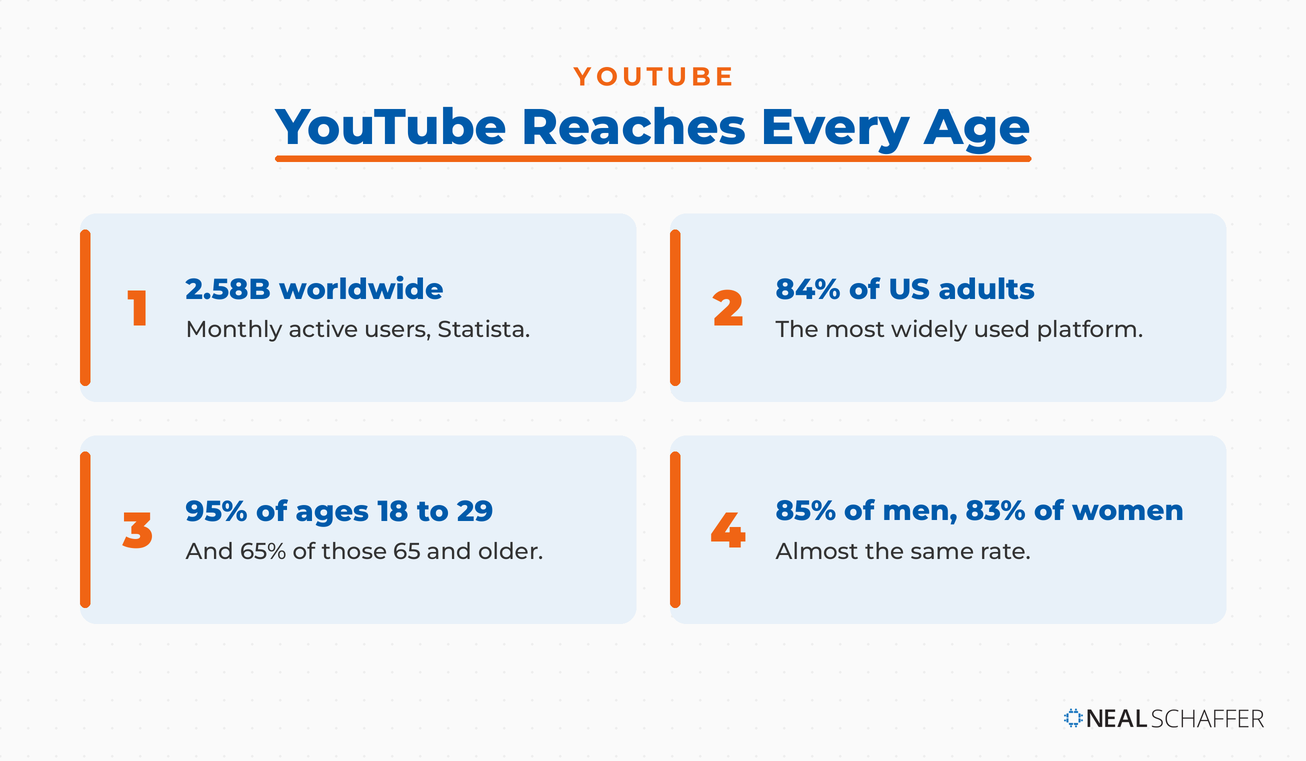
- Monthly active users: 2.58 billion worldwide (Statista, October 2025)
- U.S. adults who use it: 84% (Pew Research Center, 2026)
- Age: 95% of Americans aged 18 to 29 use it, and so do 65% of those 65 and older
- Gender: 85% of U.S. men and 83% of women use it
Two takeaways. First, YouTube is HUGE, and it is the most widely used platform in the U.S. Second, it reaches every age group, so with YouTube you definitely want to define your target audience.
Social Media Strategy Tips for YouTube
As I already pointed out, YouTube is a different animal from a social media demographics standpoint. Besides the demographics, YouTube covers a huge variety of videos, from news and documentaries to hobbies and guilty pleasures. For this reason, you need to strategize very carefully. Otherwise, you can easily get bogged down or fail to reach your ideal buyer persona.
1. Take inspiration from the best YouTube channels. As the saying goes, imitation is the sincerest form of flattery. Or in this case, building on other people’s success is a great way to both jump-start your YouTube presence and remain relevant. Besides this, you can be sure the best content creators started out the same way. For this step, you don’t have to limit yourself to creators in your niche.
2. Analyze your YouTube competitors. This is the same principle as we see all over the marketing world. Before you dive in, figure out what your competition does well so you can incorporate the same tactics. Then, adapt your findings to fit your brand voice, goals, and products.
3. Optimize your YouTube videos. Here, I mean to optimize the videos for maximum visibility on the search engine/algorithm, and for viewers. To do this, be sure to create a killer thumbnail, which should accurately preview your video. Then, write a good description of your video. These are great for the search engine, and help people decide if they want to watch your video. Finally, make playlists, so people can view a series or related videos with minimal effort.
4. Try live streaming on YouTube. People love live streams because they can be part of a community and ask questions. When you live stream, you offer people an opportunity to connect with your other fans. Over time, you can build a brand community this way.
5. Don’t miss out on YouTube ads. Finally, don’t overlook YouTube ads. You can use these to promote your channel, such as by creating a sponsored Short. Or, you can do traditional display ads and a variety of video ads that usually play before someone can view a video. With ads, you can use traditional targeting and display them on any kind of video. This way, you’ll get exposure to other people’s audiences.
TikTok Demographic Data and Usage
TikTok is the youngest-skewing of the major social networks. Its U.S. business now operates as a joint venture separate from ByteDance, which runs the Chinese version, Douyin. TikTok has become a place where you can do meaningful marketing.
Let’s look at the social media demographics for TikTok:
- Monthly active users: 1.99 billion worldwide (Statista, October 2025)
- U.S. adults who use it: 37% (Pew Research Center, 2026)
- Age: 65% of Americans aged 18 to 29 use it, compared with 11% of those 65 and older
- Gender: 43% of U.S. women use it, compared with 31% of men
There are two big takeaways from these numbers. First, TikTok’s audience is the youngest of the major platforms, with a steep drop-off after age 50. Second, women are more likely than men to use it in the U.S. If your buyers are under 30, it belongs near the top of your list.
Social Media Strategy Tips for TikTok
One of the challenges of working with TikTok is that the app works differently from many others, so you might have to work harder to keep your account growing. With that said, here are some strategy tips.
1. Know Your Audience. Most TikTok users trend to the younger side, but there’s a lot more to social media demographics than age. Make sure you understand who follows you and your company on TikTok, so you can tailor your posts (and advertising campaigns) to them.
2. Use Hashtags. As with other networks, TikTok uses hashtags to sort and classify posts. In addition, you can use a hashtag for challenges and contests, among other things.
3. Reach Out to Influencers. Even on TikTok, influencers are big. Plus, with a large network like this one, it’s relatively difficult to build close-knit communities. With the help of influencers, however, there are a lot more possibilities.
4. Use Humor. TikTok users are young, and this also comes with a quirky side. Overall, the vibe of TikTok is fun, even goofy at times. For this reason, if you want to be humorless as a brand, this isn’t the place to do it. Instead, try to make everyone laugh so your content gets shared and remembered.
5. Engage with Other Users. Finally, engagement is a big concern even on TikTok. While you might not respond to a challenge, you definitely can respond to people’s comments, like their videos, or participate in other ways. This way, you’ll build a following and, in time, brand affinity.
Frequently Asked Questions About Social Media Demographics
Social media demographics are the measurable characteristics of a platform’s user base: age, gender, location, and how much time those users spend on the app. Marketers use them to decide which platforms deserve budget and which content formats will land there.
YouTube and Facebook reach the most older adults: 65% and 59% of Americans 65 and older use them, according to Pew Research Center’s 2026 survey. Instagram, TikTok, and Snapchat skew much younger.
Check the numbers at least once a year, and sooner if a platform changes ownership, launches a major content format, or comes under regulatory pressure. Platform user bases shift faster than most marketing plans do.
No. Platform demographics tell you where a given audience is likely to be found, which is useful before you have a following of your own. Once you have one, your own analytics are the better guide.
Yes, and often they should. If a platform’s core age band and gender split both sit far from your buyer, the production cost of showing up there rarely pays back.
Conclusion
In conclusion, social media demographics are incredibly powerful tools for marketers. They allow us to identify who our target audience is, where they spend their time online, and what types of content they respond to. Armed with this information, we can create campaigns that speak directly to them, which means that we can reach them more effectively than ever before.
But these statistics aren’t just useful for marketing purposes; they’re also extremely valuable for understanding the behavior of our customers. By knowing who our users are, we can develop products that meet their needs, and we can use that knowledge to improve our services over time. So whether you want to know who your current customers are, or you’re trying to figure out how to attract new ones, social media demographics is a must-have tool for any marketer.