
Let’s face it: your small business needs to be on social media. It’s not optional anymore—it’s non-negotiable. But here’s the thing: simply being there isn’t enough. You need to be strategic, effective, and see actual results.
Think of social media as your digital storefront, community hub, and customer service desk rolled into one. With 63.9% of the world’s population now on social media and 90% of small businesses leveraging these platforms, the opportunity on social media platforms is massive—but so is the noise.
For small businesses, this isn’t about competing with multi-million dollar ad budgets. It’s about leveraging authenticity, building genuine connections, and telling your unique story. I’ve worked with countless small business owners over the years, and the ones who win aren’t always the ones with the biggest budgets—they’re the ones with the clearest strategies and most cohesive marketing tools. When they do bring in outside help, the ones who get results hire a social media consultant who builds that strategy with them rather than someone who just posts on their behalf.
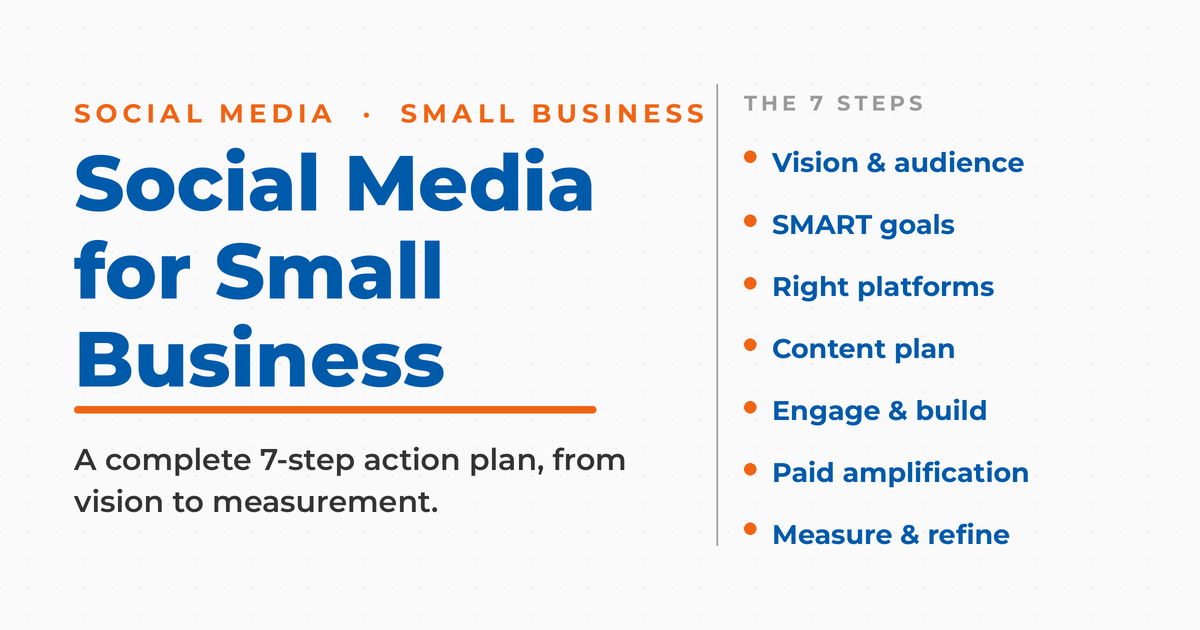
This guide is your comprehensive action plan to transform your social media efforts from a “should-do” into a powerful growth engine. Let’s get started!
Key Takeaways
✅ Start with SMART goals and detailed buyer personas before posting anything to your social channels—this foundation drives everything else
✅ Focus on 2-3 platforms maximum where your audience actually spends time rather than spreading thin across all networks
✅ Create content pillars and a calendar to maintain consistency on your social media accounts—43% of small business owners spend just 6 hours weekly on social media effectively
✅ Engagement beats broadcasting—respond to comments, ask questions, and build genuine relationships in your target market.
✅ Track your analytics weekly and adjust strategy based on data, not gut feelings
✅ Start small with paid ads ($5-10/day), test rigorously, and scale what works in your social media campaigns
Why Does Social Media Marketing Matter for Small Businesses?
Social media marketing for small business is the practice of using platforms like Facebook, Instagram, LinkedIn, and TikTok to promote products, build brand awareness, and engage with customers. It’s one of the most cost-effective ways for small businesses to compete with larger competitors by building authentic relationships at scale. Cost is only one of the advantages, though, and my rundown of the benefits of social media marketing covers the ones businesses most often overlook, from market insight to brand loyalty.
The numbers tell the story. According to PwC’s Voice of Consumer Survey, 67% of consumers use social media to discover new products, and 46% have purchased directly through social platforms—up from just 21% in 2019. That’s a fundamental shift in how people shop.
Here’s what makes social media particularly powerful for small businesses:
| Advantage | Why It Matters |
|---|---|
| Low barrier to entry | Free to create accounts; start a marketing plan with zero budget |
| Direct customer access | Bypass traditional media gatekeepers; speak directly to your audience |
| Targeted advertising | Reach specific demographics for as little as $5/day |
| Real-time feedback | Instantly understand what customers want and think to improve customer experience |
| Level playing field | Authenticity and creativity can outperform big budgets |
Step 1: How Do You Define Social Media Goals and Audience?
Before you post a single photo or craft a clever caption, you need to know why you’re on social media and who you’re trying to reach. This isn’t just a formality—it’s the bedrock of everything that follows. Without clear goals and a deep understanding of your audience, your social media strategy will be like sailing without a compass.
I’ve written extensively about creating a social media marketing strategy, including authoring the definitive book on the topic called Maximize Your Social, and this first step is where most businesses either set themselves up for success or failure.
What Are SMART Goals for Social Media?
Forget vague aspirations like “get more followers.” You need SMART goals: Specific, Measurable, Achievable, Relevant, and Time-bound. Each goal should give you something concrete to measure as you create visual content and post on socials.
| Goal Type | Example SMART Goal | Key Metric |
|---|---|---|
| Brand Awareness | Grow Instagram followers by 20% in 6 months | Follower count |
| Website Traffic | Generate 150 website visits from social monthly | Click-through rate |
| Lead Generation | Capture 50 email sign-ups via social per month | Conversion rate |
| Sales | Increase social-attributed revenue by 15% this quarter | Revenue/ROI |
| Engagement | Achieve 3% engagement rate on LinkedIn posts | Engagement rate |
| Customer Service | Reduce DM response time to under 2 hours | Response time |
Remember: what gets measured gets managed. If you can’t quantify your goal, you can’t track progress or know when you’ve achieved it. Social media management tools do not need to be huge or expensive; by keeping track of basic metrics, you can put your social media posts on the road to success.
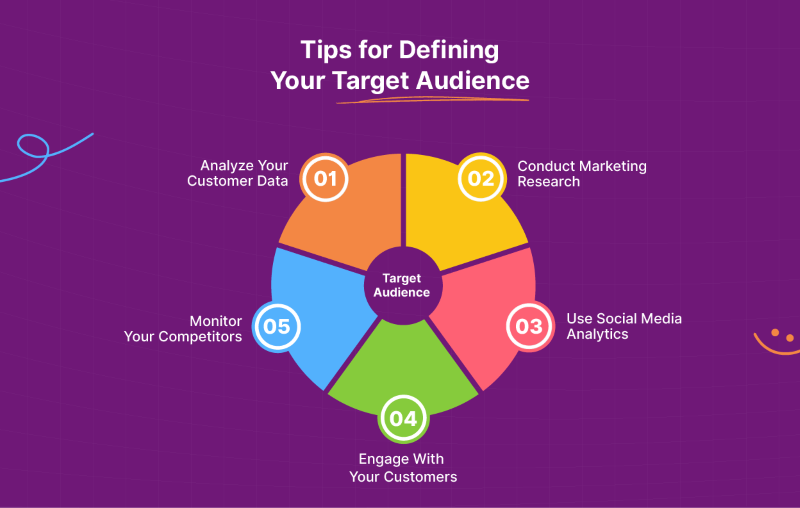
How Do You Create a Buyer Persona?
Your ideal customer isn’t “everyone.” They’re a specific individual with needs, desires, and pain points that your business solves. I’ve blogged about the importance of understanding your target audience, and this buyer persona work is crucial.
Ask yourself these questions:
Demographics:
- How old are they?
- Where do they live?
- What’s their income bracket?
- What’s their occupation?
Psychographics:
- What are their interests, hobbies, and values?
- What keeps them up at night?
- What are their aspirations?
Online Behavior:
- Which social platforms do they frequent?
- What content do they consume?
- When are they most active online?
- Do they prefer video, images, or text?
Pain Points & Goals:
- What problems can your business solve for them?
- What are they trying to achieve?
Let me give you an example. Say you own a local bakery. Your ideal customer might be Sarah: a 35-year-old busy working mom who lives within 5 miles of your shop. She values convenience, quality ingredients, and supporting local businesses. She’s on Facebook in the evenings, looking for quick dinner ideas or treats for her kids’ school events. She’s tired of mass-produced, sugary options and wants healthier, artisanal choices.
Suddenly, your content strategy becomes clear. Without knowing Sarah, you’d be shouting into the void. With her in mind, you’re having a focused conversation and building customer loyalty.
The LinkedIn Playbook for Real Business Growth
My latest book helps professionals, entrepreneurs, and business owners turn LinkedIn from a static profile into a real source of clients and growth.
Maximizing LinkedIn for Business Growth gives you clear, practical steps to build a profile that gets noticed and a network that actually sends business your way.
Grab your copy on Amazon and put it to work this week. Click the cover or the button below to get started.

Step 2: Which Social Media Platforms Should Small Businesses Use?
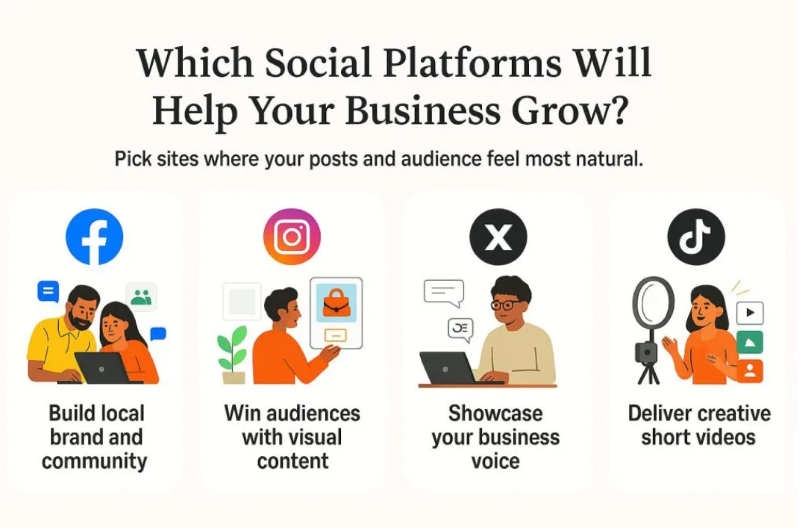
This is where many small businesses stumble. They feel compelled to be everywhere—Facebook, Instagram, LinkedIn, TikTok, Twitter, Pinterest, YouTube—and it’s a recipe for burnout and diluted effort. The key is to be strategic, not ubiquitous.
According to Sprout Social’s statistics, the average social media engagement rate ranges from 1.4% to 2.8% depending on platform. But some platforms dramatically outperform others for specific business types.
Platform Comparison: Which Is Right for Your Business?
| Platform | Monthly Users | Best For | Avg. Engagement Rate |
|---|---|---|---|
| 3.07 billion | Local businesses, community building, targeted ads | 0.06-0.15% | |
| 2 billion | Visual brands, product showcases, younger demographics | 0.50-1.0% | |
| 1 billion | B2B, thought leadership, professional services | 0.35-0.50% | |
| TikTok | 1.5 billion | Gen Z/Millennials, creative content, virality | 2.5% |
| 600 million | DIY, recipes, fashion, home decor, e-commerce | 0.20-0.30% | |
| YouTube | 2.5 billion | Tutorials, long-form content, SEO value | 0.50% |
I’ve covered the nuances of different platforms in my guides on Facebook marketing strategy, Instagram marketing, and whether platforms like YouTube and Pinterest truly count as social media.
The 2-3 Platform Rule
Here’s my advice: focus on 2-3 platforms maximum where your audience actually spends time. It’s far better to excel on two platforms where your audience is highly engaged than to have a weak, inconsistent presence on five. If you are not sure where your buyers actually are, start with the social media demographics behind each network, because the age, gender, and income skews will narrow your choice faster than any trend piece will. The same ceiling shows up in a nonprofit social media strategy, where two networks is the practical maximum for a small organization rather than the starting line.
Think about it this way: each platform has its own unwritten rules, optimal content formats, and audience expectations. You wouldn’t use the same tone at a formal business meeting as you would at a casual coffee with a friend. The same applies to social media platforms, from social networking sites to visual content-based sites like YouTube.
If you’re B2B: Start with LinkedIn and consider YouTube for thought leadership content.
If you’re B2C selling products: Instagram and Facebook are your foundation, with TikTok if you’re targeting younger audiences.
If you’re local service-based: Facebook and Instagram will likely be your sweet spots. Treat your review and map listings as part of that mix too, since that is where social, local, and mobile overlap, an idea known as SoLoMo marketing.
Step 3: How Do You Optimize Social Media Profiles for Business?
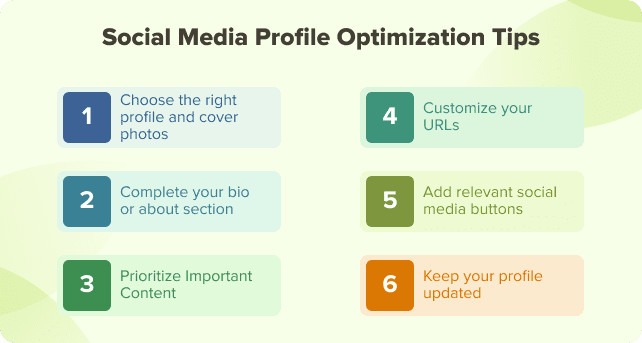
Your social media profiles are often the first impression potential customers have of your business online. Think of them as your digital business card and storefront window combined. A poorly optimized profile is like having a messy, uninviting shop—people will walk right by.
I talk about this concept extensively when discussing LinkedIn profiles—your profile is the front page of the website of you (or your business). Every activity you do on social media leads people back to your profile. Have you spent even a fraction of the time optimizing it that businesses put into their websites?
Profile Optimization Checklist
Profile Picture/Logo:
- Use your business logo consistently across all platforms
- Ensure it’s high-resolution and recognizable at small sizes
- If you’re a personal brand, use a professional, friendly headshot
Bio/About Section (Your Elevator Pitch):
- Clearly state what you do: “Artisan bakery specializing in sourdough and custom cakes”
- Who you serve: “Helping busy families enjoy wholesome, delicious bread daily”
- Your unique value: “Handcrafted with locally sourced organic ingredients since 2010”
- Include relevant keywords people search for
- Add a clear call-to-action: “Shop our menu below!” or “Book a free consultation!”
Link Strategy:
- Use link-in-bio tools like Linktree or Later if you have multiple important destinations
- Make the link purpose crystal clear
- Update regularly to reflect current promotions or content
Consistent Branding:
- Use your brand’s color palette in cover photos and banners
- Maintain consistent tone of voice across all platforms
- Match your visual style to your brand personality
An optimized profile isn’t just about looking good via high-quality photos—it’s about guiding your audience to take action with your business.
Step 4: What’s the Best Content Strategy for Small Business Social Media?
You’ve got your goals, your audience, and optimized profiles. Now, what are you actually going to post? This is where a content strategy becomes your secret weapon. Random, infrequent posts lead to inconsistent results. A well-planned approach ensures you’re consistently delivering value and improving customer communication.
According to Vertical Response, 43% of small business owners spend six hours weekly on social media marketing—roughly one hour and twelve minutes per day over a five-day work week. That’s not a lot of time, which means every minute needs to count.
I’ve covered social media content creation extensively, and the key is working smarter, not harder, to make your marketing assets truly work for you.
Content Pillars: Your Foundation
Instead of thinking “What should I post today?”, think in broader categories or “pillars” that align with your brand. This provides structure and ensures variety.
For our bakery example, consider:
| Content Pillar | Example Posts | Posting Frequency |
|---|---|---|
| Product Showcases | Photos/videos of pastries, custom cakes, fresh bread | 3x per week |
| Behind-the-Scenes | Bakers at work, ingredient sourcing, morning rush | 2x per week |
| Educational Content | How to store bread, recipes, sourdough history | 1x per week |
| Community Engagement | Customer spotlights, local events, polls | 2x per week |
| Promotions | Weekly specials, holiday pre-orders, collaborations | 1-2x per week |
These pillars ensure you’re not always selling for your marketing activities but also educating, entertaining, and engaging—which builds trust and loyalty.
Content Format Mix
Different formats work better on different platforms. Here’s what typically performs well:
- Short-form video (Reels/TikTok): Highest engagement potential; great for tutorials and behind-the-scenes
- Carousels: Excellent for step-by-step guides, tips, and multiple product angles
- Stories: Perfect for time-sensitive content, polls, Q&As, and authentic moments
- Static images: Still essential for product photography and quotes
- Long-form video: Build authority on YouTube with tutorials and in-depth content
- Text posts: LinkedIn performs well with thoughtful written content
Building Your Content Calendar
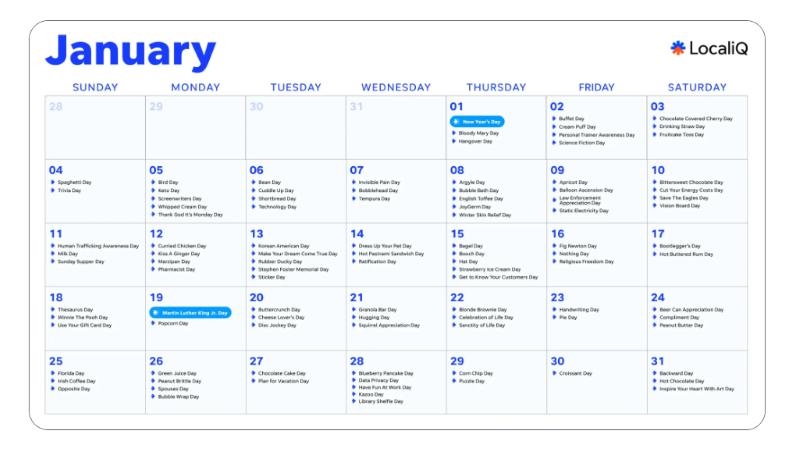
A content calendar is your roadmap. It helps you plan, organize, and schedule posts in advance—preventing last-minute panic and ensuring consistency. I’ve written a complete guide on how to create and fill a social media calendar.
Tools like social media scheduling platforms can help you batch content and maintain consistency with your content scheduler even during busy periods.
Your calendar should include:
- Date and time for each post
- Platform(s)
- Content pillar it falls under
- Content format
- Caption draft
- Hashtags
- Call-to-action
- Visual assets location
Step 5: How Do You Build Engagement on Social Media?
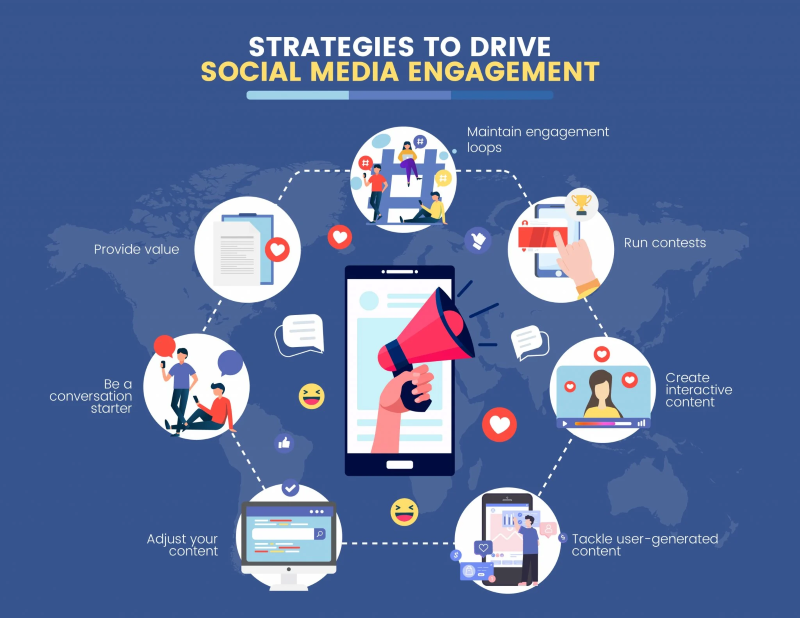
Social media isn’t a broadcast channel—it’s a two-way street. Posting great content is only half the battle. The real power comes from building relationships (and customer trust), and that requires genuine engagement.
Think of it as hosting a party. You wouldn’t just put out snacks and hope people talk to each other. You’d circulate, introduce people, and facilitate conversations. Your ad campaigns are no different.
Response Strategy: Speed Matters
According to Sprinklr’s research, 75% of consumers expect a response within 24 hours on social media, and many expect it within just a few hours. Your response time signals how much you value your customers.
Comment Response Best Practices:
- Acknowledge every comment, even with a simple thanks
- Answer questions thoroughly and helpfully
- Address negative feedback professionally—never delete or ignore it
- Take sensitive issues to private messages quickly
DM Strategy:
- Set up quick replies for common questions
- Respond to sales inquiries within 2 hours during business hours
- Use DMs for personalized relationship building
Proactive Engagement Tactics
Don’t just wait for people to come to you:
- Ask questions in your posts: “What’s your favorite way to enjoy our coffee?”
- Run polls and quizzes: Quick, easy engagement boosters
- Create “this or that” content: Sparks debate and shows personality
- Comment on complementary businesses’ posts: Offer genuine value, not self-promotion
- Engage with industry hashtags: Join broader conversations
- Share and celebrate customer content: User-generated content builds community
I’ve found that proactive social media engagement often makes the difference between accounts that grow and those that stagnate. Being “on” in this way can also help you get ahead of any necessary crisis management.
Strategic Networking
Networking isn’t just for offline events. Partner with complementary local businesses for joint promotions or content. For our bakery, this could mean collaborating with a local coffee shop, florist, or farmer’s market vendor. These partnerships expand your reach organically while expanding how you fit into different lifestyle imagery.
Step 6: How Do You Use Social Media Advertising for Small Business?
While organic reach builds community, sometimes you need a boost to reach new audiences and accelerate growth. Paid social media advertising is how you buy that boost, and it is more accessible than ever for small businesses to run ad campaigns. Before you put money behind anything, decide what the push is for, because paid spend works hardest inside a planned social media campaign with a goal, a window, and a way to measure the result.
According to WebFX’s data, you can start advertising on most platforms for as little as $5-7 per week. The question isn’t whether you can afford to advertise—it’s whether you can afford not to.
Advertising Costs by Platform
| Platform | Minimum Budget | Average CPC | Best For |
|---|---|---|---|
| $7-70/week | $0.26-0.50 | Local targeting, broad demographics | |
| $5/week | $0.01-0.25 | Visual products, younger audiences | |
| $10/day | $2.00-5.50 | B2B, professional services | |
| TikTok | $50/campaign | $0.10-1.00 | Gen Z, creative brands |
| $0.10 min/click | $0.10-1.50 | E-commerce, visual discovery |
Sources: WebFX, Meta Business
I’ve written extensively about Facebook Ads ROI and retargeting strategies that can maximize your ad spend.
Getting Started with Paid Ads
1. Start with your buyer persona: Remember Sarah from Step 1? You can target Facebook users who:
- Live within 5 miles of your bakery
- Are aged 30-45
- Have interests in “baking,” “organic food,” or “local businesses”
- Are parents of young children
This precision targeting is what makes social media ads powerful for small businesses. You’re not throwing money into the wind—you’re speaking directly to potential customers and improving your average customer journey.
2. Test with small budgets: Your first campaigns are learning experiences.
- Start with $5-10/day
- Run for at least 5-7 days to gather data
- Test different creative variations (images, copy, calls-to-action)
3. Track your key metrics:
- Click-through rate (CTR)
- Cost per click (CPC)
- Cost per lead/acquisition
- Return on ad spend (ROAS)
4. Scale what works: If a $50 campaign brings in $150 in sales, that’s your signal to increase budget.
According to Keywords Everywhere, 51% of small business owners advertising on TikTok report positive ROI, while 45% break even. That’s nearly all advertisers seeing at least neutral returns—a strong signal that targeted social advertising works for small and midsized businesses.
Step 7: How Do You Measure Social Media Success?
You’ve set goals, crafted content, engaged your audience, and run ads. But the journey doesn’t end there. The most successful social media marketers continuously analyze and adapt. Social media is a constantly evolving landscape—what works today might need tweaking tomorrow.
I’ve covered social media marketing KPIs and measuring marketing ROI in depth, and consistent measurement is what separates amateurs from professionals. Don’t sleep on social media analytics!
Key Metrics to Track
| Metric | What It Tells You | How to Improve |
|---|---|---|
| Reach/Impressions | How many people saw your content | Optimize posting times, use hashtags |
| Engagement Rate | Content quality and relevance | Test different content types |
| Follower Growth | Brand awareness trajectory | Consistency, engagement, ads |
| Click-Through Rate | CTA effectiveness | Stronger calls-to-action |
| Conversion Rate | Business impact | Optimize landing pages, targeting |
| Response Time | Customer service quality | Set up alerts, quick replies |
Analytics Review Process
Weekly: Check engagement rates, top-performing posts, follower growth
Monthly: Review reach trends, conversion data, content pillar performance
Quarterly: Assess goal progress, ROI calculations, strategy adjustments
Every platform provides built-in analytics—Facebook Insights, Instagram Insights, LinkedIn Analytics. Use them. Look for patterns:
- Which content types generate the most engagement?
- When is your audience most active?
- Which topics drive the most discussion?
- Are your posts driving traffic and conversions?
Making Data-Driven Adjustments
Based on your analysis, make concrete changes:
- Prioritize content types and topics that perform well
- Adjust your posting schedule to match audience activity
- Refine ad targeting based on performance data
- Experiment with new formats when current ones plateau
- Re-evaluate goals quarterly
The beauty of social media marketing is its iterative nature. You don’t have to get it perfect from day one. By consistently analyzing performance, listening to customer feedback, and adapting, you’ll continuously improve results.
Your Social Media Action Plan: Getting Started This Week
Feeling overwhelmed? Here’s your immediate action plan:
Day 1-2: Foundation
- Define 2-3 SMART goals
- Create your primary buyer persona
- Choose your top 2 platforms for lead generation
Day 3-4: Setup
- Optimize your profiles on chosen platforms
- Set up a link-in-bio tool if needed
- Create your content pillars
Day 5-6: Content
- Plan your first two weeks of content
- Create or gather visual assets
- Schedule posts using a manazgement tool
Day 7: Launch
- Publish your first optimized posts
- Spend 30 minutes engaging with your community
- Set up tracking for your key metrics, including social listening
Frequently Asked Questions About Social Media Marketing for Small Business
Most successful small businesses spend 6-10 hours per week on social media marketing. This includes content creation, posting, engagement, and analysis. According to research, 43% of small business owners dedicate approximately six hours weekly. Start with what’s sustainable and increase as you see results.
The best platform depends on your target audience and business type. For B2C businesses selling visual products, Instagram and Facebook typically perform best. For B2B and professional services, LinkedIn offers the highest quality leads. TikTok excels for reaching younger audiences with creative content. Focus on 2-3 platforms rather than spreading thin across all of them.
Start with $150-300 per month ($5-10 per day) to test and learn. According to WebFX, Facebook ads average $0.26-0.50 per click, making them accessible for small budgets. Scale up based on results—if your ads generate positive ROI, increase spend gradually. Many businesses see meaningful results with $500-1,000 monthly once optimized.
Quality beats quantity, but consistency matters. Aim for 3-5 posts per week on your primary platforms. Facebook and Instagram perform well with 4-7 weekly posts, LinkedIn with 2-5, and TikTok rewards daily posting. Use a content calendar and scheduling tools to maintain consistency without burnout.
Track metrics that connect to business outcomes: website traffic from social, leads captured, direct sales, and customer acquisition cost. Use platform analytics combined with Google Analytics to attribute conversions. Calculate ROI by comparing revenue generated against time and money invested. Start by defining what success looks like for your specific goals.
Final Thoughts: Your Social Media Journey Starts Now
You’ve just walked through a comprehensive action plan covering everything from setting your vision to fine-tuning execution and measuring results. This isn’t just theory—these are the actionable steps that countless small businesses have used to transform their social media from a checkbox into a genuine growth engine without sacrificing customer loyalty.
Remember, social media marketing is not a sprint; it’s a marathon. It requires patience, consistency, and a genuine desire to connect with your audience. There will be days when posts fall flat, algorithms change, and you feel a little lost. That’s perfectly normal. The key is persistence.
Gary Vaynerchuk said it best: “Social media requires that business leaders start thinking like small-town shop owners. This means taking the long view and avoiding short-term benchmarks to gauge progress. It means allowing the personality, heart and soul of the people who run all levels of the business to show.”
Start small, celebrate your wins, learn from your experiments, and let your business’s unique personality shine through. Your customers are out there, waiting to connect with you.`
Ready to level up your social media strategy? Check out my recommended social media automation tools to work smarter. And don’t forget to pick up a copy of my books Maximize Your Social for social media marketing, Age of Influence for influencer marketing, and/or Digital Threads for my latest comprehensive social media and digital marketing strategy advice.
Your small business deserves to be seen, heard, and celebrated. Go forth and conquer the social world.