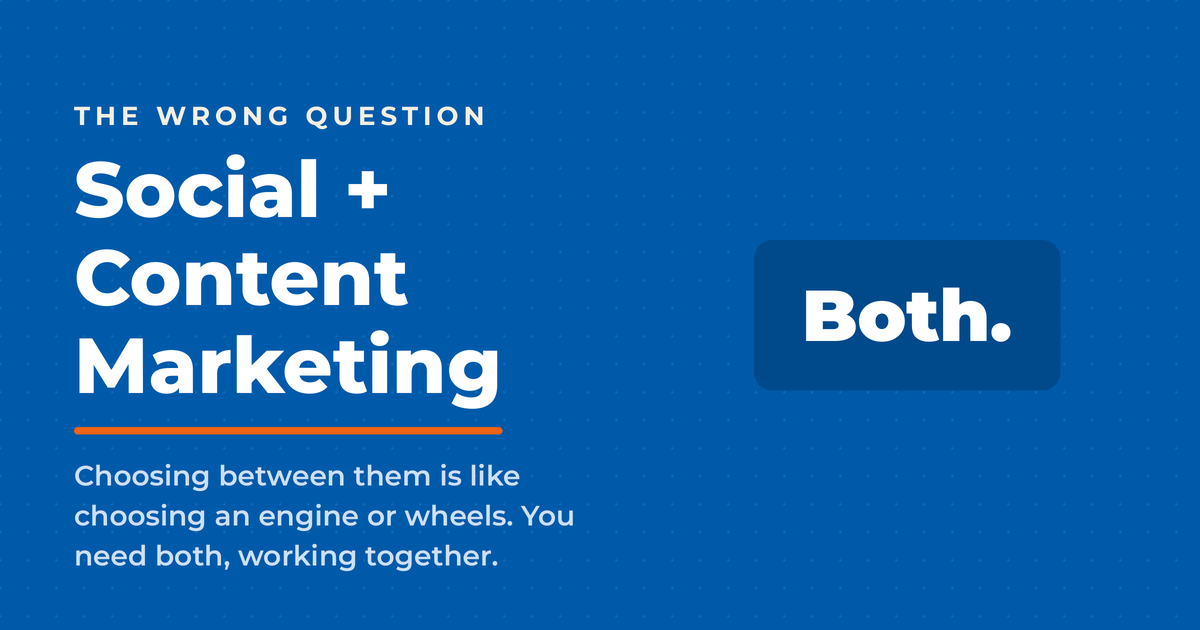

As a modern marketer, you’ve likely grappled with this question: “Should I focus on social media marketing or content marketing?” It’s common, but it’s fundamentally the wrong question. Think about it: that’s like asking whether an engine or wheels are more important for a car. Both are crucial, and neither can get you where you’re going without the other.
Here’s the reality: social media and content marketing aren’t just complementary—they’re intrinsically linked. With 5.24 billion active social media users worldwide and 90% of B2B marketers using organic social platforms to distribute content, treating your social media posts and content marketing strategy as separate disciplines means you’re leaving serious results on the table.
This guide, based on my 15+ years as a digital marketing consultant and Fractional CMO, will help you understand that synergy, craft a unified strategy, and unlock the full potential of your digital marketing presence. I’ve been helping businesses navigate this integration for years, and I can tell you: the marketers who get this right consistently outperform those who don’t
Key Takeaways
✅ Social media platforms and content marketing form a symbiotic relationship—content fuels social engagement, while social amplifies content reach.
✅ Brands that prioritize blogging see 13x more ROI than those who don’t.
✅ An integrated approach maximizes efficiency through content repurposing—one blog post can become 10+ social assets.
✅ Building on “rented land” (social platforms only) without owned content assets is a risky strategy.
✅ Regular feedback loops between social insights and content creation drive continuous improvement.
✅ Short-form video is now the dominant content format, with 91% of businesses using video marketing today.
What Is the Difference Between Social Media and Content Marketing?
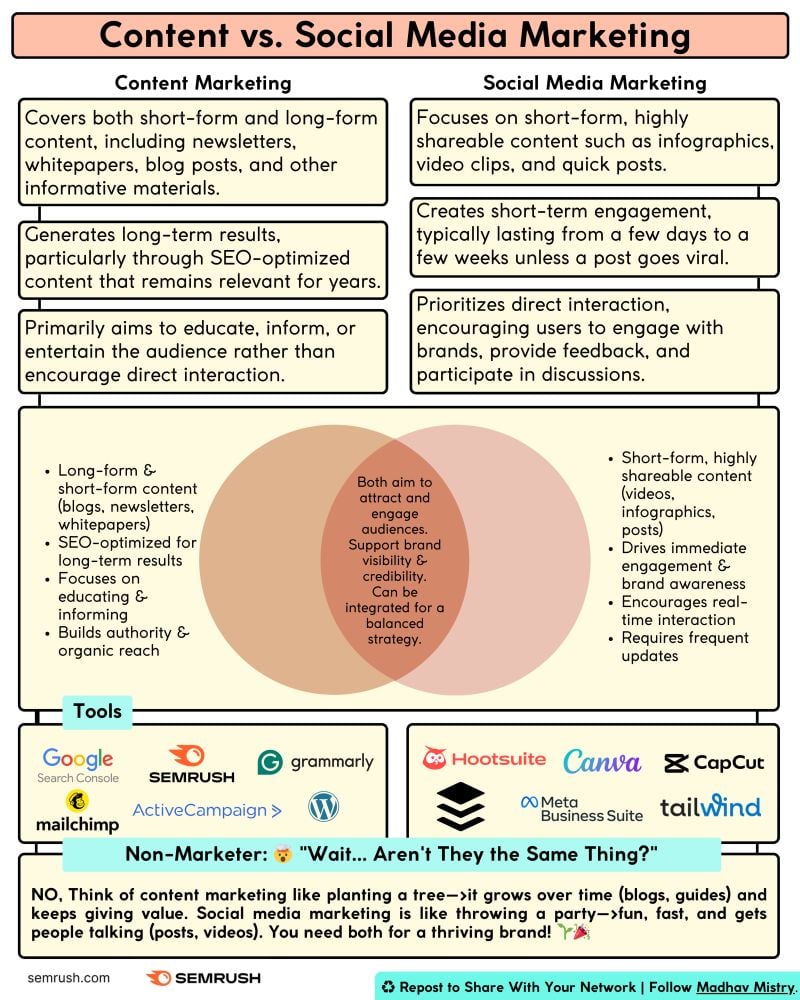
Content marketing is a strategic approach focused on creating valuable, long-form resources like blogs, videos, and ebooks that attract and retain audiences through website traffic and search visibility. Social media marketing uses platforms like LinkedIn, Instagram, and TikTok to distribute content, engage audiences, and build community. Content provides the substance; social media provides the amplification.
Before we dive into integration strategies, let’s get clear on what each discipline does best—and where their limitations lie when viewed in isolation.
What Does Social Media Marketing Do Best?
Social media marketing is your agile, responsive front-liner. Its strengths lie in real-time engagement and distribution to build your brand voice and increase visibility to your target market. You can connect directly with your audience, foster community, drive immediate traffic, and gather instant feedback.
Think of social media as the town square where conversations happen, news spreads quickly, and relationships are forged.
Key Strengths:
- Real-time audience engagement and community building
- Rapid distribution and virality potential
- Direct customer feedback and social listening capabilities
- Targeted advertising with precise audience segmentation
- Brand awareness amplification across platforms
Limitations:
- Ephemeral content with short shelf life
- Constantly changing algorithms—organic reach continues to decline
- Building on “rented land” subject to platform changes
- Requires constant content creation to maintain visibility
- Not ideal for deep dives into complex topics
What Does Content Marketing Do Best?
Content marketing is your strategic architect, building the foundation of your online presence. Its core strength is educating, informing, and entertaining your audience with valuable, evergreen resources. This includes blog posts, articles, white papers, ebooks, videos, and podcasts.
Content marketing builds trust and authority over time, answers your audience’s burning questions, and establishes your brand as a thought leader. It’s fantastic for improving SEO rankings, generating organic traffic, and nurturing leads.
Key Strengths:
- Long-term SEO value and organic traffic generation
- Authority and thought leadership building
- Lead nurturing throughout the buyer journey
- Owned media you control completely
- Evergreen assets that compound value over time
Limitations:
- Discoverability challenges without amplification
- Longer time to see results
- Requires consistent, sustained effort
- The best content means nothing if no one sees it
Why Is “Social Media vs. Content Marketing” the Wrong Question?
Pitting social media against content marketing is like asking whether a finely crafted speech or a megaphone is more important for addressing a crowd. The speech (content) provides the substance, the message, the value. The megaphone (social media) amplifies that message, ensuring it reaches the ears of those who need to hear it.
| Aspect | Content Marketing | Social Media Marketing | Integrated Approach |
|---|---|---|---|
| Primary Function | Create valuable resources | Distribute and engage | Create once, amplify everywhere |
| Timeline | Long-term asset building | Real-time engagement | Both immediate and lasting impact |
| Ownership | Owned media (your website) | Rented land (platforms) | Diversified presence |
| SEO Impact | High | Indirect | Maximized |
| Audience Interaction | Comments, downloads | Conversations, shares | Multi-channel engagement |
| ROI Timeline | 6-12+ months | Immediate to short-term | Compounding returns |
The true power lies in their synergy. Content provides the what—the valuable information, entertainment, or education your audience craves. Social media provides the how and the where—the channels through which that content is discovered, discussed, and shared.
As Joe Pulizzi, founder of Content Marketing Institute, wisely stated: “Before you create any more ‘great content,’ figure out how you are going to market it first.”
When you view content and social as intertwined rather than separate, you move from a tactical mindset to a strategic one, unlocking a much larger impact.
Why Is Integrating Social Media and Content Marketing Essential?
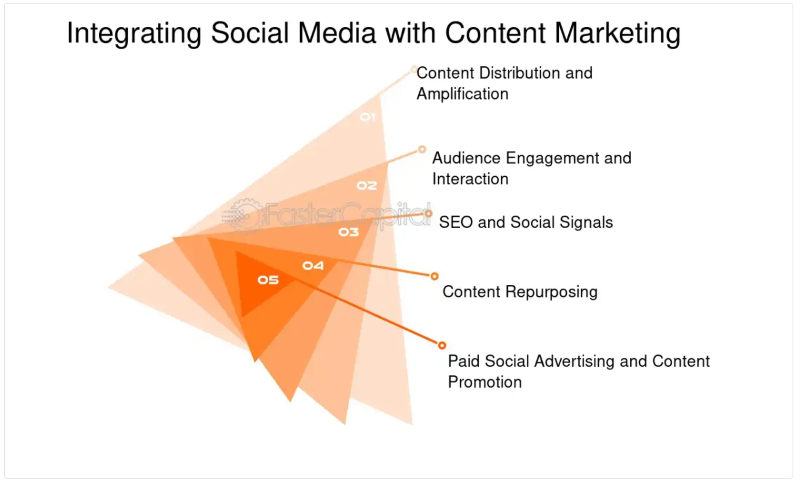
Integration is essential because content without distribution goes unseen, while social media without valuable content offers nothing worth sharing. Together, they create a powerful flywheel: content fuels engagement, social amplifies reach, and both drive measurable business results.
If you’re still treating these as separate entities, you’re actively hindering your own progress.
Is LinkedIn Actually Bringing You Business?
My latest book helps professionals, entrepreneurs, and business owners turn LinkedIn from a static profile into a real source of clients and growth.
Maximizing LinkedIn for Business Growth gives you clear, practical steps to build a profile that gets noticed and a network that actually sends business your way.
Grab your copy on Amazon and put it to work this week. Click the cover or the button below to get started.

How Does the Content-Social Symbiosis Work?
Imagine a majestic oak tree. Its roots (content) delve deep, drawing nutrients and providing stability. Its branches and leaves (social media) spread wide, reaching for the sun and distributing seeds. Neither can thrive without the other.
Your content is the fuel that powers your social media engine. Without compelling blog posts, insightful videos, or engaging infographics, what would you share? Just promotional messages? That’s a fast track to being ignored. High-quality content gives you something valuable to talk about—something genuinely helpful or interesting to offer your audience.
Social media is the amplification system for your content. You’ve poured hours into crafting that definitive guide or shooting that tutorial. Now what? Social platforms provide the channels to get that content in front of your target audience, spark conversations, and encourage sharing.
Consider these statistics:
- 90% of B2B marketers use social media platforms to distribute their content
- 58% of B2B marketers reported increased sales and revenue thanks to content marketing
- Brands with active blogs get 55% more website visitors and 97% more inbound links
Why Does Meeting Your Audience Where They Are Matter?
Your potential customers don’t live in a single digital location. They bounce between social platforms, search engines, and various websites. An integrated strategy acknowledges this fragmented journey.
By creating valuable content and strategically distributing it across the social platforms your audience frequents, you ensure your message gets seen regardless of where they spend their time. You’re not forcing them to come to you—you’re meeting them on their turf.
How Does Integration Build Brand Authority?
Consistency builds trust. When your content consistently delivers value, and your social channels consistently promote that value and engage with your audience, you build a cohesive, trustworthy brand identity.
Your blog becomes a resource hub, and your social channels become communities around that resource. This continuous cycle reinforces your expertise, positions you as a thought leader, and fosters deeper connections leading to stronger brand loyalty.
How Does Integration Maximize ROI and Efficiency?
Why work harder when you can work smarter? Integrating your efforts means getting more mileage out of every piece of content you create.
One blog post can become:
- A dozen social media updates
- A series of Instagram Stories
- A LinkedIn carousel
- A TikTok or Reels video
- A podcast episode discussion
- An email newsletter feature
- Quote graphics for Pinterest
This repurposing approach multiplies your output without multiplying your effort. It reduces redundant tasks, streamlines workflow, and maximizes your investment in both content creation and social media management.
How Do You Create an Integrated Content and Social Media Strategy?
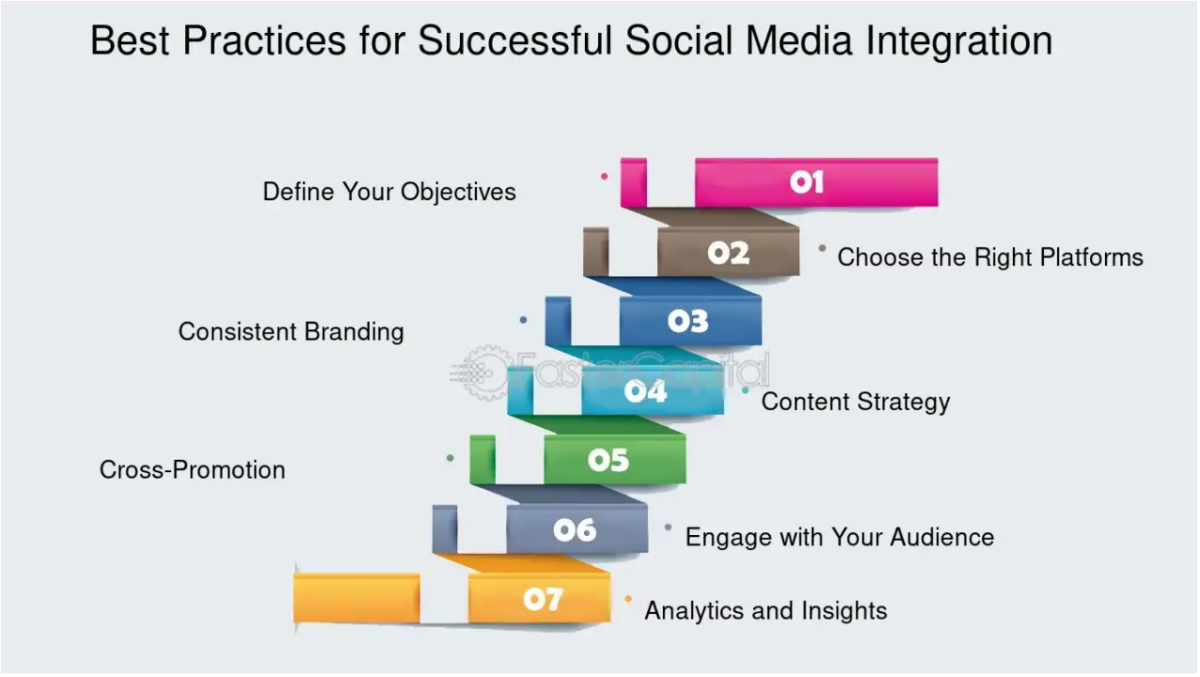
Creating an integrated strategy requires five core steps: define your audience and goals, audit existing assets, map content to the customer journey, select the right platforms and formats, and establish feedback loops between your social and content efforts.
Think of this as constructing a sturdy building—you need a solid foundation and a clear plan.
Step 1: Define Your Audience and Goals
Before you create a single piece of content or schedule a social post, you must know who you’re trying to reach and what you want them to do.
Audience Considerations:
- Demographics and psychographics
- Pain points and aspirations
- Preferred content formats
- Social platforms they actually use
Goal Setting Framework:
| Goal Type | Example Metrics | Content Focus | Social Focus |
|---|---|---|---|
| Brand Awareness | Reach, impressions, mentions | Educational blog posts, videos | Shareable content, hashtag campaigns |
| Lead Generation | Conversions, email signups | Gated content, case studies | Lead ads, landing page traffic |
| Customer Retention | Engagement rate, repeat visits | How-to guides, advanced tips | Community building, UGC |
| Thought Leadership | Backlinks, speaking invites | Original research, opinion pieces | LinkedIn articles, Twitter threads |
This clarity is your North Star, guiding all subsequent decisions.
Step 2: Audit Your Existing Content and Social Presence
Take an honest look at what you already have.
Content Audit Questions:
- Which blog posts are performing well?
- Which content is outdated and needs refreshing?
- Where are the gaps aligned with audience needs?
- What content assets could be repurposed for social?
Social Media Audit Questions:
- Which platforms drive the most engagement?
- What types of posts resonate best?
- Are your profiles optimized and consistent?
- Where is your audience most active?
This audit reveals strengths to leverage and weaknesses to address, providing a baseline for your integrated efforts.
Step 3: Map the Customer Journey to Content Touchpoints
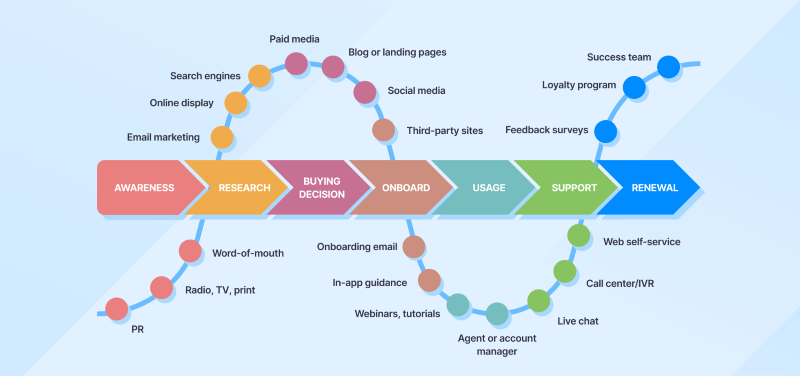
Your audience doesn’t wake up and immediately buy from you. They go on a journey: Awareness, Consideration, Decision, and Retention.
| Journey Stage | Content Types | Social Tactics | Goal |
|---|---|---|---|
| Awareness | Blog posts, infographics, short videos | Shareable posts, Reels, hashtag campaigns | Attract new audiences |
| Consideration | Webinars, case studies, comparison guides | LinkedIn articles, targeted ads, Q&A sessions | Educate and nurture |
| Decision | Testimonials, demos, free trials | Retargeting ads, DM conversations, social proof | Convert to customers |
| Retention | Exclusive content, advanced tutorials | Private groups, UGC campaigns, loyalty programs | Build advocates |
This mapping ensures your content and social efforts stay relevant to where your potential customer is in their journey.
Step 4: Identify Key Platforms and Content Formats
You don’t need to be everywhere. Based on your audience and goals, choose the platforms where your target audience spends time and is most receptive to your message.
Platform-Content Fit:
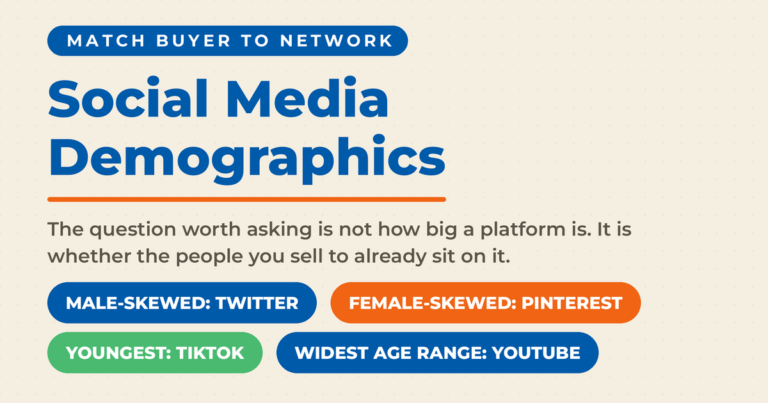
| Platform | Best Content Types | Audience Characteristics |
|---|---|---|
| Professional articles, B2B insights, carousel posts | Decision-makers, professionals | |
| Visual content, Reels, Stories | Younger demographics, lifestyle-focused | |
| TikTok | Short-form video, trends, educational content | Gen Z, millennial audiences |
| YouTube | Long-form tutorials, video marketing | Research-oriented viewers |
| Twitter/X | Quick updates, threads, news | Real-time conversation seekers |
| Infographics, how-to pins, inspiration | Planning and discovery audiences |
Tailor your content distribution—don’t just copy-paste the same content everywhere.
Step 5: Set Up a Feedback Loop Between Content and Social
This is crucial for continuous improvement. Your social media efforts gather invaluable real-time feedback: comments, questions, trending topics, and audience sentiment.
How the Feedback Loop Works:
- Social → Content: Questions and comments on social posts become blog topic ideas
- Content → Social: Blog performance data informs which content to promote more heavily
- Both Ways: Trending topics inform rapid content creation for social and future blog posts
Build time into your schedule to review social insights before content planning sessions.
How Does Content Marketing Support an Integrated Strategy?
Content marketing provides the foundation for your entire integrated strategy. Without valuable, shareable content, your social media presence becomes an empty stage. High-quality content gives you something worth sharing, establishes authority, and drives organic traffic that compounds over time.
What Makes Content High-Value and Shareable?
Your primary goal should always be providing genuine value. What problems can you solve? What questions can you answer? What insights can you offer?
When you create content that genuinely helps, informs, or entertains, it inherently becomes shareable. This isn’t just about SEO—it’s about building goodwill and establishing yourself as a trusted resource.
According to HubSpot’s research, brands that prioritize blogging see 13x more ROI than brands that don’t. Think quality over quantity, always.
Why Is Long-Form Content Your Authority Builder?
Long-form content is your secret weapon for establishing deep expertise and driving organic search traffic. A comprehensive blog post (1,500+ words), detailed whitepaper, or insightful ebook allows you to delve deeply into complex topics.
These pillar pieces are often too extensive for a single social post, but they provide a wealth of information that can be broken down and promoted across various platforms over time. I call this the “content pyramid” approach—start with one substantial piece and create multiple derivative assets. I’ve written extensively about this in Digital Threads, my definitive digital marketing playbook.
Why Does Visual Content Capture Attention?
In a scroll-heavy world, visuals are paramount. According to research, blog posts that include video attract 3x more inbound links and can increase organic traffic by up to 157%.
Visual Content Types That Perform:
- Infographics that simplify complex data
- Short-form videos for TikTok, Reels, and YouTube Shorts
- High-quality images with text overlays
- Carousel posts that tell a story
- Data visualizations and charts
Platforms like Instagram, Pinterest, and TikTok are built on visual communication, making these formats non-negotiable for any integrated strategy. For infographics, let the data pick the format. Timelines, comparisons, how-to processes, and maps are four of the seven types of infographics, and each suits a different kind of information.
How Does Interactive Content Engage Your Audience?
Want to truly engage your audience? Make them part of the experience.
Interactive Content Ideas:
- Quizzes that test knowledge and offer personalized results
- Polls on LinkedIn that gather opinions and generate discussions
- Calculators that provide instant value
- Interactive assessments
- Surveys that inform future content
This type of content is incredibly shareable, sparks conversation on social media, and gathers valuable data about your audience’s preferences.
What’s the Best Way to Repurpose Content?
This is where integration truly shines. Don’t let your content live and die as a single blog post.
The Repurposing Framework:
| Original Asset | Derivative Content |
|---|---|
| 1 Webinar | Transcribed blog series, quote graphics, short video clips, podcast episode, slide deck |
| 1 Blog Post | Social snippets, infographic, carousel post, email series, video summary |
| 1 Podcast Episode | Blog summary, audiogram clips, quote cards, newsletter feature |
| 1 Research Report | Multiple blog posts, data visualizations, social statistics, webinar presentation |
This maximizes your content’s shelf life and ensures you’re extracting every drop of value from your creation efforts. Learn more about effective content repurposing strategies.
How Does Social Media Support an Integrated Strategy?
Social media serves as the distribution engine, community builder, and feedback mechanism for your content strategy. It amplifies reach, drives traffic to owned content, gathers audience insights that inform future content, and builds the community that sustains long-term engagement.
How Do You Use Social as a Distribution Engine?
Social platforms are powerful distribution channels. They allow you to share links to blog posts, videos, and lead magnets, driving traffic back to your owned properties. If one of those properties is an online store, this guide to improving online sales with social media content covers how to turn that traffic into orders.
Crucially, they enable you to segment your audience and target your content effectively. With marketers spending an average of $46.47 per user to reach social audiences through paid media, understanding how to maximize both organic and paid distribution is essential.
Why Is Audience Engagement Critical?
Social media is a two-way street. It’s not just about broadcasting your content—it’s about listening, responding, and fostering genuine connections.
Engagement Best Practices:
- Respond to comments within hours, not days
- Ask questions that invite discussion
- Run Q&A sessions on Stories and Lives
- Share behind-the-scenes content
- Celebrate your community members
This builds a loyal community around your brand, making your audience more receptive to your content and more likely to share it.
What Role Does Content Curation Play?
An effective social presence isn’t just about sharing your content. It’s about sharing valuable content from industry leaders, news sources, and complementary businesses.
This positions your brand as a helpful resource, not just a self-promoter. Curated content adds value to your feed, keeps your audience engaged, and saves you from constantly creating new material from scratch. Need inspiration? Check out my post on 27 different social media content ideas.
How Do You Turn Social Signals into Content Ideas?
Your social channels are a goldmine of audience insights. Pay attention to:
- Questions people ask in comments and DMs
- Challenges they mention repeatedly
- Topics trending in your niche
- What competitors are sharing that resonates
- Sentiment around your posts
These “social signals” are direct indicators of what content your audience craves, providing an endless source of ideas for your content creation process.
When Should You Use Paid Social?
While organic reach continues to decline, paid social advertising offers a powerful way to put your best content in front of highly specific audiences.
Paid Social Strategy Tips:
- Amplify your best-performing organic content
- Use retargeting for warm audiences
- Drive traffic to lead magnets and gated content
- A/B test ad creative using your top-performing social posts
- Track social media ROI carefully
Paid social acts as a turbocharger for your content distribution, ensuring your carefully crafted messages don’t get lost in the noise.
What Are Practical Integration Strategies That Work?
Let’s get down to the brass tacks of how to make this integration happen day-to-day.
How Do You Harmonize Your Editorial Calendar?
Your content and social media calendars should be intricately linked. When planning a major blog post or video release, concurrently plan a series of social posts across platforms to promote it.
This isn’t about scheduling the link once—it’s about creating a multi-faceted promotional campaign that unfolds over days or weeks.
Integrated Calendar Components:
- Content publication dates
- Social promotion schedule for each piece
- Repurposed content creation timeline
- Community engagement activities
- Paid amplification schedule
For help building your calendar, explore my guide to content marketing platforms.
What Does a Weekly Workflow Look Like?
Here’s a practical example. Imagine you’ve just published a cornerstone blog post on email marketing strategies:
| Day | Action | Platform |
|---|---|---|
| Day 1 (Publish) | Share full article link with compelling copy | All platforms |
| Day 2 | Extract key strategy as a carousel post | Instagram, LinkedIn |
| Day 3 | Create 60-second tip video | TikTok, Reels, Shorts |
| Day 4 | Pose a discussion question linking back to article | Twitter, LinkedIn |
| Day 5 | Design an infographic highlighting one concept | Pinterest, LinkedIn |
| Week 2 | Recycle key points, create poll, share user experiences | Varied |
| Week 3+ | Evergreen reshares with fresh angles | Scheduled rotation |
This systematic approach ensures maximum exposure for every piece of content.
How Do You Leverage User-Generated Content?
User-generated content is authentic, trustworthy, and incredibly powerful. In fact, UGC-powered campaigns see a 29% boost in web conversions on average.
Encourage your audience to share their experiences with your product or service—or react to your content—using specific hashtags. Reposting UGC on your social channels validates your audience and provides fresh, relatable content.
What Is Social-First Content?
While repurposing is key, some content should be designed specifically for a platform’s native experience:
- Short, engaging videos exclusively for TikTok or Reels
- Live Q&A sessions on Instagram or LinkedIn
- Twitter threads that tell a complete story
- LinkedIn newsletters for professional insights
This is about participating in the platform’s culture and delivering value in its preferred format—what I call “Platform Authentic Content” in Digital Threads.
How Do You Make Content Easy to Share?
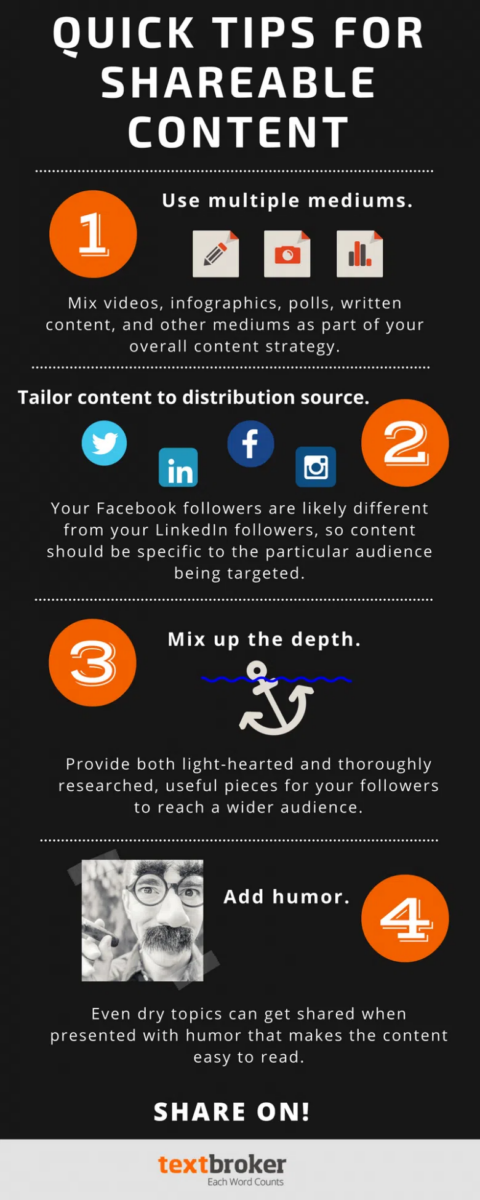
Make it easy for your audience to share your content:
- Add prominent social sharing buttons to blog posts
- Include “click-to-tweet” excerpts within long-form content
- Create shareable quote graphics within articles
- Embed relevant social feeds on your website
The less friction, the more likely your content will be shared.
How Do You Measure Integrated Content and Social Media Performance?
Measure integrated performance by tracking how social media drives traffic to content (website visits, time on page, bounce rate from social referrals), conversion rates from social campaigns, and how engagement correlates with business goals like leads and sales.
Don’t just track likes and shares. The true measure of integration is seeing how these two channels collectively contribute to your business goals.
What Metrics Matter for Integrated Performance?
| Metric Category | Content Metrics | Social Metrics | Integrated View |
|---|---|---|---|
| Traffic | Organic sessions, page views | Social referral traffic | % of content traffic from social |
| Engagement | Time on page, bounce rate | Likes, comments, shares | Social engagement → content consumption |
| Conversion | Lead form fills, downloads | Click-through rate, lead ads | Attribution across touchpoints |
| Brand | Backlinks, domain authority | Mentions, sentiment | Overall brand visibility |
How Do You Use UTM Parameters?
Tag all social links with UTM parameters to precisely track impact:
- Source: facebook, linkedin, instagram, etc.
- Medium: social, paid_social, organic
- Campaign: specific promotion name
- Content: post type or creative variant
This data reveals which social channels and content combinations drive the most valuable traffic. Learn more in my comprehensive social media marketing statistics guide.
What Are Common Pitfalls to Avoid?
Even with the best intentions, it’s easy to stumble. Be mindful of these common mistakes:
1. Treating Content and Social as Separate Silos
The biggest pitfall. If your content team and social media team aren’t communicating and working towards shared goals, you’re missing the entire point. Break down these walls—or if you’re a solo operator, ensure you’re thinking holistically.
2. Spreading Yourself Too Thin Across Platforms
Don’t try to be everywhere at once. It’s better to excel on 2-3 key platforms where your audience is most active than to have a lackluster presence across seven. Focus for maximum impact.
3. Ignoring Audience Feedback
If your audience is telling you what they want through comments, questions, or engagement patterns—listen! Failing to incorporate social insights into your content strategy is like having a direct line to market research and choosing not to pick up the phone.
4. Failing to Track and Adapt
Marketing is not “set it and forget it.” Regularly review performance data, analyze what’s working and what isn’t, and be willing to pivot.
5. Creating Content Without a Distribution Plan
I see this constantly. Marketers create beautiful content and then wonder why no one sees it. Before you create any content, know exactly how you’ll promote it across social channels. Distribution should be planned before creation, not after.
Frequently Asked Questions About Social Media and Content Marketing Integration
Content marketing focuses on creating valuable, long-form resources (blogs, videos, ebooks) hosted on owned platforms to attract and retain audiences. Social media marketing uses social platforms to distribute content, engage audiences, and build community. Content is the substance; social media is the amplification channel.
Choose platforms based on where your target audience actively spends time and engages with content. B2B marketers typically see best results on LinkedIn, while B2C brands often perform better on Instagram, TikTok, or Facebook. Start with 2-3 platforms and expand only when you’ve mastered those.
You can share the same core content multiple times, but vary the format and angle. A single blog post can be promoted 10+ times over several months using different excerpts, visuals, and hooks. Track engagement to find optimal frequency for your audience.
Extract key takeaways as standalone posts, turn statistics into graphics, create short video summaries, develop carousel posts from step-by-step sections, and pull quotes for shareable images. Each blog post should generate at least 5-10 derivative social assets.
Track how social media drives traffic to your content (social referral traffic in Google Analytics), monitor engagement metrics on both channels, and measure conversion rates from social-driven visitors. The ultimate measure is whether your integrated efforts contribute to business goals like leads and revenue.
Your Integrated Marketing Journey Starts Now
The distinction between content marketing and social media marketing is blurring—and that’s a good thing. By embracing a unified approach, you’re not just doing more; you’re doing better.
You’re building a more coherent brand story, reaching your audience more effectively, fostering deeper connections, and achieving greater marketing success.
Stop asking which one to choose. Start asking how they can empower each other.
The integrated approach is all about having a strategic mindset that will define your digital success for years to come.
Ready to get started? Begin with a content audit, identify your top-performing pieces, and create a plan to amplify them across your social channels. Then establish that feedback loop where social insights inform your next content creation cycle.
The marketers who win in 2026 and beyond are the ones who stop seeing social media and content marketing as separate line items—and start seeing them as one powerful, integrated engine for growth.
If you need any help on your journey, feel free to reach out to me for assistance with your digital marketing strategy.