
This post looks at examples of marketers creatively merging public relations (PR) and social media to achieve exposure for their brand, with a little background on the ongoing convergence of social and traditional PR as it once was.
Compared to public relations, social media is the new kid on the block. Since the early 2000s, social media has been a game changer, thanks to smartphones and the post-Myspace networks like Facebook and Twitter and, later on, Instagram and Snapchat.
PR, on the other hand, is a stalwart of the marketing communications world. It hasn’t disappeared (thankfully for those of us who work in it). Instead, PR has developed to include social media as an effective communications tool.
These days, for brands’ PR departments, whether they’re launching their campaigns, promoting new products, or fire-fighting following bad press, social media is often the first place they go to if they want to gain coverage quickly and get their message to resonate with new audiences. The efforts that land are the ones scoped as campaigns from the start, with a goal, a window, and a measure attached, which is what this guide to planning a social media campaign walks through.
In spite of the relative infancy of digital-age PR, some companies and their agencies have grasped the medium so well that their successes are well worth knowing about. So let this collection of the very brightest social-PR campaigns inspire your next one.
Key Takeaways
✅ Give the audience one simple thing to do. Nominating friends for the Ice Bucket Challenge and tweeting animal emoji for #EndangeredEmoji handed people a small, visible way to take part in the cause.
✅ Go where the audience you need already spends time. WWF took #LastSelfie to Snapchat because the brief was millennials, and its success came from reaching a younger generation on a relatively new platform.
✅ Let the format carry the message. The Like My Addiction account posed as an ordinary young woman’s Instagram feed. The clue to its real purpose, a drink in her hand in every post, sat in plain sight.
✅ Celebrity involvement gave two of these campaigns their biggest lift. #EndangeredEmoji took off once Russell Crowe and Jenson Button joined in, and Ice Bucket Challenge mentions peaked after Justin Bieber did it.
✅ The biggest campaigns spread past the group that started them. Other charities picked up the Ice Bucket Challenge, and #ThisGirlCan drew in organisations ranging from small sports clubs to the English Football Association.
World Wildlife Fund creates #LastSelfie campaign to connect with millennials
The brief
Engage with millennials on social media to raise awareness of the planet’s most endangered species.
What did they do?
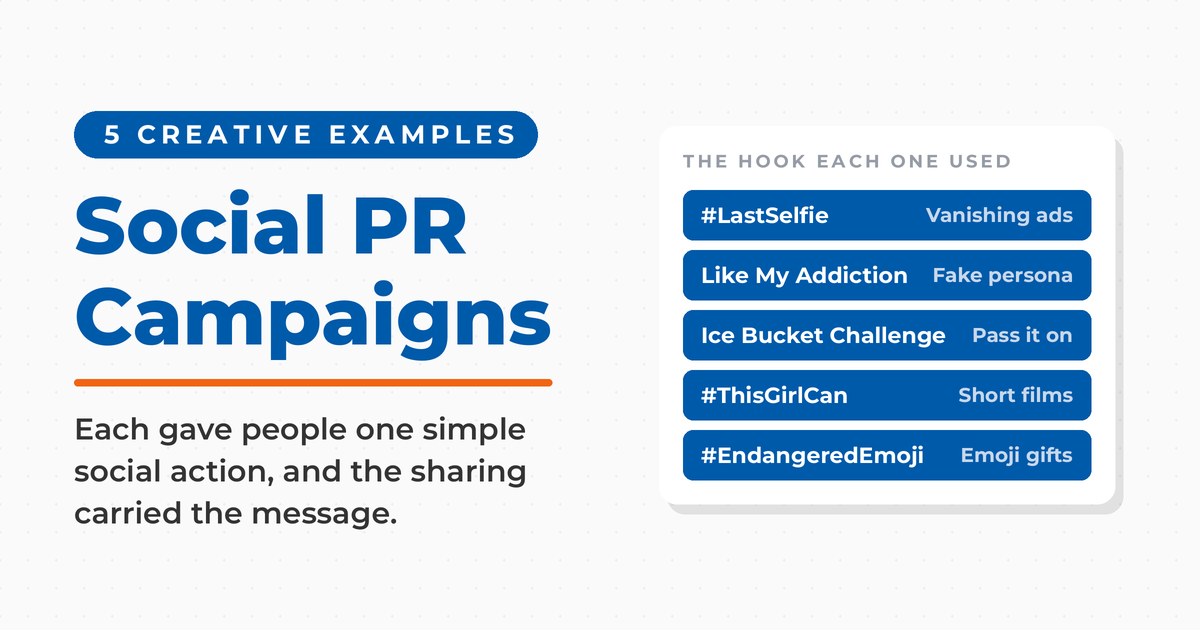
The campaign utilised Snapchat and jumped on the selfie trend to send users ads featuring one of five endangered animals along with the message: “Don’t let this by my #lastselfie”.
The idea was to ensure Snapchat users saw each image for just a few seconds before it disappeared, illustrating the plight of the animals that are at risk of being wiped off the face of the earth.
Did it work?
50% of all Twitter users (120 million users) saw this campaign from WWF, which resulted in 40,000 tweets about the topic across the globe. Its success came from being able to target a younger generation using a relatively new platform to make an impact. Reach like that across two networks at once is easier to plan for when each channel gets its own version of the message, which is what a social media cross-promotion strategy sets out.
It was a huge success, gained lots of attention and won plenty of prestigious awards, including a Webby Award for People’s Choice: Social Media Campaign in 2015.
Like My Addiction from Addict Aide
The brief
Highlight hidden addiction amongst young people.
What did they do?
When Louise Delage racked up over 50,000 Instagram likes in just a couple of months, not many people took that much notice. After all, there are loads of fun-loving young people out there with social media accounts bursting at the seams with enviable shots of beaches and tasty dinners.
But this was different. Louise wasn’t actually a real person. All of her pictures were staged by a production company for Addict Aide, who wanted to raise awareness of alcoholism amongst young people.
The account had been set up to highlight the hidden dangers of excessive drinking among young people. The giveaway? She had a drink in her hand in every post.
To make it work, each post had 20-30 hashtags to ensure the content was discoverable. Louise’s account was set up to be following a certain number of key influencers who, in turn, could help drive users to her account.
The game was given away thanks to a post outlining what had been happening…
Did it work?
The campaign generated over 140 articles discussing its merits. The final video has been viewed over 317,000 times on Instagram alone at the time of writing.
The #IceBucketChallenge to help fund breakthrough ALS research
The brief
Raise awareness of amyotrophic lateral sclerosis (ALS).
What did they do?
This initiative, which involved people nominating others to throw buckets of freezing cold water over their heads, started off as a small PR project in Massachusetts in 2014.
Did it work?
It’s safe to say it took off – The Ice Bucket Challenge went viral with mentions peaking at over 1.3 million in 24 hours after Justin Bieber did the challenge twice over one weekend in August 2014.
The LinkedIn Playbook for Real Business Growth
My latest book helps professionals, entrepreneurs, and business owners turn LinkedIn from a static profile into a real source of clients and growth.
Maximizing LinkedIn for Business Growth gives you clear, practical steps to build a profile that gets noticed and a network that actually sends business your way.
Grab your copy on Amazon and put it to work this week. Click the cover or the button below to get started.

Not only did The Ice Bucket Challenge help raise awareness of ALS; other charities also used it to promote their causes, with many people participating and donating to the Motor Neurone Disease Association in the UK.
The ALS Association raised $100 million thanks to The Ice Bucket Challenge. The Motor Neurone Disease Association raised $7 million.
#ThisGirlCan
The brief
Sport England wanted to get women interested in exercising and fitness after it found that fewer than 2mil 14 to 40-year-old women exercise. Despite many claiming they want to be more active.
What did they do?
They produced a number of short films to inspire women to take part in sport and developed an accompanying social media campaign with the hashtag #ThisGirlCan.
Did it work?
One 90-second ad has been viewed more than 37 million times on YouTube and Facebook. The campaign has developed an active social media community of over 500,000. There have been over 660,000 tweets about it so far.
It’s proven to be a highly successful campaign. 8,000 organisations got involved, from smaller sports clubs to the English Football Association (FA). While the gender gap between women and men exercising regularly has fallen from 1.78 million to 1.73 million.
Another fantastic example of PR using social media to make an undoubted contribution to a great cause. Charities and other mission-driven organizations can apply the same thinking to their everyday channels, and a written nonprofit social media strategy is where that work starts.
World Wildlife Fund creates #EndangeredEmoji campaign to highlight plight of endangered animals
The brief
Connect with a younger audience and highlight the plight of endangered species.
What did they do?
WWF found that 17 characters in the emoji alphabet represented endangered animals. So it sought to translate the popularity of the characters into charitable donations through an innovative campaign.
Initially, WWF tweeted to announce its plan, before asking anyone who wanted to be involved to retweet the initial post to raise awareness. Which also acted as a signal that they wanted to donate.
For every emoji of an endangered animal tweeted, WWF added 10 cents to a voluntary monthly donation. Then, at the end of each month, it provided users with a summary of their endangered animal emoji usage.
Did it work?
The campaign resulted in 559,000 mentions and 59,000 sign-ups between May and August 2015. But it really took off when key influencers and celebrities, including actor Russell Crowe and Formula One driver Jenson Button, got involved.
Frequently Asked Questions About Social Media for PR
It is the use of social platforms to earn attention and coverage for a brand or a cause. PR teams turn to social media to launch campaigns, promote new products, and respond after bad press, often before any other channel.
Social media marketing covers the ongoing work of building an audience and turning it into business results. Social media PR focuses on earned attention, getting people, press and other organizations to talk about a story and pass it along.
Each of the five campaigns above tied a clear cause to a format built for its platform. The most widely shared ones also gave people a simple way to join in, such as a nomination or a retweet.
Decide on the measure before launch, then track it for the length of the campaign. The campaigns in this post reported mentions, tweets, video views, press articles, sign-ups and money raised. Each figure only means something against the goal the campaign set out to reach.
Putting Social Media for PR to Work
Start with one cause or story your organization can credibly own, then give people one small, visible way to take part in it. Choose the platform by where the audience you need already spends time, and build the format for that platform rather than reposting the same asset everywhere. Set the measure before launch, and line up the partners, supporters or creators who could carry the campaign further before you need them.
The attention a campaign earns on social lasts longer when your email list and your search presence are ready to catch it. Neal Schaffer’s book Digital Threads covers how those channels fit together, and the free preview of Digital Threads is an easy place to start. If your organization needs someone to own that plan rather than advise on it, Neal’s fractional CMO services are one way to fill the gap.