
Twitter marketing means building genuine relationships on X (formerly Twitter) to drive measurable business results. Sizing the platform honestly takes an extra sentence, because X has published no global user count since going private in 2022. Its own ad tools showed 586 million reachable users in January 2025, which is a reach figure rather than a user count. Either way the audience is large enough to make this one of the strongest channels available for real-time conversations and B2B visibility.
But here’s the problem: most businesses treat the platform like a megaphone. They broadcast promotions, ignore replies, and wonder why nothing happens.
I’ve been working in social media marketing for over a decade. As a Fractional CMO, keynote speaker, author of six books including Maximize Your Social and The Age of Influence, and someone who teaches digital marketing at universities around the world, I’ve watched countless brands fail on Twitter for one simple reason. They forget it’s a conversation tool, not a billboard.
I’m also a legacy verified Twitter user with over 200,000 followers, built through the same strategies I’m sharing in this guide. So this isn’t theory. It’s what actually works.
The truth? Twitter rewards authentic relationship building. You need a system that balances content creation with daily micro-actions that expand your reach. Research from Sprout Social shows that 91% of consumers believe social media has the power to connect people, yet most companies still post and ghost.
This guide shows you how to build a sustainable Twitter marketing strategy that actually works.
Key Takeaways
✅ X advertising reach stood at 586 million in January 2025, the most defensible size figure available, since no global user count has been published since 2022
✅ X Premium accounts show higher engagement rates (0.4%) compared to free accounts (0.15% median)
✅ The 60-30-10 content rule works: 60% educational, 30% curated with your perspective, 10% promotional
✅ Video content and threads significantly outperform text-only posts for engagement and reach
✅ Daily micro-actions (replies, comments, mentions) compound into genuine visibility over time
What Is Twitter Marketing?
Twitter marketing is how businesses use the X platform to build relationships, share expertise, and drive measurable results. It’s not about chasing follower counts.
The platform is still one of the largest open publishing surfaces on the internet, and that is real distribution if you approach it strategically.
What works is treating Twitter as a conversation tool. You publish valuable content, engage meaningfully with your audience, and participate in relevant discussions happening in real time.
Most marketers focus on posting frequency. They miss the bigger picture.
Success comes from balancing content creation with daily micro-actions like replying to mentions, commenting on industry discussions, and sharing others’ insights with your perspective added. These small actions compound over time into genuine visibility and authority.
Why Does Twitter Marketing Still Matter?
Twitter delivers results other platforms can’t match. The real-time nature creates opportunities for immediate visibility and direct conversation with your target audience.
Here’s what the data shows:
| Metric | Figure and Date | Source |
|---|---|---|
| Advertising Reach | 586 million ad reach (Jan 2025) | Data Reportal |
| Daily Active Users | 237.8 million Last Reported mDAU (Q2 2022) | PR Newswire |
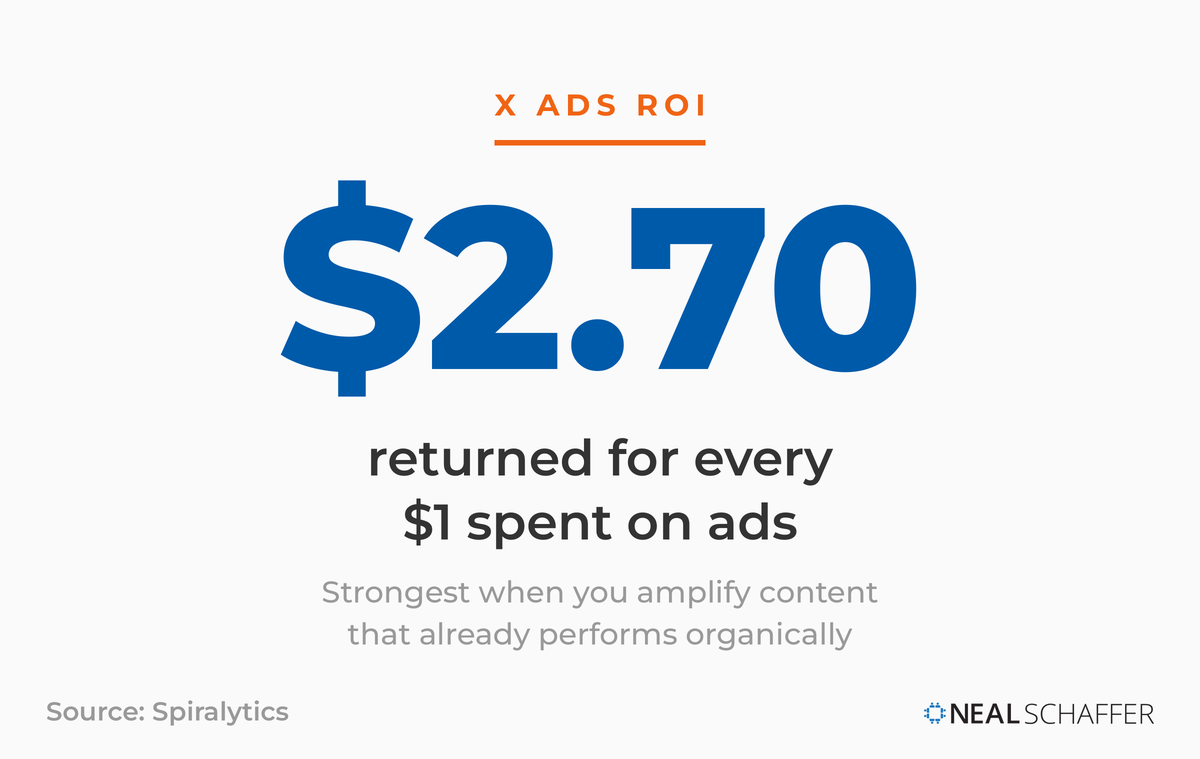
| Average Ad ROI | $2.70 per $1 spent | Spiralytics |
| Ad Revenue (2024) | $1.94-3.14 billion | Backlinko |
The platform excels at three things: real-time conversations, content distribution, and B2B relationship building. If your marketing needs any of these, Twitter belongs in your strategy. Real-time is the piece most brands get wrong, because the trending list they react to is personalized to them rather than to their market, and my guide to Twitter trends covers how to read that list before you decide to join anything.
According to Pew Research, X stands out as a place people go to keep up with politics and breaking news. That means engaged, attentive users who actually read content.
How Should You Audit Your Twitter Account?
Start by reviewing what’s actually working. Most businesses skip this step and build strategies on assumptions rather than data.
Open your Twitter analytics dashboard. Look at your last 90 days of performance. For a complete walkthrough, check out my guide on how to conduct your own Twitter audit.
Profile Performance Review
Check your profile visits and follower growth rate. Are people finding you? Are they choosing to follow after viewing your profile?
Review your bio, header image, and pinned post. Do they clearly communicate what you offer and why someone should follow?
Your profile is your first impression. Make it count.
Make LinkedIn Your Best Source of Clients
My latest book helps professionals, entrepreneurs, and business owners turn LinkedIn from a static profile into a real source of clients and growth.
Maximizing LinkedIn for Business Growth gives you clear, practical steps to build a profile that gets noticed and a network that actually sends business your way.
Grab your copy on Amazon and put it to work this week. Click the cover or the button below to get started.

Content Performance Analysis
Identify your top 10 posts by impressions, engagement rate, and link clicks. What patterns emerge? X search can also handle finding your top tweets, and the same method works on a competitor’s account.
Look for common elements in your best content: topics, formats, tone, length, and posting times.
Note which content types fell flat. You’ll stop wasting time on what doesn’t work. I recommend using social media analytics tools to dig deeper into these patterns.
Engagement Patterns
Track when your audience is most active. According to Sprout Social’s analysis, the best times to post on X vary by industry, but weekday mornings (particularly Tuesdays through Thursdays between 9 AM-12 PM) tend to perform well.
Review your reply rate. How often do you respond to comments and mentions? Quick, genuine responses build relationships.
Check who’s engaging with you most. These superfans deserve special attention and recognition.
How Do You Define Your Brand Voice on Twitter?
Your brand voice separates you from competitors. It’s how you sound across all your tweets, replies, and threads.
Most brands sound like corporate robots. That’s a mistake.
People connect with personality, not press releases. Your voice should reflect your company values while remaining conversational and human. I’ve written extensively about brand voice development if you want to go deeper.
Voice Characteristics to Define
| Element | Questions to Answer |
|---|---|
| Formality | Professional or casual? Both work, but pick one and stay consistent |
| Tone | Helpful educator, witty commentator, industry challenger, or supportive community builder? |
| Language | Industry jargon or simple explanations? Technical audiences appreciate precision; broader audiences need clarity |
| Perspective | First person (we/I) or third person? Personal or company-focused? |
Voice Documentation
Write guidelines for your team. Include specific examples of phrases you use and avoid.
Create a list of 10-15 words that capture your brand personality. Reference this when writing tweets.
Document how you handle different situations: customer complaints, industry news, competitor mentions, and community celebrations.
What Goals Should You Set for Twitter Marketing?
Generic goals like “increase engagement” waste time. You need specific targets tied to business outcomes.
Map your Twitter objectives to customer journey stages. Different metrics matter at each stage.
| Journey Stage | Primary Metrics | What Success Looks Like |
|---|---|---|
| Awareness | Impressions, Profile Visits | Growing reach to new potential customers |
| Consideration | Engagement Rate, Replies | Meaningful conversations happening |
| Conversion | Link Clicks, Traffic | Driving qualified visitors to your site |
| Loyalty | Mentions, Community Growth | Customers advocating for your brand |
Choose 2-3 primary metrics per quarter. Track them weekly. Adjust tactics based on what moves the numbers.
For a deeper look at connecting social activity to business results, read my guide on measuring social media ROI.
How Should You Optimize Your Twitter Profile?
Your profile works 24/7 to convert visitors into followers. Most profiles fail this basic job. If you are starting from zero rather than fixing an account you already have, the walkthrough on how to create a Twitter account covers the sign-up steps and the profile fields worth filling in before your first post.
Think about it: every activity you do on Twitter leads people back to your profile. Have you spent even a fraction of the time businesses invest in their websites thinking about your Twitter profile?
Bio Optimization
Your bio has 160 characters to explain what you do and why it matters. Make every word count.
Include your value proposition first. What problem do you solve? Who do you help?
Add 1-2 relevant keywords naturally. This helps people find you in searches. I’ve covered this in detail in my Twitter SEO guide.
End with a call to action or link to your latest offer.
Visual Elements
Your profile photo should be your logo or professional headshot. Use high contrast colors for visibility in feeds.
Your header image has prime real estate: 1500×500 pixels. Showcase your product, team, or brand message.
Pin your best-performing post or current promotion. This is the first content visitors see. Here is how to pin a tweet, along with ideas for what deserves the spot.
What Content Types Work Best on Twitter?
Content creation determines everything else. Without valuable posts, no strategy succeeds.
The key is building a sustainable content system, not relying on daily inspiration.
Threads Drive Growth
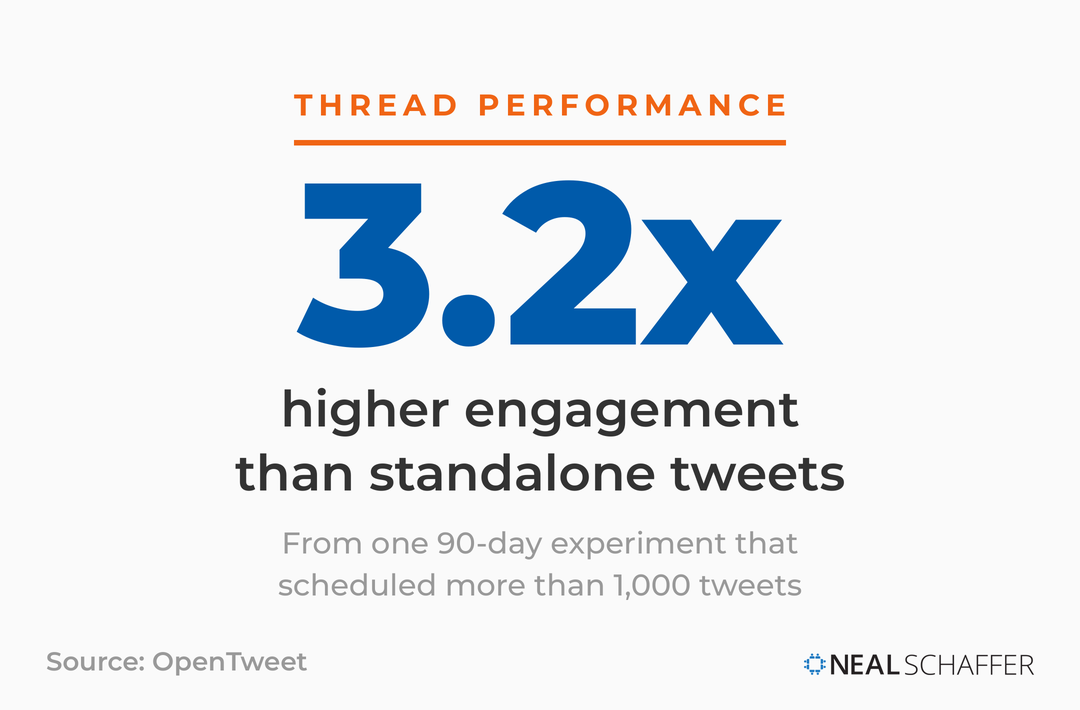
Threads allow deeper exploration of topics while maintaining a platform-native format. In one 90-day experiment that scheduled more than 1,000 tweets, threads of four to seven tweets drove 3.2x higher engagement than standalone posts.
Why? Threads keep people engaged longer, signal expertise to the algorithm, and encourage saves and shares. I’ve written a complete guide on creating engaging Twitter threads.
Video Commands Attention
Short clips under 60 seconds work best. Show your product in action, share quick tips, or offer behind-the-scenes glimpses. If you have not uploaded video to X before, start with how to tweet a video.
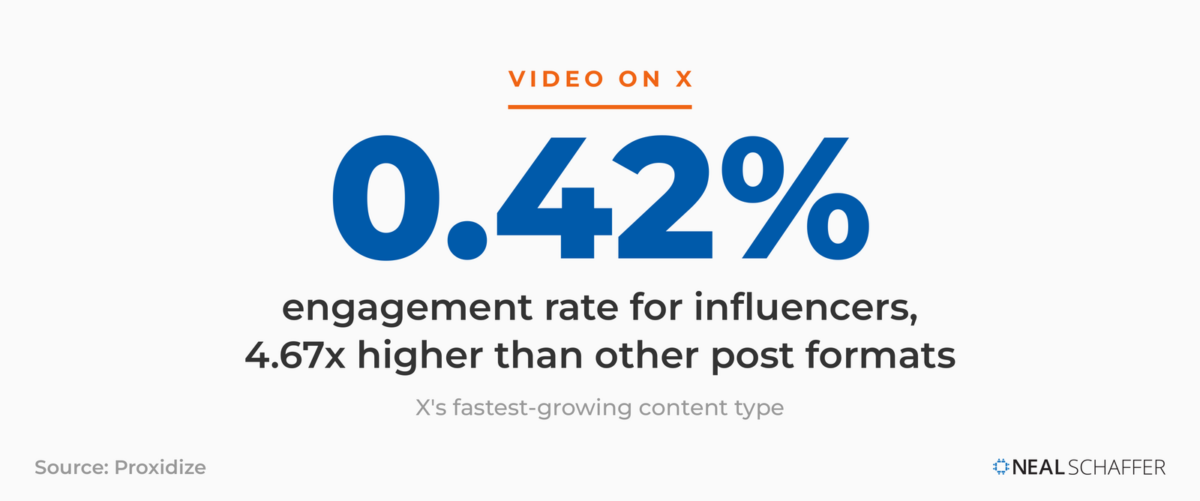
According to Proxidize research, video achieves 0.42% engagement for influencers, which is 4.67 times higher than other post formats.
Visual Posts Outperform Text
Images, graphics, charts, and screenshots stop the scroll. Text-only posts simply don’t compete.
Polls Drive Participation
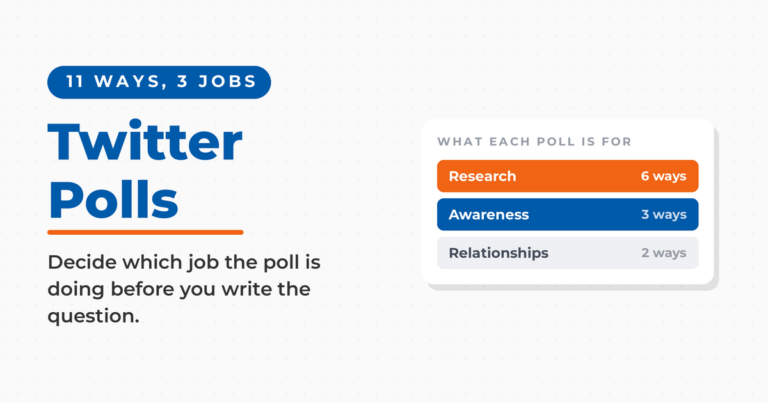
Polls drive engagement through participation. Ask your audience about preferences, challenges, or opinions related to your industry. For creative examples, check out my article on Twitter polls for marketing.
How Should You Plan Your Content Strategy?
Strategy connects individual posts into coherent marketing. Without it, you’re just shouting into the void.
The 60-30-10 Content Rule
Use this framework for content planning:
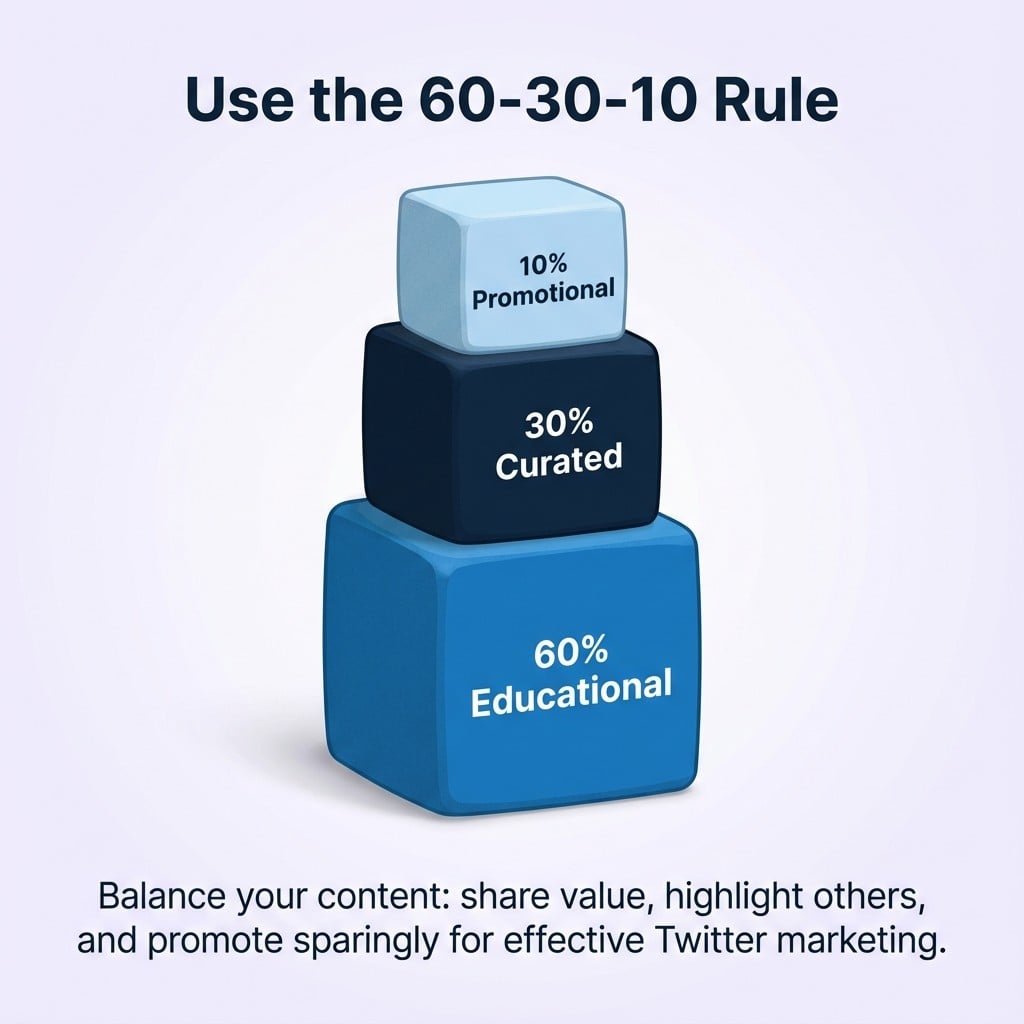
| Content Type | Percentage | Purpose |
|---|---|---|
| Educational | 60% | Establish expertise with how-to guides, industry insights, practical tips |
| Curated | 30% | Share others’ insights with your perspective added |
| Promotional | 10% | Announce products, share case studies, highlight customer wins |
This balance keeps your audience engaged without making them feel sold to constantly.
Content Calendar Planning
Plan content in weekly batches. This maintains consistency without daily stress.
Schedule posts for optimal times based on your audience analytics. Buffer’s research analyzed over 1 million posts and found that engagement rates vary significantly by time and day.
Build an evergreen tweet bank by repurposing your best content. For strategies on maximizing older content, read my guide on evergreen tweets.
Writing Effective Tweets
Lead with your strongest point. People scan quickly.
Keep sentences short. Mobile users dominate Twitter. Long paragraphs don’t work.
Use line breaks for readability. Wall-of-text tweets get ignored.
The standard character limit remains 280 characters for regular users, while X Premium subscribers can post up to 25,000 characters per tweet.
How Do You Build Engagement and Community?
Posting content is half the job. Engaging with your community is the other half. Several of the platform’s own features exist for exactly this, and my walkthrough of the Twitter features worth using now covers when and why to reach for the quote tweet instead of the plain repost.
Most brands publish and disappear. They miss the relationship-building opportunities that drive real results.
Daily Engagement Actions
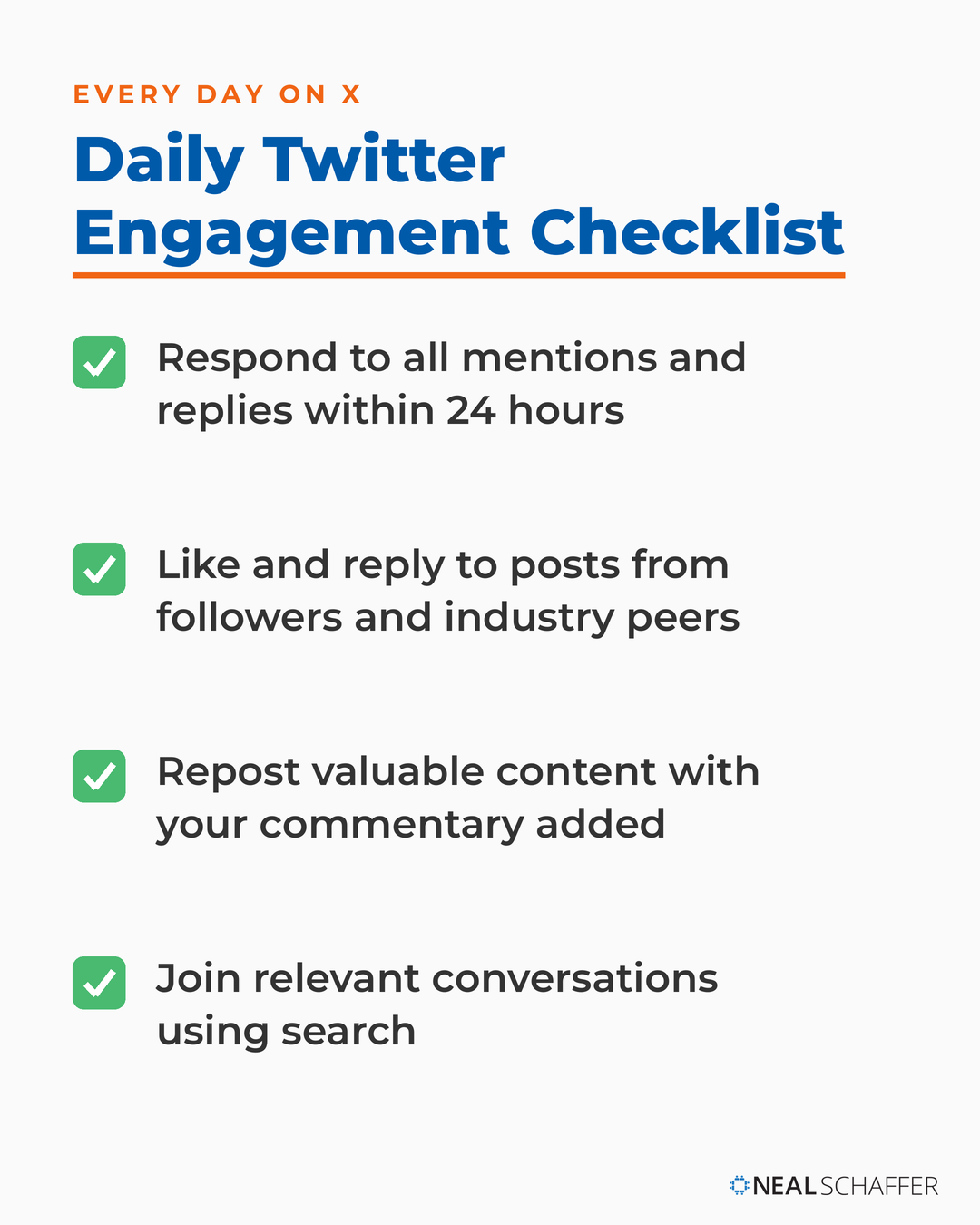
- Respond to all mentions and replies within 24 hours
- Like and reply to posts from followers and industry peers
- Repost valuable content with your commentary added
- Join relevant conversations using search
For more tactics, see my guide on increasing Twitter engagement.
Community Building Tactics
Recognize and celebrate your most engaged followers. Feature their content, thank them publicly, or highlight their successes.
Host Twitter Spaces for live audio conversations. According to X’s official documentation, Spaces let anyone join, listen, and speak in live audio conversations. This creates deeper connections than text alone, and my complete guide to Twitter Spaces walks through the host, speaker, and listener roles before you schedule your first one.
Create or join Twitter Communities around your niche. These focused groups drive higher engagement rates.
Run contests or giveaways that require engagement. For best practices, check out my Twitter giveaways guide.
What Tools Should You Use for Twitter Marketing?
The right tools multiply your effectiveness without increasing time investment.
| Tool Category | Options | Best For |
|---|---|---|
| Scheduling | Buffer, Hootsuite, Later | Consistent posting without manual work |
| Analytics | Sprout Social, Metricool | Deeper insights and team collaboration |
| Design | Canva, Adobe Express | Visual content creation |
| Research | BuzzSumo, Tweet Hunter | Finding trending topics and high-performing content |
| Listening | Brand24, Mention | Tracking conversations about your brand |
For a complete breakdown, see my roundup of Twitter tools for marketing, and if you work from a desktop browser, the Twitter extensions for Google Chrome worth installing.
Tool Selection Criteria
Start with free tools if you’re new. Upgrade when you hit limitations.
Prioritize tools that save time on repetitive tasks: scheduling, analytics reporting, and content creation.
Avoid automation tools that send generic replies or follow/unfollow users automatically. These damage your reputation and violate Twitter’s terms.
Should You Pay for X Premium?
X Premium (formerly Twitter Blue) offers benefits that might justify the cost for serious marketers. For a fuller verdict than the summary below, see this X Premium review, which weighs whether the subscription is worth it in 2026.
According to Buffer’s analysis of 18 million+ posts, Premium accounts show higher engagement rates. The median for Premium accounts moved from about 0.3% in late 2024 to 0.4% by mid-2025. Free accounts stayed flat around 0.15%.
| Feature | Basic ($3/mo) | Premium ($8/mo) | Premium+ ($16/mo) |
|---|---|---|---|
| Blue Checkmark | ❌ | ✅ | ✅ |
| Edit Posts | ✅ | ✅ | ✅ |
| Longer Posts (25K characters) | ✅ | ✅ | ✅ |
| Longer Video Uploads | ✅ | ✅ | ✅ |
| Ad-Free Experience | ❌ | ⚠️ Half Ads | ✅ No Ads (For You) |
| Priority Ranking | 🔸 Small Boost | 🔹 Larger Boost | 💎 Largest Boost |
Pricing via X Premium FAQ
The priority ranking in replies and search could make Premium worth it for businesses actively building visibility. But the fundamentals of good content and genuine engagement matter more than any subscription.
How Do You Use Twitter Ads Strategically?
Organic reach has limits. Paid promotion extends your best content to new audiences.
Twitter Ads work best when you promote content that already performs well organically. Amplify winners, don’t try to save losers. These Twitter advertising tips walk through campaign setup, ad copy, and what to track once an ad is live.
Campaign Types
- Promoted tweets: Boost individual posts to targeted audiences for announcements, content promotion, or event awareness
- Follower campaigns: Grow your audience with qualified accounts by targeting users following competitors or interested in relevant topics
- Website click campaigns: Drive traffic to specific landing pages for lead generation and sales
- Video view campaigns: Increase brand awareness through visual storytelling
Targeting Options
According to X’s creative specifications, you can target by:
- Demographics: location, age, gender, language
- Interests: people who engage with specific topics
- Follower lookalikes: users similar to your current followers or competitor audiences
- Keywords: users tweeting about specific terms
The average ad ROI of $2.70 per dollar spent beats many paid channels when targeting is done correctly.
How Do You Measure Twitter Marketing ROI?
Twitter marketing must connect to business results. Engagement metrics are nice. Revenue metrics matter.
Track how Twitter traffic converts on your website. Use UTM parameters on all links to see performance in Google Analytics. Before those links go out, set up Twitter Cards so each one displays a large preview image rather than a bare URL. For a single campaign link, you can also tweet a link with a custom preview image by building a Website Card.
Key Metrics to Monitor
| Metric Type | What to Track | Why It Matters |
|---|---|---|
| Reach | Impressions, Profile Visits | Shows visibility growth |
| Engagement | Likes, Replies, Reposts, Engagement Rate | Indicates content resonance |
| Traffic | Link Clicks, Website Sessions | Connects to business outcomes |
| Conversion | Email Signups, Demos, Sales | Proves actual ROI |
Note: The median engagement rate on X decreased from 0.029% in 2024 to 0.015% in 2025 according to RivalIQ data via Sprout Social. Benchmark your performance against industry averages, not arbitrary targets.
Attribution Tracking
Set up conversion tracking for key actions: email signups, demo requests, purchases, and downloads.
Compare Twitter’s conversion rate to other channels. This shows relative value.
Track customer acquisition cost from Twitter. Factor in time spent, tool costs, and ad spend.
Frequently Asked Questions About Twitter Marketing
Consistency matters more than frequency. Start with 1-2 quality posts daily, then adjust based on your analytics and capacity. Posting 10 times daily without responding to comments wastes opportunities. Balance content creation with engagement actions.
The median engagement rate on X in 2025 is approximately 0.015% for most accounts. X Premium accounts trend higher at around 0.3-0.4%. Sports teams and entertainment brands typically see higher rates. Compare your performance to industry benchmarks, not arbitrary targets.
Yes. X remains strong for B2B relationship building, thought leadership, and real-time industry conversations. Many B2B marketers find Twitter more effective than Instagram or TikTok for reaching decision-makers and participating in professional discussions.
Hashtags help your content appear in search results and topic feeds. Use 1-2 relevant hashtags per tweet. More than that looks spammy and reduces engagement. Mix popular industry hashtags with niche-specific tags to balance reach with relevance.
It depends on your goals. The priority ranking in replies and search, longer post capability, and analytics features justify the cost for businesses actively building visibility. Buffer’s research shows Premium accounts get higher engagement rates on average. But fundamentals matter more than subscriptions.
Your Twitter Marketing Action Plan
You now have a complete framework for Twitter marketing success. Implementation separates reading from results.
Week 1: Complete your profile audit. Understand your current performance before changing anything.
Week 2: Define your brand voice and content pillars. These guide every decision you make.
Week 3: Build your content calendar using proven formats: threads, video, visual posts, and polls. Schedule consistently.
Week 4 and beyond: Engage daily. Reply to mentions, join conversations, and recognize your community members. Track metrics weekly and adjust based on what your data shows.
The reality? Twitter marketing works when you focus on relationships over reach. Serve your audience first. Results follow.
But here’s what separates the accounts that grow from the ones that stall: actually starting.
Most people read guides like this, nod along, and never change a thing. Don’t be most people. Open Twitter right now and look at your profile with fresh eyes. Does your bio clearly communicate what you offer? Is your pinned post worth pinning? If not, fix it today. Not next week.
I’ve built an audience of over 200,000 followers using the strategies in this guide. It didn’t happen overnight, and it won’t for you either. But it started with one profile tweak, one quality thread, one genuine reply.
Your turn.
Go deeper:
- How to conduct a Twitter audit (start here)
- Twitter vs Threads (understand where X fits your strategy)
- Social media management tools (scale what works)