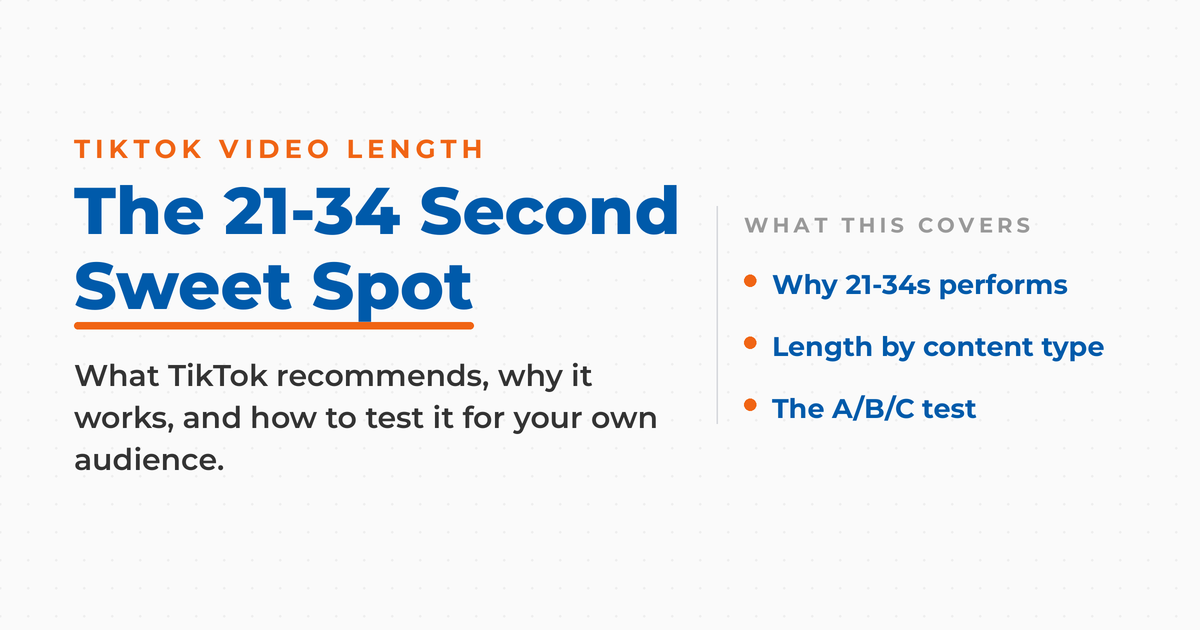

Most creators obsess over content ideas and trending audio, but they’re missing the most crucial element: timing. TikTok themselves say that the sweet spot for in-feed advertising sits between 21 and 34 seconds. This isn’t just another social media “hack” – this data comes straight from the source!
I’ve been watching social platforms evolve for over 15 years, and TikTok’s algorithm is particularly unforgiving when it comes to viewer retention. Unlike other platforms where longer content can build authority, TikTok rewards videos that people watch completely. That 30-second mark isn’t arbitrary – it’s where viewer attention typically starts to wane, and the algorithm takes notice.
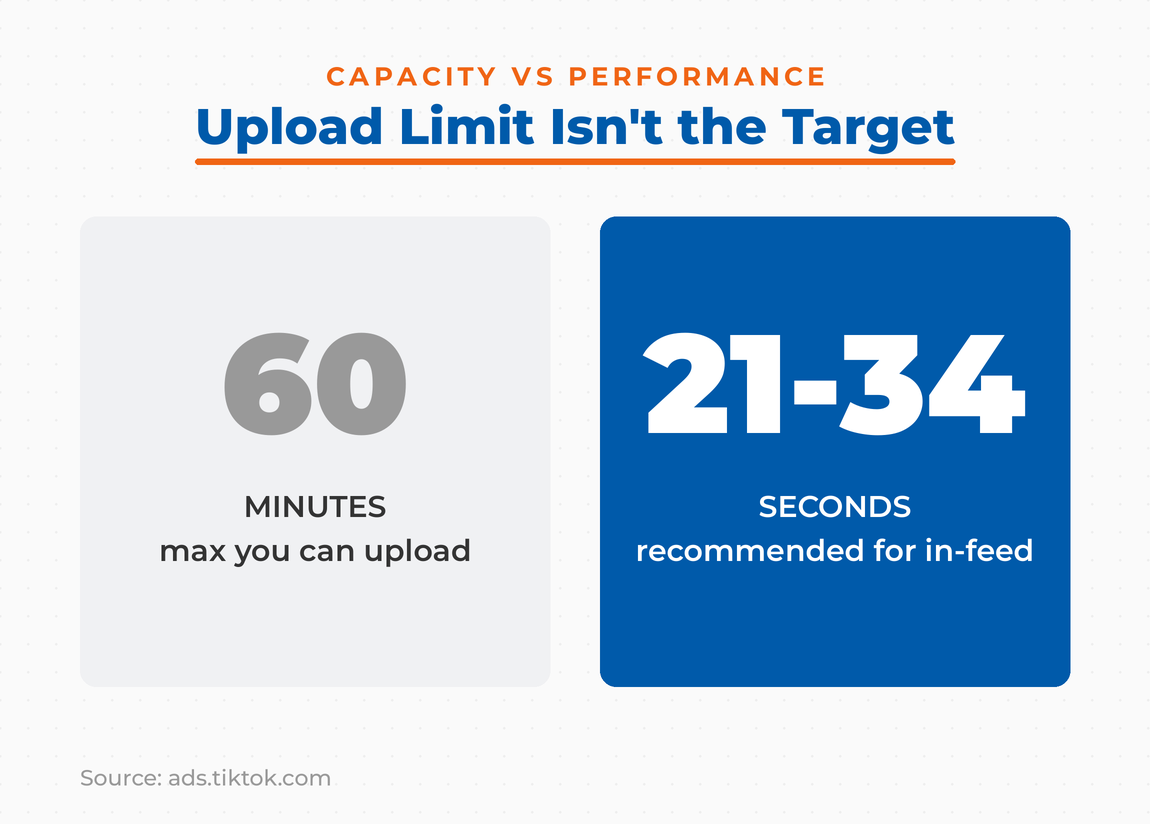
The key is understanding what TikTok actually measures. While you can upload videos up to 60 minutes long, the platform’s recommendation system prioritizes completion rates, engagement velocity, and replay value. A 25-second video that gets watched three times will always outperform a 3-minute video that loses viewers halfway through.
We’ll examine the specific data behind optimal video lengths, break down the technical constraints you’re working within, and give you a practical framework for testing what works best for your specific audience. No guesswork, just proven strategies that align with how the platform actually operates.
Key Takeaways
✅ The 21-34 second range is TikTok’s advertising sweet spot: long enough to land one complete idea, short enough to hold attention through the finish.
✅ Completion rate beats view count. A 25-second video watched to the end tells the algorithm far more than a 3-minute video most people abandon halfway.
✅ Front-load the value. Your opening seconds decide whether viewers stay, so put the payoff early instead of saving it for the end.
✅ Match length to content type: 15-25 seconds for quick tips, 30-45 seconds for how-to, 45-60 seconds for storytelling. One idea per video outperforms three crammed together.
✅ Treat 60 seconds as your practical ceiling for organic reach, even though TikTok lets you record up to 10 minutes in-app and upload videos up to 60 minutes.
✅ Test before you commit. Post the same concept at 15, 30, and 45 seconds, then let completion rate and profile visits, not raw views, show you what your audience wants.
The Algorithm’s Sweet Spot: Why 21-34 Seconds Works
Videos between 21 and 34 seconds allows you to deliver a complete thought while maintaining the rapid-fire pacing that keeps viewers engaged.
The magic happens in those first few seconds. Successful videos hook viewers immediately in the first 3 seconds and help increase viewer retention.
Here’s what happens when you nail this length: viewers watch your entire video, often multiple times, and the algorithm interprets this as high-quality content worth promoting. The result? Your video gets pushed to more For You pages, creating a snowball effect of organic reach.
| Video Length | Completion Rate Impact | Best Use Case |
| 15-20 seconds | High completion, limited storytelling | Quick tips, single concepts |
| 21-34 seconds | Optimal balance for virality | Complete ideas with strong hooks |
| 35-60 seconds | Good engagement with right content | Educational content, tutorials |
| 1-3 minutes | Lower completion, niche audiences | Deep explanations, storytelling |
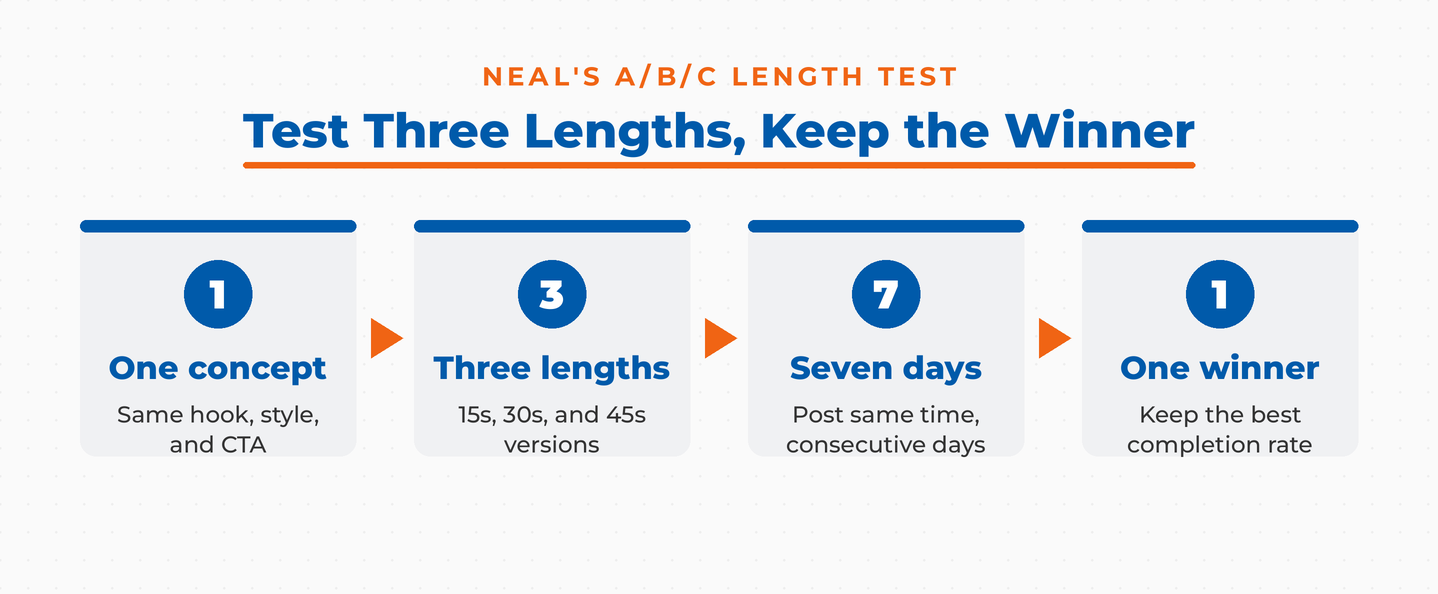
Test this yourself: create three versions of the same content at 15, 30, and 45 seconds. Post them at similar times and track which version gets the best completion rate in your analytics. You’ll likely see the 30-second version outperform the others, especially if you front-load value in those crucial opening moments. Of course, your results might vary based on your niche and unique audience.
Technical Limits and Strategic Constraints
TikTok currently allows videos from 1 second up to 10 minutes, but these technical possibilities don’t align with algorithmic preferences. The platform gives you the rope to hang yourself, content-wise. Just because you can make a 10-minute video doesn’t mean you should, especially if your goal is organic reach and engagement.
For business accounts and content creators focused on growth, think of the 60-second mark as your practical ceiling. Beyond that, you’re fighting against natural viewing behavior and algorithm bias. Most experts will tell you that videos between 15 and 60 seconds consistently perform best for organic content, with that 21-34 second range leading the pack.
The editing constraints are equally important. Your first cut should happen within 3 seconds, then ideally maintain that rapid editing pace throughout. This isn’t about being hyperactive – it’s about matching the platform’s natural rhythm. Users expect quick cuts, scene changes, and visual variety. Static shots longer than 5 seconds might hurt your retention rate, unless you’re a famous TikToker with a large following where your fans are infatuated with you.
- Upload range: 1 second to 10 minutes maximum
- Optimal range for organic reach: 15-60 seconds
- Peak performance zone: 21-34 seconds
- Maximum static shot duration: 3-5 seconds
- Hook timing requirement: First 3 seconds
Set up your CapCut or editing app with these constraints in mind. Create templates that naturally fit the 30-second structure, with predetermined cut points every 4-5 seconds. This approach removes guesswork and ensures you’re working within the algorithm’s preferences rather than against them.
Content Strategy Framework for Different Video Lengths
Not every piece of content fits the same mold, and understanding when to deviate from the 21-34 second rule requires strategic thinking. Educational content might need 45-60 seconds or longer, while trending dance videos work best at 15-20 seconds. The key is matching content type to optimal duration. One format sits outside this math entirely: TikTok Stories are capped at 15 seconds and expire in 24 hours, so they are judged by your followers rather than by the For You algorithm — which is exactly why they are a useful place to test a hook before you build a full feed video around it.
For business content, I recommend the “layered value” approach: deliver one complete insight in 30 seconds, then create follow-up videos that dive deeper. This gives you the algorithmic benefit of shorter content while building a content series that establishes expertise over time. It’s more effective than cramming everything into one longer video.

| Content Type | Optimal Length | Structure Strategy |
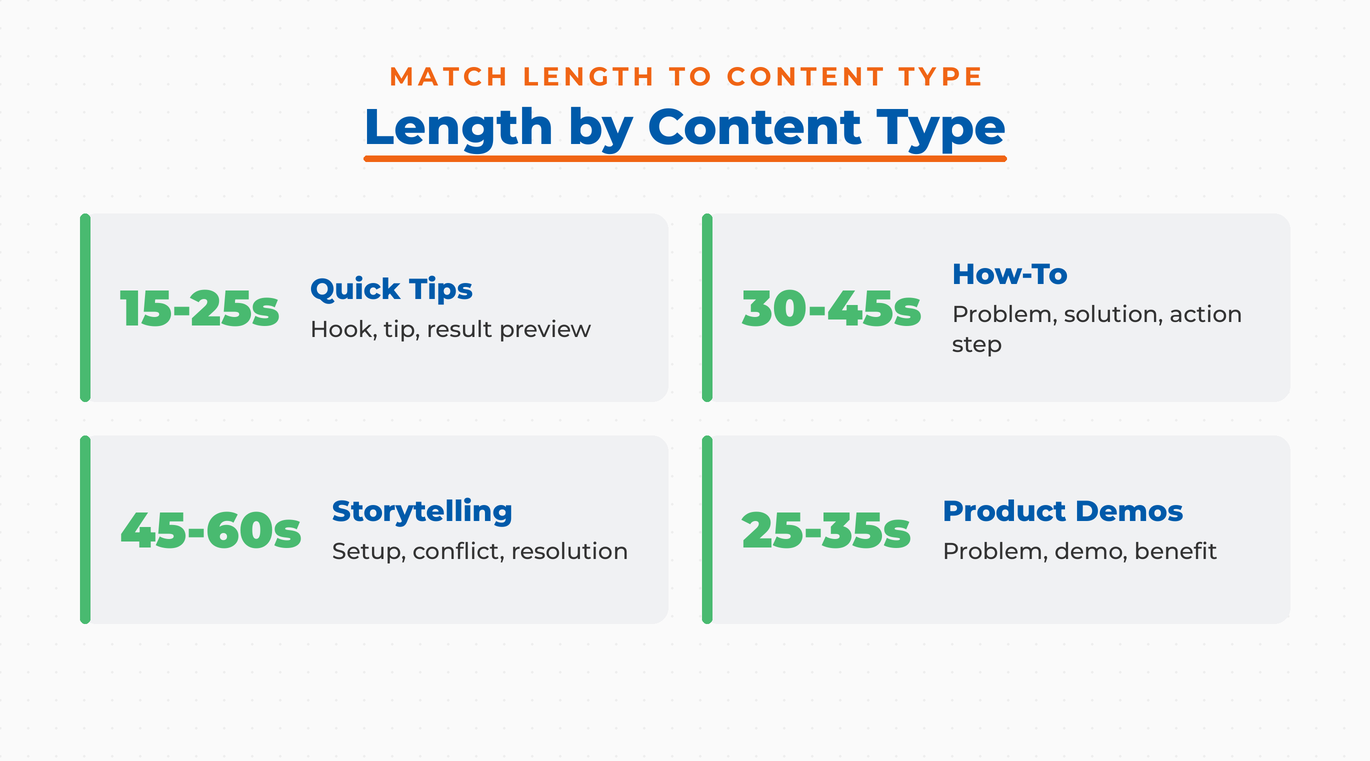
| Quick Tips | 15-25 seconds | Hook → Tip → Result preview |
| How-To Content | 30-45 seconds | Problem → Solution → Action step |
| Storytelling | 45-60 seconds | Setup → Conflict → Resolution |
| Product Demos | 25-35 seconds | Problem → Demo → Benefit |
| Behind-Scenes | 20-40 seconds | Context → Process → Insight |
Track your performance across different content types and lengths using TikTok’s built-in analytics. Look specifically at the “Average watch time” metric – if it’s below 50% of your video length, you need to either shorten the content or improve your hook and pacing.
Create content batches using this framework: film one longer explanation, then edit it into multiple shorter segments. This maximizes your content output while ensuring each piece fits the optimal length parameters. One filming session can yield 3-4 properly formatted TikToks instead of one underperforming longer video.
Testing and Optimization Strategy
Data beats intuition every time, especially on TikTok where algorithm changes can shift performance overnight. Set up a systematic testing approach: choose one variable to test at a time, maintain consistent posting times, and give each test at least 7 days to generate meaningful data.
Start with the A/B/C length test I mentioned earlier. Take your best-performing content concept and create three versions: 15 seconds, 30 seconds, and 45 seconds. Keep everything else identical – same hook, same visual style, same call-to-action. Post them on consecutive days at the same time, then compare completion rates after a week.
Your analytics will tell the real story. Open TikTok Analytics, go to the “Content” tab, and sort by “Profile view rate” rather than just views or likes. This metric indicates how compelling your content was – viewers who check out your profile after watching are highly engaged and valuable for long-term growth.
One Strategy to Connect All Your Marketing
My latest book helps small businesses, entrepreneurs, and marketers bring search, email, and social together into one digital marketing strategy that actually compounds.
Drawing on my work as a Fractional CMO, Digital Threads turns complicated tactics into a clear, practical plan you can follow, whatever your budget or team size.
Grab your copy on Amazon and start weaving your own digital threads. Click the cover or the button below to get started.

- Identify your top 3 content themes based on current performance
- Create length variations for each theme (20s, 30s, 40s versions)
- Post variations across different days, same posting time
- Track completion rate, replay rate, and profile visits for each
- Double down on the winning length for each content type
Use TikTok Analytics to dive deeper into audience retention graphs. These show you exactly where viewers drop off, helping you identify whether your problem is hook strength, mid-content pacing, or overall length. Most creators skip this step and miss crucial optimization opportunities.
Document your findings in a simple spreadsheet: content type, length, completion rate, and performance notes. After 30 days of testing, you’ll have a clear playbook for your specific audience rather than relying on general best practices that might not apply to your niche.
Advanced Timing Strategies
Once you’ve mastered the basic length optimization, advanced creators focus on micro-timing within their videos. The rhythm of your cuts, the pacing of your speech, and even the timing of text overlays can impact whether viewers complete your video or scroll away.
Professional TikTok creators often use the “three-beat rule” – major visual or audio changes every 3-4 seconds, with a significant shift (new scene, text overlay, or audio change) every 10-12 seconds. This creates natural viewing checkpoints that keep attention locked throughout the entire duration.
Audio pacing matters as much as visual cuts. If you’re speaking to camera, aim for 140-160 words per minute – fast enough to maintain energy, slow enough to be clearly understood. Avoid long pauses or slow transitions in the opening seconds. Use quick cuts, brisk camera movements, or energetic music to keep the energy high. This helps maintain momentum and prevents viewers from scrolling away.
Important: The 21-34 second range works because it matches natural attention spans, not because of any arbitrary algorithm programming. Focus on completing thoughts within this timeframe rather than padding or cutting content unnaturally.
Consider the viewing context too. Most TikTok consumption happens during transition moments – waiting in line, commuting, or taking quick breaks. Your content needs to deliver complete value within these micro-moments of attention. A 30-second video that teaches one clear concept will always outperform a 60-second video that tries to cover three topics superficially.
For service-based businesses and consultants, use this timing to establish expertise efficiently. One focused insight per video, delivered clearly in 25-30 seconds, builds more credibility than rambling explanations that lose viewers halfway through. Quality of attention matters more than quantity of time.
Measuring Success Beyond Views
Views are vanity metrics on TikTok – completion rate and engagement velocity tell the real story of content performance. A video with 10,000 views and 80% completion rate is more valuable than one with 50,000 views and 30% completion rate. The algorithm recognizes this difference and promotes accordingly.
Track these metrics weekly: completion rate (aim for 70%+), replay rate (15%+ is strong), and comment-to-view ratio (2%+ indicates high engagement). These numbers matter more than follower count for actual business impact and long-term growth on the platform.
Set up your measurement system before you start optimizing. Use TikTok’s native analytics for baseline data, then layer in engagement quality metrics. Screenshot your analytics weekly to track trends over time – the platform’s interface doesn’t provide historical comparison tools.
| Metric | Good Performance | Excellent Performance |
| Completion Rate | 65-75% | 80%+ |
| Replay Rate | 10-15% | 20%+ |
| Comment Rate | 1-2% | 3%+ |
| Profile Visit Rate | 2-3% | 5%+ |
The real business impact comes from profile visits and follower quality, not raw view counts. A video that drives 100 profile visits from engaged viewers beats one that generates 1000 passive views every time. Optimize for attention quality, and the quantity follows naturally.
Remember that TikTok success compounds over time. Consistent performance at the 21-34 second sweet spot builds algorithmic trust, leading to better distribution for all your future content. It’s a long-term strategy disguised as a simple timing decision.
Frequently Asked Questions
The 21-34 second range performs best for most content. It gives you enough time to deliver one complete idea while keeping the pacing tight enough that viewers watch to the end, which is the signal the algorithm rewards most.
You can record up to 10 minutes directly in the TikTok app and upload pre-recorded videos up to 60 minutes long. Just because you can post a long video does not mean the algorithm will reward it with reach.
Not automatically. What matters is completion rate, so a short video watched to the end beats a long one that loses viewers partway through. The shortest length that fully delivers your point is usually the strongest choice.
Aim for 25 to 45 seconds and cover one clear insight per video. This builds credibility faster than a rambling explanation, and you can turn a single topic into a series of follow-up videos that deepen your expertise over time.
Your hook needs to land in the first 3 seconds. That opening is where viewers decide to stay or scroll, so promise clear value immediately and make your first cut fast rather than easing in slowly.
Put These TikTok Video Length Tips to Work
After 15 years advising businesses on social, I keep coming back to one lesson. The creators who win on TikTok are the ones who respect the viewer’s time. Aim for 21 to 34 seconds, deliver one complete idea, and cut the moment your point lands. Then let your own completion-rate data, not a generic best practice, tell you where to adjust for your niche.
The length is only the starting point. Once your timing is dialed in, the next lever is distribution, so learning how to get more views on TikTok is the logical next step. Nail the timing, keep testing, and let the algorithm reward the content that people actually finish.