
Most marketers are flying blind. They post content, watch the likes trickle in, and wonder why the needle isn’t moving. Meanwhile, their customers are out there, on Reddit threads, in Instagram comments, on TikTok stitches, telling them exactly what they want and don’t want. The brands that hear those conversations win. The ones that don’t keep guessing.
That’s the gap social listening closes. After teaching social media marketing at Rutgers Business School and UCLA Extension, working as a Fractional CMO with companies of various sizes, and writing six books on digital and social media marketing including Maximize Your Social and the recently published Digital Threads, I’ve watched too many brands skip this step. They build content calendars without knowing what their audience cares about. They launch campaigns without checking if the message resonates. And then they wonder why competitors keep eating their lunch.
Here’s the thing: you don’t need a six-figure research budget to fix this. You need to listen.
Let me walk you through what social listening really is, why it matters more than ever in 2026, and how to do it without losing your mind in a sea of mentions.
Key Takeaways
✅ Social listening is the practice of analyzing online conversations about your brand, competitors, and industry to inform business strategy.
✅ Listening differs from monitoring: monitoring tracks individual mentions, while listening identifies patterns and the “why” behind what people are saying.
✅ Social listening has crossed from early-adopter tactic to a standard line item in serious social media programs, and the brands skipping it are losing ground every quarter.
✅ The biggest wins come from connecting listening insights to other functions: product, customer service, sales, and competitive strategy.
✅ AI has reshaped social listening in 2026, with sentiment analysis, multimedia monitoring, and predictive analytics now table stakes for any serious tool.
What Is Social Listening?
Social listening is the practice of tracking and analyzing online conversations about your brand, competitors, industry, and customers across social media, blogs, forums, podcasts, and review sites. The goal is to extract actionable insights that inform marketing, product, and customer experience decisions, not just to count mentions or react to individual posts.
The term gets thrown around a lot, often interchangeably with “social media monitoring.” They are not the same thing, and I’ll get to that in a minute. But at its core, social listening is the audience research method most marketers underuse.
Think about what your customers say when they’re not talking to you. They post on X about a frustrating experience. They tell their friends in a Facebook group why they switched brands. They drop a five-star review on Google but mention one nagging issue. They make a TikTok comparing your product to a competitor. Each of those moments contains data. Listening tools collect it. Listening as a discipline makes sense of it.
Educational platforms describe social listening in similar terms. Coursera frames it as analyzing online consumer behavior across social channels to understand sentiment and inform marketing. Where most brands fall short is the analysis part. They install a tool, watch the dashboard fill with mentions, and never connect those mentions to a real business decision.
How Is Social Listening Different From Social Media Monitoring?
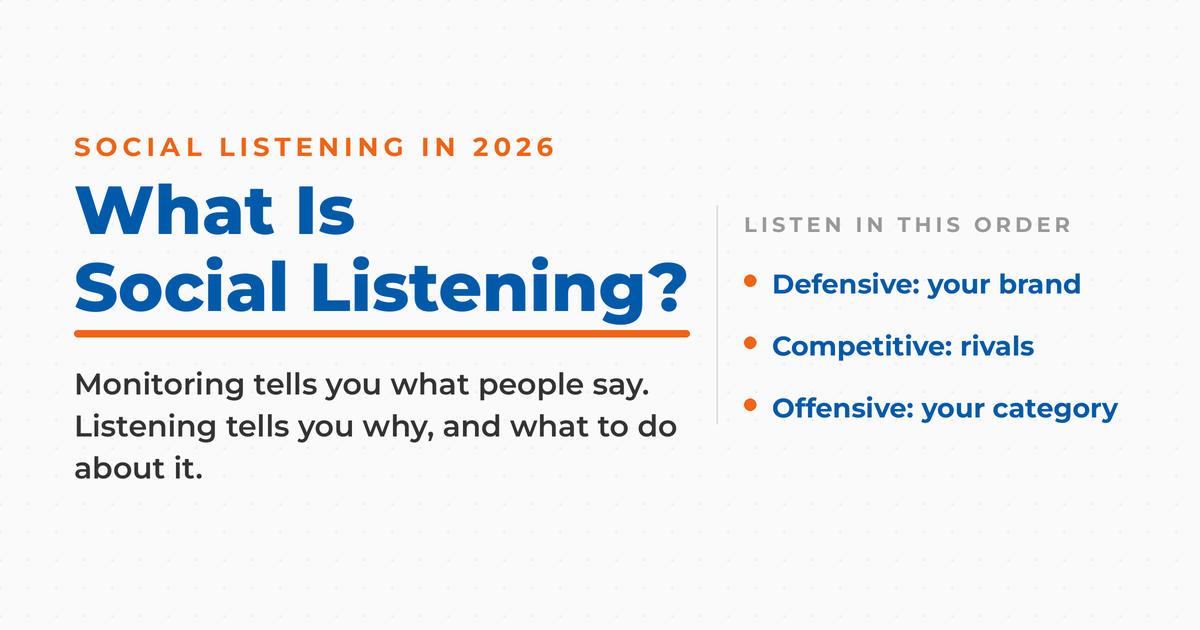
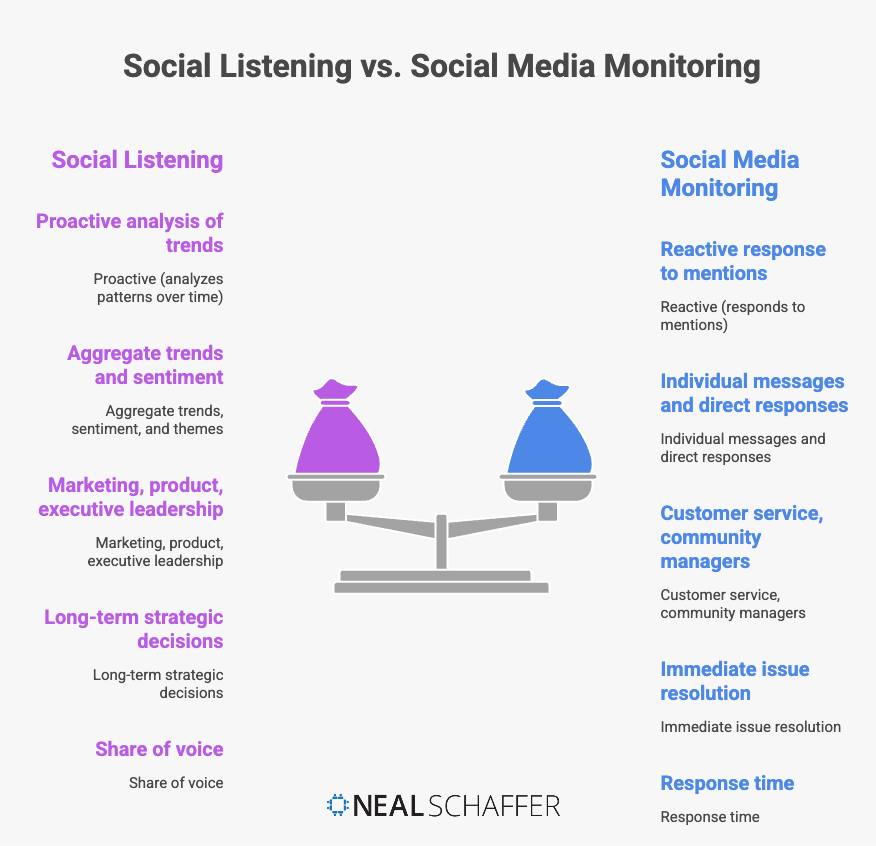
Social media monitoring is reactive: it tracks individual mentions and helps your team respond in real time. Social listening is proactive and analytical: it aggregates those mentions over time to identify patterns, sentiment shifts, and strategic opportunities. Monitoring tells you what people are saying. Listening tells you why and what to do about it.
The clearest framing I’ve seen comes from Cision’s overview of social listening as a strategic practice, which describes monitoring as catching what’s said and listening as understanding the emotion and context behind those words. Both matter. They work best together.
Here’s the practical difference. Imagine ten customers complain about your checkout flow on Twitter in the same week. Monitoring catches each tweet so your support team can respond. Listening notices that those ten complaints share a pattern, traces it back to a UX change rolled out the previous Monday, and tells your product team to fix it before the issue reaches one hundred angry customers.
| Capability | Social Media Monitoring | Social Listening |
|---|---|---|
| Approach | Reactive (responds to mentions) | Proactive (analyzes patterns over time) |
| Scope | Individual messages and direct responses | Aggregate trends, sentiment, and themes |
| Primary user | Customer service, community managers | Marketing, product, executive leadership |
| Outcome | Immediate issue resolution | Long-term strategic decisions |
| Example metric | Response time | Share of voice |
Here’s a deeper visual view of these differences:
If you want to go deeper on the day-to-day metrics that connect both, my breakdown of the social media metrics that matter most covers what to track and why.
Why Does Social Listening Matter for Your Business in 2026?
Social listening matters in 2026 because organic reach has collapsed, audiences are fragmenting across platforms, and customers expect brands to understand them without being asked. Listening turns billions of public conversations into the audience intelligence that powers smarter content, faster crisis response, and more relevant products. Brands that listen consistently report higher confidence in their social ROI.
Look, the social media landscape has changed. Organic reach on Facebook and Instagram has dropped into the low single digits. AI-generated content is flooding every feed. Consumers are more skeptical of brand messaging than they’ve ever been. Research from Sprout Social’s 2025 Index found that 81% of consumers say social media has driven them to make spontaneous purchases multiple times per year. Those purchases don’t happen because your branded post showed up in someone’s feed. They happen because of conversations, recommendations, reviews, and creator content. Most of which you only see if you’re listening.
There’s also the adoption question. Social listening has moved from an early-adopter tactic to a standard line item in serious social media programs. Brands that aren’t doing it are competing against brands that are, and the gap compounds every quarter.
The market reflects this shift. Hootsuite’s 2026 social listening guide projects the social listening space will grow rapidly, with forecasts placing it well past $16 billion before the decade is out. Tools are getting cheaper and more capable at the same time, which is good news for small businesses that used to be priced out. Independent industry analysis from Mordor Intelligence pegs the broader social media analytics market on track to roughly double by 2031, with listening capabilities driving much of that growth.
What Are the Main Benefits of Social Listening?
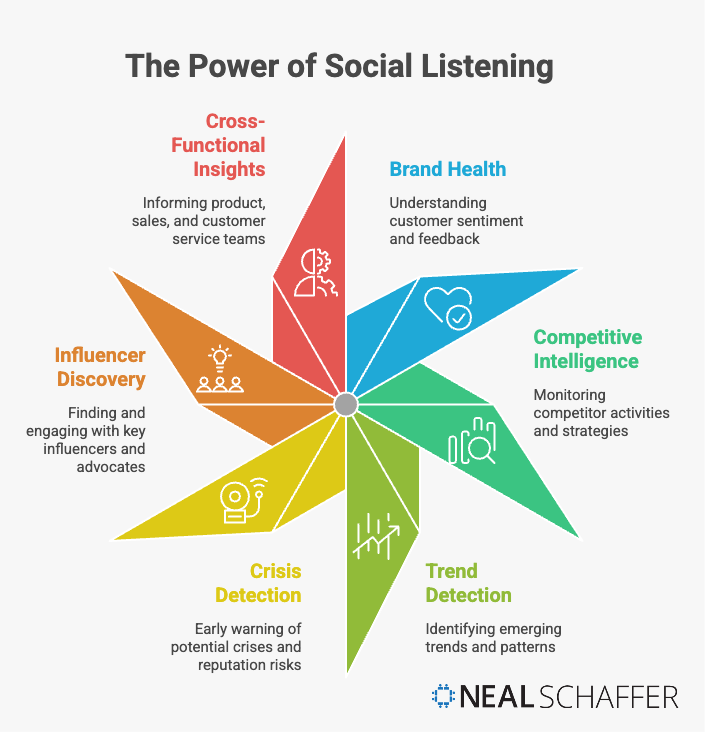
The main benefits of social listening include uncovering authentic customer sentiment, identifying competitor weaknesses, spotting trends before they peak, detecting crises early, validating product decisions with real feedback, and finding aligned influencers and brand advocates. Beyond marketing, listening insights inform product, sales, and customer service teams.
Let me walk through the ones that drive the most value with my Fractional CMO clients.
Brand Health and Authentic Sentiment
You think you know how customers feel about your brand. You don’t. Internal teams overestimate positives and miss recurring complaints. Listening surfaces what people actually say when they don’t think you’re watching. That’s gold for messaging, positioning, and product roadmap decisions.
Make Your Marketing Finally Work Together
My latest book helps small businesses, entrepreneurs, and marketers bring search, email, and social together into one digital marketing strategy that actually compounds.
Drawing on my work as a Fractional CMO, Digital Threads turns complicated tactics into a clear, practical plan you can follow, whatever your budget or team size.
Grab your copy on Amazon and start weaving your own digital threads. Click the cover or the button below to get started.

Competitive Intelligence
Social listening lets you eavesdrop on your competitors’ customer base. You see what their fans love, what their detractors hate, and where their messaging is missing the mark. Then you make better decisions about where to position your own brand. Every consulting engagement I run starts with a listening sweep on the top three competitors. If you haven’t done one in the last six months, my walkthrough on running a social media audit is a useful starting point.
Trend Detection
Trends move at the speed of TikTok now. By the time a trend hits a marketing newsletter, it’s halfway through its lifecycle. Listening catches the early signals: rising hashtags, emerging vocabulary, niche communities forming around a topic. Brands that move on trends early get the engagement. Latecomers get ignored. For broader pattern recognition across platforms, my analysis of current social media trends shows where the bigger shifts are happening right now.
Crisis Detection and Reputation Management
Negative sentiment spikes before crises become full-blown emergencies. Listening alerts catch those spikes early, giving your team a chance to respond before a small fire becomes a brand-damaging blaze. Hootsuite’s coverage notes that Hong Kong Airlines caught a pricing error through monitoring and saw a 4,900% engagement spike, turning what could have been a PR mess into a publicity win.
Influencer and Advocate Discovery
Listening reveals who’s already talking about your industry, your category, and sometimes your specific brand. These are your highest-converting potential partners. They have audiences that already care about your space. Cold-pitching influencers based on follower counts is dead. Listening-based discovery is where the smarter brands are spending their effort.
Cross-Functional Insights
This is the benefit nobody talks about enough. Listening data is useful far beyond marketing. Product teams use it to prioritize features. Customer service teams use it to anticipate complaints. Sales teams use it to identify in-market buyers. Steph Hermanson, Manager of Professional Services at Sprout Social, captured the shift well in Sprout’s guide to using social listening tools:
“Social now goes beyond marketing and into insights that change how businesses act.”
How Do You Build a Social Listening Strategy?
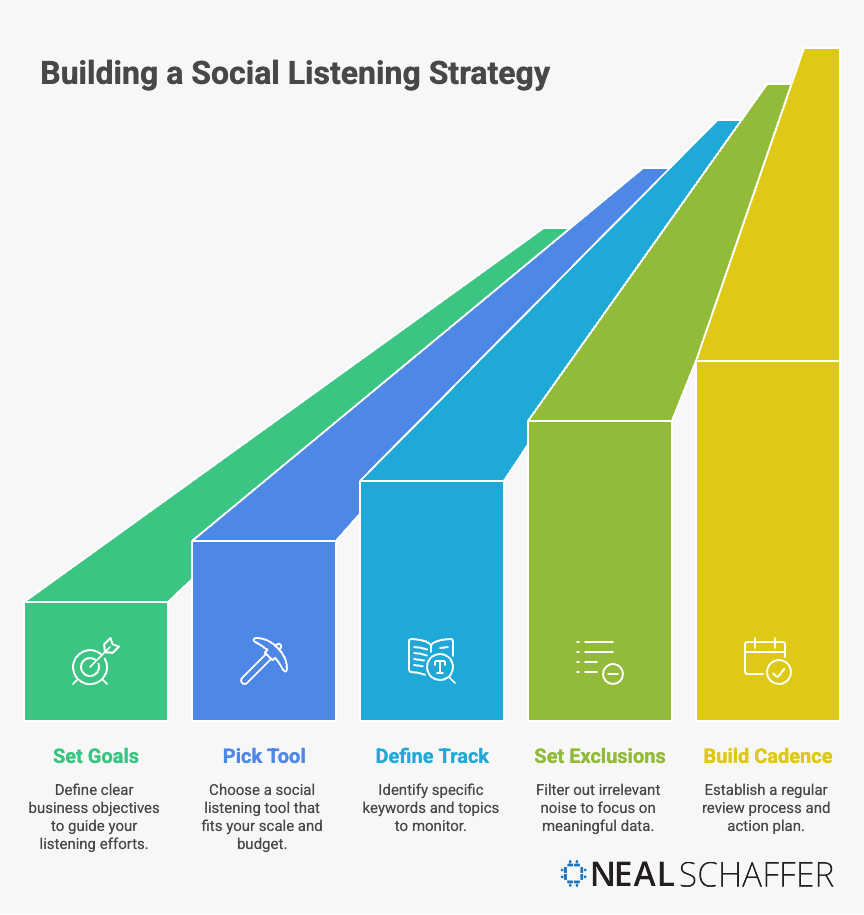
To build a social listening strategy, start by defining clear business objectives, then choose a tool that fits your scale, identify the keywords and topics to track, set up queries with proper exclusions, and establish a regular cadence for reviewing data and acting on insights. The strategy fails when listening produces reports nobody acts on.
Medallia’s three-step framework of monitor, analyze, respond is a useful mental model, but the real work happens in the details of each step. Here’s how I structure it with clients.
Step 1. Set Specific Goals
“Understand my audience better” is not a goal. “Identify the top three pain points our prospective customers mention about competitors so we can address them in our messaging by Q3” is a goal. Concrete objectives drive everything else. They tell you what to track, what to ignore, and how to measure whether listening is paying off.
Step 2. Pick the Right Tool
This depends on your scale and budget. Solopreneurs and small businesses can start with free tools and platform-native search. Growing brands need a dedicated platform. Enterprise teams need something that ingests millions of mentions and integrates with their CRM. I keep an updated breakdown of the best social listening tools if you want the full landscape. The short version: don’t pay for enterprise software if you’re tracking three keywords. Start small, prove ROI, then scale.
Step 3. Define What to Track
Your listening queries should cover at least these categories:
- Your brand name and product names (including misspellings)
- Branded hashtags and campaign hashtags
- Competitor brand and product names
- Industry keywords and topic clusters
- Common pain points your products address
Be specific. “Marketing” as a keyword will drown you. “Email marketing automation small business” gives you something useful. Before a query goes into a paid tool, run it through a few social media search engines to see what it pulls back.
Step 4. Set Up Smart Exclusions
This is where most listening setups fail. If you sell something with a common name, you’ll get noise. Exclusions filter that noise. If your brand is “Apple,” you need to exclude apple pie, apple juice, and Apple Records. Spend an hour on exclusions and you’ll save weeks of irrelevant data.
Step 5. Build a Cadence and Act
Listening dashboards are useless if nobody looks at them. Set a weekly review cadence for trends and a real-time alert system for sentiment spikes and crisis signals. Then build the workflow for what happens next: who reads the report, who shares insights with product, who escalates a crisis. Without that workflow, listening becomes another vanity dashboard.
For more on connecting listening to broader strategy, my framework for an effective social media strategy covers how the pieces fit together. And if you’re starting from zero on the broader management function, what social media management actually entails is worth a read first.
What Should You Listen For?
You should listen for brand mentions, competitor mentions, industry conversations, sentiment trends, customer pain points, emerging topics in your category, and creator or influencer content related to your space. The goal is a mix that gives you a defensive view (your reputation) and an offensive view (opportunities, gaps, and trends).
There’s a hierarchy I use with clients. Start defensive: track everything related to your brand directly. Then go competitive: do the same for your top three to five competitors. Then go offensive: track your category as a whole. Sprinklr’s overview of social listening reinforces this framing, breaking listening targets into brand mentions, product chatter, and category conversations. Most teams stop at defensive and wonder why their listening data feels thin.
The table below maps the most useful listening targets to the business outcome each one drives. Use it as a starting checklist when you build your queries.
| Listening target | What it tells you | Primary business use |
|---|---|---|
| Your brand and product names | How customers describe you in their own words | Reputation, messaging, customer service |
| Branded and campaign hashtags | Reach and sentiment of active campaigns | Campaign analysis, ROI reporting |
| Competitor brand and product names | Competitor strengths, weaknesses, and customer complaints | Competitive positioning |
| “Best [category] for [use case]” queries | In-market buyers actively comparing options | Sales prospecting, content creation |
| “Alternative to [competitor]” queries | Prospects already considering a switch | Direct outreach, comparison content |
| Industry hashtags during events | Trending conversations and key influencers | Trend detection, partnerships |
| Recurring pain points in your category | Unmet needs your product could address | Product roadmap, positioning |
These queries surface buying intent, content opportunities, and competitive openings you’d otherwise miss. Tools like the platforms I cover in my roundup of social media analytics tools can help you turn these queries into structured data you can actually use.
What Are Some Real-World Social Listening Examples?
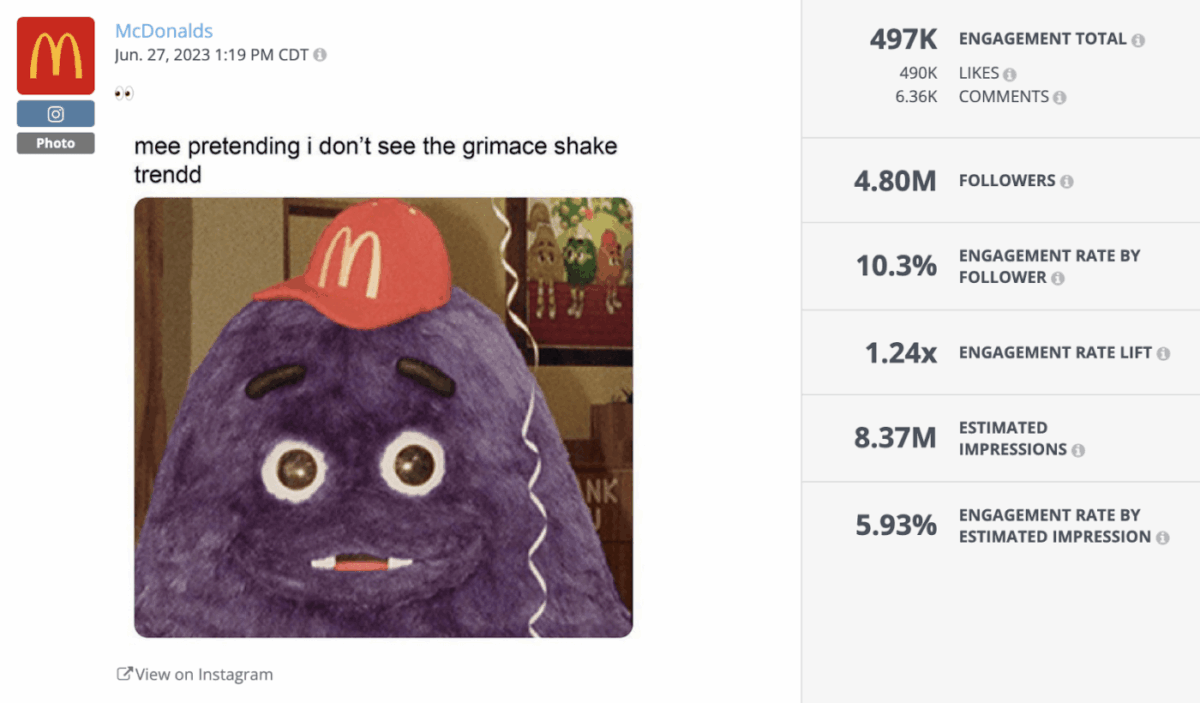
Real-world social listening examples include McDonald’s riding the viral Grimace Shake trend with in-character humor, Stanley turning a viral car-fire video into a brand reputation win, and Domino’s famously rebuilding its product and its public image after listening to brutal customer feedback. The common thread: turning raw data into a specific business action.
The Stanley case from late 2023 is one of the cleanest examples I’ve seen. A TikToker posted a video of her car after a fire, with her Stanley tumbler still intact and ice still inside. The video went viral. Stanley’s CEO didn’t wait for a PR plan. He posted his own video offering to buy her a new car, and per Brand24’s analysis of the conversation, nearly 84% of reactions to that response were admiration and joy. That’s social listening in action: catch the emotionally charged moment, respond fast, win the room. Here’s the actual video for your viewing pleasure:
The Domino’s “Pizza Turnaround” from 2009 is the older, larger-scale version of the same idea. Domino’s leaned into harsh customer criticism instead of defending its product, ran a documentary-style campaign acknowledging the feedback, and reformulated the recipe. Stock more than doubled within a year of the campaign. That’s listening tied directly to a product and revenue decision.
These are not isolated cases. They’re what happens when listening informs decisions instead of just generating reports. Adobe’s overview of how brands use social listening notes that listening has become one of the highest-ranked priorities for social teams, in large part because of these kinds of measurable outcomes.
How Has AI Reshaped Social Listening in 2026?
AI has reshaped social listening in 2026 by making sentiment analysis more accurate, expanding monitoring to images and video, automating query building, and surfacing predictive trend signals. Modern tools detect sarcasm, emojis, and cultural nuance, then summarize insights in plain language. The result: less time interpreting data, more time acting on it.
Three years ago, sentiment analysis was famously bad. Tools tagged sarcastic praise as positive and complimentary roasts as negative. AI has fixed most of that. Today’s leading platforms catch nuance, parse emojis, and distinguish a complaint from a joke. That’s a real upgrade.
The bigger shift is multimedia. Brands aren’t just discussed in text anymore. They’re discussed in TikToks, Instagram Reels, YouTube videos, and podcasts. As Meltwater’s overview of social listening highlights, modern tools now analyze conversations across podcasts, blogs, forums, and even AI-generated content, with capabilities that go far beyond what was possible even a year ago. AI-powered listening can detect your logo in a video where nobody tagged you. That coverage was impossible to do at scale before.
What I tell clients: AI hasn’t replaced the strategic thinking part of listening. It’s removed the manual labor part. You still need someone asking the right questions and deciding what to do with the answers. The AI just gets you to the answers faster.
What Tools Should You Use for Social Listening?
The right social listening tool depends on your budget, team size, and which platforms matter to you. Solopreneurs and small teams can start with native platform search and free tools. Growing brands benefit from mid-tier options. Enterprise teams need full platforms for advanced AI and multi-channel coverage. Match the tool to your workflow, not the other way around.
I’m not going to rank every tool here because that landscape changes too fast. What I will say is that the most expensive platform in the world is useless if your team won’t open it. I cover the full set of options I recommend in my roundup of the best social listening tools, and for broader social media management, my list of the top social media management tools covers platforms that bundle listening with publishing and analytics.
FAQ
Absolutely. Small businesses often benefit more than enterprises because they don’t have other research budgets to fall back on. Listening gives you direct access to your niche audience’s actual language, complaints, and desires. Many quality tools start under $50 a month, which is less than most agencies cost for a single hour.
You can start without one. Native platform search, Google Alerts, and free monitoring tools will get you basic coverage. The limitation is depth and history. Free options usually don’t aggregate sentiment, surface trends, or store historical data. They work as a starting point, not a long-term system.
For most brands, weekly trend reviews and real-time crisis alerts is the right cadence. Active campaigns and product launches warrant daily check-ins. Long-term brand health analysis works on a monthly or quarterly basis. The frequency matters less than the discipline of acting on what you find.
Traditional market research is structured, expensive, and slow. You design a survey, recruit a panel, run the study, analyze the results. Social listening is unstructured, cheap, and immediate. You set up queries today and start collecting data tonight. Both are valuable. Listening shouldn’t replace research entirely, but it fills the gaps between formal studies and gives you a real-time pulse.
Tie listening insights to specific decisions and their outcomes. Did a competitor analysis from listening data inform a positioning shift that lifted conversions? Did sentiment monitoring catch a crisis early and save you from a customer churn event? Track those moments. ROI for listening lives in the decisions it changes, not in the volume of mentions it captures.
Ready to Start Listening to Your Audience?
The best brands in 2026 aren’t the ones shouting the loudest. They’re the ones listening the closest. Social listening is no longer optional. It’s the foundation that makes every other social media decision smarter, and the cost of skipping it grows every quarter your competitors get better at it.
Start small. Pick three keywords that matter to your business. Set up free alerts. Read what people actually say for two weeks. You’ll be surprised how much you’ve been missing. Then decide whether you need a more capable setup, and if you do, my breakdown of the best social listening tools covers the platforms I trust most.
If you want help building a listening strategy that connects to your broader marketing engine, I work with companies as a Fractional CMO to put these systems in place. And if you want regular insights on social listening, content strategy, and digital marketing as a whole, join the thousands of professionals who get my weekly newsletter.