
Video content has become one of the most powerful ways to connect with audiences, educate customers, and grow a brand. No matter how engaging your video is, however, it won’t generate leads or awareness if no one can find it.
That’s where video SEO comes in.
In my work helping brands and entrepreneurs master digital marketing, I’ve seen firsthand that a well-optimized video can outperform blog posts, social media ads, and even email campaigns in driving qualified traffic. This guide will break down the most effective, up-to-date video SEO strategies—combining proven best practices with my own insights—so you can not only create videos worth watching but also ensure they rank where your audience is searching.
Key Takeaways
✅ Video SEO optimizes an individual video for search, not a whole webpage, so titles, thumbnails, watch time, and engagement carry most of the ranking weight.
✅ Universal search, the Google video tab, and YouTube’s own results each rank videos differently, so plan for where your audience actually searches.
✅ Pick a hosting strategy on purpose: YouTube for reach, your own site for control, or a hybrid that embeds YouTube videos on pages you own.
✅ Feed search engines the text they cannot get from footage, meaning accurate transcripts, clean captions, multilingual options, and timestamped chapters.
✅ Add video schema markup and submit a video sitemap in Google Search Console so your video gets indexed and can earn rich results.
✅ Track impressions, click-through rate, watch time, and session duration across YouTube Analytics, Google Analytics, and Search Console, then refine what underperforms.
What Is Video SEO and Why It Matters
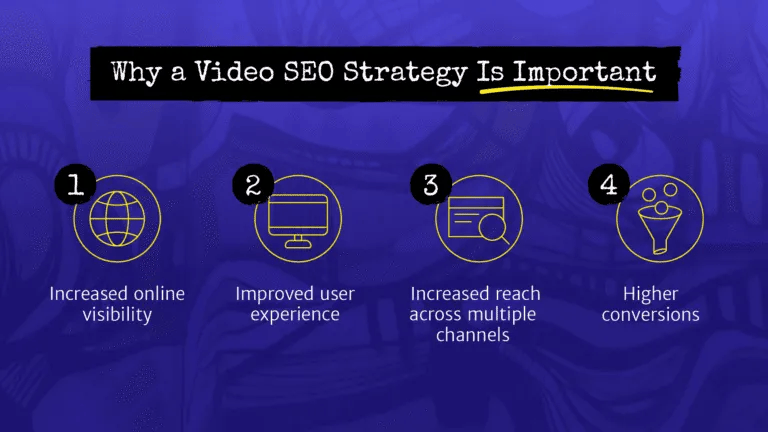
Video SEO describes search engine optimization efforts that focus on making your video visible in search engine results. Unlike traditional SEO, which focuses on optimizing a specific webpage, video SEO targets a specific video.

Search engines love video content, as video content is extremely popular with consumers, and search engines exist to answer the needs of their users. Videos more effectively encourage high dwell time, naturally promote engagement, and answer search intent–all of which are essential for search engine success.
Video SEO is powerful. Most consumers—nearly three-quarters of them—would rather learn about new products through video content. Even more impressive is that over 8 out of 10 people say watching a company’s video actually convinced them to buy something. That’s why implementing what I am about to teach you can make or break brand awareness, increase conversions, and even help maintain audience retention. As an SEO strategy, video is invaluable.
How Video SEO Works
Search results for video different significantly from search results for webpages. Search engines “read” video content differently. While metadata is still important, the written content on a video is limited to transcripts, thumbnails, and captions. This limited space makes it extremely important to use appropriate keywords to consistently show up in search results.
Structured data and schema makeup are essential, because they help your video come up consistently in search results. Both provide a means for engines like Google search to “read” information about a video, in order to properly categorize and subsequently recommend it.
There are important ranking factors to include to appease Google search and YouTube search, alike. The most valuable ranking factors include:
- Titles. Titles will be one of the most important considerations for both Google search and user experience.
- Engagement. Engagement is the lifeblood of any brand, but videos are particularly hampered by a lack of engagement.
- Click-through rates. Your video thumbnails and titles are important to spur click-through rates.
- Watch time. Watch time can also help search engines identify your video as a worthwhile one; if watch times are consistently high, it suggests your video is well-liked and useful.
Universal search, Google video tab, and YouTube SERPs are all different, and require a different approach to SEO. Universal search brings in search results from everything and everywhere, including video. Google video tabs search videos around the web, and YouTube SERPs focus entirely on YouTube videos.
To make sure that you are targeting both user experience and search engine results, make sure you are…
1. Choosing the Right Hosting Strategy
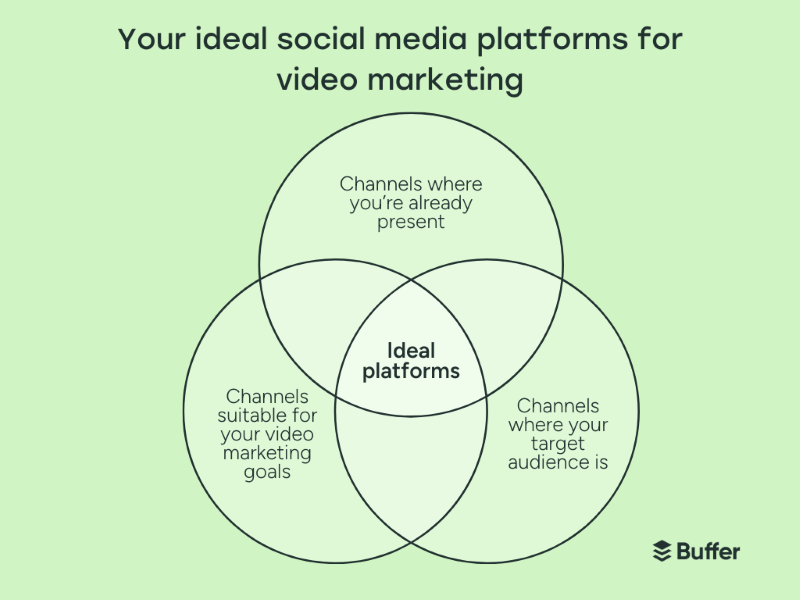
Hosting on YouTube is different from hosting on your website. Hosting on YouTube has the potential for improving your reach, while hosting on your website offers greater control over traffic.
A hybrid approach can more effectively help you bridge your content marketing strategy with YouTube hosting by embedding YouTube videos on your site. This helps bridge the gap between social media platforms like YouTube and your site, potentially reaching your target audience across multiple platforms.
If YouTube is not your preferred hosting site, there are others to consider, including Wistia, Vimeo, and Brightcove. These options may not offer the same familiarity as YouTube, but still come with the ability to add a thumbnail image and embed video on your site.
Hosting does have an effect on your metadata and structured data. If you host through an outside app and embed on your site exclusively, your SEO practices will differ from those you would use if you were exclusively using YouTube Studio for your video marketing needs.
2. Creating High-Quality, SEO-Friendly Video Content
Production quality matters for rankings and engagement. A thumbnail image, for instance, can convey either a high-quality video or a low-quality one, and can significantly influence an audience member’s decision to click or navigate away. Production quality, too, can impact your audience’s interest long-term.
Keyword targeting is important in video marketing, but cannot erase the value of human-first storytelling. Rather than stuffing as many keywords as possible into your meta data or video titles, choose a keyword or phrases to focus on, and develop your human-first approach around that.
SEO-friendly video content also depends on duration. Different platforms focus on different preferences; YouTube, for instance, tends to favor videos that are anywhere from 5-15 minutes. Social sites prefer smaller snippets as small as 30 seconds. Sites often use videos lasting 1-2 minutes.
Finally, consider how you use calls to action (CTAs). These can be organically embedded in video titles, or casually slipped into a video script, or even offered in the caption of a video. Calls to action can be subtle and small, and encourage an action without disrupting viewer experience or interrupting your content strategy.
Is LinkedIn Actually Bringing You Business?
My latest book helps professionals, entrepreneurs, and business owners turn LinkedIn from a static profile into a real source of clients and growth.
Maximizing LinkedIn for Business Growth gives you clear, practical steps to build a profile that gets noticed and a network that actually sends business your way.
Grab your copy on Amazon and put it to work this week. Click the cover or the button below to get started.

3. On-Page Video Optimization
On-page optimization also helps guide your audience toward your videos. To start, place your most important video at the top of your page. An upfront video player will quickly and easily indicate to your audience how important a video is.
Make sure all of your page content supports and expounds on your video content. No matter your video platform, you can make sure your videos are well-supported via content marketing practices.
It can be tempting to feature the same video in multiple places–especially if it is a high-quality video you are proud of–but make sure that your videos are not overused. Choose the best place for a video, and let it be. You can always choose to move it if it does not perform as hoped!
Make the video the focus of your page to increase crawlability. Search engines need to be able to crawl sites to adequately index and rank the information they find. SEO video marketing does require that you make the video itself the focus of the page in question.
4. Optimizing Video Metadata
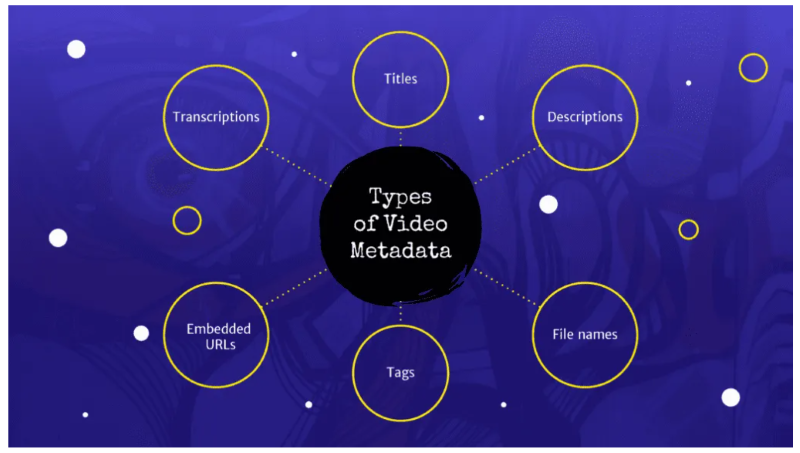
To effectively optimize your videos, craft keyword-rich, click-worthy titles. SEO video marketing does rely on drawing interest quickly, so it is important to make sure that your videos are appropriately titled and keyword-rich.
SEO-friendly descriptions are also important to optimize your videos. Unlike on-page SEO, which is easy to fill with keywords, descriptions are small, and require some finesse. SEO-friendly descriptions engage users and inform search engines to make it easy to find your videos.
Relevant tags and categories can further improve SEO video marketing. By making good use of categorizing and tags, you can not only make your video easy to understand, but easy to index and come up in search.
Thumbnail best practices are also an important part of your content creation. While SEO copywriting on its own is valuable, the way in which you present your videos matters, as well. Use custom, high-quality images or stills from your video. These images or stills must be relevant and contain a human element.
5. Leveraging Transcripts, Captions, and Timestamps
Transcripts can also boost accessibility. Your audience may contain individuals who are hard of hearing, or who are unable to engage with your content without closed captioning or transcripts. Interactive transcripts can further boost your accessibility, engagement, and ease of indexing.
Although closed captioning can be valuable, it is important to make sure that your captions are accurate. Many services can auto generate incorrectly or generate “gibberish.” Avoid this trap by taking the time to caption your own videos, or select a highly-trusted software.
Multilingual captions are another common player in a content marketing strategy. They allow for international reach and engagement across multiple languages, and they are the cheapest way to test whether a market is worth entering before you commit to producing anything native for it. Taption handles this end of the work, transcribing and translating across 40 or more languages and exporting bilingual subtitle tracks as SRT, VTT, or MP4 with the subtitles burned in. Machine translation quality still varies by language pair, so have someone who reads the target language check the output before you publish, particularly for languages that do not share an alphabet with English.
Timestamps and chapters can help improve user experience and SERP features, as well. Search traffic may come to your video looking for a specific topic or answer, and timestamps and chapters can help facilitate receiving answers while building trust.
6. Implementing Structured Data and Video Sitemaps
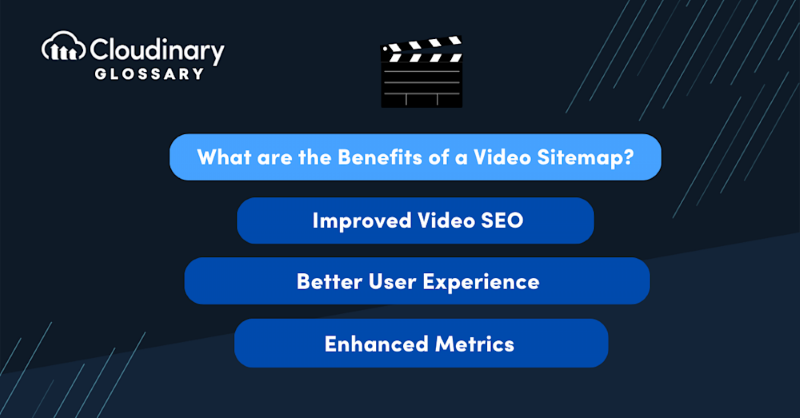
Structured data and video sitemaps can also help support coming up in SERPs. Schema markup–and JSON-LD in particular in the heading or body of your page–can help your video index properly, which in turn helps with search engine optimisation.
It may seem like a tedious extra step, submitting a video sitemaps to Google Search Console can further aid in making sure search engines recognize your page and read it effectively. Whether your keyword density is high, or you are opting for a lower-key approach, a sitemap will help search engines crawl your site easily.
Metadata, like any other keyword-dense piece of content, does require occasional updates. Quarterly or monthly check-ins with your keywords and SEO performance can help identify any punctures in your efforts toward online visibility. Adjust keywords and your overall metadata as necessary when you find your site is not performing as well in search.
7. Promoting Videos Beyond SEO
SEO is a great starting point for your video SEO, but there are other ways to promote your videos to further increase your reach. Social media amplification is one of the most common ways to get your videos out there. Posting snippets of a video, along with video summaries, is a popular option for platforms like TikTok and Instagram. Previews and promotions are other popular and effective strategies to boost your reach on socials.
Influencer partnerships and collaborations can also stretch the reach of your videos. You can partner with YouTubers to improve native YouTube video SEO, but you can also work with influencers across numerous platforms to promote your work. Collaborations allow you to access both your existing audience and the influencer’s.
Email marketing integration allows you to embed or link videos in your campaigns. This allows your reach to extend past a social media or organic traffic audience, and reach an entirely different audience with different needs and nuances.
Finally, consider paid video promotion. While paid ad is not always the best approach, it can be an excellent supplement to organic reach efforts. Video tags and paid promotion can be excellent partners.
8. Measuring Video SEO Performance
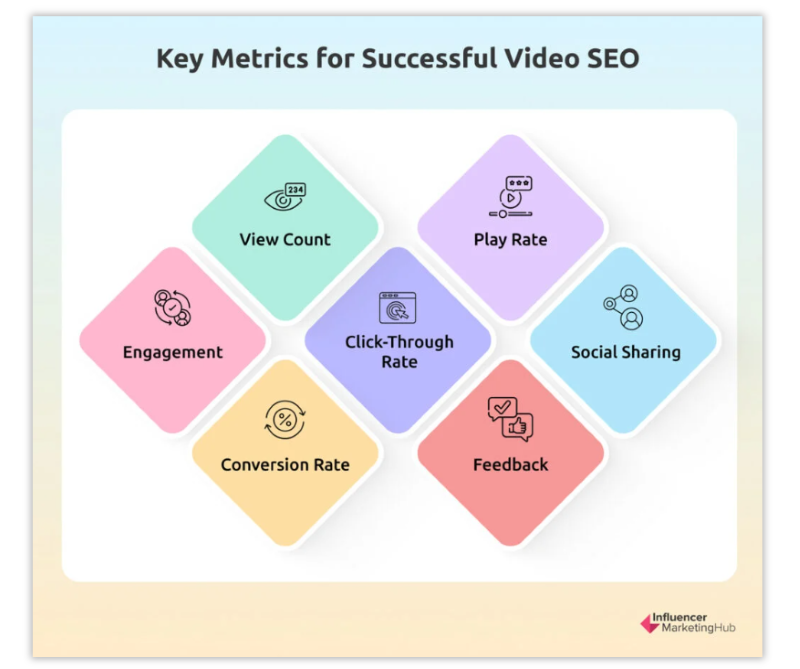
As you implement the strategies I have outlined above, continually circle back to make sure that your efforts are paying off. Adding time stamps, paying close attention to HTML elements, and increasing keyword density can all be useful, but using analytics tools will help you more effectively identify the success of your efforts, or show where you need a bit more support.
Key metrics to track include:
- Impressions
- CTR
- Watch Time
- Session Duration
Each of these metrics can point to areas in need of further help. Time stamps may need to be broken down further, or SEO metadata may need an overhaul.
YouTube Analytics can be used along with Google Analytics and Google Search Console to identify any weaker areas. YouTube Analytics will focus on different metrics than Google, so using all of these tools in tandem can cover all of your bases.
Once you have a clear handle on your performance data, you can implement changes. From changing your closed captioning, to refining your keywords, you can use metrics to get a clear picture of your strengths and weaknesses and refine accordingly.
Frequently Asked Questions
Video SEO is the practice of optimizing a specific video so it appears in search results, on YouTube, in Google’s video tab, and in universal search. Unlike traditional SEO that targets a webpage, it focuses on the video itself through titles, metadata, transcripts, and engagement signals.
Regular SEO optimizes the text on a webpage, while video SEO works around content search engines cannot watch. Because engines read a video mainly through its title, transcript, captions, and schema, those elements do most of the ranking work.
It depends on your goal. YouTube gives you the widest reach and its own search engine, hosting on your own site gives you more control over your traffic, and a hybrid approach embeds YouTube videos on pages you own. Wistia, Vimeo, and Brightcove are worth considering when YouTube is not the right fit.
Length should match the platform. YouTube tends to favor videos in the 5 to 15 minute range, while social platforms reward shorter clips, sometimes as brief as 30 seconds, with 1 to 2 minutes being common.
Watch the impressions, click-through rate, watch time, and session duration your videos earn. Pair YouTube Analytics with Google Analytics and Google Search Console, since each surfaces different signals about where your video is winning or losing attention.
How to Succeed With Video SEO
Video SEO is no longer a nice-to-have—it’s a must-have for any marketer who wants to compete in today’s search landscape. With the rise of video-first platforms and Google’s increasing preference for video-rich results, optimizing your videos is one of the fastest ways to improve visibility and engagement.
By combining the technical elements that search engines need with the human-focused storytelling that keeps viewers watching, you can create videos that not only rank but also resonate. Start applying these strategies today, and you’ll give your brand a measurable advantage in driving organic growth through video.