Editorial Note: I may earn a commission when you visit links that appear on my website.
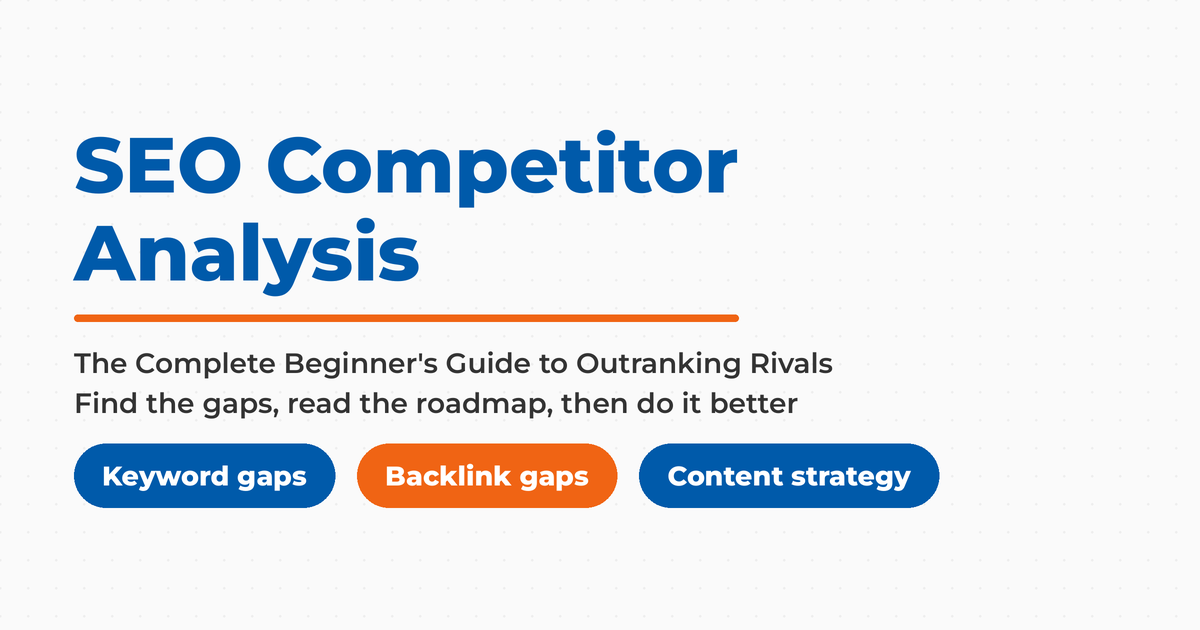
How to Do an SEO Competitor Analysis (Complete Beginner’s Guide)
SEO doesn’t have to feel like throwing darts in the dark. Yet that’s exactly what most small business owners do—guessing at keywords, creating content without a strategy, and wondering why their competitors consistently outrank them.
Here’s the truth: Your competitors are already showing you the roadmap to SEO success. You just need to know how to read it.
That’s where SEO competitor analysis comes in. Instead of guessing what might work, you can see exactly what IS working for others in your space—then do it better.
Whenever I consult with clients as a Fractional CMO, one of the first things I ask them is for their competitor information. Whether it is SEO, social media, or even web design, by analyzing what they do we can literally stand on the shoulders of giants and gain a clear perspective on the landscape in front of us. While I cover a lot about SEO in my modern marketing playbook Digital Threads, this post will focus a little more deeper on this concept of analyzing our competitors for our SEO benefits.
Key Takeaways
✅ Your SEO competitors are not always your business competitors. Any website ranking for the keywords you want counts, including industry blogs, directories, and video channels.
✅ Start by finding who actually ranks for your target keywords, then run a keyword gap analysis to surface the terms your competitors capture and you miss.
✅ Search intent matters more than raw volume. Match your content format to whatever already ranks, whether that is a how-to guide, a comparison, or a product page.
✅ A backlink gap shows which referring domains link to competitors but not to you, turning link building into a targeted list instead of guesswork.
✅ Treat competitor analysis as a quarterly cycle, not a one-time project, because rankings shift constantly and new competitors can appear overnight.
What is SEO Competitor Analysis?
SEO competitor analysis is the process of reverse-engineering the search engine optimization strategies that help other websites achieve better search engine rankings than you. This includes studying competitor websites, their website structure, and how algorithm updates may have affected their performance. Think of it as competitive intelligence for organic search performance.

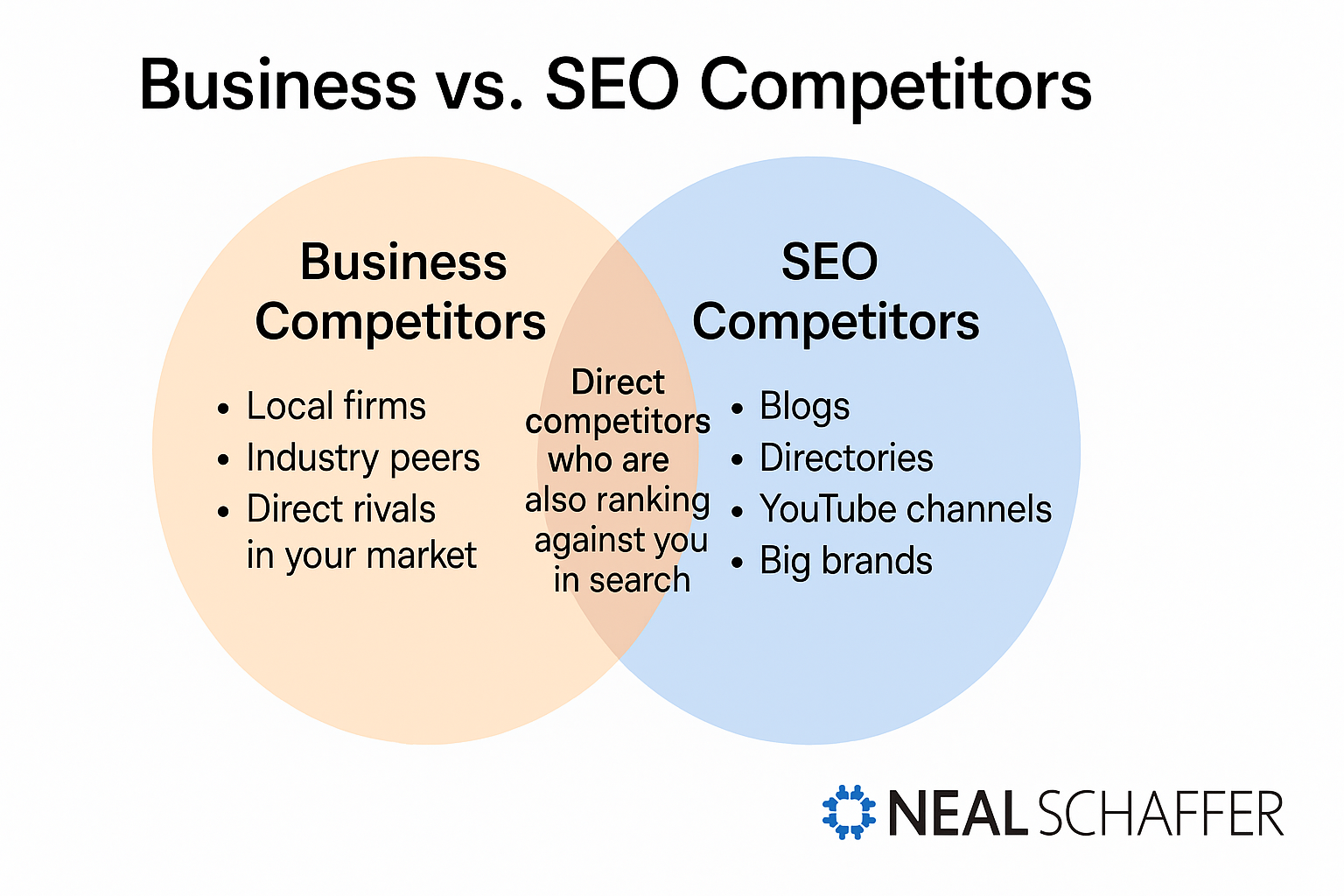
But here’s where most people get confused: your SEO competitors aren’t always your business competitors.
Business competitors are obvious—the company across town, the consultant in your industry, the brand selling similar products.
SEO competitors are any websites ranking for keywords you want to target. This could include:
- Industry blogs and publications
- Wikipedia and educational sites
- YouTube channels and video content
- Online directories and review sites
- Major brands publishing related content
For example, if you’re a financial advisor targeting “retirement planning,” you might find yourself competing against:
- Other financial advisors (business competitors)
- Personal finance blogs like NerdWallet
- Government sites like Social Security Administration
- YouTube channels about investing
- Major banks’ educational content
Understanding this distinction changes everything. You’re not just competing with businesses like yours—you’re competing for attention in a much broader ecosystem.
Why SEO Competitor Analysis Matters More Than Ever
Guessing your way to SEO success is expensive and time-consuming. Competitive research eliminates the guesswork by showing you proven strategies that help competitors gain market share in organic search. And because these audit tools run on any URL, not just your own, a Google SEO checker gives you a fast read on a competitor’s on-page setup before you commit to a deeper analysis.
Here’s what the data tells us:
Keywords are just the beginning: An Ahrefs study revealed that the average top-ranking page also ranks in the top 10 search results for nearly 1,000 other organic keywords. Your competitors may be capturing exponentially more traffic than you realize through strategic keyword targeting.
Content gaps = missed opportunities: Businesses that blog strategically are 13x more likely to see positive ROI, yet many miss obvious content opportunities their competitors are already monetizing.
Backlinks still dominate rankings: Research shows 66% of pages have zero backlinks, while top-ranking pages average 3.8x more backlinks than positions 2-10. Your competitor’s backlink profile and overall brand authority could be the missing piece of your puzzle.
Most traffic goes to the top: The first three Google results capture over 50% of all clicks. If your search competitors hold those spots, you’re missing the majority of organic traffic.
The bottom line? Competitor analysis isn’t just helpful—it’s essential for any business serious about search visibility.
Here’s the complete framework we’ll walk through together:
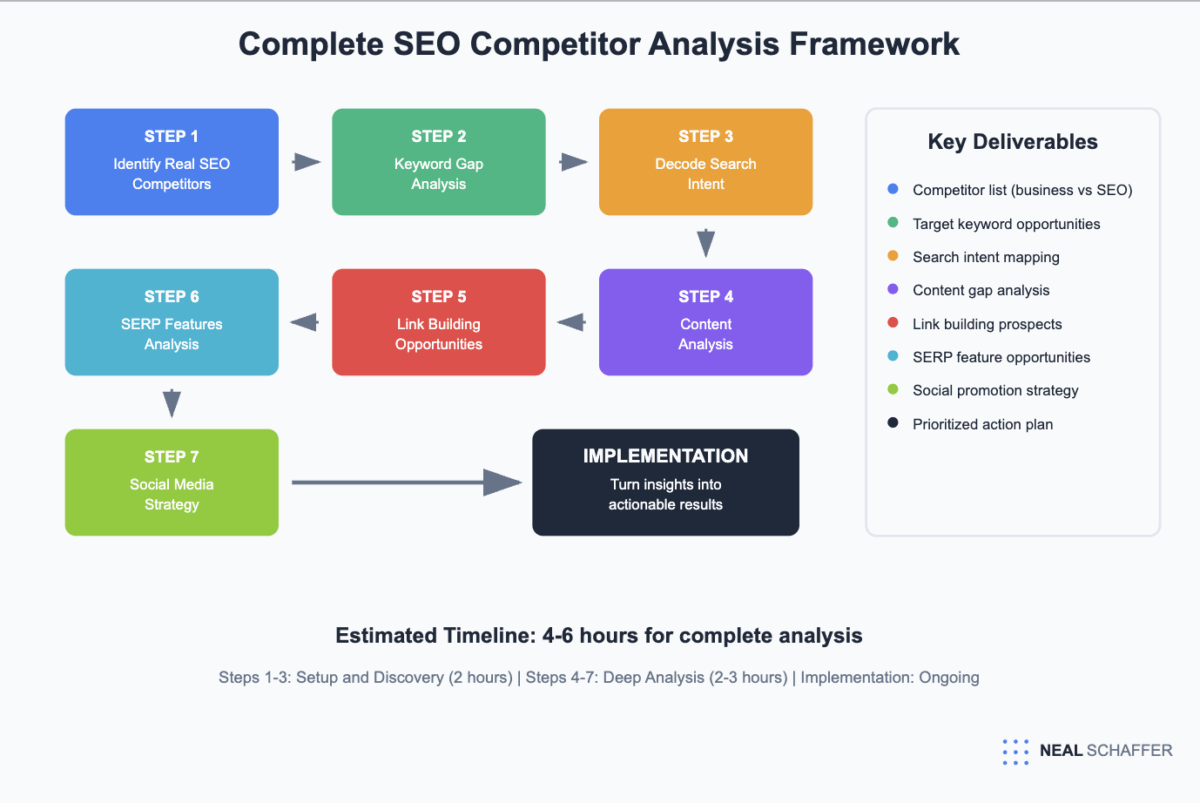
The Complete 7-Step SEO Competitor Analysis Framework
Let me walk you through the exact process I use with clients to uncover their competitors’ SEO secrets. Follow these steps, and you’ll have a clear roadmap to outrank the competition.
Step 1: Identify Your Real SEO Competitors
Most people skip this step and jump straight to analyzing obvious business competitors. That’s a mistake.
One Strategy to Connect All Your Marketing
My latest book helps small businesses, entrepreneurs, and marketers bring search, email, and social together into one digital marketing strategy that actually compounds.
Drawing on my work as a Fractional CMO, Digital Threads turns complicated tactics into a clear, practical plan you can follow, whatever your budget or team size.
Grab your copy on Amazon and start weaving your own digital threads. Click the cover or the button below to get started.

Start by searching your primary keywords in Google. Note every domain that appears on page one—not just the businesses you know.
Quick method:
- Search 5-10 of your main target SEO keywords
- Record every domain that appears multiple times
- Use competitor analysis tools like Semrush’s Organic Competitors or Ahrefs’ Competing Domains for deeper competitor website analysis
Pro tip: Don’t ignore informational sites. For instance, Wikipedia ranks as the most visible domain on Google’s AI Mode search results. Understanding why helps you create content that can compete.
Step 2: Run a Strategic Keyword Gap Analysis
This is where you find the keywords your competitors rank for that you’re completely missing. These gaps represent immediate opportunities to capture more organic traffic through strategic keyword research.
How to execute:
- Use a keyword gap tool like Semrush Keyword Gap, Ahrefs Content Gap, or Moz Pro Keyword Explorer
- Enter your domain plus 3-5 competitor domains
- Filter by search volume (minimum 100 monthly searches)
- Sort by keyword difficulty (target low to medium competition first)
- Cross-reference findings with Google Ads Keyword Planner for additional search volume data
Focus on intent alignment: Don’t just chase high-volume keywords. Long-tail keywords account for 70% of searches and often signal higher purchase intent. A search for “best CRM for small business under $50/month” is much more valuable than just “CRM.”
Here’s what your keyword gap analysis results should look like:
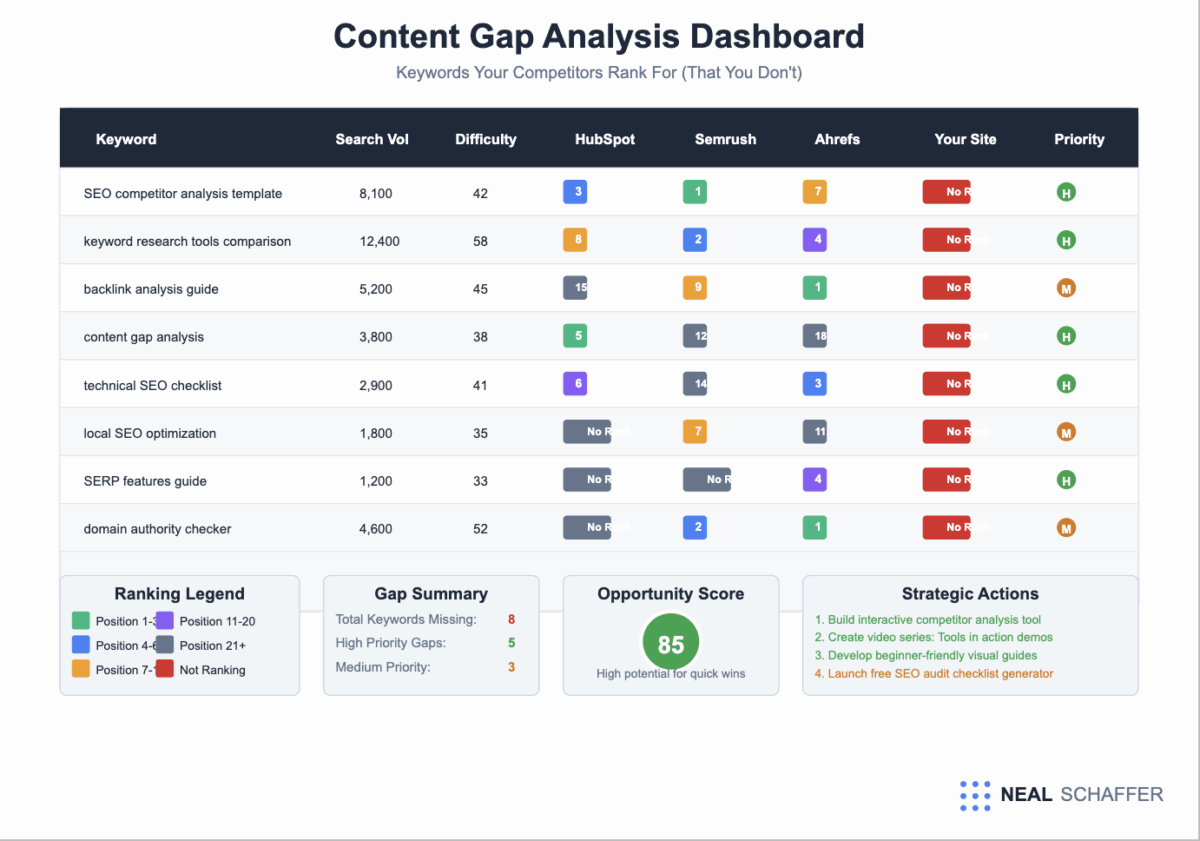
Step 3: Decode Search Intent Like Google Does
Google’s algorithm has evolved far beyond simple keyword matching. BERT and RankBrain now interpret user intent with sophisticated accuracy. That means you need to understand what users actually want when they search.
Intent categories to analyze:
- Informational: “How to do competitor analysis” (wants guides and tutorials)
- Navigational: “Semrush login” (looking for specific site)
- Transactional: “Buy SEO audit tool” (ready to purchase)
- Commercial investigation: “Best SEO tools 2024” (comparing options before buying)
Study the SERP patterns:
- If you see mostly blog posts, users want information
- If you see product pages, they’re ready to buy
- If you see reviews and comparisons, they’re in research mode
Misunderstanding intent is the fastest way to waste content creation time.
Step 4: Analyze Top-Performing Content (Beyond Keywords)
Keywords tell you what to target, but content analysis reveals how to win. Look beyond just topics to understand why certain pages consistently outperform others in organic search. Doing this by hand across a few dozen competitor URLs gets tedious fast, which is why I lean on an AI website scraper to pull headings, word counts, and meta data into a spreadsheet before I start looking for patterns.
Content audit checklist:
- Format analysis: Are top pages long-form guides, quick tutorials, or interactive tools?
- Content depth: How comprehensive is the coverage? What unique angles do they take?
- Visual elements: Do they use original graphics, screenshots, or videos?
- Page experience: How fast do pages load? Are they mobile-optimized? Check Core Web Vitals performance using PageSpeed Insights.
- On-page SEO: Review title tags, meta descriptions, URL structure, and structured data implementation
- Website structure: How well do they organize their content hierarchy and internal linking for SEO content?
The Skyscraper opportunity: If a competitor’s “10 tips” post ranks well, can you create “20 actionable tips with templates and examples”? The average first-page result is 1,447 words, but depth and value matter more than length alone.
Step 5: Uncover Link Building Opportunities
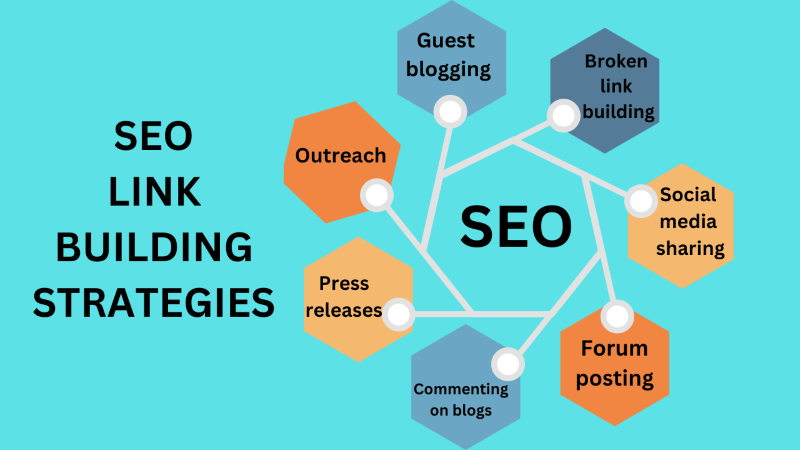
Backlinks remain one of Google’s strongest ranking signals, yet link building intimidates most business owners. Competitor analysis makes it strategic instead of random.
Link gap analysis process to find competitors backlinks:
- Use Semrush or Ahrefs for comprehensive backlink analytics
- Enter your site plus 2-3 main competitors
- Filter for referring domains that link to them but not you
- Prioritize industry-relevant sites, directories, and resource pages
- Analyze their backlink profiles and relevance to your niche
Focus on these link types:
- Industry publications that have quoted or featured competitors
- Resource pages where competitors are listed
- Guest posting opportunities on sites where competitors have contributed
- Broken link opportunities where you could replace outdated competitor content
Remember: One high-quality, relevant backlink from a high authority site often outperforms dozens of low-quality links when building brand authority.
Step 6: Master SERP Features for Maximum Visibility
Ranking #1 isn’t the only way to dominate search results. Google’s SERP features—featured snippets, People Also Ask, local packs, and rich media—offer additional opportunities to capture clicks.
SERP feature analysis:
- Featured snippets: Appear in 12.3% of searches and often steal clicks from #1 results
- People Also Ask: Shows related questions users have
- Local pack: Critical for location-based businesses
- Video/image carousels: Great for visual or how-to content
Optimization tactics:
- Structure content with clear headers and bullet points for snippets
- Answer specific questions concisely (40-50 words for featured snippets)
- Include relevant structured data markup
- Create SEO content that specifically targets PAA questions
- Optimize title tags and meta descriptions for better click-through rates
Step 7: Track Social Amplification Strategies
While social signals aren’t direct ranking factors, they influence SEO indirectly by increasing content discoverability, engagement, and link opportunities.
Social analysis framework:
- Which platforms do competitors prioritize?
- What content gets the most social engagement?
- How do they cross-promote between channels?
- Do social posts drive measurable traffic to their site?
Research shows articles with strong social engagement earn higher search visibility than similar content without it. Social media doesn’t just boost awareness—it creates link opportunities that strengthen SEO.
When to Conduct SEO Competitor Analysis
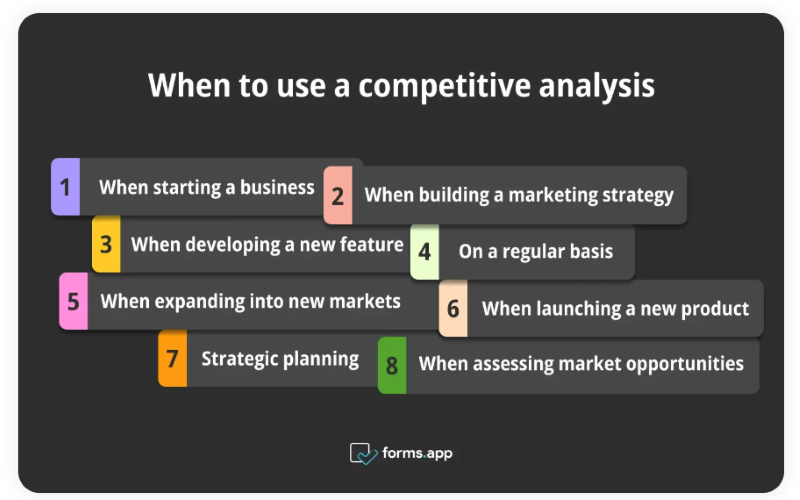
SEO isn’t a “set it and forget it” strategy. Search landscapes shift constantly, making regular competitor analysis essential for staying ahead.
Conduct analysis when:
- Launching new content initiatives – Understand the competitive landscape before investing
- Rankings suddenly drop – Determine if competitors out-optimized you or algorithm updates shifted intent
- Entering new markets – See which local or industry competitors dominate
- Content performance stagnates – Find gaps where you can improve or expand coverage
- Quarterly strategy reviews – Run competitor analyses at least quarterly to analyze competitors’ content strategies
Since the average top-ranking page on Google is five years old, consistent monitoring prevents established competitors from maintaining unchallenged positions. A rank tracker tool takes the manual work out of that monitoring by recording where you and each competitor sit for the keywords you care about.
Building Your SEO Competitor Analysis System
Even when you understand the process, executing competitor analysis without structure leads to inconsistent data and missed opportunities. The key is creating a systematic approach that ensures you capture everything that matters.
System benefits:
- Consistency: Track identical data points across all competitors
- Completeness: Never forget crucial elements like technical SEO or SERP features
- Efficiency: Use systematic processes to speed up recurring SEO tasks
- Actionability: Organize findings in ways that directly inform strategy decisions
The goal isn’t just data collection—it’s creating a framework that transforms insights into measurable improvements.
Essential Components of Effective Competitor Analysis
Based on years of client work, here are the critical areas your analysis should cover:
Core Analysis Areas:
- Competitor identification with clear distinctions between business and SEO competitors
- Keyword gap analysis with intent classification and priority scoring
- Content strategy evaluation covering topics, formats, and performance metrics
- Backlink opportunity assessment with outreach priority rankings
- Technical SEO comparison including Core Web Vitals, mobile optimization, and structured data
- SERP feature tracking with optimization recommendations
- Social amplification analysis across all major platforms
Strategic Framework Elements:
- Action item prioritization system to focus on highest-impact opportunities
- ROI tracking methodology to measure improvement over time
- Quarterly review process to maintain competitive advantages
This combination of keyword and backlink gap analysis is particularly powerful. Identifying where competitors have links and you don’t highlights the most impactful opportunities.
The key is treating this as a strategic framework that turns competitor intelligence into actionable growth plans.
How to Execute Your Competitor Analysis Effectively
Success comes from systematic execution. Here’s how to maximize your analysis:
Setup phase:
- Identify 3-5 primary competitors (mix of business and SEO competitors)
- Choose your tool stack (Semrush, Ahrefs, Moz Pro, or free alternatives like Google Search Console and PageSpeed Insights)
- Set baseline metrics for your current keyword rankings and organic traffic
- Block dedicated analysis time (plan 2-3 hours for initial setup)
Analysis phase:
- Work through each area systematically – don’t skip steps
- Look for patterns across competitors – what do successful sites have in common?
- Prioritize opportunities based on your resources and timeline
- Document specific action items with deadlines and success metrics
Implementation phase:
- Start with quick wins – often technical fixes like improving page experience or updating meta descriptions
- Plan content calendar around identified keyword gaps
- Begin outreach for priority backlink opportunities
- Monitor progress monthly using Google Search Console and adjust tactics based on results
The real value comes when you treat this as an ongoing strategic process, not a one-time exercise. Systematic competitor analysis keeps you organized, accountable, and focused on actions that drive real results.
From Analysis to Action: Building Your SEO Advantage
Here’s what separates successful SEO competitor analysis from busy work: implementation. The insights you uncover are only valuable when they inform specific, measurable actions.
Think of this process as a cycle, not a one-time project. Search rankings shift constantly, and new competitors can appear overnight. That is why it is important to run competitor analyses at least quarterly to keep up with these changes. Regular check-ins keep you from falling behind.
Immediate actions (first 30 days):
- Fix obvious technical issues competitors have solved (improve Core Web Vitals, optimize URLs)
- Create SEO content targeting high-opportunity keyword gaps
- Reach out to 5-10 sites for backlink opportunities
- Optimize existing pages for SERP features with better title tags and structured data
Medium-term strategy (90 days):
- Launch comprehensive content series based on competitor gaps
- Build relationships with link prospects through value-first outreach
- Test new content formats that competitors haven’t explored
- Expand into related keyword clusters where competition is lighter
Long-term advantage (6+ months):
- Establish thought leadership in areas competitors ignore
- Build a sustainable link acquisition system
- Create content that becomes the new standard in your industry
- Develop unique value propositions that differentiate you entirely
Remember: the goal isn’t to copy competitors—it’s to understand what works, then do it better while adding your unique expertise and perspective.
Frequently Asked Questions
How do I find my real SEO competitors?
Search your main target keywords in Google and note every domain that appears on page one, not just the businesses you already know. Confirm the list with a tool like Semrush Organic Competitors or Ahrefs Competing Domains. Your real SEO competitors are any sites ranking for the keywords you want, which often includes blogs, directories, and video channels.
What is the difference between a keyword gap and a backlink gap?
A keyword gap shows the search terms your competitors rank for that you do not, which points to content you are missing. A backlink gap shows the referring domains linking to competitors but not to you, which points to outreach opportunities. Running both together gives you the clearest picture of where you can catch up.
Do I need paid tools to run an SEO competitor analysis?
Paid platforms like Semrush, Ahrefs, and Moz Pro make gap analysis faster, but you can start for free. Google Search Console, Google Ads Keyword Planner, and PageSpeed Insights cover keyword data, search volume, and page experience at no cost. Many marketers begin with free tools and upgrade once the process proves its value.
How often should I run an SEO competitor analysis?
Run a full analysis at least once per quarter, since rankings shift constantly and new competitors can appear quickly. Add an extra review whenever your rankings drop, you publish major new content, or you enter a new market. Treating it as a recurring cycle keeps you from falling behind.
What should I do first with my findings?
Start with quick wins, usually technical fixes and on-page updates your competitors have already solved. Then build a content calendar around the keyword gaps you found and begin outreach for your highest-priority backlink targets. Acting on a few clear items beats collecting data you never use.
Your Next Steps
SEO competitor analysis isn’t complicated, but it requires a systematic approach. The businesses that win in search aren’t necessarily the ones with the biggest budgets—they’re the ones with the clearest understanding of what actually works.
Your competitors have already done the expensive testing and trial-and-error. They’ve identified which keywords drive organic traffic, which content formats engage users, and which backlink sources provide real brand authority.
Now it’s your turn to leverage those insights.
Follow this framework, create your systematic approach, and start turning your competitors’ search engine optimization success into your own strategic advantage. You can validate your findings using free tools like Google Search Console and Google Ads keyword data. Because in SEO, the best insights often come from looking not at what everyone says works, but at what’s actually working for those who rank above you in organic search.
Your next page-one ranking is waiting in the data. You just need to know where to look.
DIY your digital marketing with AI.
Practical advice on social, content, influencer, and search marketing, plus the AI tools that make each one easier. Join thousands of founders and business owners who read it.