
Every “best B2B ecommerce examples” post I read tells me the same thing: Grainger has good search, Amazon Business has good pricing, Alibaba is global. Then it shows me a screenshot and moves on.
That’s a design tour. It is not how I, as a Fractional CMO, evaluate a B2B ecommerce site. When I look at Grainger, I’m not asking “is the homepage clean?” I’m asking how their lead capture works, how they nurture a procurement manager from first search to first reorder, what their account-based content strategy looks like, how they handle the long tail of low-volume SKUs in search, and what’s running behind the checkout to lift average order value. Because that’s where the revenue actually lives.
The global B2B ecommerce market is on track to hit $36 trillion in 2026 according to the International Trade Administration, and it’s still growing at roughly a 14.5% compound annual rate. That’s roughly six times the size of the global B2C ecommerce market, and Shopify’s enterprise B2B research shows that as of 2025, B2B organizations now generate around 56% of revenue through digital channels, up from 32% in 2020. Most of the marketing playbooks out there still treat B2B as B2C with longer purchase cycles. It is not. As a former B2B sales and business development executive in technology who’s now spent years on the Fractional CMO side working with ecommerce clients, I wanted to write the B2B ecommerce examples post I keep wishing existed.
These are 11 B2B ecommerce sites I think are doing the marketing system right. I picked them based on three things: years of being a top-cited example in B2B ecommerce industry coverage, demonstrable revenue scale or category leadership documented in primary reporting, and at least one marketing or conversion pattern that other B2B operators can actually steal. No flashy redesigns. No “look at this animation.” Just systems that move money.
Key Takeaways
✅ The B2B ecommerce market hit roughly $36 trillion in 2026 per the International Trade Administration, and the best sites are built around marketing systems, not visual design.
✅ B2B buyers behave like B2C buyers with bigger budgets. McKinsey’s 2024 B2B Pulse Survey found 39% of B2B buyers willing to spend over $500,000 per order via digital self-service or remote channels, up from 28% two years earlier.
✅ Five marketing systems separate the best B2B ecommerce examples from the rest: technical search and faceted catalog, account-based experiences, lead capture and quote-to-order flow, education-led content marketing, and post-purchase retention.
✅ Industrial and MRO B2B sites (Grainger, McMaster-Carr, Uline, Fastenal) lead in catalog UX and self-service procurement, while marketplaces like Amazon Business and Alibaba lead in account scale and net-terms financing.
✅ The pattern across every great B2B ecommerce site is the same: education-led marketing on the front end, friction-removed self-service in the middle, and account-based retention on the back end.
What Makes a B2B Ecommerce Site Actually Work in 2026?
A B2B ecommerce site works when it serves a professional buyer the way a great B2C site serves a consumer: ruthlessly fast self-service, transparent pricing within an account, complete product information, and a sales human available the moment the order gets complex. The marketing systems do the heavy lifting. Visual design follows.
When I evaluate a B2B ecommerce client’s site, I look at five marketing systems in sequence. First, the technical catalog and search layer. A B2B buyer searching for “1/4 inch socket head cap screw 304 stainless” needs to find exactly that SKU in under two seconds, with stock status visible, account-specific pricing, and a clear path to bulk ordering. Second, the account experience: tiered pricing, reorder tools, multi-user approval workflows, ERP integration. Third, lead capture and quote-to-order: how does a stranger become a registered buyer, and how does a registered buyer move a complex quote to a paid order without leaving the site? Fourth, content and SEO: what’s the education layer pulling buyers in from search, and is it written for engineers and procurement managers or for marketers? Fifth, retention: post-purchase email, replenishment prompts, account expansion plays.
The table below summarizes how I score each of these systems when auditing a B2B ecommerce site.
| Marketing System | What “Working” Looks Like | What “Broken” Looks Like |
|---|---|---|
| Technical search and catalog | Sub-2-second SKU search, full specs above fold, real-time stock visible | Slow search, missing specs, “out of stock” hidden behind “add to cart” |
| Account experience | Contract pricing, multi-user approval, ERP punchout, reorder lists | One-price-for-all checkout, no account history, no approval workflow |
| Lead capture and quote-to-order | Quote forms with structured fields, instant config pricing, persistent carts | “Contact us” form as the only quote path, abandoned configurators |
| Education-led content and SEO | Deep technical articles ranking on top-of-funnel intent, content adjacent to relevant SKUs | Generic blog disconnected from the catalog, content team siloed from merchandising |
| Account-based retention | Loyalty tiers, replenishment prompts, post-purchase email automation, account growth plays | “Order confirmation” is the only post-purchase message; new customer is the only customer |
Every B2B ecommerce site I’m about to walk through gets at least three of those five right. The best ones get all five.
How Did I Choose These 11 B2B Ecommerce Examples?
I selected these B2B ecommerce examples through three filters: documented revenue or market share scale based on primary sources, persistent appearance across the most-cited B2B ecommerce industry coverage over the past three years, and at least one marketing or conversion pattern that translates to other B2B sites regardless of vertical.
Teaching social selling and digital marketing strategy at Rutgers Business School and influencer marketing at UCLA Extension keeps me close to what marketers are actually wrestling with, so the sites I selected solve real B2B marketing problems, not visual ones.
I deliberately included a mix of industrial, distribution, manufacturing, and specialty verticals so the lessons are transferable to as many as possible. If you sell plumbing fittings, you’ll learn more from Ferguson than from a fashion site. If you sell custom plastic, Curbell will teach you more than Amazon Business will. Cross-reference the example closest to your vertical, then borrow the marketing patterns from the rest. Operators selling consumer-facing products may also find value in studying Shopify website examples for the B2C parallels.
One more selection criterion: I left out sites that are widely cited but don’t actually run an ecommerce checkout for B2B buyers. A B2B brochure site with a “request a quote” button is not a B2B ecommerce example. It is lead generation. The 11 sites below all actually transact.
Which B2B Ecommerce Examples Lead in Industrial and MRO?
The industrial and MRO category has been a leading B2B ecommerce vertical since the mid-1990s, and the marketing systems here are among the most mature in any vertical. Adobe Business’s analysis of top B2B ecommerce websites features Grainger and similar industrial sites prominently for the same reason: they treat ecommerce as the operating layer of the relationship.
The four examples below set the benchmark for self-service procurement, catalog depth, and account-based purchasing in any B2B vertical.
1. Grainger
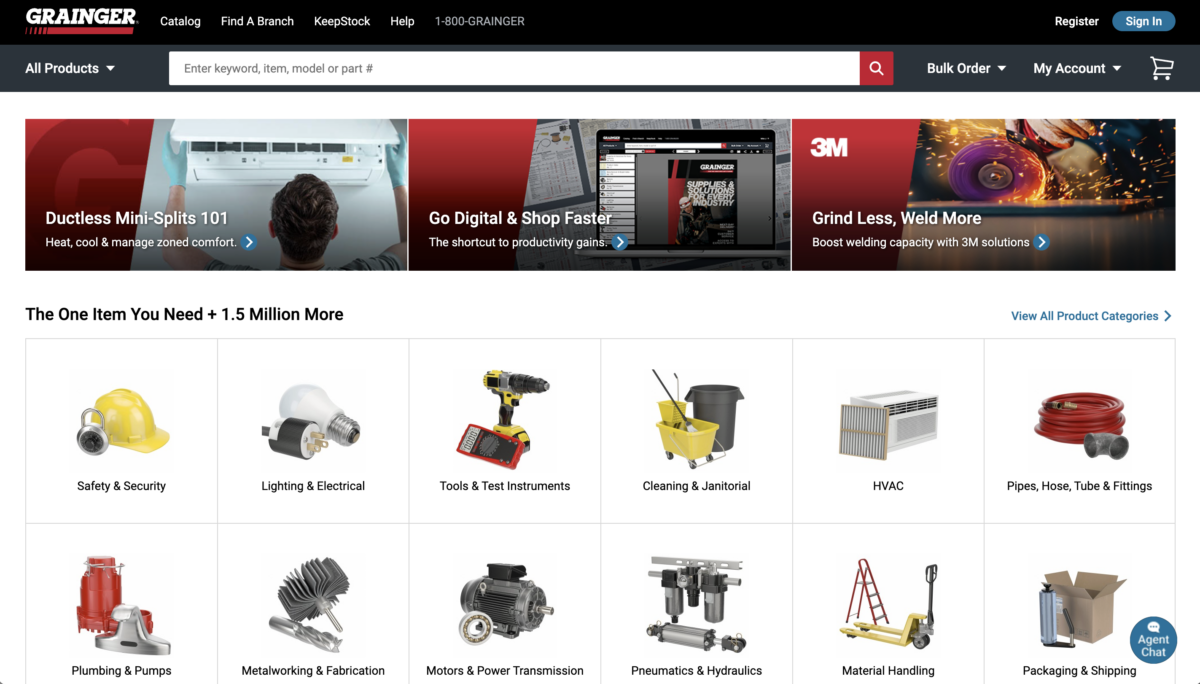
Grainger reported $17.9 billion in full-year 2025 sales in its official earnings release, and the operational story behind that number is its account-based experience layer. Grainger doesn’t have one ecommerce site; it has thousands. Every enterprise account gets a custom catalog and sign-in-gated contract pricing on Grainger.com, plus configurable approval workflows and PunchOut integration to major eProcurement systems including SAP, Oracle, Ariba, Coupa, and Jaggaer. From a marketing perspective, this is the entire account-based retention play in one platform. Once a procurement team is configured inside Grainger, switching costs are measured in months of integration work. The lesson for any B2B ecommerce operator: the more you embed inside the buyer’s procurement workflow, the more your retention metric stops being “did they come back” and starts being “did they architect us out.”
2. McMaster-Carr
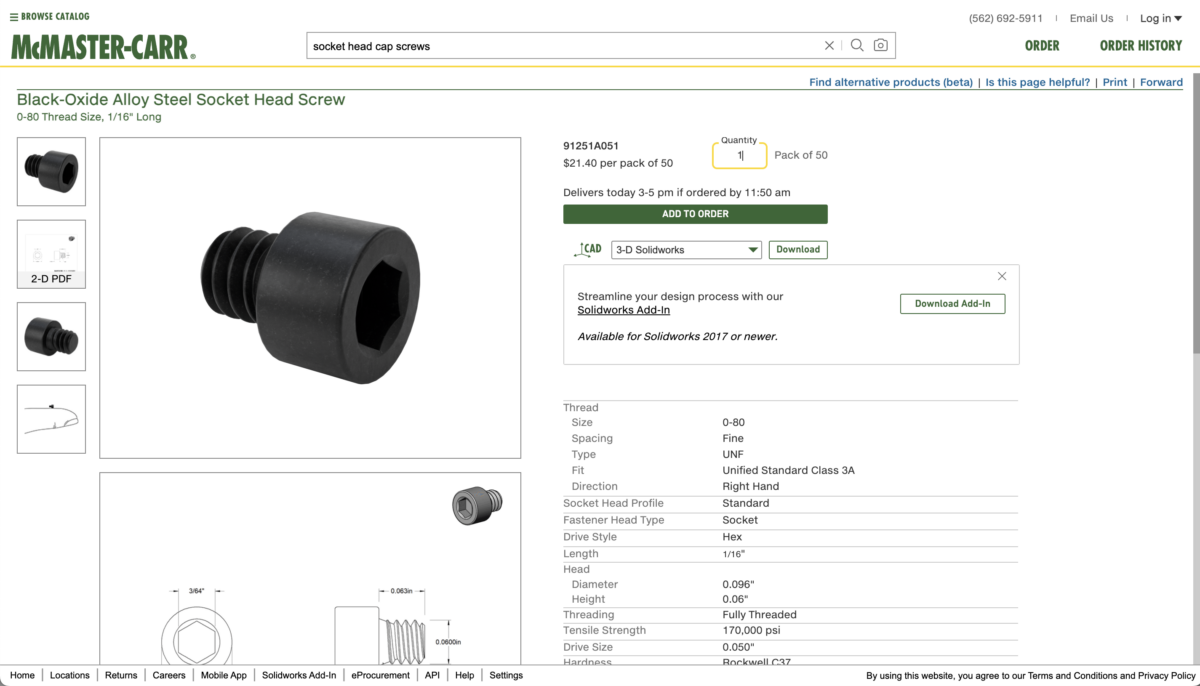
McMaster-Carr is the B2B ecommerce site engineers actually love, and the reason is brutal speed. No video, no oversized hero images, no inspirational marketing copy. Search is sub-second. Every product page shows complete technical specifications, dimensional drawings, material composition, and stock status above the fold. The category navigation is taxonomy-first: by product type, not by brand. For B2B marketers, McMaster-Carr is the antidote to “we need a more emotional storefront.” Their buyer is an engineer ordering a replacement bushing at 11 a.m. The whole site is engineered around removing every millisecond of friction between “I need this part” and “ship it today.” This is what a B2B ecommerce experience looks like when the marketing team builds for the actual user instead of the brand book.
3. Uline
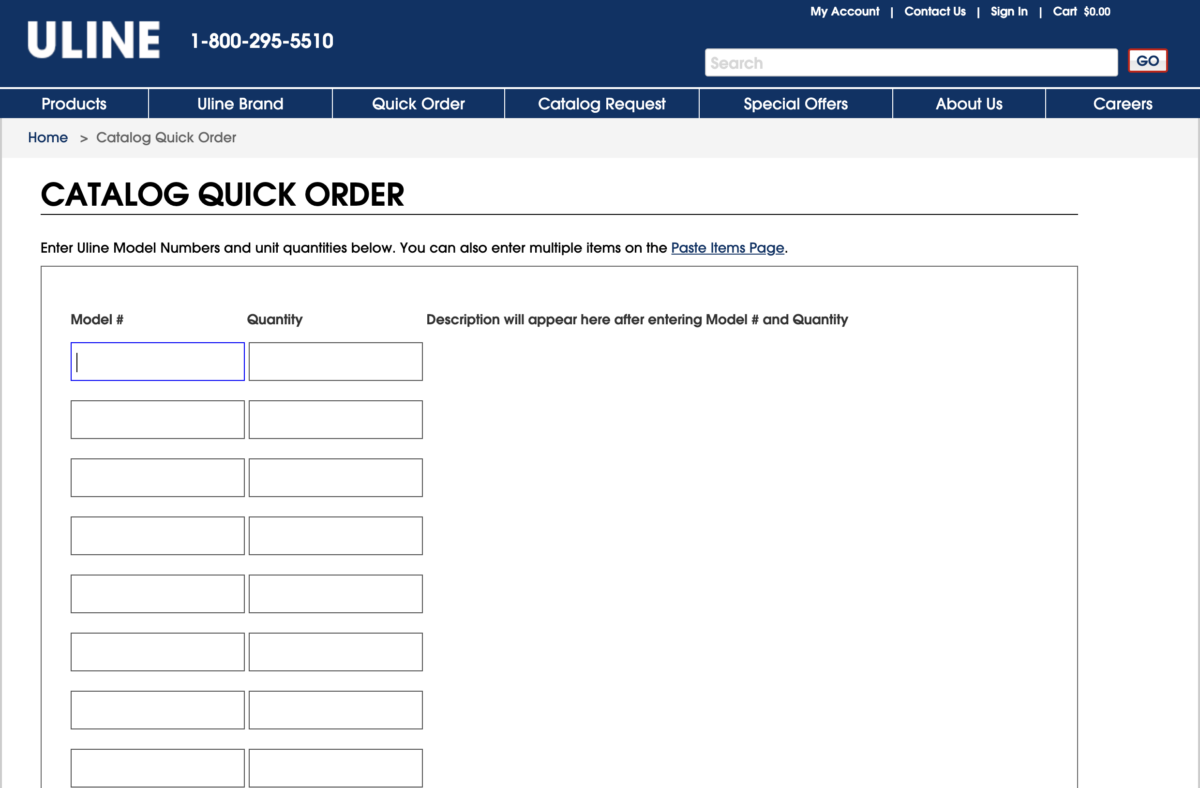
Uline’s catalog runs in two formats: a print catalog mailed widely to warehouse employees as a central element of Uline’s marketing strategy, and a digital ecommerce site at uline.com alongside it. The marketing pattern here is omnichannel coherence. Uline does not abandon print because digital is bigger. They use print as a brand and category memory device and digital as the transaction layer. Quantity price discounts encourage larger orders, and Uline’s Quick Order tool lets returning buyers enter model numbers and quantities directly without browsing the catalog. For mid-market B2B ecommerce sites, Uline is the model for how to make repeat ordering feel effortless without overengineering the experience.
4. Fastenal
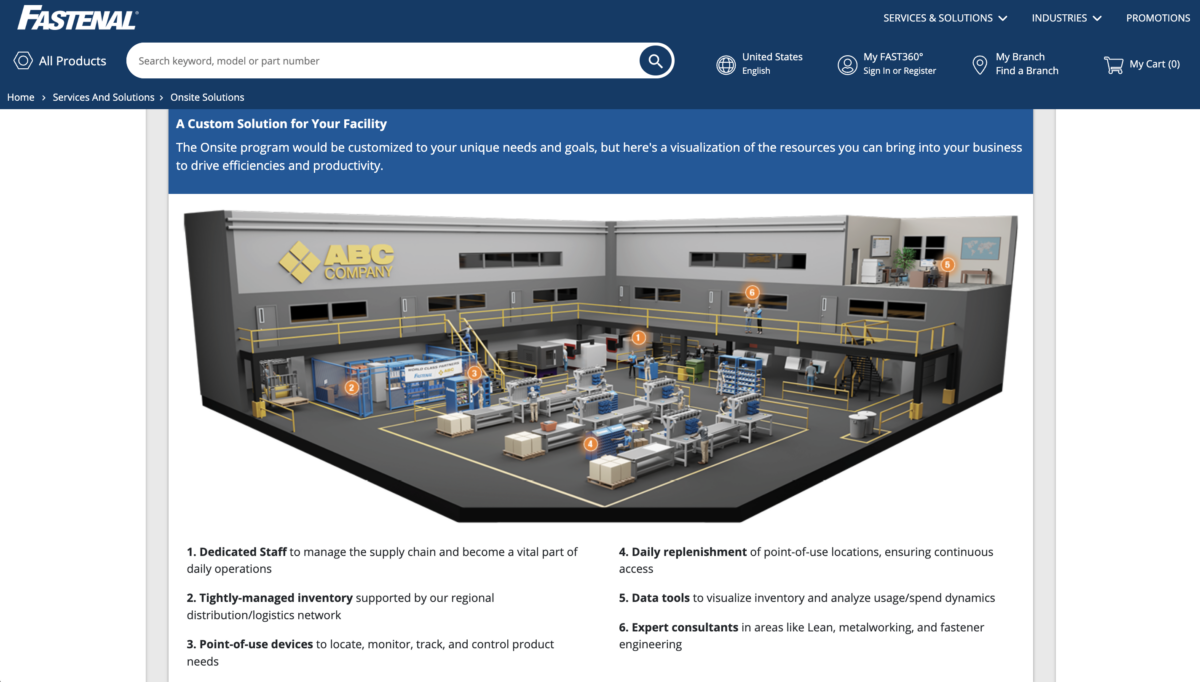
Fastenal blends online and in-person distribution in a way most B2B ecommerce operators ignore. The company runs branches, fulfillment centers, and on-site locations embedded inside customer facilities, with dedicated staff and point-of-use devices managing inventory at the customer’s workstations. Its “Digital Footprint” (ecommerce, EDI, and Fastenal Managed Inventory programs combined) represented 61.4% of total sales in 2025. The marketing system threads the two channels: industry coverage describes the integration as mutually reinforcing, with the physical footprint supporting ecommerce fulfillment and service delivery while ecommerce drives business back to the physical locations. This is the B2B version of buy-online-pickup-in-store, but with a human technical service layer attached. For any B2B ecommerce operator with a physical distribution footprint, Fastenal is the operational template: don’t treat ecommerce and field sales as separate channels, treat them as different surfaces of the same account.
Which B2B Ecommerce Examples Lead in Distribution and Wholesale?
Distribution and wholesale B2B ecommerce sites face a different marketing challenge than industrial MRO: the buyer is often a retailer or small business owner, the catalog is wide and shallow rather than deep and technical, and lead capture is the bottleneck because most buyers arrive without an account. The four examples below show how the best ones solve it.
5. Amazon Business
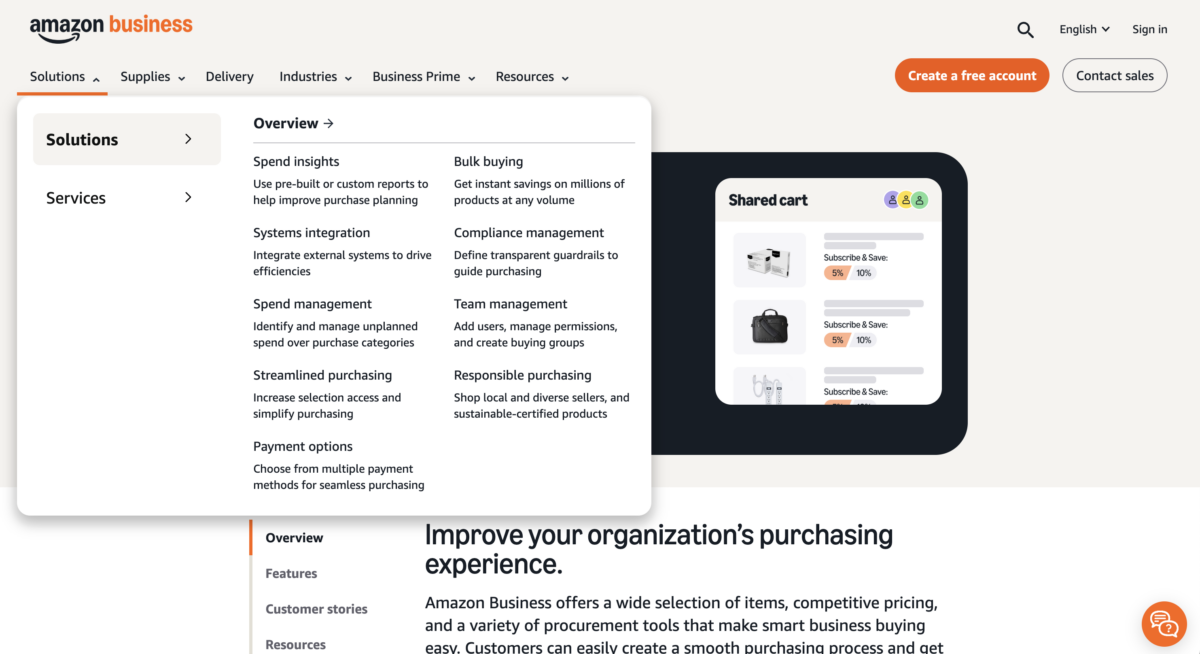
Amazon Business surpassed $35 billion in annualized gross sales in its 10th anniversary announcement, with 97 of the Fortune 100, 66 of the FTSE 100, and 38 of the DAX-40 companies among its more than 8 million global customers. The marketing story here is account architecture, not catalog. Amazon Business took every B2B procurement feature that used to require enterprise software (multi-user accounts, approval workflows, net terms, tax exemption, custom analytics) and embedded them inside the consumer Amazon experience that procurement managers already used at home. For B2B ecommerce operators, the lesson is psychological: the buyer at work and the buyer at home are the same human, and the friction tolerance they bring to a procurement portal is calibrated by the consumer experience they had on Sunday night. Match it or lose.
Make Your Marketing Finally Work Together
My latest book helps small businesses, entrepreneurs, and marketers bring search, email, and social together into one digital marketing strategy that actually compounds.
Drawing on my work as a Fractional CMO, Digital Threads turns complicated tactics into a clear, practical plan you can follow, whatever your budget or team size.
Grab your copy on Amazon and start weaving your own digital threads. Click the cover or the button below to get started.

6. Alibaba.com
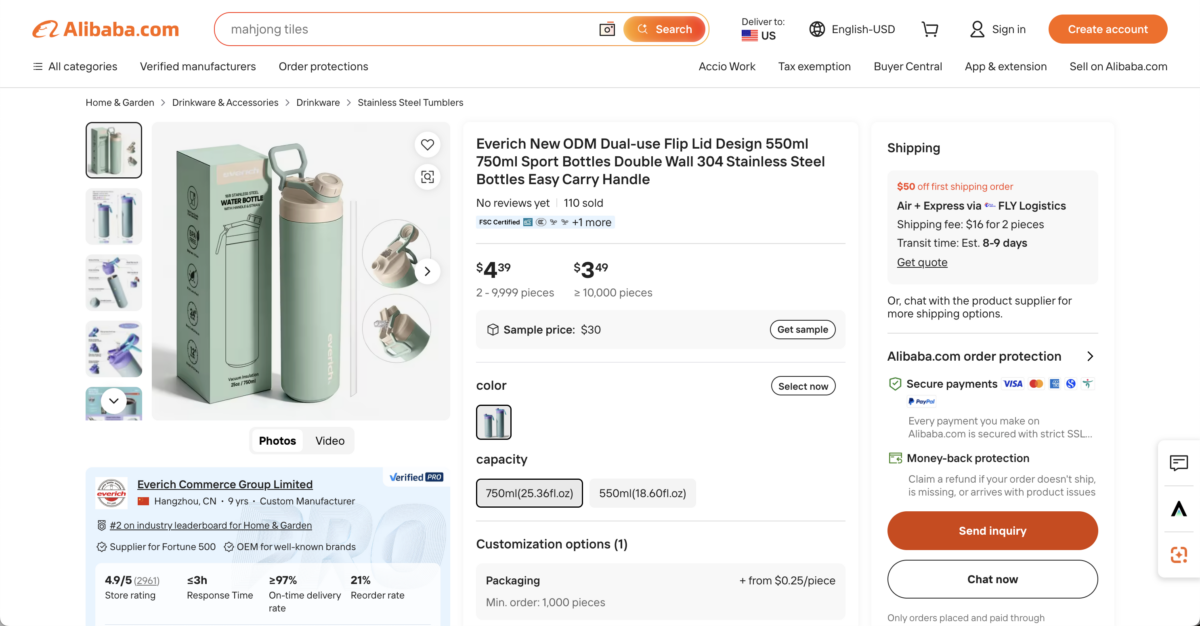
Alibaba is the B2B ecommerce example that handles the international lead capture problem better than any Western site. The home page asks one question: what do you want to source. Every product page is structured to drive a quote inquiry: minimum order quantity, supplier verification badges, sample order pricing, trade assurance terms, and a quote-request button anchored to the right rail. Alibaba treats the catalog as a directory and the conversion event as the supplier connection, not the immediate sale. For any B2B ecommerce operator selling internationally or selling configurable products that don’t have a standard price, Alibaba is the model for separating “I’m browsing” intent from “I’m sourcing” intent and routing each one differently.
7. Ferguson
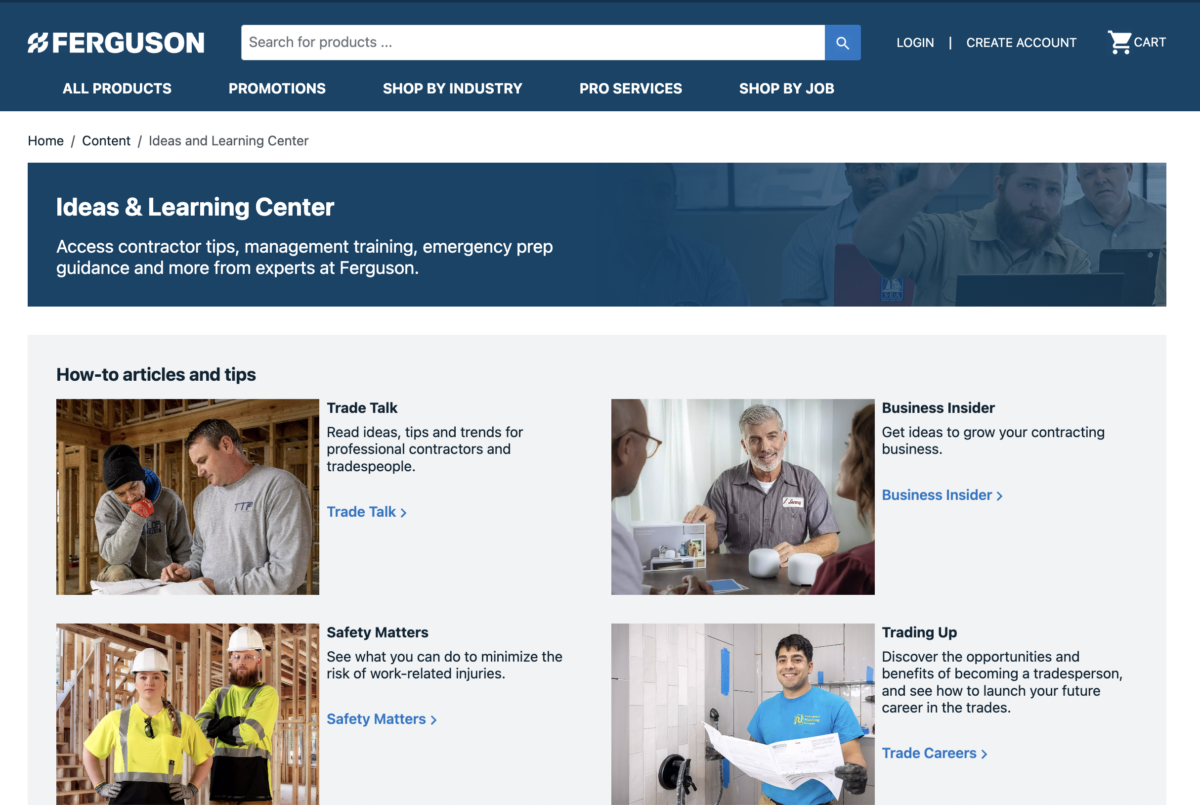
Ferguson sells plumbing, HVAC, and waterworks supplies to contractors and serves a B2B audience that researches like consumers and orders like enterprises. Their content marketing is the unsung hero of their ecommerce site, anchored by the Ideas & Learning Center — a hub of contractor tips, technical guides, installation videos, and business training resources targeted at professional contractors and tradespeople. From a B2B SEO standpoint, the model is textbook: educational content earns the search visit from a contractor researching a project, and the same site closes the transaction. For B2B ecommerce sites that have a content team but treat the blog as a marketing afterthought, Ferguson is the proof that education-led content is a primary lead capture asset, not a brand exercise. The same logic applies to SEO for ecommerce in general: ranking is downstream of being genuinely useful to the buyer at the moment of research.
Which B2B Ecommerce Examples Lead in Specialty B2B Distribution and Components?
Manufacturing and component B2B ecommerce sites face a unique problem: the catalog is highly technical, the buyer is often an engineer or a specifier, and the purchase decision frequently runs through multiple stakeholders inside the customer organization. The three examples below show how the strongest sites handle that complexity.
8. Berlin Packaging
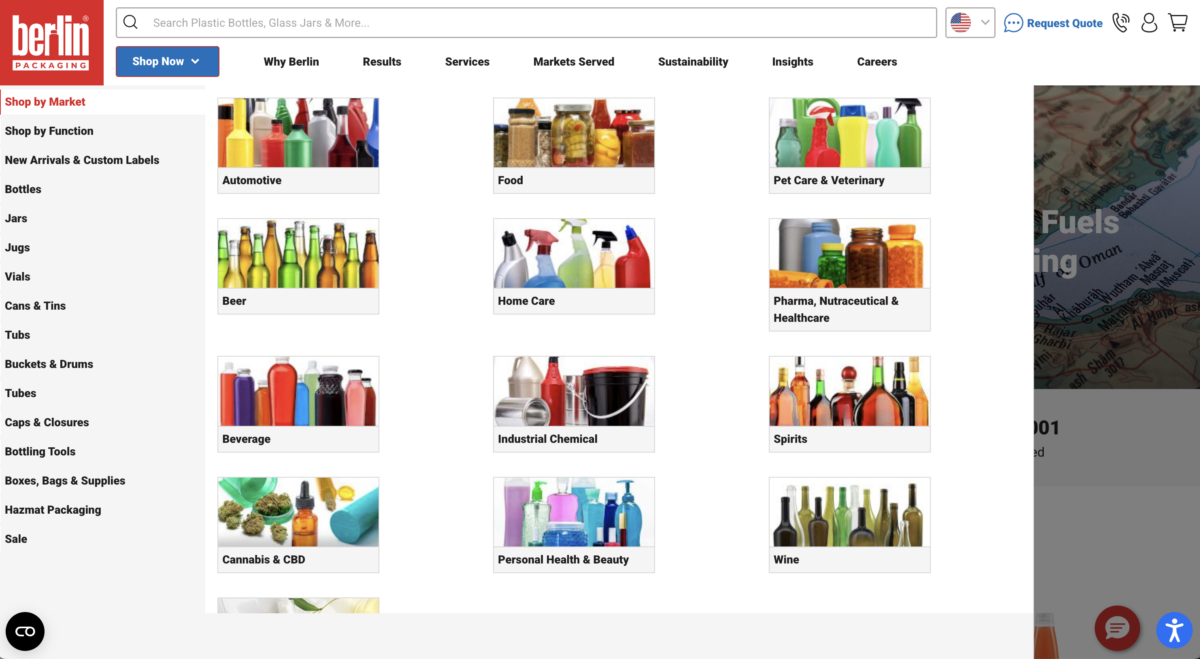
Berlin Packaging, described as the world’s largest Hybrid Packaging Supplier of glass, plastic, and metal containers, organizes its site around industry-specific packaging solutions rather than SKU browsing. The “Shop by Market” navigation routes buyers to dedicated sections for Food, Beverage, Beer, Wine, Spirits, Cosmetic, Personal Health & Beauty, Home Care, Pharma/Nutraceutical/Healthcare, Industrial Chemical, Automotive, Pet Care & Veterinary, and Cannabis & CBD, with each section emphasizing the solutions and case studies relevant to that vertical rather than a generic product catalog. The lesson for B2B ecommerce operators: if your product requires the buyer to make several upstream decisions before choosing a SKU, the navigation should mirror the decision sequence by industry, not the catalog’s internal taxonomy. That’s information architecture as a conversion tool.
9. RS Components
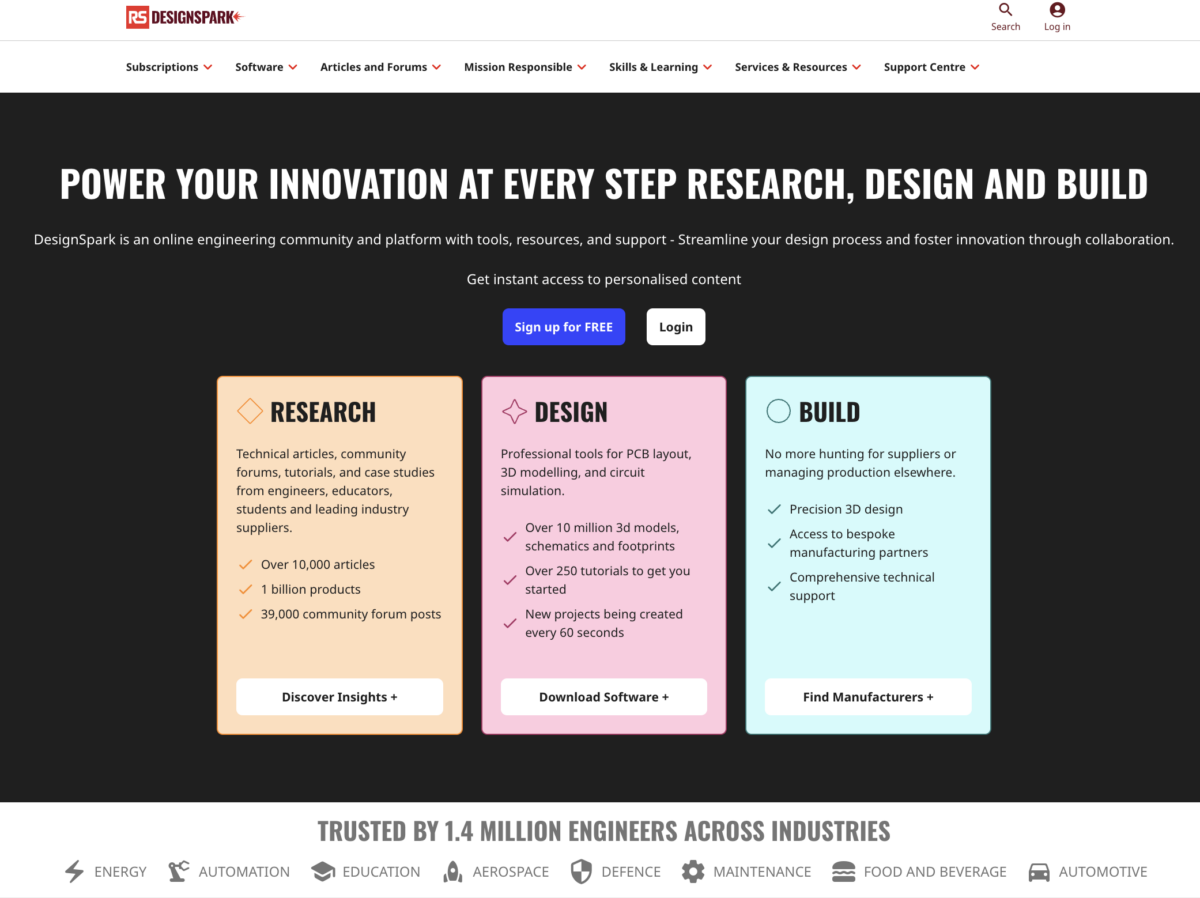
RS Components (now operating as RS in many regions) sells electronic components to engineers and procurement teams worldwide, and the company’s marketing system is built around the integration of technical content and commerce. RS operates DesignSpark, an online engineering community now trusted by 1.4 million engineers across industries, offering free design software for mechanical design, PCB layout, and circuit simulation. For B2B ecommerce sites in technical categories, RS Components proves that a full ecommerce marketing strategy needs an editorial and developer-tools team, not just a paid media team.
Which B2B Ecommerce Examples Lead in Specialty B2B Verticals?
The final two B2B ecommerce examples come from specialty verticals: custom plastics and office supplies. The shared marketing pattern is that these sites all succeed by going deep on a vertical that bigger, broader marketplaces cannot serve as well.
10. Curbell Plastics
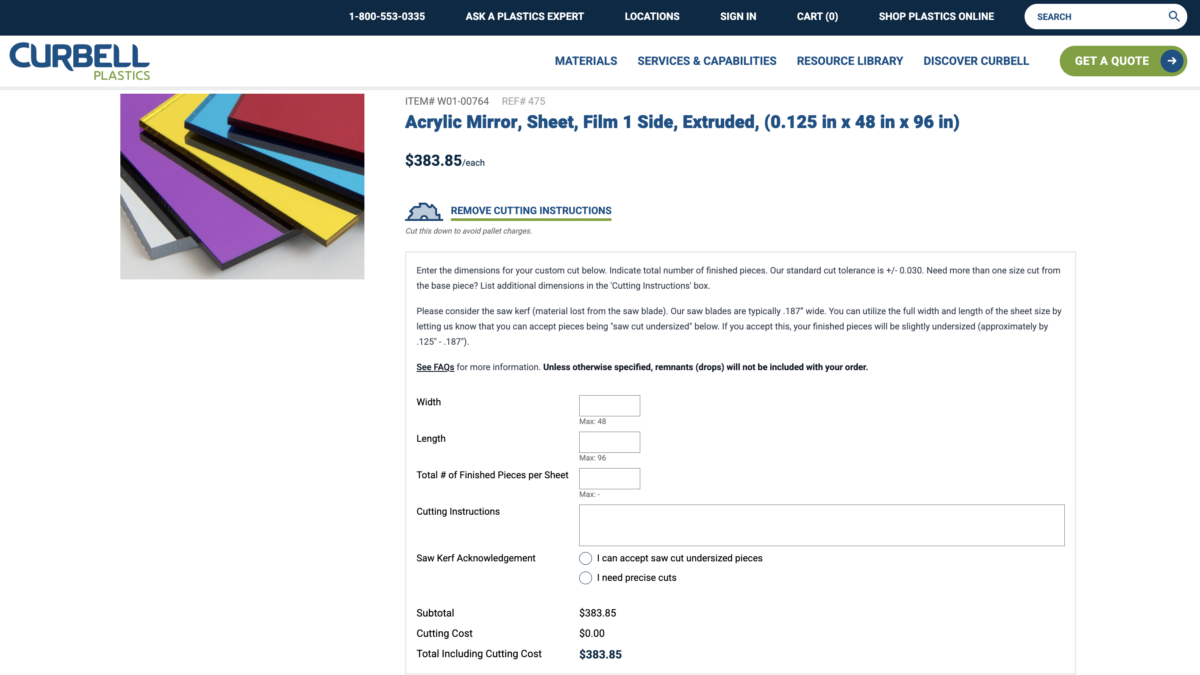
Curbell Plastics sells plastic sheets, rods, and tubes to fabricators, and the standout marketing pattern is their cut-to-size ordering exposed as an ecommerce feature. After selecting a material, a buyer can enter the number of pieces and finished dimensions for straight cuts and proceed directly to checkout without going through a sales rep. Complex cuts or fabrication services route through a Get a Quote form, but standard cut-to-size orders are self-service. For B2B ecommerce sites selling configurable products, Curbell is the example of how to expose the simpler customization paths in the storefront, reducing sales cycle time and recapturing buyers who would have abandoned a “request a quote” form.
11. Quill
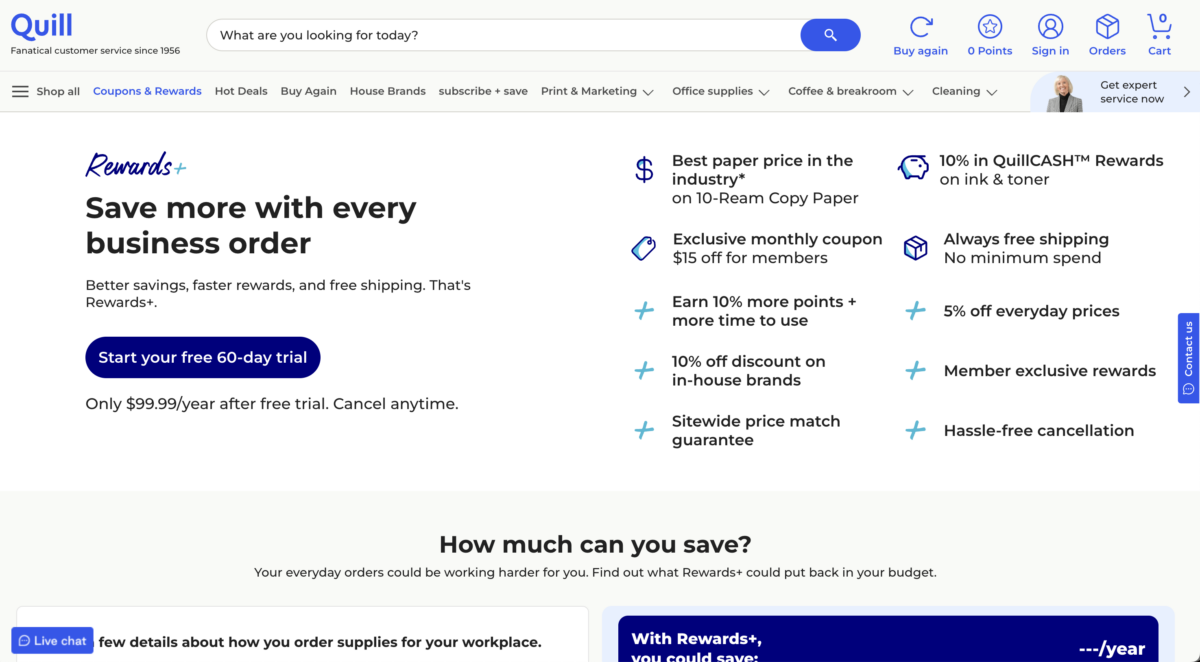
Quill is the office supply ecommerce site owned by Staples, and the marketing pattern worth stealing is their account-based loyalty program. Quill’s Rewards+ paid membership gives members 5% off everyday prices, free shipping with no order minimum, and QuillCASH rewards that earn 10% back on ink and toner purchases redeemable at checkout. Self-serve account management includes order tracking, reorder lists, favorites, and savings analysis reporting. For B2B ecommerce operators who think loyalty programs are only a B2C trick, Quill is the proof that account-based loyalty mechanics work just as well when the buyer is procuring for an office of 50 people as when they’re buying for themselves.
Quick Reference: 11 B2B Ecommerce Examples and Their Standout Marketing Patterns
The table below maps each of the 11 B2B ecommerce examples to the single marketing pattern most worth stealing for your own site. Each pattern is independently transferable, regardless of whether your vertical matches the example. Read the rows in your category first, then scan the rest.
| # | B2B Ecommerce Example | Vertical | Standout Marketing Pattern |
|---|---|---|---|
| 1 | Grainger | Industrial MRO | Account-based catalog with ERP punchout |
| 2 | McMaster-Carr | Industrial MRO | Search and catalog speed above all |
| 3 | Uline | Industrial MRO | Omnichannel print and digital coherence |
| 4 | Fastenal | Industrial MRO | Branch network as an extension of ecommerce |
| 5 | Amazon Business | Distribution | Consumer-grade UX with enterprise procurement |
| 6 | Alibaba.com | International wholesale | Quote inquiry as primary conversion event |
| 7 | Ferguson | Plumbing/HVAC distribution | Education-led content as lead capture |
| 8 | Berlin Packaging | Packaging | Industry-segmented solution navigation |
| 9 | RS Components | Electronic components | Technical content community integrated with commerce |
| 10 | Curbell Plastics | Custom plastics | Self-service cut-to-size ordering |
| 11 | Quill | Office supplies | Account-based loyalty mechanics |
What Marketing Patterns Do the Best B2B Ecommerce Sites All Share?
The 11 sites above span verticals, customer sizes, and product complexities, but the marketing patterns that show up across all of them cluster into five repeatable plays.
Before walking through each pattern, the table below shows which of the 11 examples best demonstrates each one. If you want to pick a single site to study deeply for any of the five systems, the right column tells you where to start.
| Marketing Pattern | Best Demonstrated By | Why |
|---|---|---|
| Technical search and catalog speed | McMaster-Carr, RS Components | Sub-second search, full specs surfaced, no UX bloat |
| Account-based experiences | Grainger, Amazon Business, Quill | ERP punchout, multi-user accounts, loyalty mechanics |
| Education-led content marketing | Ferguson, RS Components, Berlin Packaging | Editorial operations adjacent to the catalog |
| Frictionless quote-to-order flow | Curbell Plastics, Alibaba | Instant config pricing and structured quote forms |
| Account-based retention | Grainger, Uline, Amazon Business, Quill | Reorder tools, ERP lock-in, loyalty programs |
The B2B ecommerce sites that consistently win on revenue per visitor share these underlying systems, regardless of what they sell.
First, technical search and catalog speed. Every great B2B ecommerce site has search that returns the right SKU in under two seconds with stock and price visible. None of them prioritize hero imagery over information density. The buyer is at work. The buyer is solving a procurement problem. Speed wins.
Second, account-based experiences. Every site above offers some form of contract pricing, multi-user accounts, approval workflows, or order history personalization. The McKinsey B2B Pulse data cited earlier on buyer willingness to spend over $500,000 per order through digital channels is only credible because these account-based features exist to support those big-ticket transactions. Gartner now predicts 90% of B2B buying will be AI agent intermediated by 2028, pushing over $15 trillion of B2B spend through AI agent exchanges, which only becomes possible when the underlying account data layer is already structured and clean. The AI in ecommerce shift is changing the calculus for catalog completeness, dynamic pricing, and how account-level data needs to be structured to feed agentic buying systems. A useful illustration of what account-layer consolidation looks like in practice is veterinary medtech brand Movora’s documented platform consolidation, which unified 20+ disparate brand websites onto BigCommerce B2B Edition integrated with Microsoft Business Central ERP and Akeneo PIM.
Third, education-led content marketing. Ferguson, RS Components, and Berlin Packaging all run substantial editorial operations alongside their catalogs. The content earns the search visit, and the catalog converts it. This is the B2B equivalent of ecommerce SEO for top-of-funnel: it brings the buyer in. The checkout closes the loop. Andy Lambert, author of Social 3.0 and a senior product manager at Adobe, told me on my podcast that the B2B growth flywheel at his prior company ContentCal was built on consistent educational content marketing with a weekly co-hosted webinar as the cornerstone, not on any clever single-shot growth hack. The same dynamic shows up at every B2B ecommerce site in this list that succeeds on content: consistency beats cleverness.
Fourth, frictionless quote-to-order flow. Curbell Plastics exposes configuration on the product page. Alibaba routes every inquiry through a structured quote form. Each approach removes a different friction point between “I’m interested” and “I’m a customer.” Most B2B ecommerce sites still have at least one massive friction point in this stage. Fixing it is usually the single biggest lift available to your ecommerce conversion rate.
Fifth, account-based retention. Quill’s loyalty program. Grainger’s ERP integration. Uline’s Quick Order tool. Amazon Business’s Business Prime Rewards. Every site I selected has at least one mechanism for making the second order easier than the first, which is the entire game in B2B. As McKinsey’s Liz Harrison, co-author of the B2B Pulse Survey, put it in an interview with Digital Commerce 360:
“Omnichannel is here to stay and the rule of thirds rules all (a combination of in-person interactions, remote communications, and digital self-serve).”
A B2B ecommerce site is the operating layer of the customer relationship, and it should be staffed, funded, and prioritized that way.
How Can You Apply These B2B Ecommerce Examples to Your Own Site?
Most B2B ecommerce operators are working with limited time and budget, so applying everything in this post simultaneously is unrealistic. The pragmatic move is to pick the example closest to your vertical, audit your site against the marketing pattern that example does best, and ship a single improvement before moving to the next.
If you sell industrial or MRO products, Grainger and McMaster-Carr are your benchmarks. Start with search speed and catalog completeness, then layer in account-based pricing for your top 20% of accounts. If you sell technical components, Ferguson and RS Components show you what an education-led SEO strategy looks like in a B2B catalog environment. For all of these, the most current ecommerce statistics are worth keeping in front of your team as a reminder that the buyer expectations driving these patterns aren’t slowing down.
One more observation worth making. Plenty of B2B ecommerce operators invest heavily in rebuilding the visual design of their site without touching the search layer, the account features, or the content strategy. The new site looks great in the leadership all-hands. The conversion rate moves zero. The redesign that matters is the marketing-system redesign. Visual refresh is the last 10%, not the first 90%.
Frequently Asked Questions About B2B Ecommerce Examples
B2B ecommerce is the online sale of goods or services from one business to another through a digital storefront, marketplace, or self-service portal, with features that support how professional buyers actually purchase: tiered or account-specific pricing, multi-user approval workflows, net payment terms, bulk ordering tools, and ERP or procurement system integration.
B2B ecommerce examples like Grainger, Amazon Business, and Alibaba are built around contract pricing, repeat buying, multi-stakeholder approval, and substantially larger average order values than B2C. B2C examples optimize for impulse, emotion, and single-buyer decision-making. The catalog depth and technical specificity required in B2B also far exceeds what most B2C sites need to surface.
The platforms vary widely. Grainger, Amazon Business, and Alibaba run proprietary platforms. Mid-market B2B brands often use Shopify Plus, BigCommerce, Adobe Commerce (Magento), Salesforce Commerce Cloud, or specialist B2B platforms like Oro Commerce. The platform matters less than the marketing systems built on top of it. You can run a strong B2B ecommerce site on any of those platforms if your search, account features, content, and retention plays are right.
The global B2B ecommerce market was projected at roughly $36 trillion in 2026 per the International Trade Administration, with a 14.5% compound annual growth rate. That makes it several times larger than the global B2C ecommerce market.
If I had to pick one, I’d pick account-based retention. New customer acquisition in B2B is expensive, sales cycles are long, and the lifetime value of a well-onboarded account dwarfs single-transaction economics. Every B2B ecommerce example in this post wins on the second order, third order, and fiftieth order. That’s where the margin actually compounds.
Ready to Build a B2B Ecommerce Marketing Engine That Actually Converts?
The 11 B2B ecommerce examples above prove that great B2B ecommerce is built on marketing systems, not visual polish. Technical search, account-based experiences, education-led content, frictionless quote-to-order, and account-based retention are the five systems that show up across every site in the list. Pick the example closest to your vertical, steal one pattern, ship it, then move on to the next.
If you’re serious about which metrics actually predict B2B ecommerce growth, my post on the 14 ecommerce KPIs that predict growth is worth bookmarking. And if you’d like help architecting the digital marketing systems behind your own B2B ecommerce site, grab a free preview of my book Digital Threads or get in touch about my Fractional CMO services.