
One of the great maxims of our culture is that nothing stays the same. Trends are a part of life, whether it’s fashion, communications, or even architecture. People even talk about trends, especially as they impact everyday life. And, in the last couple of decades, social media trends have become a growing concern for consumers and marketers alike. In this article, we’ll look at the major trends we’re seeing this year. Hopefully, this will help to guide your decision-making.
Key Takeaways
✅ Social media has become a revenue channel, not just an awareness channel. Social commerce, creator monetization, and paid distribution all move money through the same platforms, which is why social budgets increasingly get judged on social media ROI rather than on reach.
✅ Video keeps absorbing the format innovation. Short-form serials are the newest version of it: Deloitte predicts that in-app micro-series revenue will more than double in 2026, reaching $7.8 billion.
✅ Organic and paid do different jobs now. Organic builds the relationship, paid buys the distribution, and treating organic social media as a free substitute for advertising is one of the more common mistakes I run into in client work.
✅ Brands get held accountable in public, and staying quiet still reads as a position. Supply chains, labor practices, and inclusivity all get argued over on social, so what a company does offline eventually shows up in its mentions.
✅ Chasing every trend is how a strategy comes apart. Pick the two or three shifts that touch your audience and your business model, build them into your social media strategy, and let the rest go by.
The Social Media Economy Expands
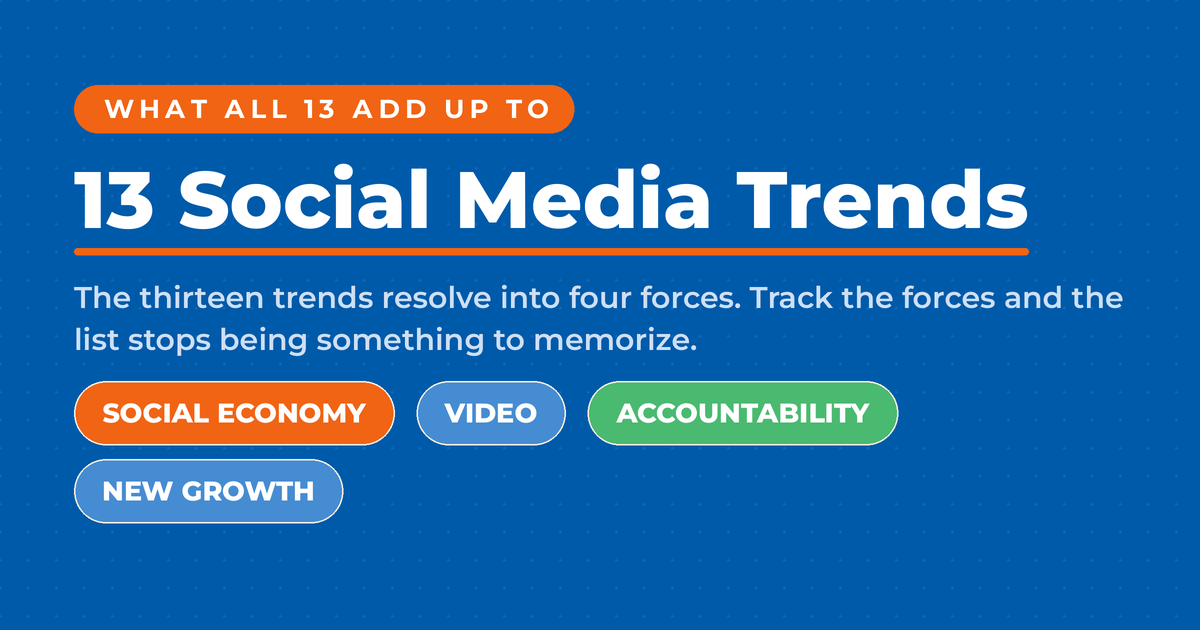
Among the 2026 social media trends, we do recognize a pattern: the social media economy is expanding. For our purposes, the social media economy involves people spending and making money online. This can include monetizing content, shopping, subscriptions, advertising, and more. Let’s take a look at this category of developments.
1. Social Media Becoming a Stronger Shopping Platform
Social media has gone from a minor shopping channel to a genuine retail format with its own rules. Shoppable posts, in-app checkout, and creator storefronts now carry the whole path from discovery to payment, and messaging apps handle a growing share of the customer service around it.
The buying is not confined to one age group either. One-third of US adults aged 18 to 34 have made a purchase on social media, against 23% of 35 to 54 year olds and 13% of adults between 55 and 65, per a Bizrate Insights survey for EMARKETER.
Live shopping and creator-led selling took hold in China years before they landed in the US, and that gap has closed faster than most Western marketers expected. TikTok Shop is the clearest case, which is why I gave it a separate guide on how to sell on TikTok Shop instead of a paragraph here.
In my client work, the brands getting results from this treat creators as a sales channel with its own targets, not as an awareness buy that happens to have a link in it.
2. Paid Social Media Continues to Increase
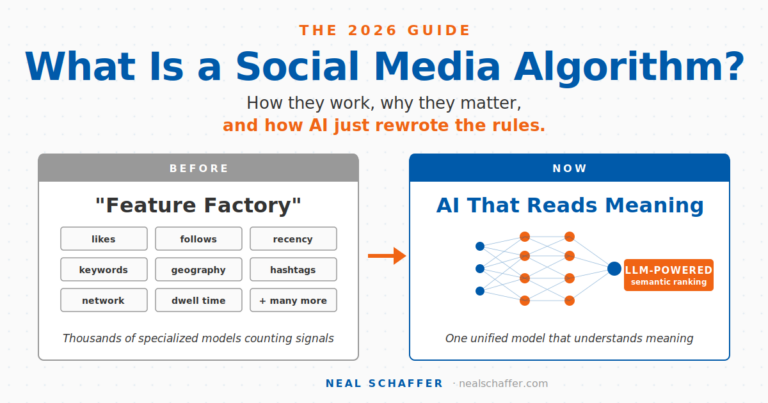
Similarly, brands are meeting the trends by spending more on social media advertising. Especially since networks like Facebook have long since placed organic branded content at a disadvantage, this is one of the more long-term social media trends. Ad spending has risen steadily for many years, and marketers expect the trend to continue over the long term. That disadvantage is a design choice rather than an accident, and understanding how social media algorithms decide what gets shown explains why paid distribution keeps absorbing more of the budget. Brands that don’t advertise on social media are missing out on a lot of potential revenue.
3. Boom of Creator Economy / Brand Collaboration with Content Creators / Nano and Micro Influencers
If you’ve spent a significant amount of time on YouTube, you’ve probably noticed that a lot of channels are monetized. Whether that is a subscription through YouTube, an outside sponsorship site, or even branded collaborations.
Speaking of collaborations on YouTube, this concept isn’t new. In fact, it was the rise of influencer marketing that helped create the concept of paid sponsorships. It used to be that social media content creators either published content to be famous or to keep track of their network. Monetization options were minimal at best.
The rise of influencer marketing changed everything in this regard. Companies found that influencers would talk about products, and their followers would often buy them. Over time, influencers started getting paid sponsorships because brands saw the value of these advertisements. Influencer marketing spending has grown to the extent that some companies spend a large part of their marketing budget on it. In addition, even influencers with relatively small subscriber bases are now part of the marketing scene.
That trend kept going, and the ways creators earn have changed with it. Courses, memberships, affiliate commissions, brand deals, and in-app shopping have taken the place of the speculative experiments of a few years back. The scale is not small anymore: YouTube says it has paid over $100 billion to creators, artists, and media companies in the past four years, with more than 500,000 creators already using YouTube Shopping.
Content creation is a side gig for a lot of people and a full-time job for a growing number of them. For the wider picture of how much money moves through this economy and who actually captures it, I keep a separate set of creator economy statistics.
Video
While social media started out as a primary text and graphics-based medium, it has long since grown beyond these boundaries. Nowadays, social media includes videos of all lengths and types. Some are elaborate, while others can be taken with a smartphone and posted right away. The options are endless, so it’s unsurprising that video content makes up some of the social media trends for 2026.
4. Continued Domination of Video Content
YouTube is no longer just the largest video website. It is the largest single distributor of television watching in the United States, taking a platform-best 13.8% of all US TV watch-time in May 2026, its third straight month ahead of every other distributor, while streaming as a whole reached 48.6% of total TV usage, according to Nielsen.
What makes that figure worth sitting with is what is behind it. A large share of those hours is creator-made rather than studio-made, and it is being watched on a living room screen right next to network television. Brand video now competes in that same lineup, which is a harder job than competing on a website. My roundup of video marketing statistics carries the rest of the numbers.
However, YouTube isn’t the only show in town for video content. There’s Facebook Live, Vimeo, Instagram, and many more platforms. Added together, the potential for people and brands to distinguish themselves through video is incredible.
5. Short-form Video Content is Still Booming
Short-form content options include YouTube Shorts, Instagram Reels, TikTok, Pinterest Idea Pins, and Google Web Stories. Many of these options, like TikTok and YouTube Shorts, have emerged over the last few years. And while YouTube Shorts is an expansion of an existing platform, TikTok is something we hadn’t heard of until recently. In a free marketplace, new opportunities are bound to crop up whenever there’s money to be made. The very existence of newer video content options shows that video remains one of the big social media trends.
Let’s look at this another way. TikTok took the world by storm when it branched out from the Chinese mainland. It’s young and hip, with a very young demographic. Unfortunately, it has also led to a lot of hazardous behavior to gain views. Nonetheless, there’s an increasing number of TikTok content creators who are paid influencers. If a short-form video wasn’t still cool, advertisers wouldn’t have started working with TikTok influencers. Inside China the pattern ran the other way, splintering into dozens of narrower networks rather than producing one global hit, and my roundup of the social media apps used in China covers the ones that stayed home.
Brand Accountability in Social Media
Social media is where brands get judged now, and the judging happens in public. Every large news event turns into a thread about which companies said something, which stayed quiet, and which said the wrong thing. Consumers have priced that in: 88% say trusting a brand is an important or critical purchase criterion, level with quality at 89% and value at 88%, according to the 2026 Edelman Trust Barometer special report on brands.
That is a different bar from the one brands faced ten years ago. Trust used to be a reputation problem, handled after something went wrong. It now sits inside the purchase decision itself, which puts it in the marketing plan rather than the crisis plan.
One Strategy to Connect All Your Marketing
My latest book helps small businesses, entrepreneurs, and marketers bring search, email, and social together into one digital marketing strategy that actually compounds.
Drawing on my work as a Fractional CMO, Digital Threads turns complicated tactics into a clear, practical plan you can follow, whatever your budget or team size.
Grab your copy on Amazon and start weaving your own digital threads. Click the cover or the button below to get started.

6. Increased Calls for Brand Accountability and Social Awareness
Once upon a time, brands could pretend to not care about anything going on in the world. They didn’t have to take a stand on social issues, and nobody really cared how they treated their employees. However, times have changed. One of the biggest social media trends is calling out brands for their stand on different social issues. Having the wrong position on some things can even get a brand “canceled.” Many events over the last two years have shown the extent to which this is true.
However, it isn’t just about social justice issues. Rather, people want to know if a company is transparent about its supply chains. Some major brands have gotten into a lot of trouble with consumers about bad labor practices. Wal-Mart and Apple are great examples: Wal-Mart gets pressurized for low wages, and Apple is often accused of using factories with poor working conditions. In both cases, the war is waged on social media in addition to other forums.
7. Renewed Focus on Inclusivity & Diversity
These days, when companies commit a perceived injustice against an employee that belongs to a “disadvantaged” group they often get called out on social media. This shows another one of our social media trends: a focus on inclusivity and diversity. In response to this trend, many employers talk about how well their brand treats minorities, women, and LGBTQ people, among others. Companies also have committees that look for ways to be more inclusive and diverse.
The calculation has gotten harder, because audiences are pulling apart rather than converging. The same Edelman research found that 66% of consumers are hesitant or unwilling to trust someone different from them, and that 30% of that group will not use brands that people unlike them use. Taking a position no longer wins one audience without costing another.
So the practical question is not whether to say something. It is which audience your business is actually built to serve, and whether the position is one you can hold for years rather than for one news cycle. Knowing your social media demographics before you take a stance is less exciting than the stance itself, and a lot more useful.
“New” Areas of Growth in Social Media
Some of these shifts have been visible for years. Others are still forming, and the smaller networks are where a lot of that forming happens. Audiences have scattered across more apps than any brand can reasonably staff, so the conversation about your company is frequently happening somewhere you are not.
That is the argument for treating social listening as a standing practice rather than a campaign add-on. A small network with the right few thousand people in it can matter more to your business than a large one where nobody is talking about your category.
8. TikTok’s Social Media Domination
TikTok is not the new arrival anymore. It is a mature platform with a mature ad business, and its short vertical format has been copied by every major network, which means the interesting question is no longer whether TikTok is big. Attention across mobile is what everyone is competing for: consumers spent 5.3 trillion hours in apps in 2025, roughly 3.6 hours per day per user, according to Sensor Tower.
What has not changed is that TikTok was built for the phone first, and its watch behavior still looks different from the desktop-era platforms. My separate roundup of TikTok statistics tracks where the audience and engagement numbers actually stand.
TikTok’s advantage is not only watch hours. Kantar’s Media Reactions 2025 study, built on interviews with more than 21,000 consumers and around 1,000 senior marketers, ranked TikTok third among consumers’ preferred ad platforms behind Amazon and Snapchat, with consumers calling TikTok ads attention-grabbing, fun and entertaining.
The gap worth noticing is who agrees. Marketers named a completely different top five in that same study: YouTube, Instagram, Google, Netflix and Spotify, with no brand appearing on both lists. If you are deciding where to put a small budget, that disconnect tells you more than any single platform ranking does, and I work through the practical version of it in my guide to social media advertising for small business.
9. Utilization of User-Generated Content
Among social media trends, the value of user-generated content is well-established. Influencer marketing, in general, has become a major market force, but these days it has become more collaborative. For example, shoppable Instagram posts put together by an influencer help to sell many units of product. With that said, other types of UGC also help sell things and increase brand awareness.
How effective is this technique? Some brands are even abandoning their content creation studio, or significantly scaling it back. Brands have found that there’s a much higher ROI when they pay an influencer to create content than there is when they buy traditional advertising. As social advertising costs rise, the ROI gap only grows.
10. Increasing Brand Connection and Personalization with Their Audience
Most of us have seen the “which ad do you prefer” prompt on certain video streaming services. This is a crude form of personalization, which is one of the latest social media trends. Over time, brands have realized that people are more likely to buy from brands they feel a personal connection to. In other words, the old “one size fits all” model doesn’t work like it used to.
How are marketers leveraging these social media trends? Simply put, they personalize the messages for each market segment. In many cases, ads are also personalized based on browsing history. For instance, a gourmet food company might learn from big data that you love Japanese food, then serve ads for authentic teriyaki sauce. This practice has been common on most web pages for years. The difference now is that you’re seeing increased personalization on social media, too.
11. Embracing the “Smaller” Platforms such as Pinterest, LinkedIn and Snapchat
While some have focused on Facebook, Instagram and TikTok, there is also renewed interest in other large social networks such as Pinterest, LinkedIn, and Snapchat. In other words, video and pictures aren’t the only content types that are benefitting from recent social media trends. Plus, the size of the social network doesn’t make as much difference as it once did.
Pinterest has kept growing well past its early spike. The company reported 640 million monthly active users in the second quarter of 2026, up 11% year over year and its eleventh straight quarter of double-digit user growth. That is not a platform coasting on an old bump.
The reason is what it always was. Pinterest is an ideas-based network where people arrive to plan something, so the intent shows up before the purchase does. If you have filed it away as a hobby network, my case for why Pinterest counts as social media makes the argument in full.
Even professional networks have benefitted from changing social media trends. Organic engagement on LinkedIn seems to be alive and well when compared to Facebook. With the need to move much professional networking online, it’s unsurprising that people spend more time on LinkedIn. And, since networking requires a lot of interaction, organic engagement has skyrocketed.
Finally, Snapchat is quickly becoming a favorite 2nd messaging platform for Gen Z and is not going away. Snapchat has always enjoyed a larger following among the younger generations. However, it was having trouble for a while, with other social networks closing in. The usefulness of Snapchat for messaging, however, has helped reverse their fortunes.
12. Increasing B2B Social Community Building
When someone mentions social media communities, most of us think about B2C marketing and special affinity groups. However, one of the latest social media trends is that B2B brands are building communities on social networks such as Facebook. These communities will usually share tips and tricks that are industry-specific while also talking about products. Over time, business decision-makers build brand affinity and, when the time comes, buy what they need from that company.
13. Meme Marketing
Finally, memes are joining the latest social media trends. While memes have been around for a long time, their use in social media marketing is much newer. Yet, in some ways, it’s surprising that advertisers have taken so long to embrace this cultural artifact as a way to sell things. After all, humor has been a part of marketing for a long time.
Why are memes becoming so popular as a marketing tool? In short, because they’re engaging and funny. Memes often comment on cultural realities, make fun of crazy situations, or simply tell a joke. And, in an age when most of us need a good laugh, memes deliver. Using them to sell things is a natural development.
Frequently Asked Questions About Social Media Trends
The ones that touch how your buyers already find and evaluate you. For most small businesses that is social search behavior, short-form video, and creator partnerships, and it is rarely being early on a brand new platform. Checking your own numbers against the broader social media marketing statistics is a faster way to decide than reading another trend list.
Use it for research, first drafts, and analytics, with a human pass before anything publishes. Disclosure is also heading toward becoming a requirement: Deloitte predicts that in 2026 generative video could prompt US rules requiring labeling for AI-generated content published on social platforms.
Start with where your customers already spend time, not where the growth headlines point. A social media audit of the accounts you already run will usually show you which network is quietly producing results and which one you keep posting to out of habit.
Quarterly for tactics, once a year for the strategy itself. Formats and platform features move fast enough that a quarterly review earns its hour, but rebuilding your positioning every time a new format launches tends to cost more than it returns.
What is the Future of Social Media Trends?
There’s little question that social media trends have included some continuations from earlier years. However, since the beginning of the pandemic, some other trends have emerged. As marketers, it’s critical that we keep track of these trends to continue providing relevant, effective marketing for our clients or employers. One of the most reliable ways to stay ahead of them is attending the best social media and digital marketing conferences, where the shifts you just read about get argued over on stage months before they show up in your feed. For the week-to-week version of that same job, X is still the fastest place to see a story form, and my guide to Twitter trends covers how to read that list as research instead of as a content calendar. In return, we’ll get a really good ROI that is brag-worthy for years.