


The explosion of the TikTok platform has forced many content creators to reconsider their strategy. While almost all of them previously devoted hours and hours to making long-form tutorial or explainer videos, we are seeing more and more short-form content as attention spans dwindle and creators find it allows them to produce a greater quantity of content in a constant battle for views.
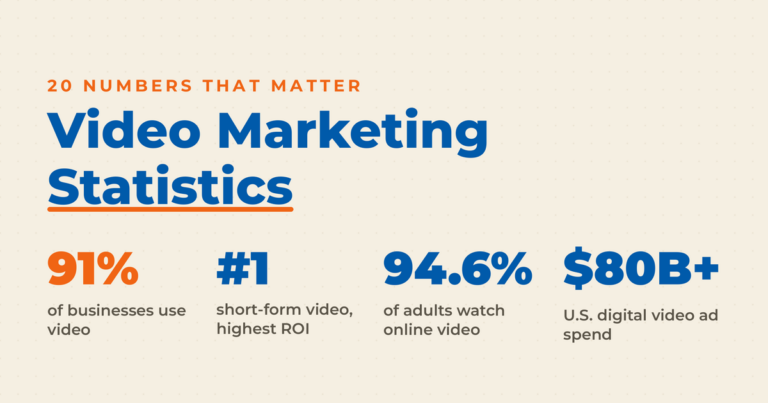
Short-form videos take much less time to create, but are often just as effective in gaining views, and are becoming increasingly more effective towards growing your reach online. The wider body of video marketing statistics puts that shift in context. But none of the short-form platforms have figured out how to properly monetize this content and reward creators for their efforts. Until Now.
Shorts creators have been able to qualify for the YouTube Partner Program (YPP) since February 1, 2023, when YouTube began sharing ad revenue from the Shorts Feed. That path is now a permanent part of the program, and a second, lower entry tier has been added since.
So what does this mean for content creators? How about YouTube? And what about TikTok, who now faces a head to head battle with one of the most experienced advertising partners to ever exist?
Key Takeaways
✅ Shorts creators keep 45% of the revenue allocated to them from the Creator Pool, whether or not the video uses music, according to YouTube’s Shorts monetization policies
✅ Full ad revenue sharing requires 1,000 subscribers and 10 million valid public Shorts views in 90 days, while a 500-subscriber tier brings fan funding and Shopping features but no ad revenue, per YouTube’s expanded Partner Program terms
✅ Acceptance into the Partner Program is not enough on its own, because you also have to accept the Shorts Monetization Module in YouTube Studio, and views earned before you accept never become eligible
✅ Only engaged views on original, advertiser-friendly Shorts count toward payment, so reuploaded clips, compilations, and bot traffic earn nothing
✅ Shorts now run up to three minutes, though any Short over one minute carrying an active Content ID claim is blocked and cannot be monetized
The YouTube Partner Program
Before we get into what this means for other platforms, let’s consider what we know. We know that YouTube, which of course is owned by Google, currently is the best in the world at sharing ad revenue with its content creators.

In the past, this revenue was only available to long form video creators that achieved 1,000 subscribers and 4,000 watch hours, and any Shorts videos were excluded from such monetization.
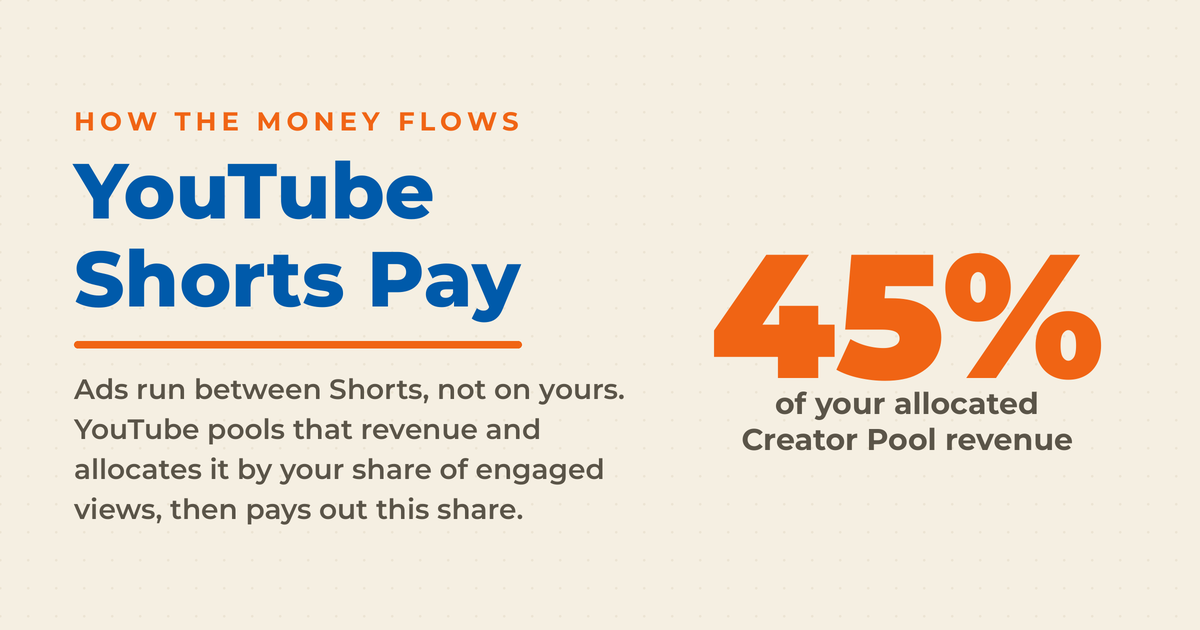
Today, Shorts creators keep 45% of the revenue allocated to them from the Creator Pool. Neal Mohan, now YouTube’s CEO, announced the plan in September 2022 while serving as Chief Product Officer, calling it the first revenue share offered to short-form creators on any platform at scale.
The announcement pulled major creators toward the format, with MrBeast arguing that it would push TikTok’s biggest stars onto YouTube. Several years on, Shorts monetization is a standing part of the Partner Program rather than a launch event, and the case for taking the format seriously no longer rests on the announcement.
How Does YouTube Generate Revenue?
YouTube’s revenue sharing model only works if the platform generates enough revenue to pay its creators, so how does it monetize Shorts?
YouTube currently charges its advertisers for a placement either at the beginning or throughout its long form videos on the platform. But this strategy doesn’t make sense for short-form content.
So YouTube took after Instagram and TikTok, and gives advertisers a placement in between Shorts videos to promote their message. As you scroll through your Shorts feed, you see 3 or 4 videos from your typical channels, then a paid advertisement.
Generally, businesses are happy to place their ads directly into the feed, while your typical Shorts creators see no effect on their content.
How Does The YPP Pay Creators?
Ok so how does this revenue sharing model work? How do you as the creator make money?
Monetizing creators keep 45% of the revenue allocated to them from the Creator Pool, not 45% of everything YouTube earns on Shorts. Because the advertisements stand alone as their own video within the feed, YouTube pools the Shorts Feed ad revenue and distributes it at the end of each month.
This is an interesting method for paying creators, as it incentivizes a commitment to YouTube Shorts considering the more ad revenue YouTube makes, the more money everyone makes.
As far as how much each individual creator makes, it comes down to their share of total engaged Shorts views from monetizing creators in that country for the month. A channel accounting for 5% of eligible engaged views is allocated 5% of the Creator Pool, and the 45% share is then applied to that allocation.
Long story short, if you’re a short-form video creator, it’s time to take YouTube Shorts seriously as it offers one of the best opportunities to make money online right now.
Here’s how YouTube announced this to the world:
What Are The Eligibility Requirements?
Of course, to make money on the platform, you must apply and be accepted into the YouTube Partner Program. To earn a share of Shorts ad revenue, you need 1,000 subscribers plus 10 million valid public Shorts views in the last 90 days, or 4,000 valid public watch hours over the last 12 months if you also publish long-form video. Hitting the numbers is only part of it. Your channel also has to sit in a country where the program is available, carry no active Community Guidelines strikes, have 2-Step Verification turned on, have advanced features access, and be linked to an active AdSense for YouTube account. YouTube says a decision typically takes about a month.
Joining the YouTube Partner Program by way of Shorts will allow creators to monetize their efforts based on their share of views. Joining the program will also provide access to additional monetization tools that will allow you to boost your income!
Turn LinkedIn Into a Real Growth Channel
My latest book helps professionals, entrepreneurs, and business owners turn LinkedIn from a static profile into a real source of clients and growth.
Maximizing LinkedIn for Business Growth gives you clear, practical steps to build a profile that gets noticed and a network that actually sends business your way.
Grab your copy on Amazon and put it to work this week. Click the cover or the button below to get started.

What Does This Mean For TikTok?
This is bad news for TikTok. YouTube has a tremendous amount of experience with the ad revenue share model, and has been successfully rewarding its creators for years now. This level of promotion as far as YouTube Shorts Monetization is more than enough reason for creators to focus more heavily on YouTube than TikTok or any other platform for that matter.
Both platforms started out paying creators from a fixed pool of money. YouTube retired its Shorts Fund when revenue sharing began, and TikTok has since retired its Creator Fund as well, replacing it with the Creator Rewards Program. Fixed-pool payouts were small and got smaller as more creators joined, which is why both platforms moved away from them.
When it made the switch, YouTube said it expected the majority of its Shorts Fund recipients to earn more money under the revenue share model, which was built for long term sustainability rather than one-off bonuses. That structure stuck. Every monetizing channel that accepts the Shorts module now earns on eligible Shorts views, instead of a small group collecting a monthly bonus.
TikTok did respond, and the fixed-pool model is gone on both platforms. What is left is a straightforward comparison: which performance-based model pays better for the kind of short-form content you actually make, and which audience you would rather build on.
Get Started With YouTube Shorts
So now that we’ve covered YouTube Shorts as an opportunity to set yourself apart as a content creator, let’s talk about how you can get started on the platform if you’re brand new to putting out content online.
Of course, this could mean putting yourself in front of a camera for the first time or figuring out a system to automate the creation and uploading of your YouTube Shorts content.
If you plan to get in front of the camera, you have plenty of options as far as what niche you select, whether it’s to show off the latest fashion trend or provide workout demonstrations for the health & fitness people out there. However, let’s talk about how to grow your channel without showing your face.
Here’s how YouTube would like to inspire you to create more YouTube Shorts!
How to Do YouTube Shorts Automation
For those of you that are uncomfortable appearing in front of a camera and broadcasting your face in the abyss of the internet, YouTube automation could be the side hustle you are looking for. Here’s how it works.
1. Pick A Niche
First, you choose a niche for your video content. This could be any number of things, but let’s take travel as an example. Travel is an extremely popular niche on YouTube as people love to get inspired to visit new places, or learn some new details about a place they are considering traveling to.
Now that we’ve selected a niche, we need to start creating videos that people actually want to watch. We have to create content that people on YouTube want to consume. So how do we do this?
Well, first we need an idea in the form of a video title. Do a quick YouTube search or two and start getting a feel for what types of videos are popular in the travel niche. A quick test reveals that there are a lot of lists related to top destinations, such as “Top 10 Places To Visit In Europe.”
This not only gives you a single video idea, but you can now make variations to include Top 10 Places to Visit in North America, Asia, The Middle East, and so on. Right away, you have 10-15 videos that you can go ahead and create.
2. Assemble A Content Team
Next, you’ll need to put a team together to help you create content on a consistent basis. Generally, you’ll want to post at least 5 YouTube Shorts a week to gain some initial traction on the platform, which means you’ll need to put in a significant amount of effort, or hire freelancers to help with certain aspects of the process.
For the most part, you’ll want to come up with the video titles yourself, then give your team some directions on what their role is from there. Sticking with the Top 10 Places to Visit in Europe idea, you’ll potentially need a script writer depending on the depth of your video, a voice over artist, and a video editor.
Alternatively, you can use a video marketing tool software which makes the video creation process super easy. Many of these tools allow you to select from a variety of video templates, then add in your title text for each jump cut. From there, you can select your favorite video clips from the library of video content included with each tool, which provides an engaging and seamless feel to your final videos.
Plus, some of these tools are complete with a text to speech feature offering a few different voice options, or you can record your own voiceover inside the software and seamlessly add it to your video. For those of you serious about YouTube Shorts Automation, using one of these tools, or even a video editing app, is a great way to get started at a reasonable cost.
Once you start getting some traction with your YouTube Shorts business and hopefully make some money along the way, you can put a more specialized team together and really ramp up your production and eventually your income!
3. Grow Your Channel
Of course, the success of your channel will depend on your ability to grow your reach and gain more views over time. Here are a few tips for growing your channel with YouTube Shorts.
A) Determine the Length
Shorts now run up to three minutes rather than the original 60 seconds, but longer is not automatically better. You want your content to be as engaging and interesting as possible, so cut to the chase and make sure your content isn’t dragging on. There is also a practical reason to be careful past the one-minute mark: a Short longer than a minute that carries an active Content ID claim gets blocked outright and cannot be monetized, so clear your music before you publish at that length.
B) Make Valuable Shorts
Again, watch time is important, but even more important is the percentage of your video each viewer watches. For instance, if the average viewer watches 90% of your video, YouTube is going to continue to push that content out to a larger audience because it is a video people are interested in watching. A replay is the only way that percentage climbs past 100%, and YouTube Shorts looping is how you earn one on purpose rather than by luck.
C) Create Custom Thumbnails
Don’t overlook a thumbnail. We’ve talked about YouTube pushing its Shorts initiative, which means it is displaying them in numerous ways. You don’t want to miss out on more views because you didn’t take the time to create an eye-catching thumbnail.
D) Make Relevant Titles
The title of your video is important. YouTube is owned by Google, the largest search engine in the world. Number 2? YouTube. They know what people are searching for and want to provide the best content in an effort to match the search intent.
E) Be Consistent
This is a big one. Don’t get discouraged when you’re just getting started. Getting started is the hardest part, and it can be tough when it feels like no one is watching your content. Enjoy the process and know that you are one viral video away from success. Once you start getting traction, all your old videos will start to get more views and the machine will continue building on itself. Don’t ever give up!
Frequently Asked Questions About YouTube Shorts Monetization
Ad revenue sharing on Shorts requires 1,000 subscribers plus 10 million valid public Shorts views in the last 90 days, or 4,000 valid public watch hours over the last 12 months if you also publish long-form video. The lower entry tier asks for 500 subscribers, 3 valid public uploads in the last 90 days, and 3 million Shorts views in 90 days, and it brings fan funding and Shopping features rather than a share of ad revenue.
No. Public watch hours from Shorts views in the Shorts Feed do not count toward the 4,000 hour threshold, which is why Shorts have their own separate path. Private, unlisted, and deleted Shorts do not count toward the Shorts view threshold either, and neither do Image Posts appearing in the Shorts Feed.
Monetizing creators keep 45% of the revenue allocated to them from the Creator Pool, and that percentage does not change based on whether the Short uses music. Music affects how much revenue flows into the Creator Pool in the first place, since a portion covers licensing costs, but it does not reduce an individual creator’s allocation or their 45% rate.
Shorts can run up to three minutes. Square or vertical videos up to three minutes uploaded after October 15, 2024 are classified as Shorts and can earn through the Shorts revenue sharing model, while videos uploaded before that date stay long-form and monetize on the Watch Page instead.
The most common reason is that the Shorts Monetization Module has not been accepted in YouTube Studio, and any views earned before you accept it are permanently ineligible. The other reason is ineligible views, which YouTube excludes for non-original Shorts such as reuploaded clips and compilations, artificial or bot traffic, and content that falls outside the advertiser-friendly guidelines.
Final Thoughts on YouTube Shorts Monetization
For content creators, it’s time to reconsider your preferred platform, especially if you’re making shorter videos. Anytime YouTube puts its weight behind a certain business goal or new initiative, we need to pay attention.
As YouTube continues to push out its Shorts platform, it creates a massive opportunity for both experienced and brand new creators alike. In fact, one of the most talked about aspects of YouTube Shorts right now is that first time creators have the ability to go viral and grow more rapidly on the platform than ever before.
That, combined with a monetization path that is now a settled part of the Partner Program rather than an experiment, keeps YouTube Shorts among the better opportunities available to online businesses.
So if you’re thinking about starting your YouTube channel, we hope you found this article helpful and encourage you to put yourself out there and get comfortable being uncomfortable. A YouTube business is one that takes some time to gain traction, but once you get there it is an extremely rewarding profession.
So remember to never give up and we wish you nothing but success!
Author Bio
Michael founded Pursuit of Passive Income with the goal of helping its readers achieve financial freedom and create a life they love. He is living proof that every failure is just one step closer to success, having started and shuttered many failed businesses. Michael now makes a full time income from Pursuit of Passive Income and strives to help others create passive income streams of their own.





YouTube Shorts opens up exciting possibilities for creators!
Totally agree Rahul!