Stop Chasing Opportunities on LinkedIn. Make Them Come to You.
Get the complete first edition of Maximizing LinkedIn for Business Growth free.
LinkedIn is a paradise for many types of business professionals, and if you are not finding success on the platform, it might just come down to your personal branding as manifested in your LinkedIn profile. I hope to inspire you to revise your profile by showcasing some standout LinkedIn profile examples.
Since LinkedIn is a great place to find a job or recruit a new employee, everyone on LinkedIn should have a profile that gives their experience and qualifications, which makes it easy to identify opportunities. Likewise, people in sales use LinkedIn to find sales prospects and decision-makers.
Of course, people don’t only use LinkedIn to locate immediate opportunities. Instead, it’s a place for networking and relationship building. Then, when the time comes, professionals have a network they can rely on for help. This could be a job, help fill a position or even a sale.
With that said, LinkedIn wouldn’t be a powerful tool if people didn’t have high-quality profiles to represent themselves online. Here are some tips to create a great profile, and some LinkedIn profile examples to inspire you.
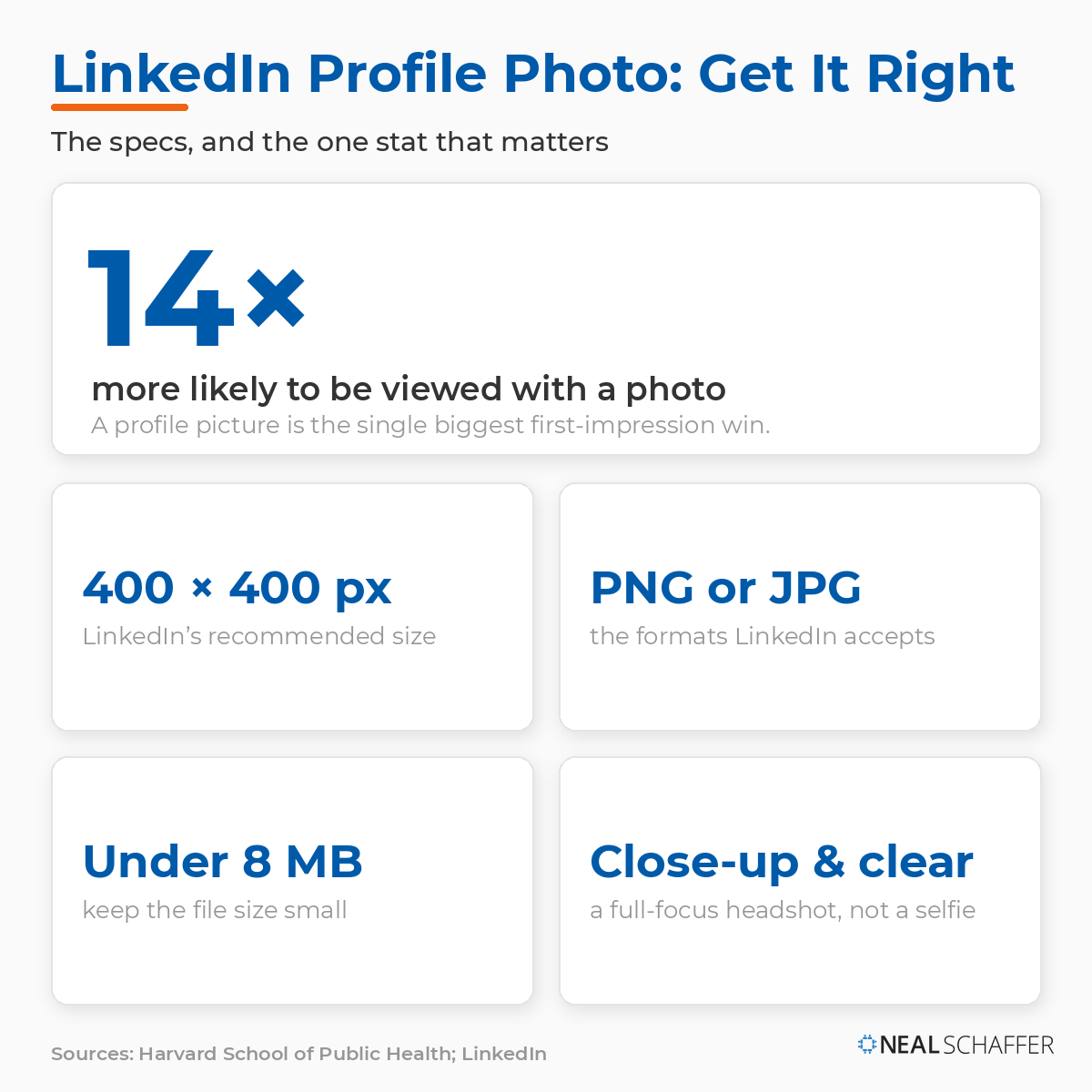
✅ Seven elements make a complete profile: a professional photo, cover photo, headline, summary, work experience, skills and endorsements, and recommendations.
✅ Your photo does heavy lifting: profiles with photos are 14 times more likely to be viewed, so use a clear, close-up 400 x 400 pixel headshot.
✅ The headline is search real estate: you get 220 characters, and they appear in both LinkedIn and Google results, so lead with your keywords.
✅ The summary’s one job is contact: share your background, quantify accomplishments, tell a short career story, and end with a call to action.
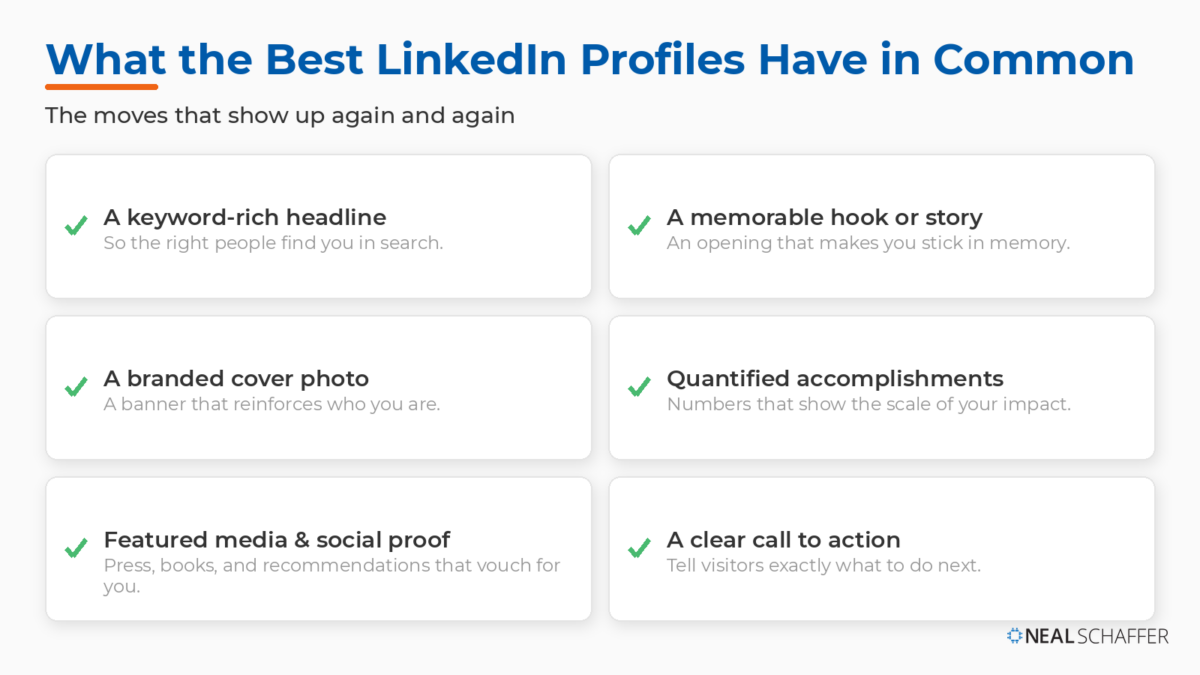
✅ The best profiles repeat the same moves: a keyword-rich headline, a memorable hook, a branded cover photo, quantified wins, featured proof, and a clear call to action.
A LinkedIn profile is a LinkedIn member’s page, where they have a picture, career goals, and other material. In other words, it’s like a business card or personal website but with a social media twist. LinkedIn calls the profile a “professional landing page” because it’s supposed to be the first impression people have of you on the platform. Often, this is the “actual” first impression because LinkedIn introduces a lot of people who’ve never met in person.
Updating your LinkedIn profile makes sure that your profile accurately reflects your professional life. People go through a lot of transitions, both personally and professionally, over the years. By keeping your profile updated, you’ll make it easier to meet the right people, find the right opportunities online, and put your best foot forward.
Here’s an example. Especially during a recession, lots of people look for new opportunities. They might go get a degree or new certification, get laid off, or decide a new career is their best bet. Some people even start a business or retire early. In turn, their goals and needs on LinkedIn change. If someone switches from recruiting to operational management in another company or industry, they won’t need to find recruiting candidates anymore. Or, a person starting a business might need new employees. Either way, their LinkedIn profiles should reflect the job changes.
It’s difficult to talk about the best LinkedIn profile examples without talking about what makes them great. After all, some profiles are more effective than others. In addition, LinkedIn profiles can be quite different depending on the member, whether that’s related to their career, their personal goals, or individual branding. With that said, here are some “must haves” for a good profile.
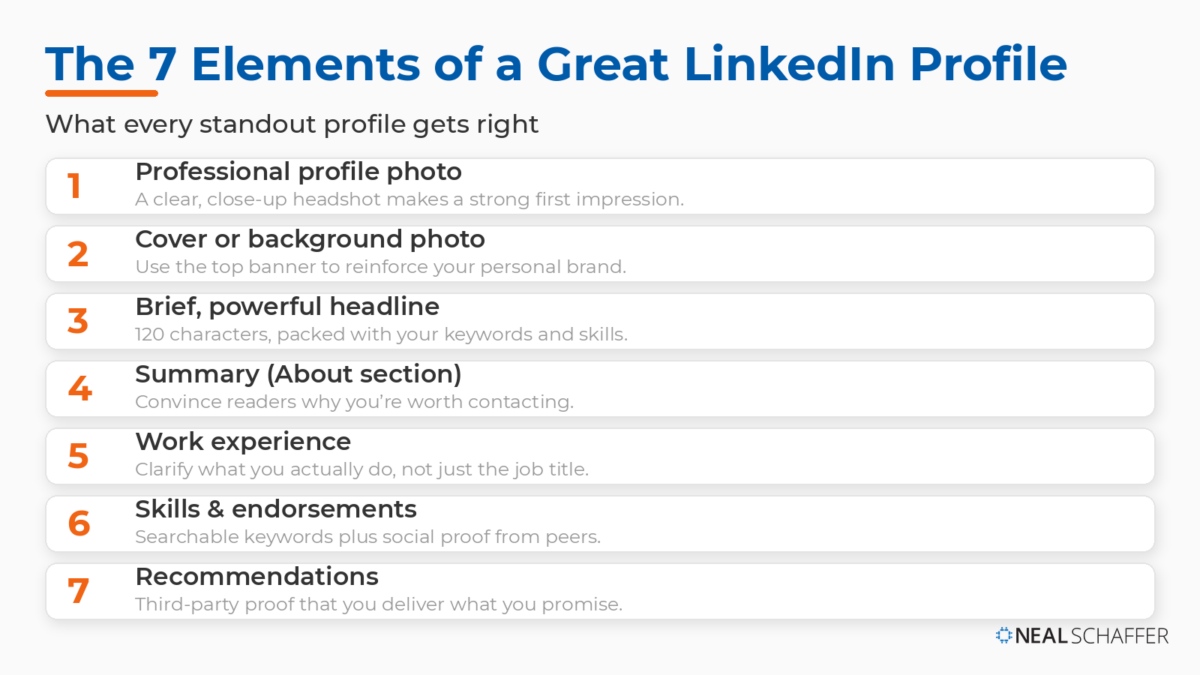
Having a professional picture is important because profiles with photos are 14 times more likely to be viewed. Besides this, a great picture helps you introduce yourself, especially in an era where there are fewer in-person meetings than there used to be. Therefore, a nice profile picture also helps people recognize you when they meet or see you at some in-person event.
However, you should always use a full-focus photo, and it needs to be a close-up, professional headshot. This isn’t where you use special effects or a blurry, poorly focused selfie that you adapted from Instagram. Remember, your LinkedIn profile picture is part of what provides a good (or not so good) first impression.
Besides the need for clarity and professionalism, you’ll need these parameters:
In other words, choose a small, high-resolution photo that has a relatively small file size. These parameters will get you the best results. Otherwise, the photo might not look nice once it’s posted online.
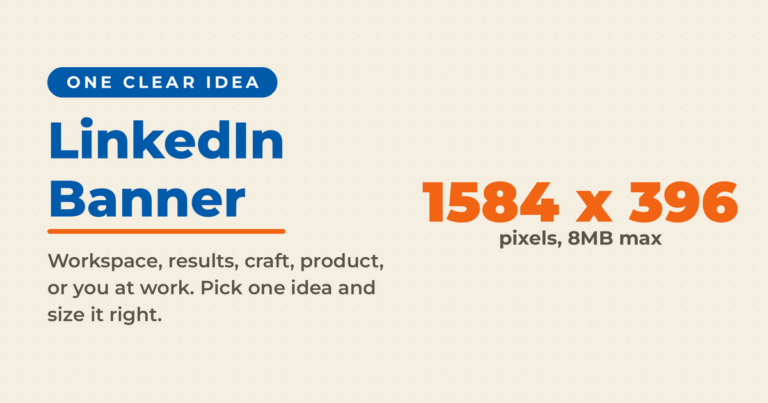
This is the picture or graphic that you see at the top of someone’s profile, and it’s a great opportunity to make a splash. Generally, I recommend something that promotes a professional accomplishment or other parts of your online presence. For instance, you can promote a portfolio of work, a website, free resources, books you’ve written, or client testimonials. If you want to see how other professionals fill that space, I put together a set of LinkedIn background photo ideas along with the 1584 x 396 pixel dimensions LinkedIn expects.
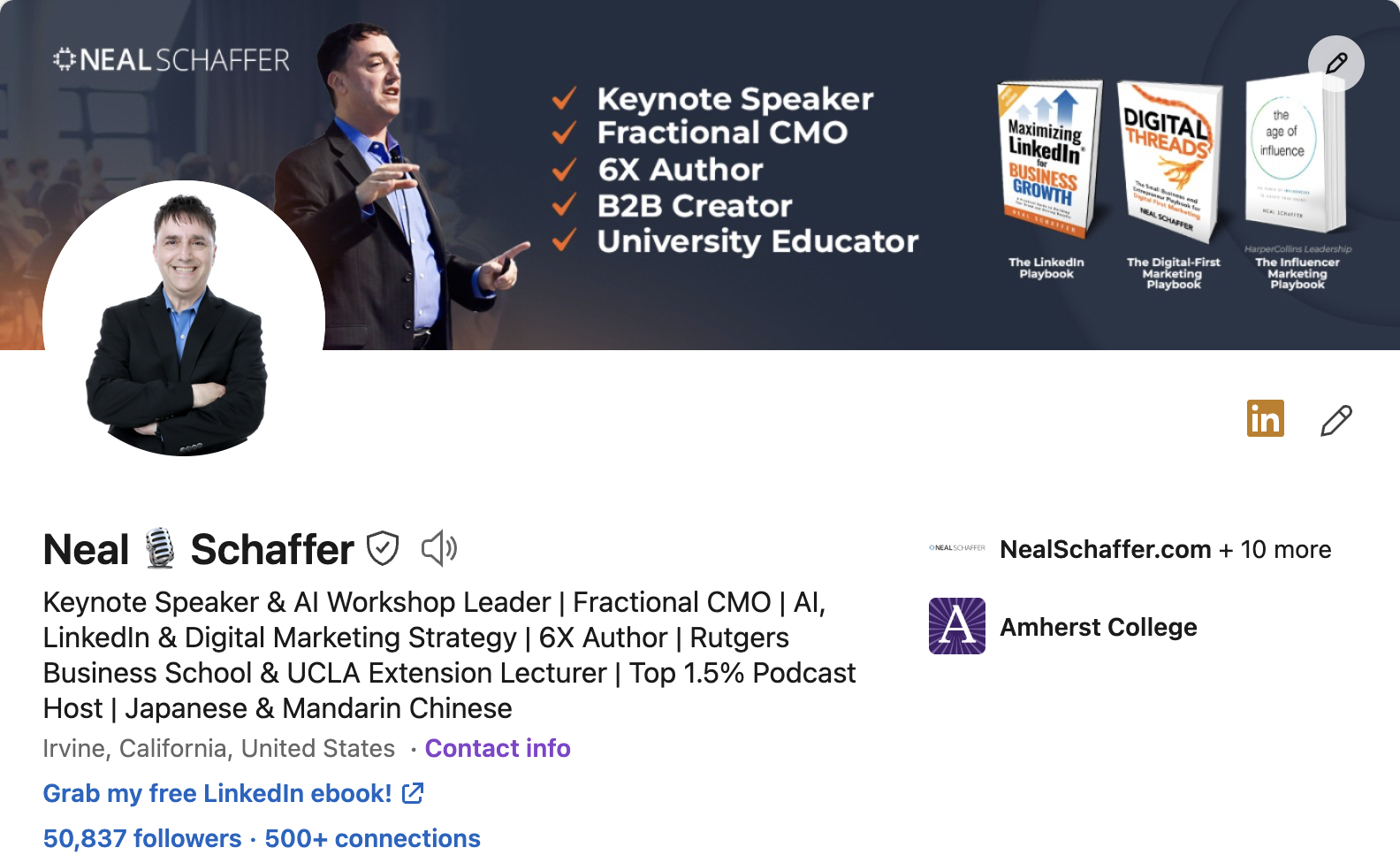
These aren’t as difficult to make as you might think. A graphics editing tool like Canva can help you create awesome content for social media. You can use several design elements with this tool and others, offering the opportunity to create something special.
Finally, your cover photo should always reinforce your personal brand. While most people are used to a personal brand when job hunting, in the social media age you should project your brand whenever possible. Ideally, people will see you as a go-to person when they need what you have to offer.
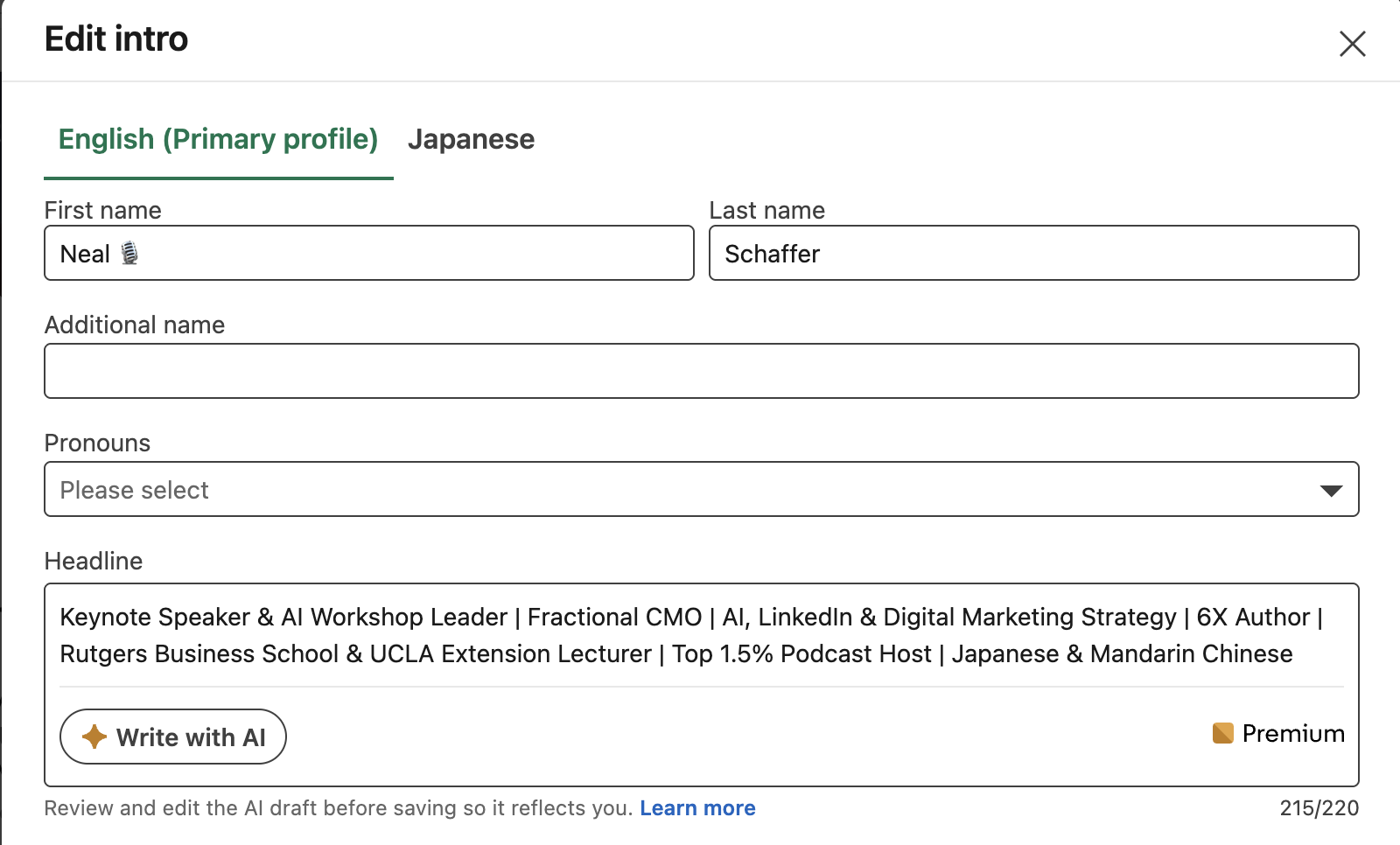
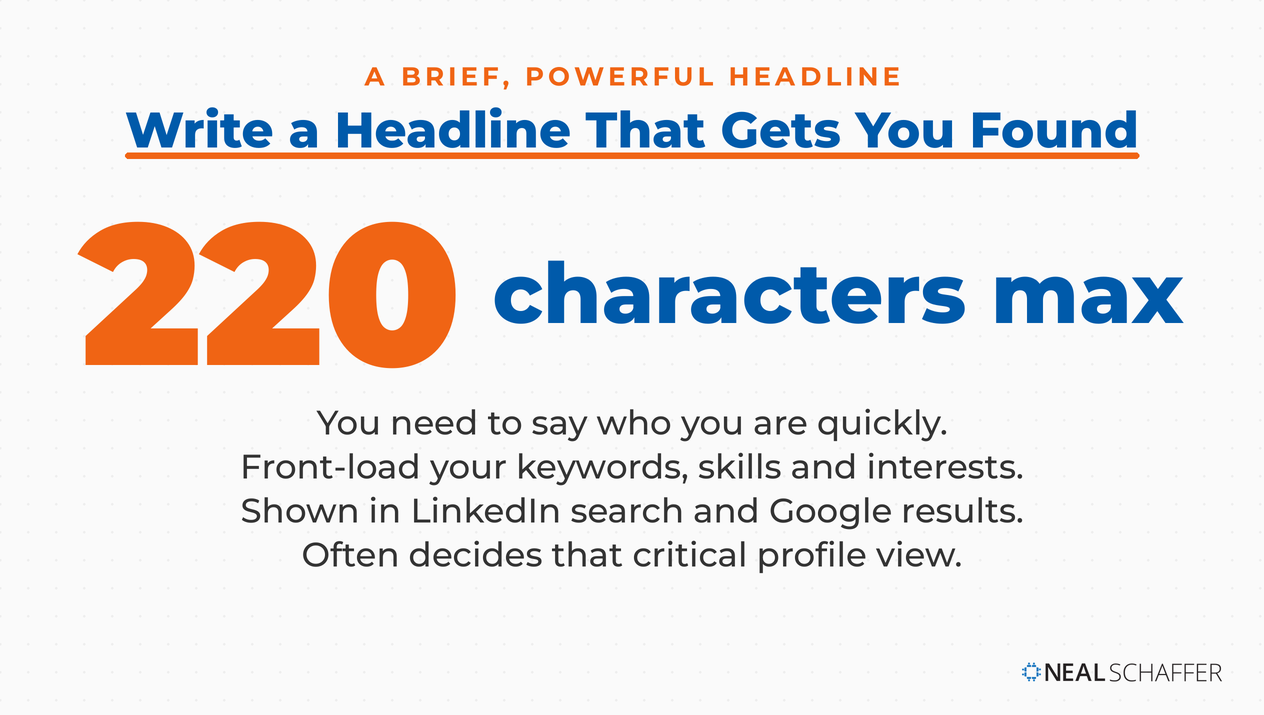
A great headline is one of the most important elements of great profiles, and you’ll see some of our LinkedIn profile examples highlight this element. One reason for this high level of importance is that the headline text gets shown in search results within LinkedIn and Google SERPs. This means that your profile will get discovered more easily if you have a great headline. Plus, a good headline can help you edge out the competition for that often-critical profile view. If you want to study this one element on its own, I collected 15 LinkedIn headline examples from professionals who get it right.
Technically speaking, a headline can be difficult to write. That’s because the headline is limited to 220 characters, so you need to say it quickly. Be sure to include your industry-related keywords, skills, and interests.
Next, there’s the summary. This is the piece of text below your headline, and it allows for more detail about why you’re special. When people click through your headline and see your profile, they are often on the fence about following up, especially if they are looking for an opportunity more than a particular person (you). The job of your summary or about section is to convince people to contact you.
To build a good summary, think about who your target audience is. For instance, job seekers can talk about how they could bring value to the right employer. Or, they can announce their goals and something about themselves, displaying the personality behind the photo.
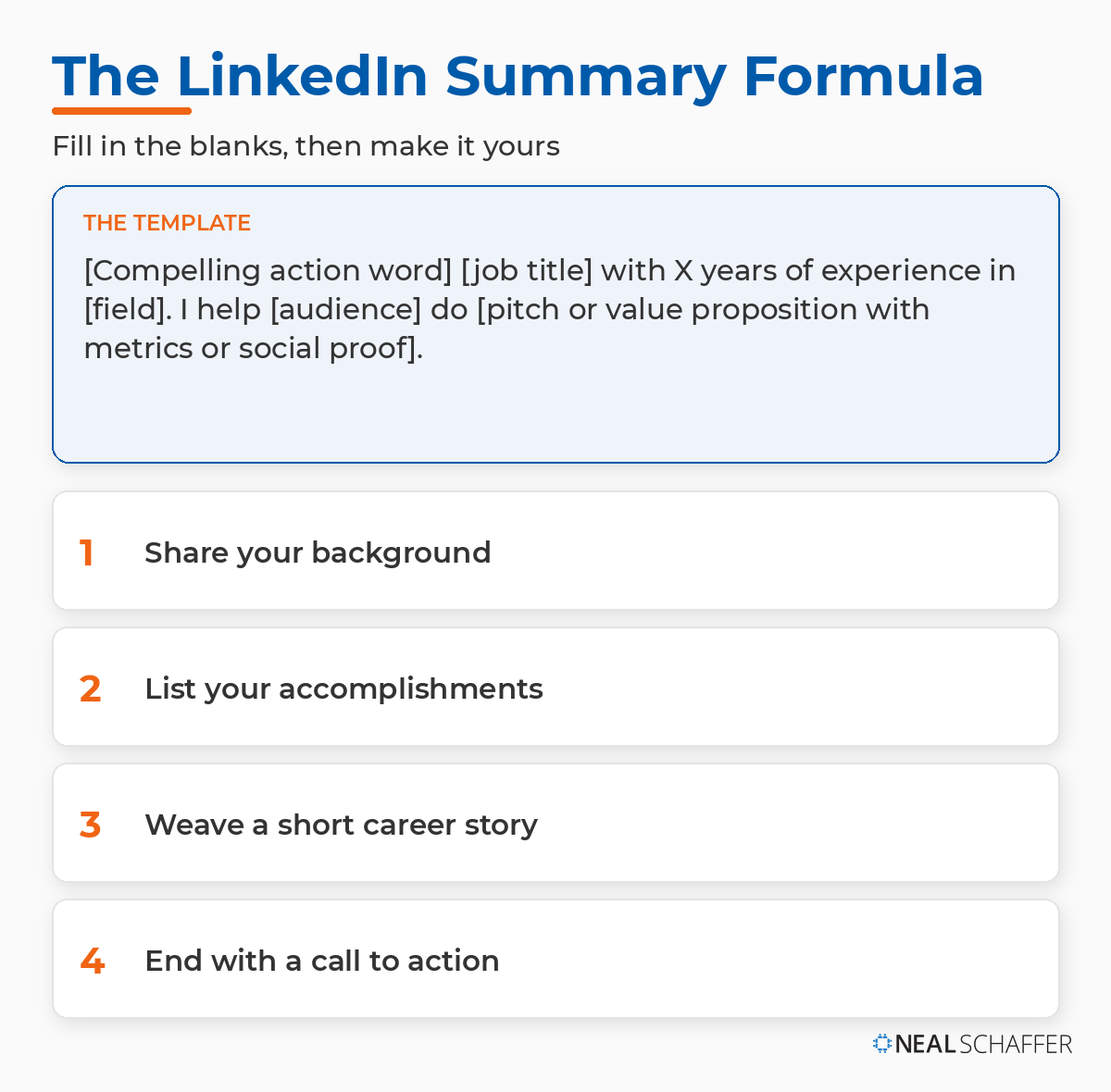
Summaries are tricky because you need to say a lot, and everything you say can do a lot towards getting the results you want. To do this, talk about your background, list out your accomplishments, and weave a short story detailing your career trajectory. The idea is to give your readers a view into who you are, and why you’re important. In the end, include a call to action.
My latest book helps professionals, entrepreneurs, and business owners turn LinkedIn from a static profile into a real source of clients and growth.
Maximizing LinkedIn for Business Growth gives you clear, practical steps to build a profile that gets noticed and a network that actually sends business your way.
Grab your copy on Amazon and put it to work this week. Click the cover or the button below to get started.

Here is an example of what a summary might look like:
“[Compelling action word] [Insert job title] with X years of experience in [Insert field/job title]. I help companies do [Insert pitch or value proposition with metrics or social proof].”
Notice how this isn’t a long statement. Yet, it’s packed with details that make the writer highly desirable in the job or consulting market. Check out more tips on my dedicated blog post.
Your experience section should be well-crafted and precise. One challenge some professionals face is the generic job title, which often doesn’t tell casual observers what that person does. For instance, “account manager” or “administrative assistant” covers a wide range of job descriptions. So, while it’s fine to list the technical job title, be sure to clarify your role in the job description.
Skills and endorsements are great tools to differentiate yourself from other job candidates, consultants, or professionals. In addition, some professionals like recruiters and salespeople like to use this section to give people reasons why they are trustworthy. Specifically, skills are keywords that other professionals might look for in search. Endorsements are a kind of social proof that vouch for someone’s abilities. Whether that social proof still counts for much is a fair question, and I take it up in my guide to whether LinkedIn endorsements have any value left.
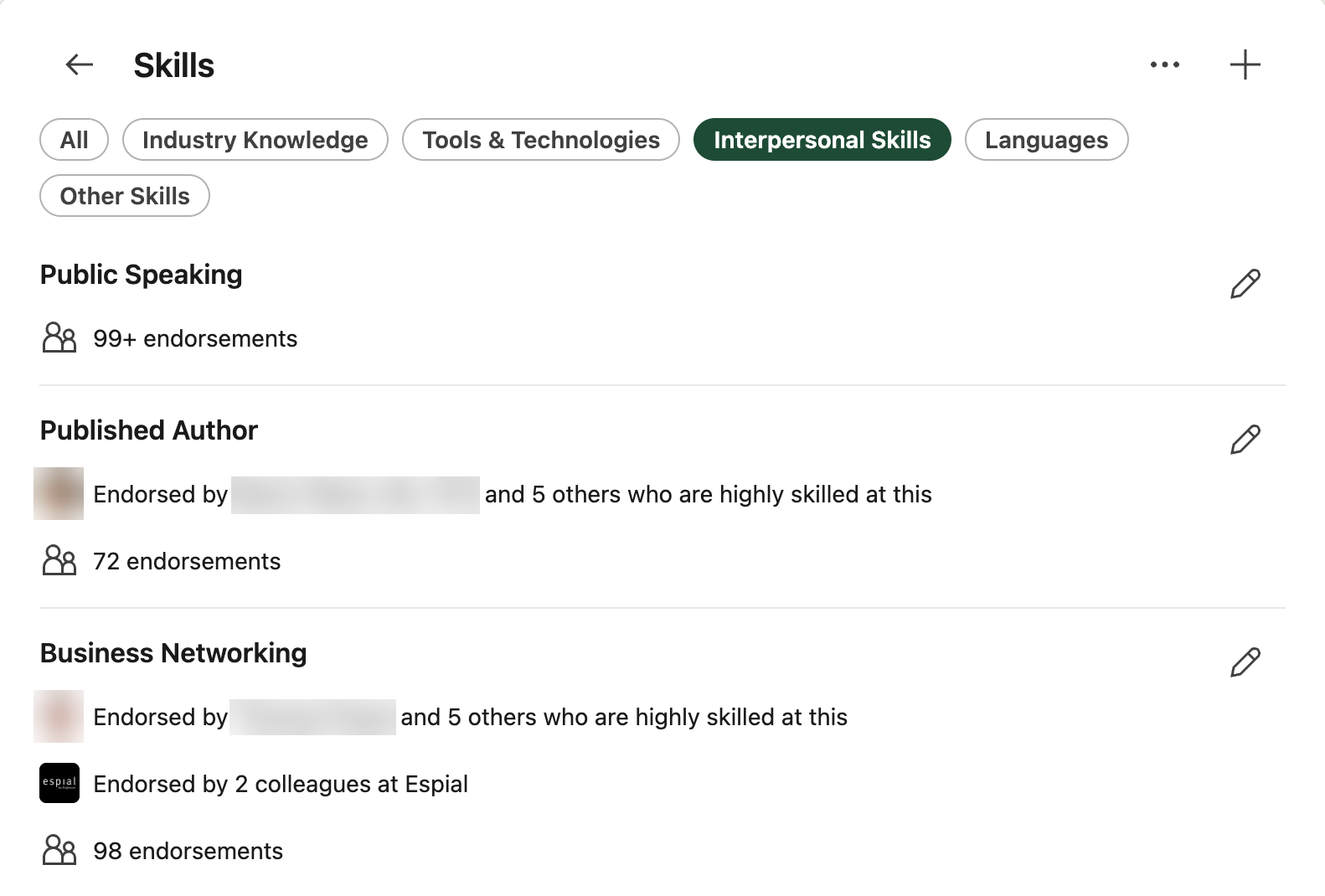
Finally, include some recommendations if you can. While employers check references during the recruiting process, a recommendation on your LinkedIn profile can give you a better chance to get interviewed. Likewise, even professionals who aren’t looking for a job can benefit from recommendations. Not only can it get the attention of recruiters who might offer a better opportunity, but it can draw sales prospects, clients, and even networkers. If you are not sure what to ask for, or how to write one in return, my 15 LinkedIn recommendation examples break down what a strong one actually contains.
Even the best LinkedIn profile tips can be hard to follow if you don’t have some examples. After all, these examples can help you understand the best way to apply the tips. In addition, some inspiration is always useful when you’re writing an expressive piece like this. Here are some of the best LinkedIn profile examples I could find. Each of these can give you some inspiration to write a killer profile yourself. Profiles change often, so each description below reflects the profile as it looked when I reviewed it. Click through to see the current version.
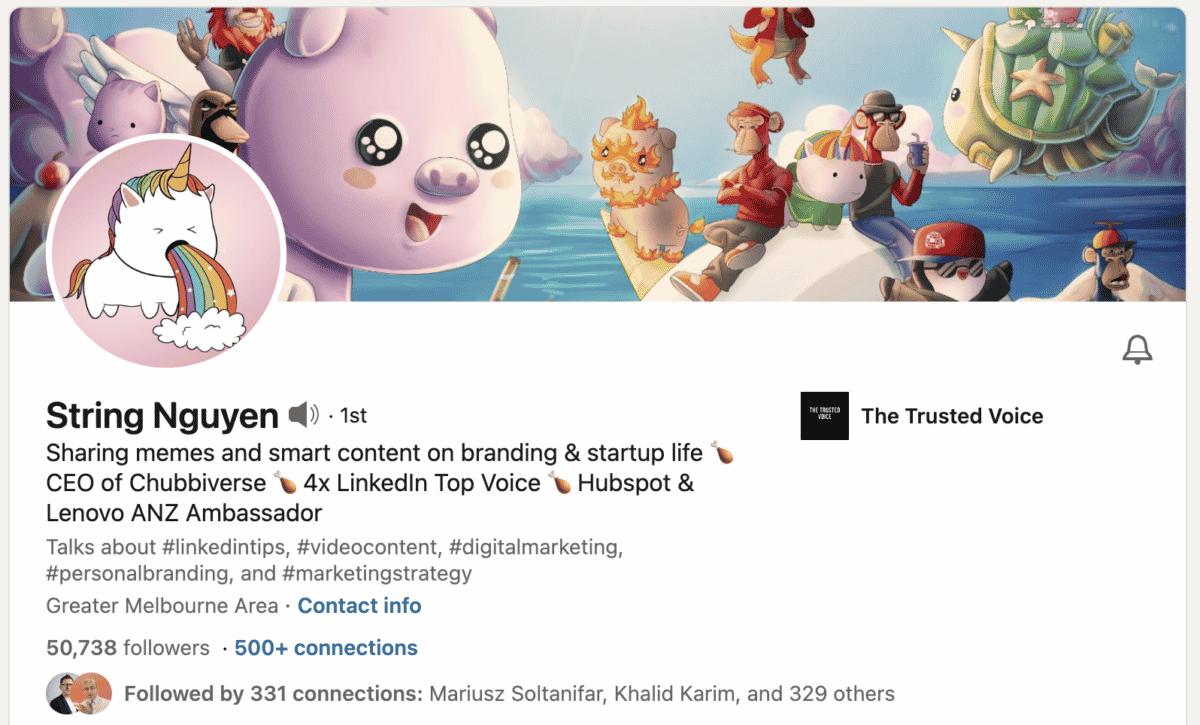
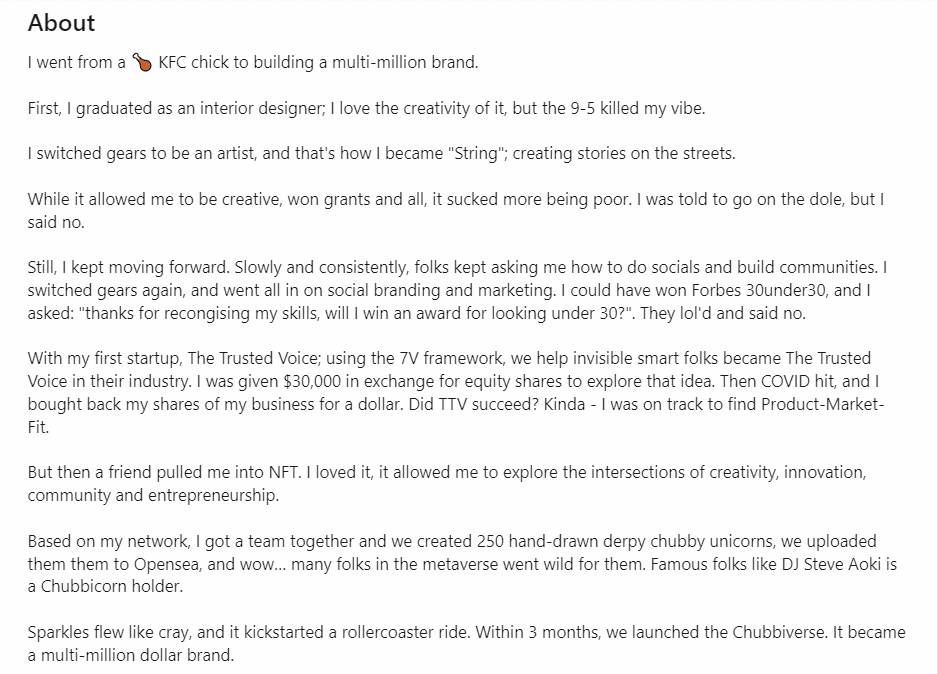
Why is this profile great? At first, her profile immediately grabs your attention. You can tell she is an artist at heart (her qualifications bear this out) and that she’s both unique and motivated. However, this is also one of our better LinkedIn profile examples because of its technical excellence.

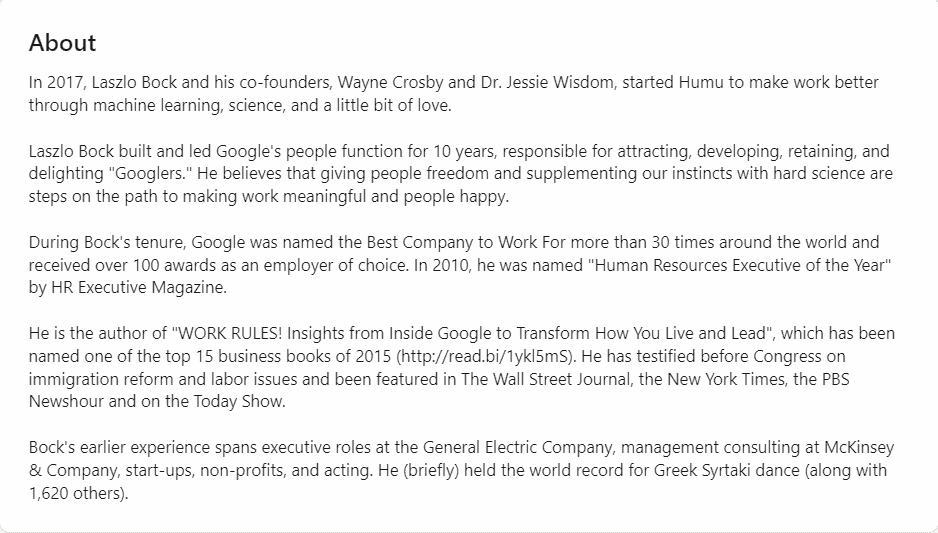
Laszlo is actually a prominent business leader, having served as an executive at Google. However, he left Google to start a new business that takes a more humane approach to human resources. This need for humanity in HR is deeply felt by many, and Laszlo is introducing the potential of a new HR career path for many through his work.
Why is this a great profile?
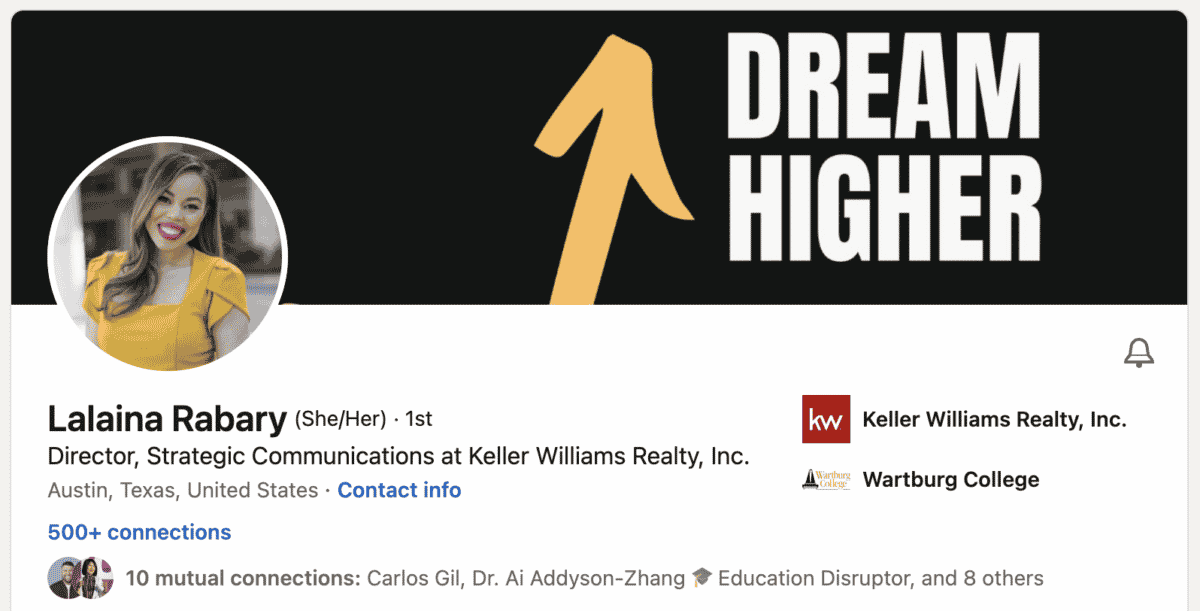
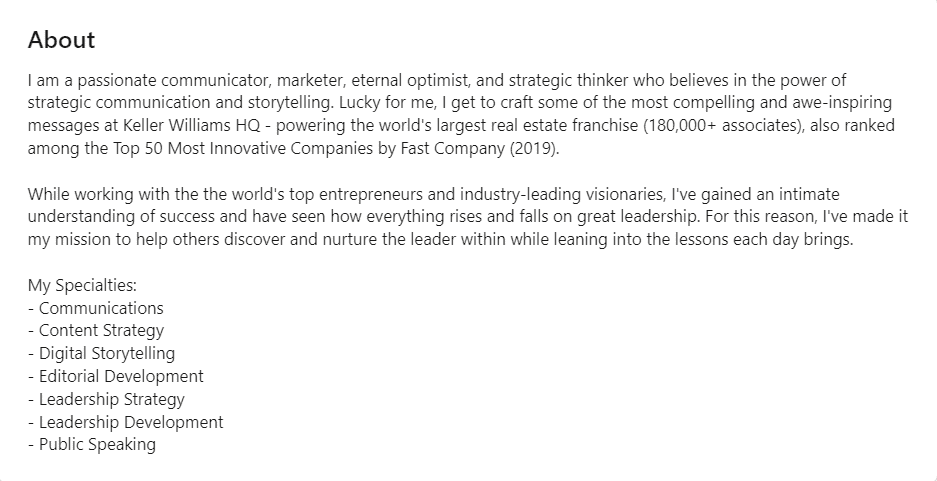
Among the LinkedIn profile examples we’ve discussed so far, Lalaina’s profile is the most conventional. She tells you what she’s like in simple terms, but doesn’t use humor or fun facts to make herself out. It’s all business.
Why is this profile great?

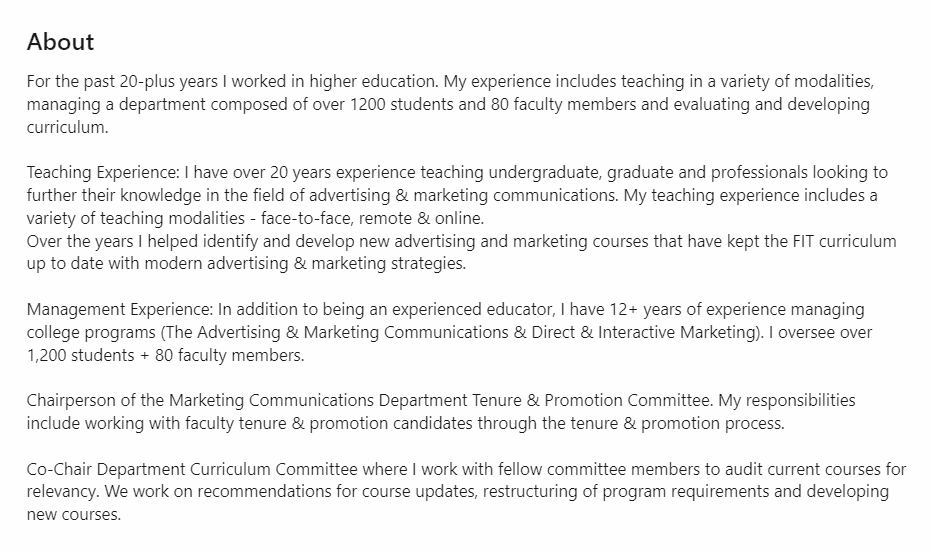
Ted is someone who’s spent a lot of his career in academia. Nowadays, he teaches marketing and communications to the next generation while staying active in the business.
Why is this a great profile?
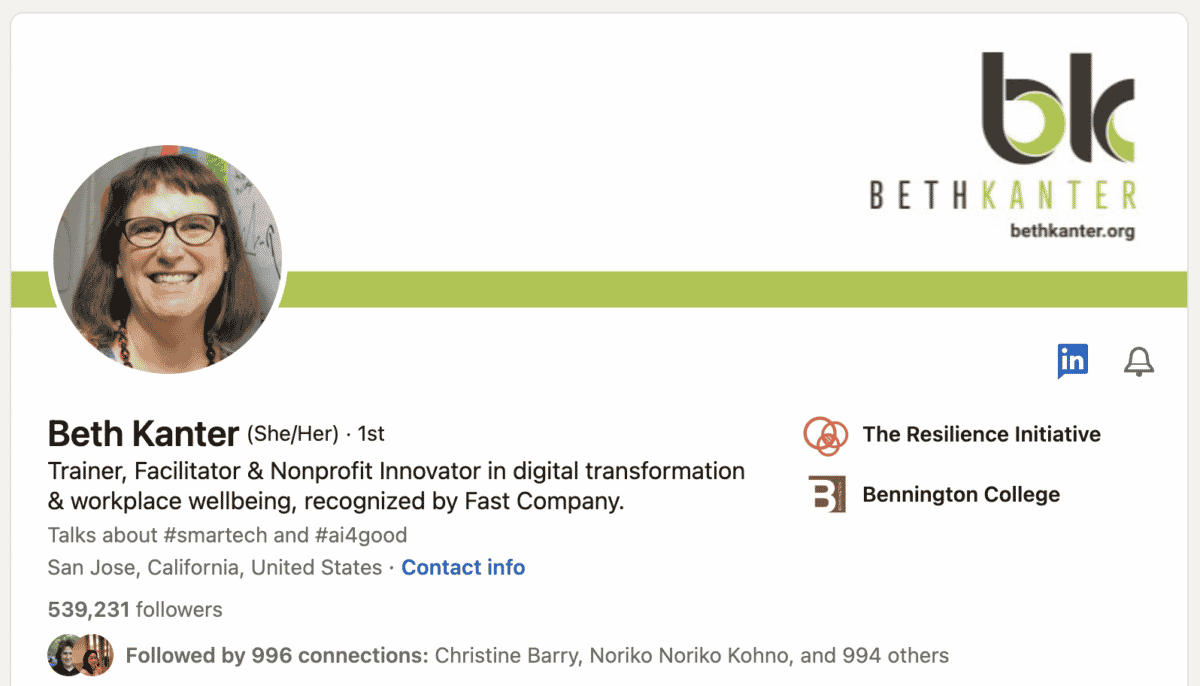
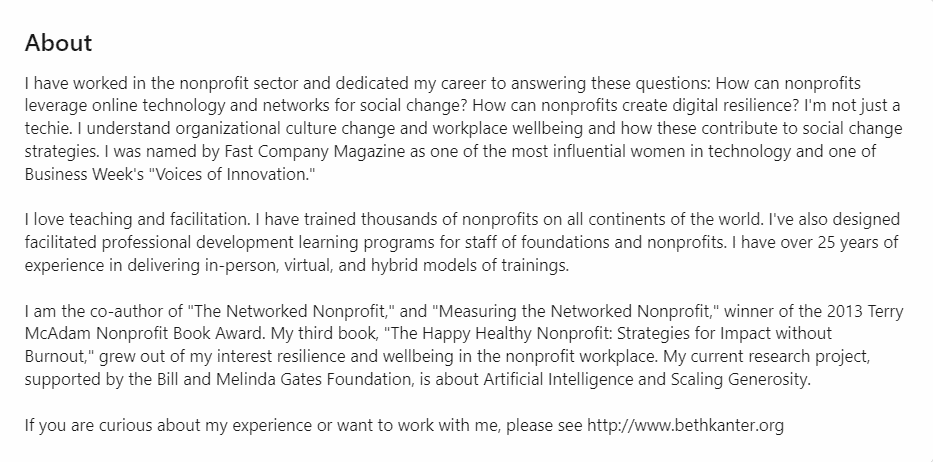
Beth specializes in helping nonprofits navigate the digital age, including through a digital transformation. She also helps them reach out to donors and other stakeholders. Her goal is to keep nonprofits focused on their human mission even with technology.
Why is this profile great?


Neil is a world-famous marketer and technology person that lectures all over the world and owns an agency.
Why is this profile great?
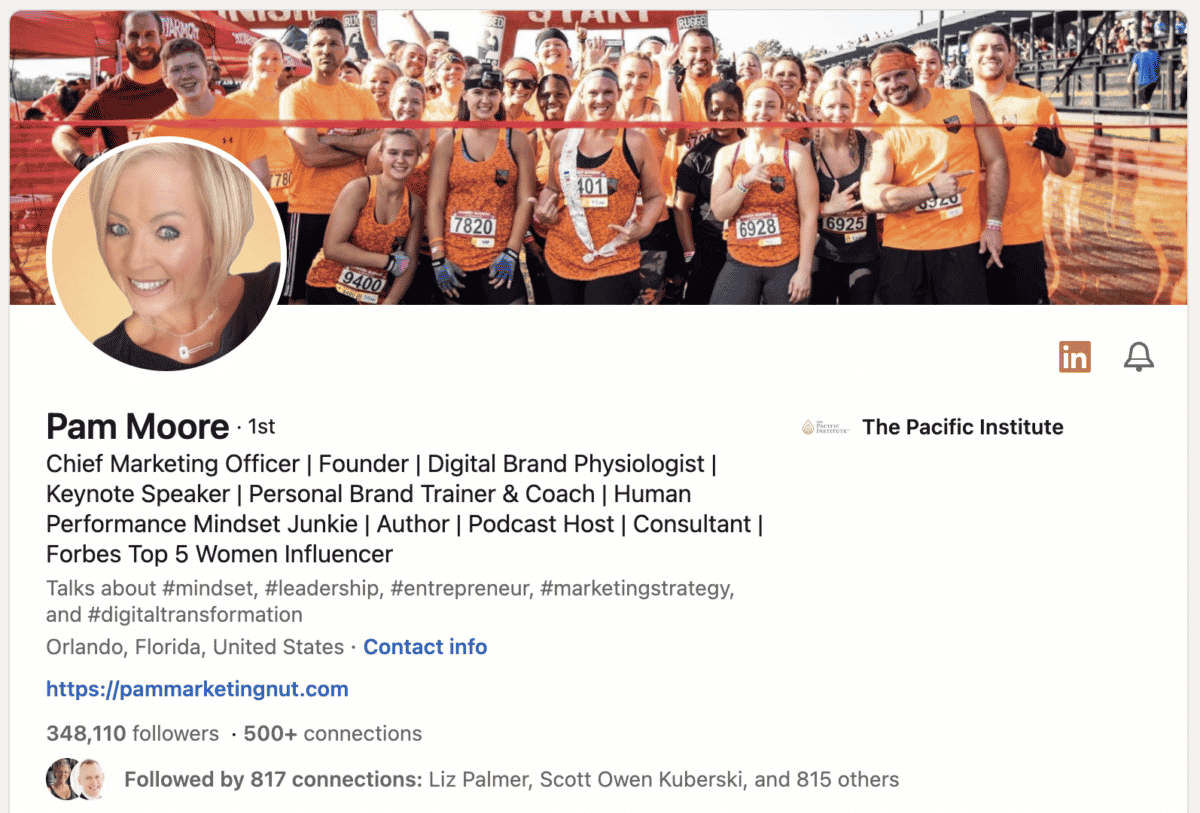
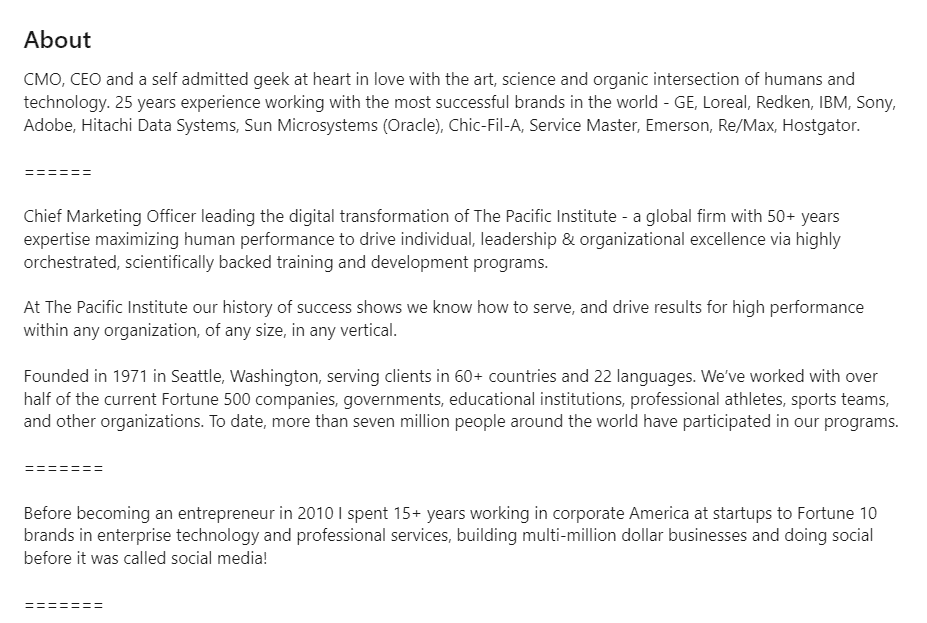
Pam is another veteran marketer.
Why is this profile perfect?


Anthony is another marketer, and he specializes in the AI space. Overall, his profile is very down-to-earth and businesslike, without any humor.
Why is this profile great?
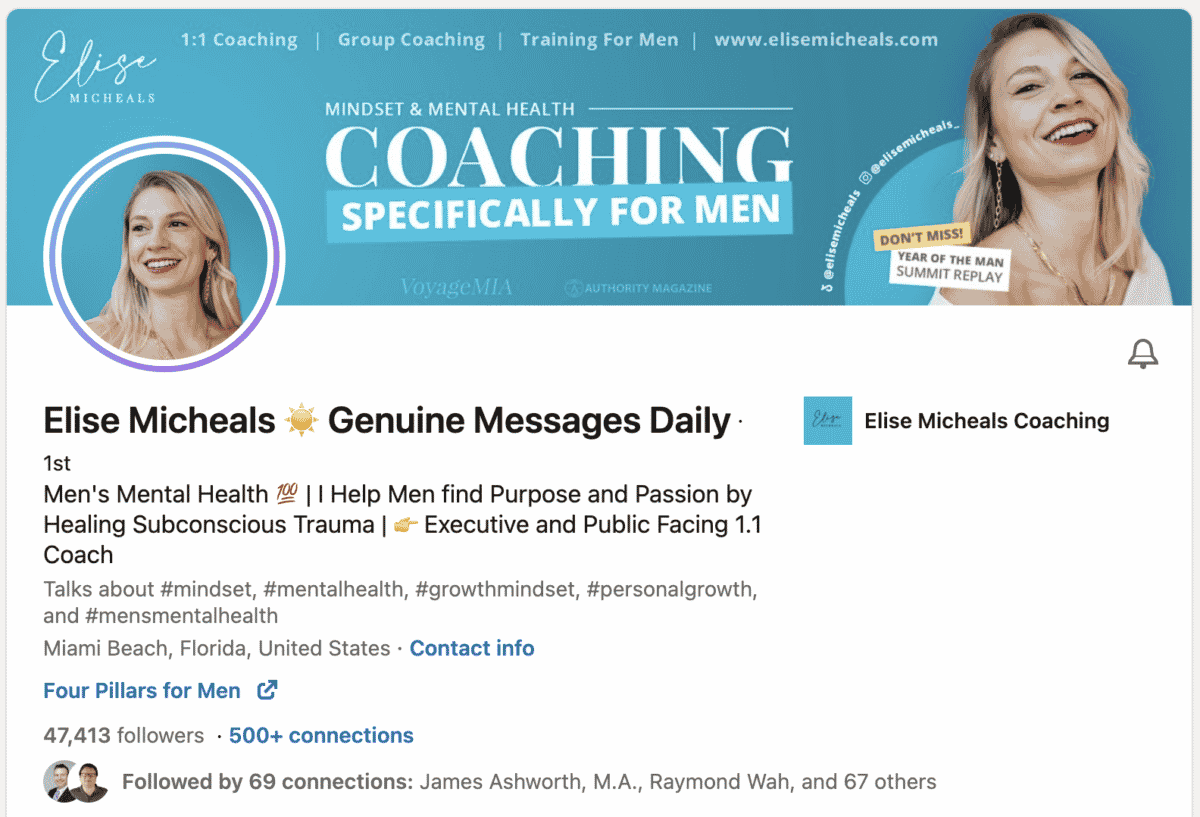

Elise has a sales background, but she’s turned her skills into a new career: coaching.
What’s awesome about this profile?


Jay is a superstar marketer for Convince and Convert, as well as a conference speaker and writer. However, that doesn’t mean that his profile has to be boring. Far from it.
Why is this profile incredible?


Juhli is a trainer who specializes in teaching small businesses to do marketing. Her practice focuses on social media techniques.
What is good about this profile?


Anthony is a business coach, but he also has a heavy IT background. This makes him a multifaceted professional with a diverse point of view. In this profile, Anthony emphasizes coaching because he runs a business doing it.
Why does this profile rock?
A great LinkedIn profile combines seven elements: a professional photo, a branded cover photo, a keyword-rich headline, a compelling summary, clear work experience, endorsed skills, and recommendations. The strongest profiles also add a memorable hook and quantified accomplishments that make the person easy to remember and contact.
LinkedIn recommends a square photo of 400 x 400 pixels, saved as a PNG or JPG, generally under 8 MB. Use a clear, close-up headshot in full focus, since profiles with photos are 14 times more likely to be viewed.
A LinkedIn headline is limited to 220 characters. Because the headline appears in both LinkedIn search results and Google, front-load it with your industry keywords, skills, and interests so the right people find and click your profile.
Talk about your background, list your accomplishments, and weave a short story about your career trajectory, then close with a call to action. A simple formula: an action word plus your job title, your years of experience, and who you help with what measurable results.
Updating your profile keeps it aligned with your current professional life as you change roles, industries, or goals. An up-to-date profile makes it easier to meet the right people, surface the right opportunities, and put your best foot forward.
Writing a killer LinkedIn profile is important for professionals. After all, LinkedIn these days is more than a resume site. Instead, it’s a place where professionals build their personal brands and look for new opportunities. I hope that these LinkedIn profile examples have helped you to see where your own profile is great, and where it might be lacking.

We respect your privacy. Unsubscribe at anytime.
Practical advice on social, content, influencer, and search marketing, plus the AI tools that make each one easier. Join thousands of founders and business owners who read it.