


You’ve heard it before: creating content that lasts is the holy grail of SEO. But weaving that strategy into your content marketing? That’s where many blogs hit a plateau. Evergreen content—those timeless, high-value assets like how-to guides, checklists, glossaries, and case studies—offers a long-term SEO payoff.
Informed by both search demand and the formats that consistently perform, this post will walk you through selecting the right formats for your niche, optimizing them for traffic, and maintaining their relevance over time—all while reflecting the practical guidance and accessible voice I bring at nealschaffer.com.
Let’s dive into crafting timeless content that works for you from day one and keeps working year after year.
Key Takeaways
✅ Evergreen content is defined by durability, not by format. A how-to guide, a checklist, or a glossary entry all qualify as long as the value survives the news cycle.
✅ Eight formats hold up longest: how-to guides, ultimate guides and pillars, checklists, listicles, glossaries, case studies, research roundups, and video or infographics.
✅ Stable, high-intent keywords are what keep an evergreen post earning traffic. “What is X” and “how to X” queries compound; seasonal spikes do not.
✅ Evergreen does not mean unattended. Audit every 6 to 12 months, refresh stats and screenshots, and change the post date when you relaunch.
✅ Repurposing is where evergreen content pays you twice. One durable post becomes a video, an infographic, an email series, and a syndicated LinkedIn article without new research.
What Is Evergreen Content?
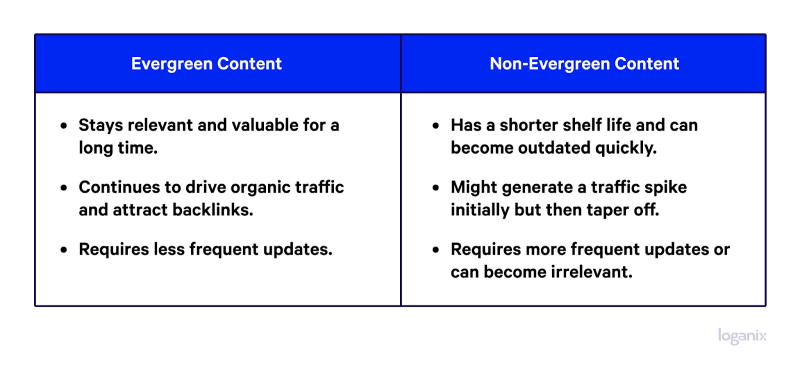
Evergreen content is any type of content that remains valuable and retains its relevance long-term. Evergreen content can come in the form of a blog post, social media post, or Tweet, provided that it meets both requirements.
In contrast, time-sensitive content is any content idea that relies on speed or specific timing. In your content marketing strategy, that may look like content ideas focused on news, trends, and seasonal pieces. These are typically found during holidays, sales periods, and in periods of significant cultural events.

One invaluable example of evergreen content can be found on Backlinko. Backlinko created a guide on link building, and its link building content has consistently shown up in search engine results and has reached the site’s target audience over the long-term. This is an excellent example of evergreen content that can keep offering returns long-term.
Why an Evergreen Content Strategy Works for Search Engines & Business
Evergreen content is good for both search engines and businesses, as it helps create sustained search traffic, while generating cumulative backlinks. Organic traffic is wonderful, but backlinks help establish authority, which is essential for building customer trust. This is the compounding effect at the center of how content marketing and SEO reinforce each other: one durable asset keeps earning both links and rankings long after you publish it.
Evergreen content can help build domain authority. All content formats can effectively establish your brand as an authoritative voice in your field, provided that you use those formats correctly.
Evergreen content does plenty of work for you, without having to continually fill up your content calendar. It is an excellent tool for passive lead generation and conversions.
8 Most Popular and Proven Evergreen Formats
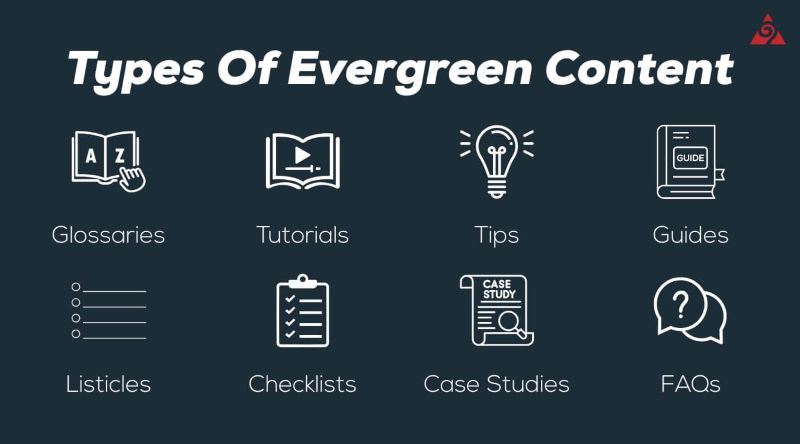
Content marketers looking to implement evergreen content typically focus on one of the following evergreen content formats. These formats can be adapted to work across all industries, and can provide an excellent jumping-off point to promote evergreen content.
1. How-to Guides & Tutorials
These guides provide step-by-step instructions for core problems. I created my own guide here, as an example of my own approach to evergreen web content. These can be updated as changes come to software or products, but can generally hold their own for years to come.
2. Ultimate Guides & Pillars
Ultimately guides and pillars are comprehensive deep-dives (e.g., “The Ultimate Guide to…”). These are often seen on sites like Yoast, which boasts a blog post titled “Blogging: The Ultimate Guide.” These are excellent for evergreen content, because they generally offer long-term solutions and are perfect for content repurposing.
3. Checklists & Cheat Sheets
This type of content offers practical, actionable resources. These are frequently found on sites promoting health and wellness, as can be seen on Anytime Fitness. Checklists and cheat sheets can be used for years with very little updating.
4. Listicles & “Tips” Posts
Sites like BuzzFeed are infamous for creating this type of easily digestible, scannable content. A quick perusal of the listicle page can offer a wealth of inspiration. These are ideal for evergreen content when they focus less on trending content and more on brand-specific tips.
5. Glossaries, Encyclopedias
Glossaries and encyclopedias are keyword-rich resources with internal link value, and are great sources of evergreen pieces, because they can continually refer back to your own site. Hubspot has an excellent example of this, both in terms of offering a comprehensive guide to the site and in listing internal links.
6. Case Studies & “What Went Wrong/Right” Analyses
These posts can help improve credibility and amplify storytelling. Storytelling is invaluable for a brand, and even case studies from long ago can be used to illustrate important ideas. Business Insider showed that with a 2021 leadership case study on Andy Jassy’s return-to-office memo, and the lesson it draws about communicating through uncertainty has outlasted the news event that prompted it.
7. Research & Data Roundups
Roundups provide linkable and shareable authority content. These posts are a useful part of any content strategy, as they help build trust and do the work of finding data or products for your audience. To maintain their status as evergreen content, simply update the links regularly. Organizations like NASA use these regularly and even outdated data remains valuable.
8. Video & Infographics
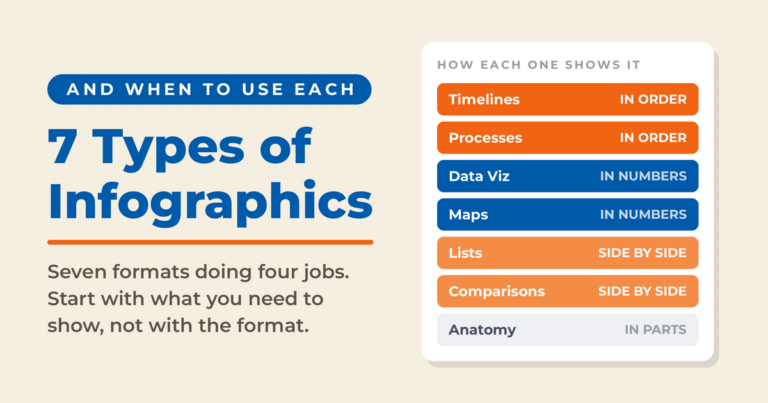
Finally, video and infographic materials provide visual formats that extend engagement. Nielson demonstrates the immense value of infographics by showing years of data in the form of straightforward infographics. Clear and colorful visuals are typically the best route to take.
Keyword Research & Topic Selection
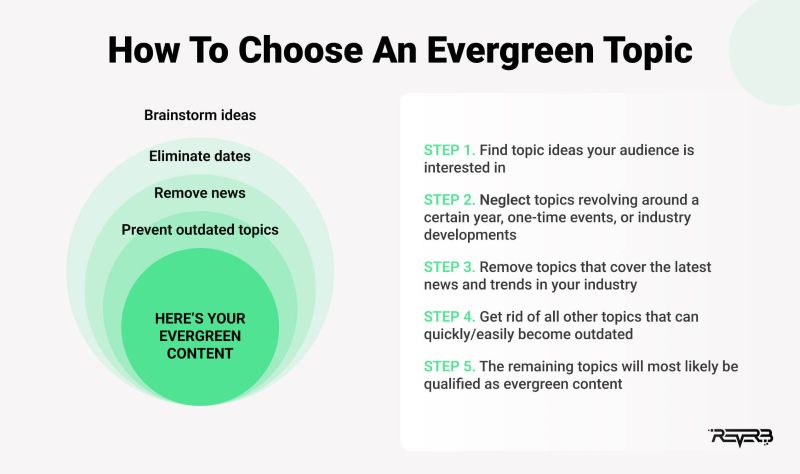
As you conduct keyword research and focus on preferred topics, target stable and high-intent keywords. “What is X,” “How to X,” and “X definition” are all excellent places to start.
Semrush, Google Trends, and other keyword tools can help identify sustained interest in a topic or key phrase, as opposed to seasonal spikes or trending pieces. This is essential in your quest to develop a backlog of evergreen content.
Is Your Digital Marketing All Over the Place?
My latest book helps small businesses, entrepreneurs, and marketers bring search, email, and social together into one digital marketing strategy that actually compounds.
Drawing on my work as a Fractional CMO, Digital Threads turns complicated tactics into a clear, practical plan you can follow, whatever your budget or team size.
Grab your copy on Amazon and start weaving your own digital threads. Click the cover or the button below to get started.

Simply identifying long-standing topics and keywords is not enough, however; you must also be careful to choose topics that align with your target audience’s needs and your specific business goals. If your pipeline of durable topics is running thin, start from a broader pool of content ideas and filter it down to the ones with stable search demand.
As you develop your keyword strategy, take care to also incorporate long-tail question queries, as these are frequently how audiences use search. Queries such as “What is evergreen content,” for instance, or “How to update evergreen content” can bring in more traffic than a simple “evergreen content.”
Writing & On-Page SEO
On-page SEO requires intention and a practical approach to structure. To work on developing ideal on-page SEO, consider the following:
- Structured copy. Create clear headings, use bullet points, and provide tables of contents to lend your content a cohesive structure.
- Target keywords and related terms. Use the target keyword and related terms naturally. In other words, avoid keyword stuffing to prevent damaging your SEO.
- Alt text on all images and infographics. Include alt text with keywords on images/infographics to further encourage organic traffic.
- Internal linking. Utilize internal links to related content to build clusters and distribute authority, while fostering audience trust.
- Commentary and quotes. Provide expert commentary or quotes to boost the E‑E‑A‑T approach and support your SEO.
Promoting & Maintaining Evergreen Content
Creating evergreen content is just the beginning—ensuring it continues to deliver value requires a smart promotion and maintenance strategy. Here’s how to amplify its reach and keep it performing at its best over time.
Initial Promotion
The initial promotion of your evergreen pieces is just as important, as you want content established as authoritative from the beginning. The following approaches are all effective in providing adequate initial promotion:
- Social media campaigns. Carousel snippets, quote cards, and Stories or Shorts can all be used to indicate the presence of a new piece of content worth a look. A quick peek is more than enough.
- Email series. Introduce content to audiences and new subscribers via email. Even a weekly round up of content can be sent via email, to encourage reading multiple pieces.
- Syndication. Republish content on platforms like LinkedIn and Medium to see as much as exposure to the piece as is possible while establishing backlinks to your site.
Treat your evergreen content as important the day you write it, and each time you update it thereafter.
Updates & Relaunch Strategy
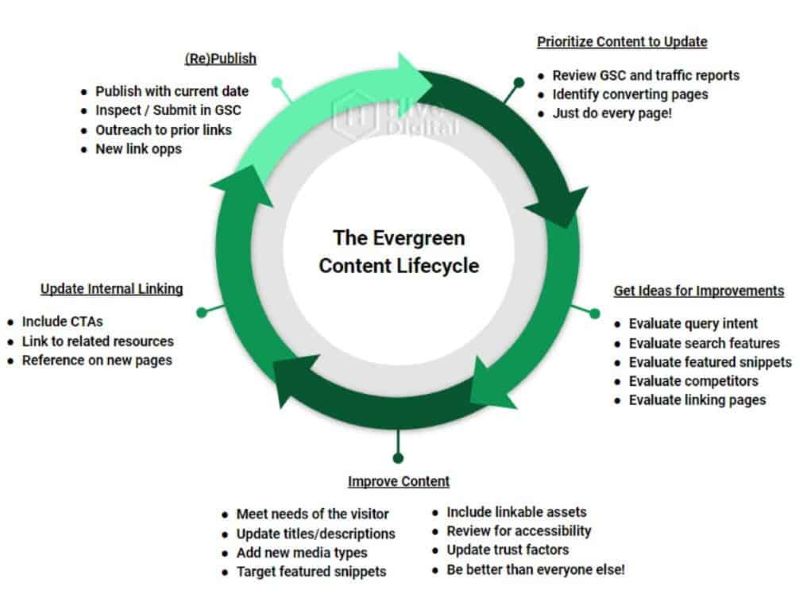
Updating your evergreen content is essential. Although the content itself is evergreen, you may need to update links or stats periodically. To help maintain regular updates, consider these practices:
- Schedule audits every 6–12 months. Audits ensure that your links remain updated and your stats remain accurate. A repeatable content audit process is what turns this from a good intention into something that actually happens on schedule.
- Refresh outdated statistics and screenshots, and add new insights. These updates do not need to take a large amount of time, but they do need some careful thought and consideration. New insights can be simple, requiring only a sentence or two.
- Change post date and promote as “new and improved.” Old posts can put readers off, as they may consider them irrelevant. By changing the date of the post and acknowledging changes, you can soothe any concerns about content being outdated.
- Keep visuals, examples, and tools current. Tools come and go, and as new tools and examples arise, old ones fall out of favor or disappear entirely. Take a few moments to make sure all listed items are accurate.
Updates and relaunches should not take up a large portion of time. Even a few minutes of updating can help keep your evergreen content ready to republish.
Repurpose for Broader Reach
There are many reasons for using evergreen content, but repurposing is one of the greatest. Repurposed content helps fill out your content calendar, without putting more strain on your resources. Evergreen content provides a significant pool of content from which to choose. Some great examples of repurposing include:
- Creating video versions, infographics, podcasts, and downloadable PDFs. Each of these has the ability to draw in an entirely new audience and ultimately expand your reach. By repurposing content, you are casting a wider net without needing to develop countless streams of content.
- Adapting content to different formats for diverse channels. Adapting content is even easier than creating entirely new versions. Adaptation can be as simple as plucking a quote from a longer piece.
Repurposing content is an invaluable strategy to maintain a consistent calendar without putting too much strain on your team. Repurposing evergreen content addresses the need for long-term content and multi-channel content.
Evergreen + Seasonal Tie-ins
Now that I have established the value of creating evergreen content, I want to impress the usefulness of pairing evergreen content and trending pieces. Tie-ins between seasonal pieces and evergreen pieces can provide a seamless way to further promote evergreen work. Consider…
- Spinning trending topics into evergreen pieces. Trending topics may focus on a season, a day, or a current event. Take advantage of trends by spinning them with an evergreen take, such as “How to Support Friends Year‑Round from Best Friends Day,” or “Christmas baked goods that will satisfy year-round.”
- Adding contextual evergreen value to seasonal posts. Contextual value can be quick and simple–little more than a sentence. By adding evergreen value, whether it is in the form of advice or a suggestion, you can lend long-term value to your work.
Seasonal pieces are not an enemy to avoid. They have their place, just as evergreen content has its place. By fusing the two, you can reap the benefits of both in a single step.
Frequently Asked Questions About Evergreen Content
Any content whose value does not expire with the news cycle. The test is simple: if you shared the post two years from now, would anyone tell you it was out of date? How-to guides, ultimate guides, checklists, glossaries, case studies, and data roundups all pass that test. Product launch announcements and event recaps do not.
Every 6 to 12 months is the cadence I work to on my own blog. The work is usually small: replace a dead link, refresh a statistic that has a newer version, swap a screenshot of an interface that has changed, and add a paragraph reflecting anything you have learned since. Then update the post date and promote it again.
They do different jobs. Trending content wins attention in the moment, and evergreen content compounds. Most blogs I work with are over-indexed on the first and under-invested in the second, which is why traffic drops the moment they stop publishing. The strongest approach is to spin the trending topic into an evergreen angle so a single piece of work serves both.
Longer than most people expect, and that is the point. Because evergreen posts target stable, high-intent keywords rather than short-lived spikes, they usually take months to build position and links. What you get in exchange is a page that keeps earning traffic for years instead of a spike that dies in a week.
AI can accelerate the research, the outline, and the first draft. It cannot supply the firsthand experience, the client examples, or the point of view that make a post worth citing and linking to years later. Those are exactly the parts search engines and AI assistants now reward, so treat AI as the assistant and keep the judgment yours.
Evergreen Content Is a Long-Term SEO Asset for Your Brand
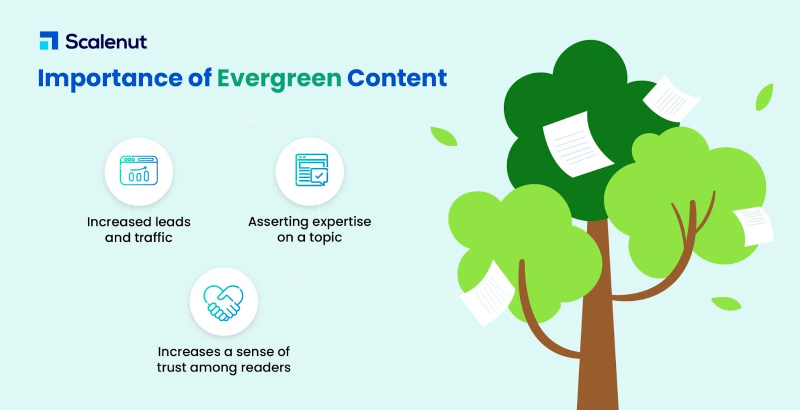
Evergreen content isn’t about creating a one-hit wonder. On the contrary, it’s about building a cornerstone of sustainable digital growth over time. Content that works for you in the long-term builds authority, builds trust, and continually makes space for new members of your audience.
By selecting the right formats, optimizing around stable keywords, structuring for clarity and user intent, and maintaining a cadence of updates and repromotion, you turn individual posts into long-term traffic and authority engines.
Start with one strong evergreen piece, tailor it with your voice, and grow from there. When done right, each post continues to deliver SEO value and audience trust for months–even years.
In my time as a fractional CMO, I have developed a consistent strategy for developing evergreen content. By utilizing the outlines and suggestions I have compiled here, you can be well on your way to creating your own backlog of evergreen pieces to build trust and flesh out your body of work.





I tried to submit a CMO request for more information but it didn’t go through even though my capcatcha figure was correct
Sorry to hear that – please send me an email to neal at nealschaffer dot com with the form information. Thank you!
very nice list of collection, I am working on above sites and trying to create more backlinks for my website
I’ve met numerous times websites, they have no traffic and a loyal audience, publish a lot of news. In a few days this news are not fresh and actual. All big publications published such news as well. However, big websites have own audience and new websites don’t. Another problem is that old news are not interested to audience anymore and disrank even more. Evergreen content is always digestible and valuable information.
And big websites recycle the news and delete out the posts which new websites are afraid to do. It's a fundamental problem in the blogging industry I believe. Thanks for chiming in!