Editorial Note: I may earn a commission when you visit links that appear on my website.
23 Powerful Types of Content Marketing (And How to Use Them in Your Strategy)
Looking to unlock the full potential of content marketing for your business?
With so many platforms and content formats to choose from — blogs, videos, podcasts, Reels, whitepapers, communities, and more — the key isn’t just knowing what types exist. It’s knowing which ones to prioritize based on your audience, your business goals, and where they fall in your content marketing funnel.
In this guide, I’ll walk you through the 23 most effective types of content marketing — grouped by strategic category — to help you diversify your approach, build stronger customer relationships, and drive real business growth. Whether you’re new to content marketing or ready to scale, this is your definitive roadmap to creating content that converts.
Key Takeaways
✅ The 23 types fall into five groups, not one long list. Foundational long-form content, social and community-driven content, lead magnets and educational content, user-generated and trust-building content, and everything else. Pick from the groups, not the list.
✅ Match the format to the funnel stage before you produce anything. Blogs, short-form video, and infographics pull people in at the top. Webinars, case studies, and whitepapers do the convincing in the middle. Reviews, interviews, and communities close.
✅ Your team’s capacity decides the mix as much as your audience does. The best content strategy sits where what works meets what you can actually publish every week without burning out.
✅ One asset should become several. I take a single interview, run it as a livestream, publish it as a podcast episode, then build a blog post from it. That is how a small team competes with a big content budget.
✅ Trust-building formats say what you cannot say about yourself. Customer reviews, testimonials, case studies, and user-generated content carry third-party weight that your own copy never will, and Google’s emphasis on EEAT rewards it.
✅ You don’t need all 23. Start with the three or four formats your audience already consumes, prove them out, then add. Trying to run every format at once is how content programs stall.
Why Content Marketing Matters More Than Ever
Content marketing isn’t just growing — it’s becoming essential. Today’s consumers are more informed, research-driven, and discerning than ever. Whether they’re evaluating software or skincare, buyers are doing their homework.
The good news? Content marketing meets them where they are. From top-of-funnel blog posts to bottom-of-funnel case studies, the right content helps build trust, answer questions, and move people toward a decision.
It also boosts your SEO — helping your site rank for more keywords and increasing your visibility across channels. And when executed well, content doesn’t just attract — it converts.
What are the Different Types of Content Marketing?
Before we dive into the full list, it’s helpful to see how different content types align with the stages of your marketing funnel — from building awareness to driving conversions. The table below maps each type to its ideal funnel stage, along with a quick tip on how to use it effectively for funnel content.
| Funnel Stage | Content Type | Strategy Tip |
|---|---|---|
| TOFU | Blog Posts | Target high-volume, low-competition keywords; create evergreen how-tos. |
| TOFU | Short-Form Video (Reels, TikToks) | Grab attention with quick insights; link back to longer content. |
| TOFU | Infographics | Visualize key stats or processes; optimize for social sharing. |
| TOFU | Memes / GIFs | Inject brand voice with humor or cultural references; great for engagement. |
| TOFU | Social Media Posts | Publish natively across platforms to build visibility and spark conversations. |
| TOFU | Audio Streaming / Twitter Spaces | Host live Q&As or real-time discussions to increase reach and relevance. |
| TOFU | Photos / Images | Share lifestyle shots, behind-the-scenes, or branded visuals. |
| TOFU | Stories / Shorts | Use ephemeral content to highlight timely offers or moments. |
| MOFU | Webinars | Deliver deeper value; capture leads with gated registration. |
| MOFU | Podcasts | Build thought leadership; nurture mid-funnel leads through recurring shows. |
| MOFU | eBooks / Long-Form Guides | Use gated content to capture leads and educate in-depth. |
| MOFU | Checklists / Templates | Offer quick wins; great for email list growth and onboarding. |
| MOFU | Case Studies | Showcase success stories to prove your value to prospects. |
| MOFU | Whitepapers | Offer deep insights for decision-makers; ideal for B2B audiences. |
| MOFU | Quizzes / Interactive Content | Use logic-based tools to personalize recommendations or segment leads. |
| MOFU | Email Courses | Automate nurture flows with value-driven, multi-part education. |
| BOFU | Presentations | Use sales decks or demos to reinforce product value; repurpose on SlideShare. |
| BOFU | Direct Messaging | Nurture leads 1:1 via chat, SMS, or social DMs with value-led conversations. |
| BOFU | Customer Reviews | Highlight real feedback across web and social to build credibility. |
| BOFU | Interviews | Use third-party voices or client testimonials to close with trust. |
| BOFU | User-Generated / Influencer Content | Leverage authentic voices and social proof to support purchasing decisions. |
| BOFU | Communities | Build advocacy and long-term relationships; mine insights from users. |
| Full Funnel | Courses | Educate your audience from awareness to conversion with structured lessons. |
Now that you have a high-level view of how each content format fits into your strategy, let’s explore each type in more detail.
To make this easier to navigate — and more actionable — I’ve grouped the 23 types of content marketing into five strategic categories. As you explore them, think about where your audience is in their journey and which formats will best educate, build trust, and convert.
Foundational Long-Form Content
When people think of content marketing, they often start with blogs or eBooks — and for good reason. These long-form content types are foundational to any successful content strategy. They give you the space to tell stories, demonstrate thought leadership, rank in search engines, and nurture your audience over time.
Whether it’s a well-crafted blog post, an in-depth guide, a downloadable white paper, or a signature eBook, these assets serve as your content core — the pieces of content your social, email, and lead generation efforts often build around.
1) Blog Posts
Blog posts remain one of the most powerful and versatile types of content marketing. They’re foundational for attracting potential customers through search engine optimization (SEO), building long-term authority, and driving consistent organic traffic. Whether you’re solving customer pain points, answering frequently searched questions, or weighing in on industry trends, blog content gives you the space to educate, persuade, and engage your target audience — all while supporting a variety of formats, from how-to guides and listicles to industry experts roundups and in-depth case studies.
Strategy Tip: Focus on evergreen, search-optimized blog posts (like this one!) that answer specific questions your audience is already Googling. Use keyword research tools to build a content calendar around terms with strong traffic and conversion intent. Regularly update your top-performing posts to maintain rankings and relevance.
2) Video Content
Video content covers a wide variety of visual content, from TikTok and YouTube Shorts all the way to hours-long explanations and demos. I’ll cover short-form videos separately below, but it’s important to understand that long-form video content is still a valuable modality. 54% of consumers love to see videos from their favorite brand, and this is the highest level of interest across content types. It’s effective, too: brands get 157% more organic search traffic if they have a good video marketing strategy.
Don’t overthink video: Even a simple tutorial like the one below can generate thousands of views:
Strategy Tip: Use video to visually demonstrate what sets your brand apart — product features, customer stories, or behind-the-scenes access. Optimize every video with an SEO-friendly title, description, and thumbnail to increase visibility in both YouTube and Googugle search.
3) Podcasting
Podcasting is a powerful way to connect with your audience — anytime, anywhere. Whether your listeners are commuting, working out, or walking the dog, audio content lets them multitask while staying engaged with your brand. More than just convenient, podcasting builds an intimate connection with your audience: your voice is in their ears, your insights in their heads, creating a uniquely personal and focused experience that few other formats can match, regardless of how much valuable content in other formats you produce.
Keep in mind, you don’t have to be the producer to reap benefits. In fact, guest podcasting is a powerful way to reach customers. You can be a guest on several different podcasts, or a regular on just one. For the best of both worlds, consider hosting a podcast and inviting guests, then being a guest yourself. This introduces you and your guests to wider audiences.
And if you’re trying to launch your own podcast as part of your content marketing efforts, check out my video with specific instructions on how to do just that!
Is Your Digital Marketing All Over the Place?
My latest book helps small businesses, entrepreneurs, and marketers bring search, email, and social together into one digital marketing strategy that actually compounds.
Drawing on my work as a Fractional CMO, Digital Threads turns complicated tactics into a clear, practical plan you can follow, whatever your budget or team size.
Grab your copy on Amazon and start weaving your own digital threads. Click the cover or the button below to get started.

Strategy Tip: Repurpose podcast content into blog summaries, quote graphics, or audiograms for social media. Submit your podcast to all major platforms and build backlinks from guest mentions to strengthen your domain authority.
Social and Community-Driven Content
Today content doesn’t just live on your website — it lives and breathes on social media, too. These forms of content marketing are designed for platforms like LinkedIn, Instagram, TikTok, YouTube, and beyond, where your brand can interact with audiences in real time, spark conversations, and grow communities.
This category includes everything from short-form videos and livestreams to meme content and Stories. It’s about showing up where your audience already spends time — with engaging, native-friendly formats that build visibility and trust.
4) Live Streaming
Live streaming offers a dynamic way to engage your audience in real time — whether you’re launching a product, hosting a Q&A, sharing behind-the-scenes moments, or collaborating with a guest or influencer. Because live content is unscripted and interactive, it fosters authenticity and builds trust quickly.
Platforms like LinkedIn Live, YouTube Live, Facebook, and Instagram make it easy to go live and connect directly with your community. Plus, your live sessions can be recorded and repurposed as evergreen video content, allowing you to extend their reach far beyond the moment. Here is an example of a recorded live stream of mine from YouTube that still generates views for me years later:
Strategy Tip: Use livestreams for product launches, Q&As, or behind-the-scenes access. Promote your stream in advance across all platforms, and repurpose highlights into shorter videos for ongoing engagement.
5) Audio streaming
Audio streaming offers a dynamic way to connect with your audience in real time — without the pressure of video or the commitment of long-form content. Platforms like Twitter/X Spaces, Clubhouse, and LinkedIn Audio allow brands to host live conversations, Q&As, industry panels, and casual community chats with minimal production effort.
What makes audio streaming powerful is its immediacy and interactivity. Listeners can “drop in” to tune into thought leadership, join conversations, or even participate. It’s an ideal channel for thought leaders, service-based businesses, and B2B brands looking to build trust through voice and transparency — especially in industries where face time is rare.
Strategy Tip: Use live audio to test new content ideas, collect audience insights, or break down complex topics conversationally. Promote upcoming sessions in advance, and repurpose key takeaways into blog posts, LinkedIn content, or podcast episodes.
6) Photos / Images
Visual content has always been a cornerstone of marketing — and in today’s fast-scrolling digital world, high-quality images are more important than ever. From product photos and branded graphics to behind-the-scenes snapshots and lifestyle imagery, strong visuals help your content stand out, convey emotion, and reinforce brand identity at a glance.
Platforms like Instagram, Pinterest, LinkedIn, Facebook, and X are built around visual storytelling, and compelling imagery often drives higher engagement, shares, and conversions. Even on blog posts and landing pages, custom images and branded visuals improve readability, SEO (through alt text), and time on page.
Strategy Tip: Incorporate branded visual templates and UGC (user-generated content) to keep your feed cohesive and community-focused. Use alt text and geotags for SEO and local discoverability.
7) Stories
Stories are short-form, time-sensitive content formats that allow you to connect with your audience in a more casual, authentic, and engaging way. Made up of a series of images, videos, or text overlays, Stories are most commonly used on Instagram and Facebook but are available on other platforms as well.
What makes Stories an effective form of content is their ephemeral nature — because they disappear after 24 hours (unless saved to Highlights), they encourage quick consumption and repeat engagement. They’re perfect for behind-the-scenes content, limited-time offers, real-time updates, event coverage, or even running polls and quizzes. For marketers, Stories offer a low-friction way to keep your brand top of mind without needing polished production.
Strategy Tip: Use Stories to create mini-campaigns that build momentum over a few slides — such as countdowns, limited-time offers, or quick tutorials. Add polls, sliders, or questions to boost interaction.
8) Short-Form Video
Short-form video is one of the most powerful and fast-moving content formats in digital marketing today. Platforms like TikTok, Instagram Reels, and YouTube Shorts thrive on this bite-sized video content — typically under 60 seconds — that’s engaging, easy to consume, and highly shareable.
Whether you’re educating, entertaining, or showcasing your brand personality, short-form videos offer a high ROI with low production barriers. You don’t need a professional camera crew to go viral — just creativity, relevance, and a deep understanding of your broader audience’s interests.
Once again, don’t overthink it. Even educational content can still get views on a platform like TikTok, as Gen Z uses it as their primary search engine. That is why videos like these still get engagement there:
Strategy Tip: Use short-form videos to hook attention quickly — lead with emotion, surprise, or value in the first 3 seconds. Test various styles (behind-the-scenes, talking head, quick tips) and track what drives the most engagement and shares.
9) Direct Messaging
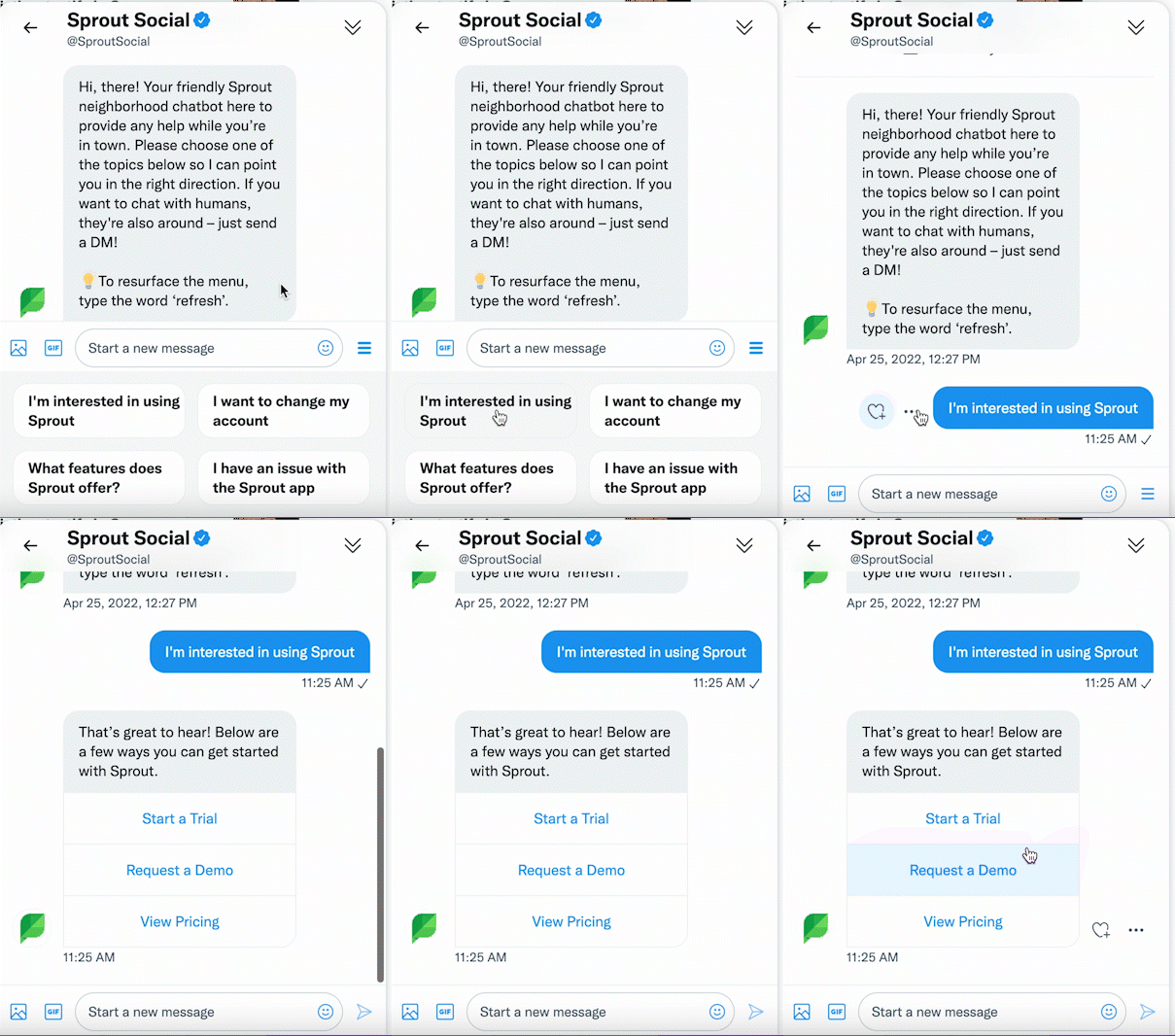
Direct messaging is an increasingly important channel for personalized, one-to-one engagement. Whether you’re using Instagram DMs, LinkedIn InMail, X / Twitter, Facebook Messenger, SMS, or chatbot-powered replies, direct messaging helps brands have real conversations with prospects and customers — at scale.
Used strategically, DMs can humanize your brand, streamline customer support, and increase conversion rates through timely nudges, reminders, and check-ins. This format is especially effective for service-based businesses, lead generation, and relationship nurturing.
Strategy Tip: Create DM funnels for lead capture and qualification. Combine automation (via chatbots or SMS flows) with occasional manual outreach to maintain authenticity and high-value touchpoints.
Lead Magnet and Educational Content
These content types are ideal when your goal is to capture attention and convert that attention into leads. They offer value upfront — often in exchange for an email address or a click deeper into your funnel.
Think checklists, templates, cheat sheets, glossaries, and email courses. They’re typically more text-based, but their true power lies in how useful and actionable they are. These are your go-to formats when you want to educate, nurture, and gently guide your audience toward a decision — without the hard sell.
10) Case Studies
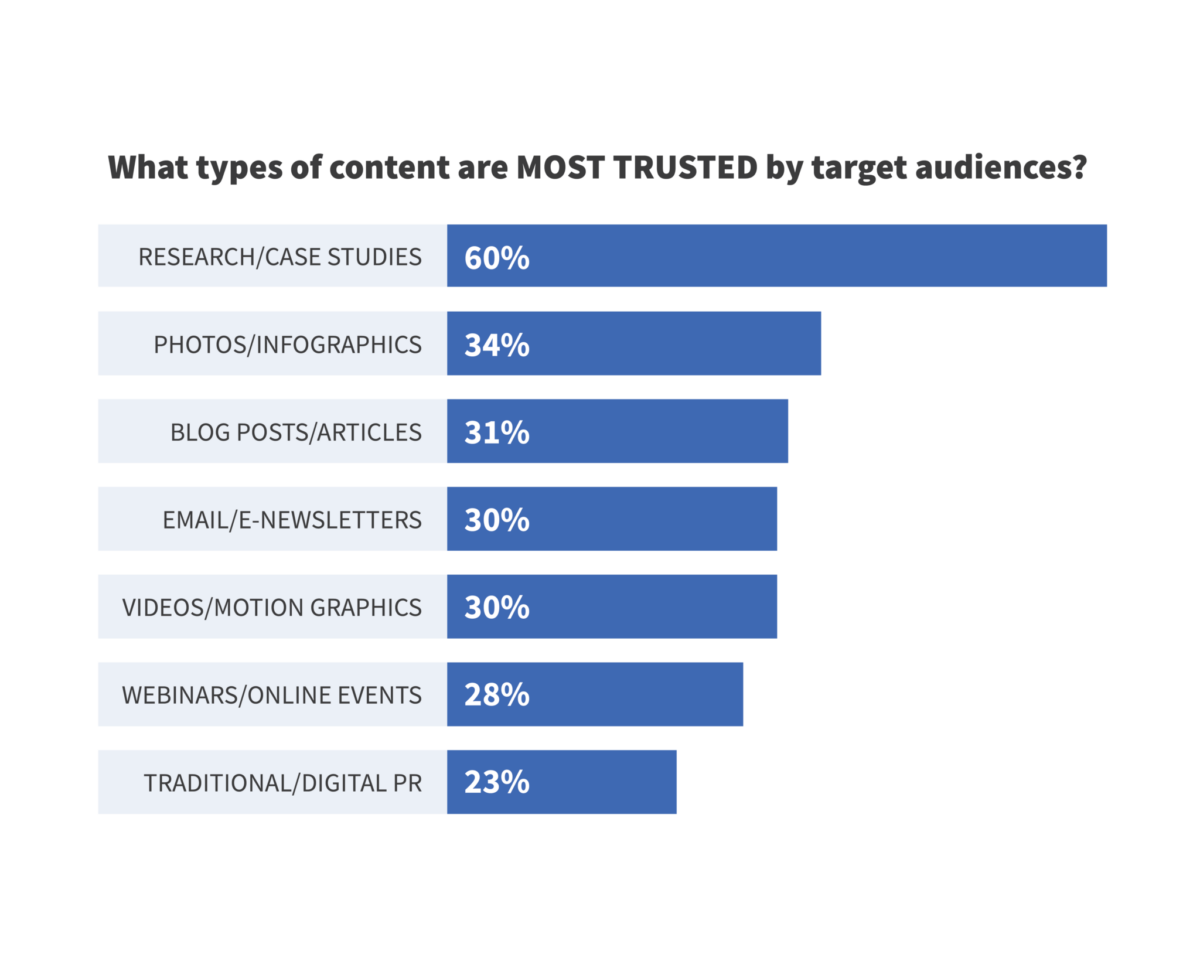
Case studies are one of the most persuasive types of content marketing as you can see from the above image — especially for B2B brands or high-consideration products and services. They showcase how your solution has helped real customers solve real problems, offering social proof, credibility, and concrete results that prospective buyers can relate to.
A well-structured case study doesn’t just highlight what you did — it tells a compelling story. It walks readers through the challenge your customer faced, the solution you provided, and the measurable outcomes achieved. This format builds trust, reinforces your expertise, and gives prospects a clear picture of what working with you looks like.
Strategy Tip: When writing case studies, focus on outcomes and transformation. Use a simple structure: challenge → solution → result. Include data points, quotes, and visuals when possible to boost credibility.
11) White Papers
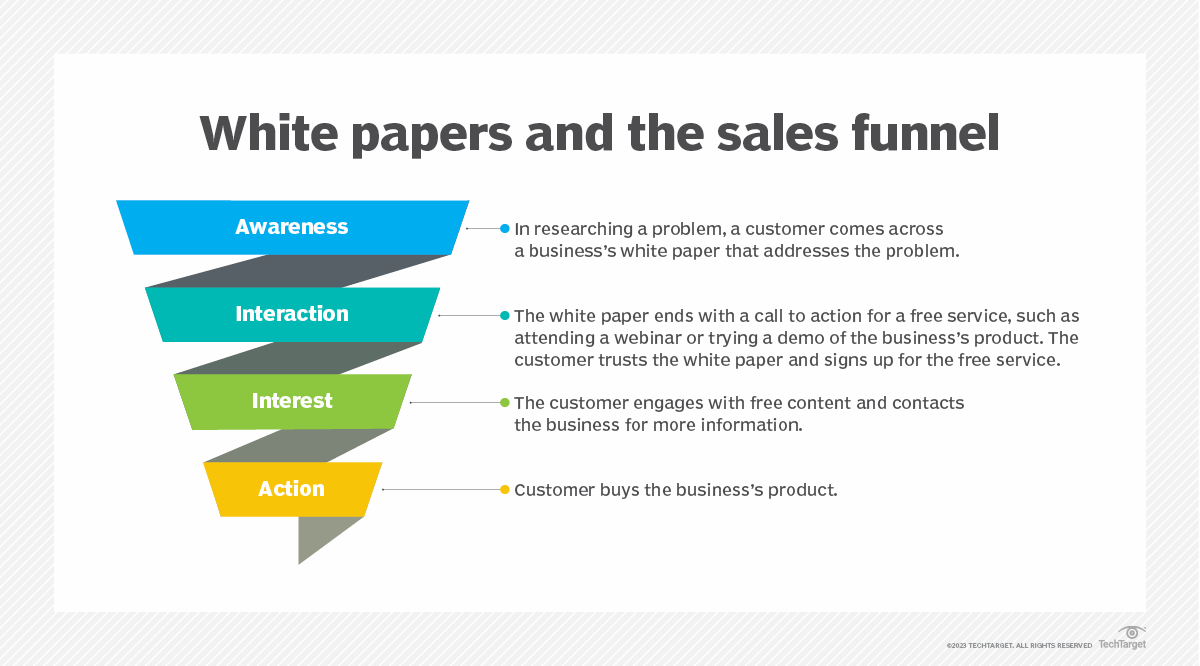
White papers take an in-depth look at a problem or issue, then suggest a solution. Typically, the solution is a product or service that’s offered by a particular company. As one example, an internet security company might talk about their proprietary solution to the ransomware threat. Or, a company that makes a cash handling system might demonstrate the reasons why a retail establishment needs it.
Whitepapers are very popular with business customers. One reason for this is that they pay attention to detail. For this reason, 71% of B2B buyers use them as an important part of their research. Which is to say, if you sell a business product in a highly-competitive niche, you probably should be using whitepapers for customer education and lead magnets.
Strategy Tip: Gate your whitepapers behind a lead form to collect email addresses — but only if the content is truly valuable. Make them highly specific and backed by data to stand out from generic competitor resources.
12) eBooks and other long-form content
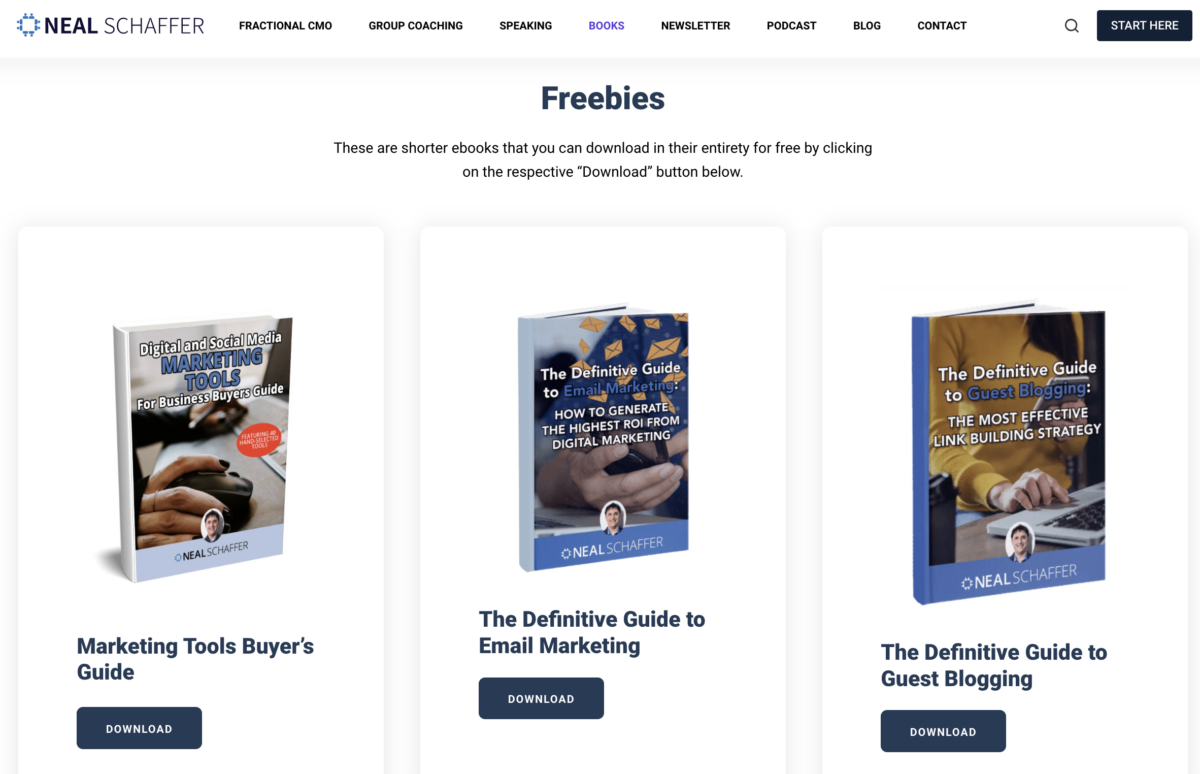
The great thing about eBooks is that they’re appropriate for a wider variety of industries. For instance, a consumer brand might write an eBook about proper use of their product. Or, they might have an inspiration booklet of different kinds, and put it online. Unlike whitepapers, these eBooks tend to be more general and less detailed. But they’re still highly effective for the right products.
I’m a big fan of leveraging ebooks for generating leads, as you can see from my Books page below!
Strategy Tip: Use eBooks as content upgrades for blog posts or as part of nurture sequences. Break long eBooks into modular chapters you can repurpose into blog posts, checklists, or carousel content.
13) Checklists and Other Short-Form Content
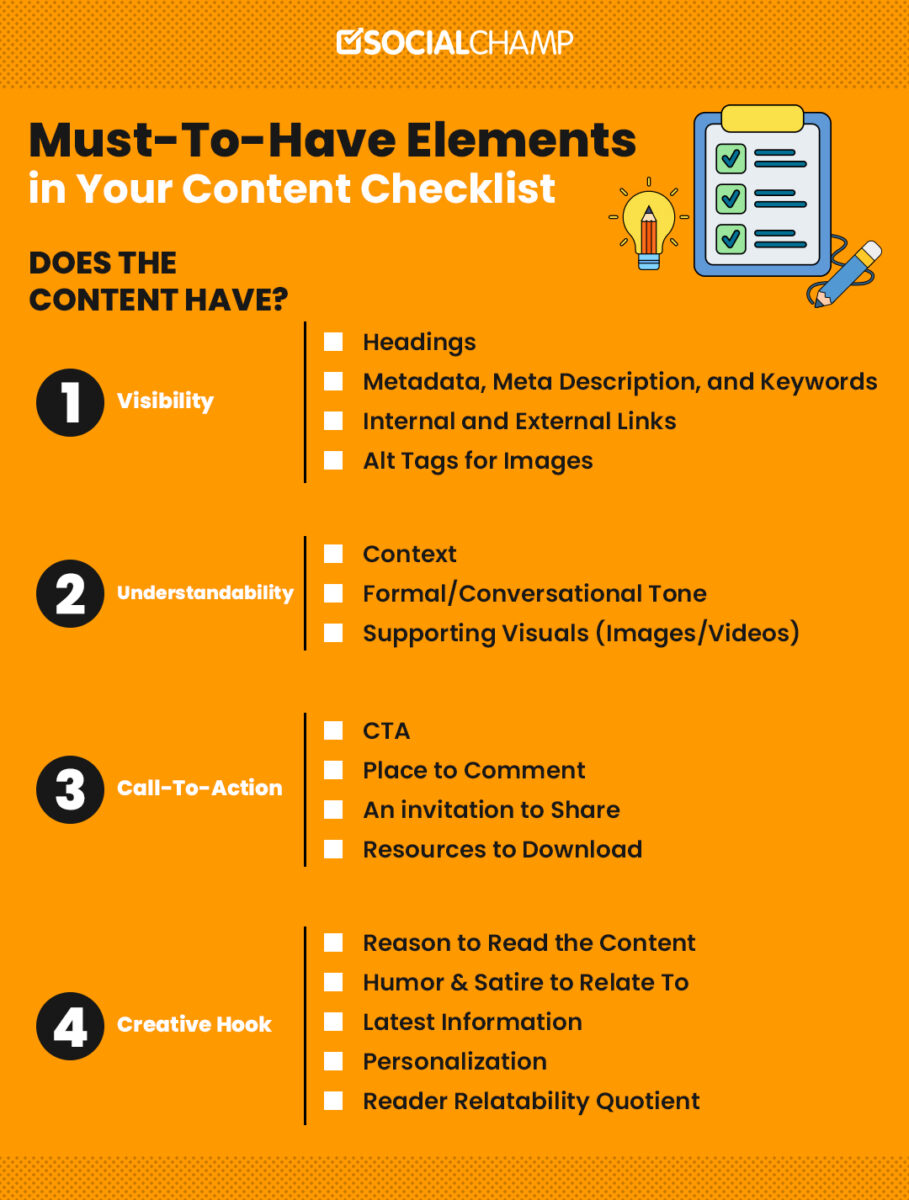
Checklists are really useful in industries like travel where people ask a lot of questions that are easy to answer. For instance, it could be “what should I pack for a week traveling around Japan?” If you sell tours to Japan, this can be quite useful. Similarly, a lot of medical companies will use checklists that encourage people to talk to their doctors about symptoms.
Of course, other short-form content can be used. Here, the idea is to write something that gives useful information and is easy to remember. At the same time, it’s valuable enough that you can insist people give you their email to get it.
Strategy Tip: Promote checklists on social media or as post-content CTAs. Keep the format clean, scannable, and printable — and design it to deliver a quick win for the reader.
14) Webinars
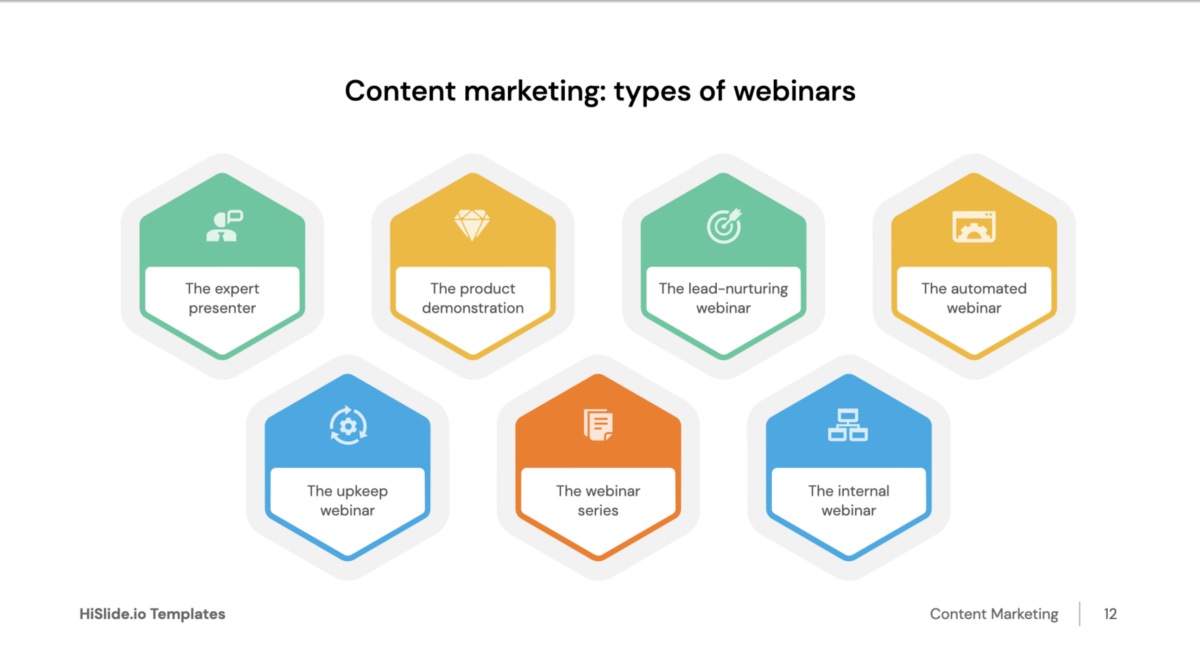
This one involves teaching people a bit about what you know. In this case, for the “price” of their contact information. I like webinars because they give the opportunity for people to become more informed consumers or professionals. At the same time, you can distinguish yourself (and your company) as thought leaders in your industry. And unlike blog posts or whitepapers, people can listen in on webinars while multitasking.
Strategy Tip: Choose webinar topics that solve urgent problems or showcase how-to expertise. Use real-time Q&A to drive engagement, and always follow up with a replay link + next steps via email.
15) Quizzes and Interactive Content
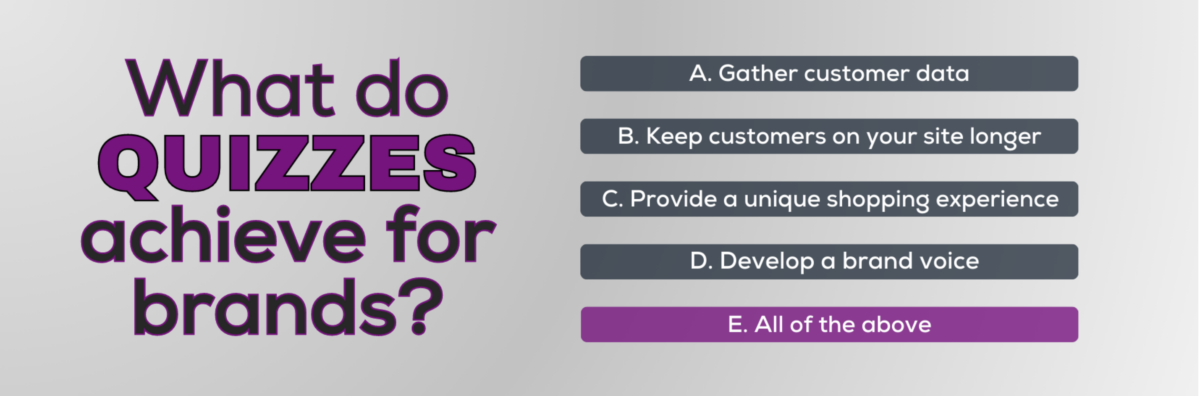
Quizzes, calculators, and other interactive tools are powerful ways to engage your audience while collecting valuable insights. Unlike passive content, interactive formats invite users to participate — helping them self-discover solutions, segment themselves, or assess their needs in real time.
From “Which product is right for you?” to knowledge tests or ROI calculators, interactive content boosts dwell time, social shares, and lead conversions. It’s especially effective in the awareness and consideration stages of the funnel, where education and content personalization can gently guide users toward a decision.
Strategy Tip: Use interactive tools like Interact or Outgrow to build high-converting quizzes. Make the results insightful — and tie them to a relevant product or content offer to drive next-step engagement.
User-Generated and Trust-Building Content
Trust is the currency of digital marketing — and these types of content help you earn more of it. User-generated content, testimonials, reviews, influencer collaborations, and employee advocacy content all fall under this category.
What makes this type of content marketing so powerful is that it’s not just about what you say — it’s about what others say on your behalf. And with Google’s growing emphasis on EEAT (Experience, Expertise, Authoritativeness, and Trustworthiness), content that highlights third-party validation or real-world results carries more weight than ever.
16) User-Generated social media Content / Influencer Content
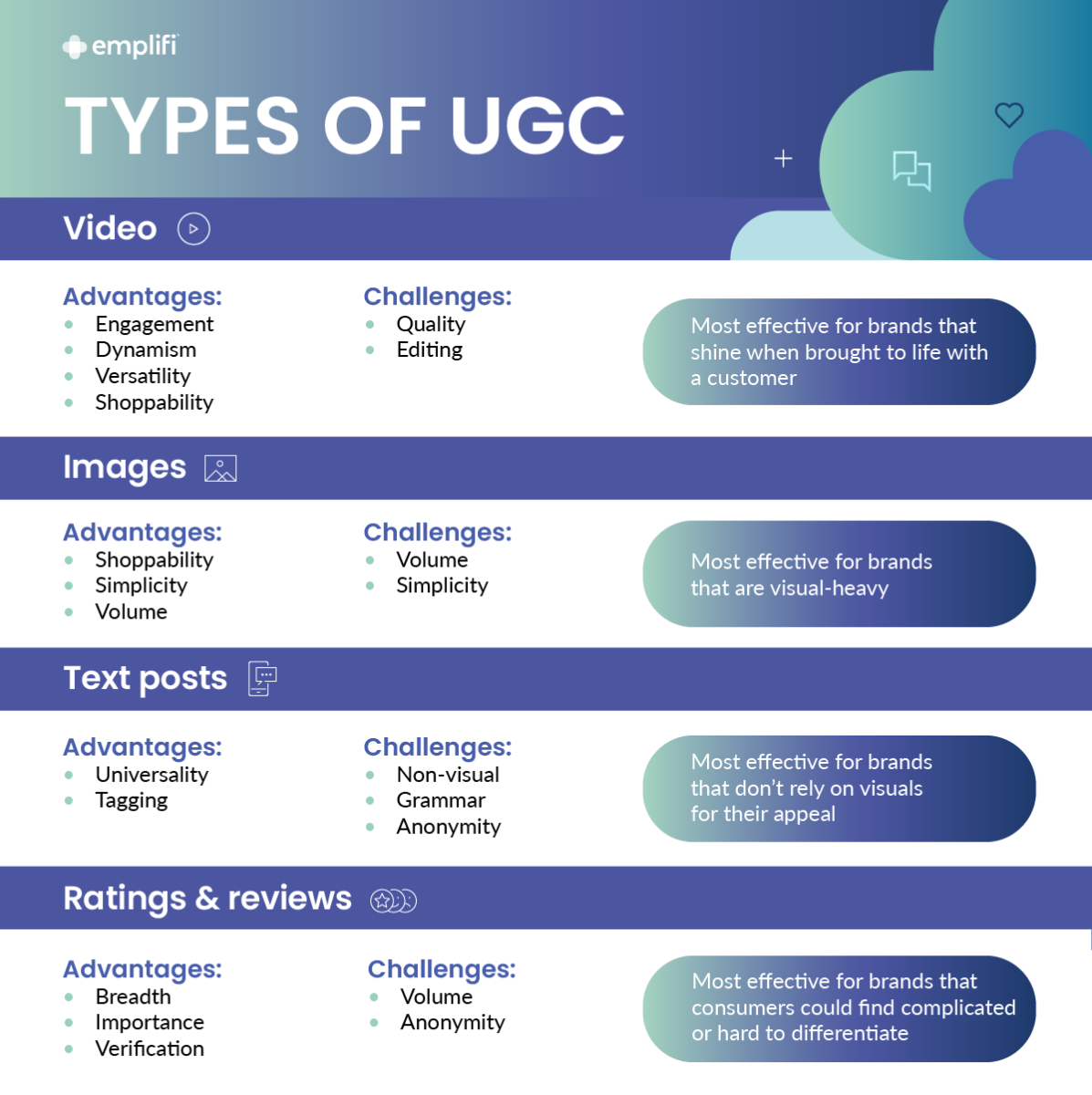
This category has two basic types. First, there’s classic user-generated content. These are spontaneous representations of your products and services. For instance, a traveler talking about the awesome time they had at a particular hotel. On the other hand, influencer content is sponsored by a company. In return, the brand gets introduced to the influencer’s audience. This is overall a very effective way to reduce the burden of content creation.
Strategy Tip: Repost UGC (with permission) across your marketing channels to increase trust. For influencer partnerships, prioritize creators whose values and audience align with yours — and aim for long-term collaborations over one-off posts.
17) Customer Reviews

Customer testimonials and reviews are highly effective for marketing. And unsurprisingly, there are several ways to benefit. First, you can encourage people to review your products and services on third-party websites, such as online retailers or travel sites. Second, reviews can be posted on YOUR website. Between these approaches, you can invite reviews while also pulling them from other sites with a widget.
Strategy Tip: Feature your best reviews as social proof throughout your website — especially near product pages and CTAs. Use review snippets in email marketing and retargeting ads to increase conversion rates.
18) Interviews
Interviews are a high-impact content format that allows you to tap into the credibility, expertise, and audiences of others — whether you’re speaking with industry thought leaders, happy customers, or even your own internal subject matter experts. They build trust by showing real perspectives, spark engagement through brand storytelling, and help humanize your brand.
From video interviews and blog Q&As to podcast episodes or social media Lives, interviews offer flexible, multi-format content that can be repurposed across channels. They also open the door to collaboration, expand your reach through cross-promotion, and generate fresh insights that your audience may not hear anywhere else.
Like other types of content marketing, you can combine various types and through content repurposing, take an interview, livestream it, use it as a podcast recording, and then develop a blog post around it! This is exactly what I do with interviews like you see above for my own Your Digital Marketing Coach podcast. If you were curious how I do this, please listen to my podcast episode on my own repurposing playbook below:
Strategy Tip: Turn interviews into multi-format content: blog posts, YouTube videos, audiograms, or quote graphics. Position them as co-branded collaborations to tap into your guest’s audience and expand reach.
Other Formats
These content types might not be the first that come to mind, but they can be incredibly powerful when used strategically. From interactive quizzes and calculators to AR filters, microsites, and even AI-generated content, this category is all about experimenting with newer formats that create memorable, differentiated brand experiences.
These can be resource-intensive to produce — but they often generate strong engagement, backlinks, and brand recall. As technology and audience expectations evolve, so should your content mix.
19) Infographics
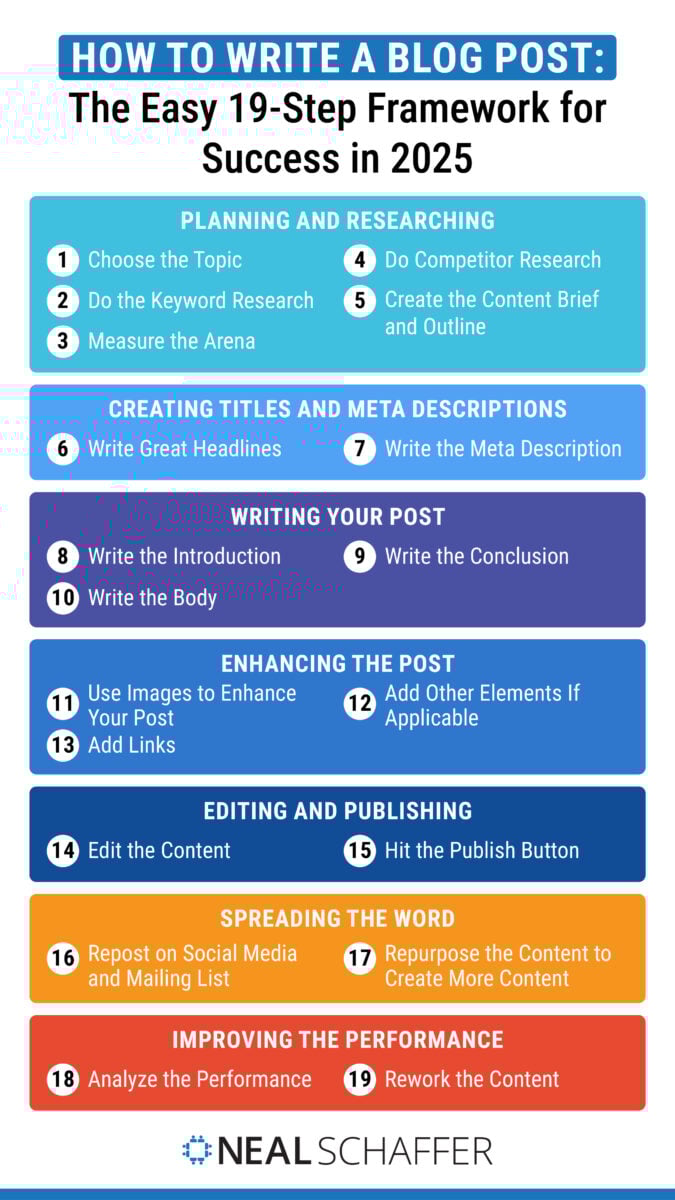
Infographics are just what you think: graphical representations of information. In most cases, they’re an easy-to-read mixture of words mixed in with visuals that emphasize key points. These graphics are usually relatively simple, but they help visualize and present data-heavy or step-by-step information in a format that’s engaging and easy to remember. Customers love them because they’re scannable, visual, and highly shareable.
Infographics used to be an expensive proposition, but you can even use ChatGPT to develop infographics, which is how I created the above infographic!
Strategy Tip: Use infographics to repurpose blog content, research, or data-heavy material into visual assets that drive backlinks and social shares. Embed them in posts, pitch them to journalists, or share them natively on Pinterest and LinkedIn.
20) Memes and GIFs

Memes use humor or cultural relevance to get a point across quickly. For brands, these need to align with your voice and values — but when done right, they humanize your message and encourage viral engagement, just like the official Starbucks Giphy above. Similarly, GIFs are short looping videos that can add personality and tone to your content, especially in social and email campaigns.
Strategy Tip: Create branded meme or GIF templates that your team (or audience!) can remix. Track trending formats and jump in early to boost organic reach — but always prioritize authenticity over virality.
21) Courses
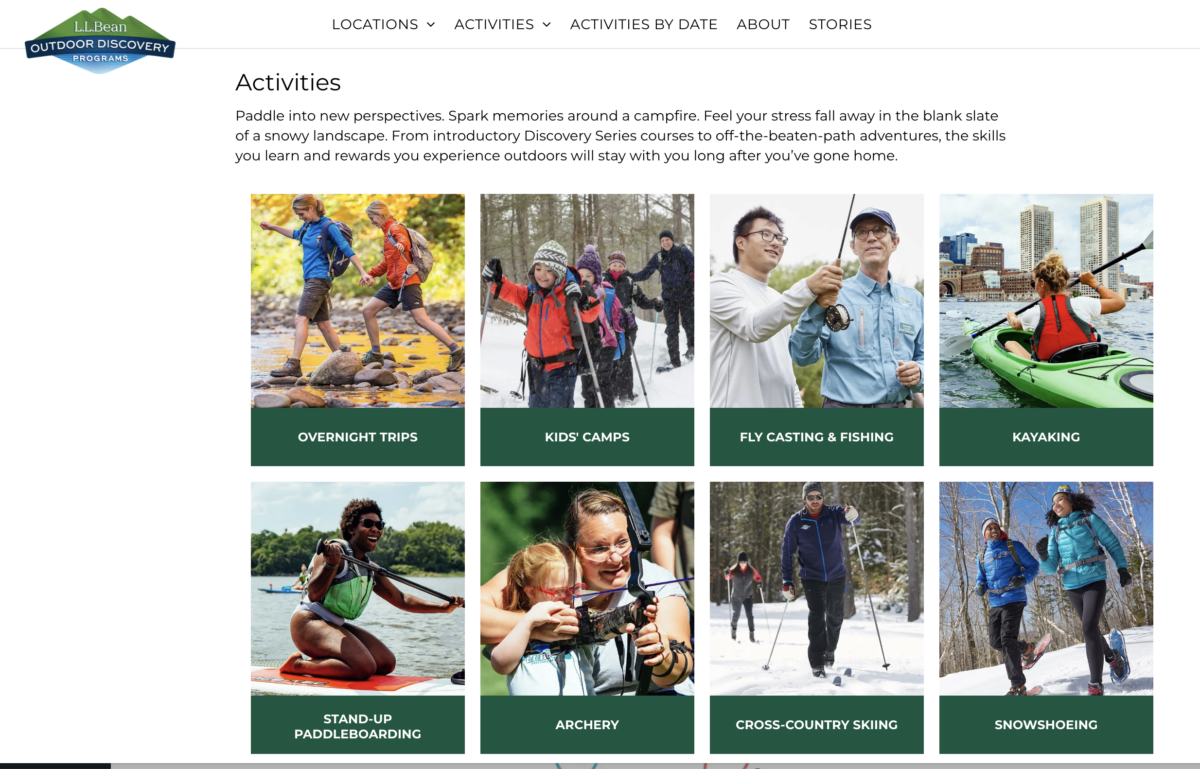
Depending on your product type, courses are among the more effective types of content marketing. These present information in a structured and often interactive format, and they’re ideal for brands looking to educate while building authority. A great example is L.L. Bean’s outdoor instruction programs pictured above — paid interactive courses and experiences that ultimately help build brand loyalty and sell more gear.
Strategy Tip: Offer free mini-courses as lead magnets and upsell into premium offerings. Use email drip sequences to guide participants and reinforce your authority while nurturing trust across the funnel.
22) Communities
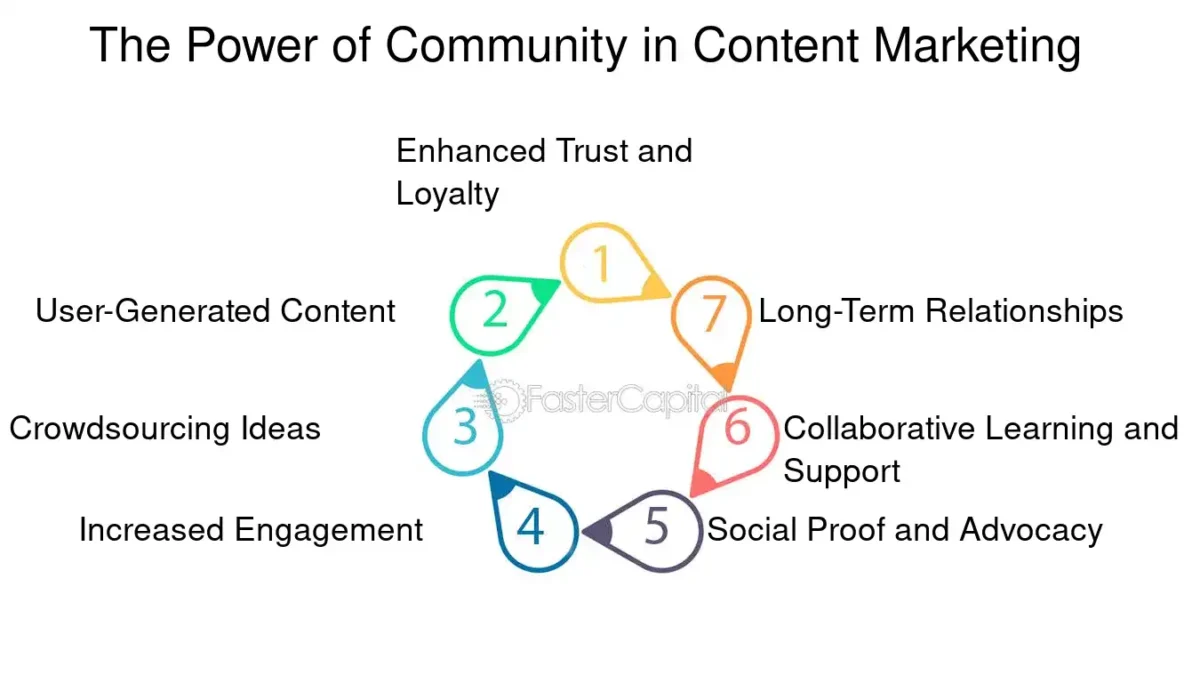
Communities are online gathering places for people who share a connection with your brand, your industry, or the problem you solve. These can include fans, customers, brand ambassadors, or simply curious learners. Whether it’s a Facebook Group, Slack space, or LinkedIn group, communities create space for ongoing discussion, support, and user-generated content that lives beyond your own content marketing calendar.
Strategy Tip: Seed your community with conversation-starter content and make your top fans feel seen. Use community discussions to spark blog ideas, build trust, and gather insights directly from your audience.
Check out my own community: Digital First Group Coaching Membership Community
23) Presentations
Last among our types of content marketing, consider presentations. These can be live webinars, on-demand recordings, classic slide decks shared on platforms like SlideShare, or repurposed into LinkedIn carousel postsf. When optimized for digital distribution, they become evergreen assets that can support sales, education, or event-based lead gen.
Strategy Tip: Create a “presentations hub” on your website featuring decks from conferences, sales demos, or workshops. Add transcripts or summaries to boost SEO and encourage repurposing into blog posts or video snippets.
How to Choose the Best Types of Content for Your Content Marketing Strategy
With 23 types of content marketing to consider, the challenge isn’t just knowing your options — it’s knowing which ones make the most strategic sense for your brand and capabilities of your marketing team. While every business will benefit from using multiple formats, the right mix depends on your goals, audience, and resources. Here’s how to choose wisely:
1. Start with the Essentials
If you’re embracing a digital-first marketing strategy (and you should), start with the foundational pillars: SEO, paid search, email, and social media. These channels offer the broadest reach and the highest return — and each contains a variety of content opportunities within it.
Not every social platform or search engine is right for every audience, so prioritize the ones where your customers actually spend time.
2. Know Where Your Audience Consumes Content
Think of search broadly — beyond just Google. YouTube is a search engine for video. Apple Podcasts is a search engine for audio. Pinterest is a visual search engine.
Ask: Where is my audience actively seeking information or inspiration?
- Blogs are essential for Google searchers.
- Video is a must if your audience lives on YouTube or TikTok.
- Podcasts are ideal for commuting professionals or audio-first learners.
- LinkedIn thrives on thought leadership and B2B case studies.
The more aligned your content is with your audience’s habits, the higher your engagement and conversions will be.
3. Match Content Types to Your Brand Story
Choose content formats that help tell your story in the most authentic, compelling way. For some brands, the most authentic format is branded content built around shared values rather than the product itself. What you sell narrows the field before you start. A software company running a SaaS content marketing program has to earn trust inside a free trial window, so its format mix skews toward proof. A brand selling on taste and lifestyle can win on personality instead.
- A B2B content marketing software company might lean on whitepapers, webinars, and LinkedIn posts.
- A lifestyle brand might focus on tutorials, influencer content, and visual formats like Stories or Reels.
Also consider what’s already working: audit your best-performing content and benchmark what your competitors are doing successfully.
4. Align With Your Internal Capabilities
Even the best strategy falls apart if your team can’t execute it consistently. Start with the content types your team is already equipped to produce — whether that’s written, video, or audio.
User-generated content can help fill gaps, and influencer partnerships (when structured correctly) can expand your capacity without overloading your internal team. The best content strategy happens at the intersection of what works strategically and what’s sustainable to produce.
Frequently Asked Questions About the Types of Content Marketing
What are the main types of content marketing?
There are 23 types worth knowing, and they group into five categories: foundational long-form content (blogs, video, podcasts), social and community-driven content (live streams, Stories, short-form video, DMs), lead magnets and educational content (case studies, whitepapers, ebooks, checklists, webinars, quizzes), user-generated and trust-building content (UGC, influencer content, reviews, interviews), and other formats (infographics, memes, courses, communities, presentations). Most businesses only ever need a handful of them.
Which type of content marketing is most effective?
The most effective type depends on where your buyer is. Blog posts and video win at the awareness stage because they are what people search for, while case studies and whitepapers do the persuading further down: 71% of B2B buyers treat whitepapers as an important part of their research. If you sell something complex or expensive, prioritize the formats that prove results over the formats that chase reach.
How many types of content marketing should a small business use?
Three to five, chosen deliberately, will beat all 23 done badly. Pick one foundational format you can publish consistently, one social format where your audience already spends time, and one trust-building format such as reviews or case studies. Add a lead magnet once you have traffic worth converting, which is exactly how I use my own ebooks.
What is the difference between a type of content and a content marketing channel?
A type of content is the format you create, such as a video, a checklist, or a podcast episode. A channel is where that format gets distributed, such as YouTube, your email list, or LinkedIn. One type often runs across several channels, which is why repurposing is the cheapest way to expand your content program.
How do I choose the right types of content marketing for my business?
Start with your audience’s habits, then check them against your team’s capabilities. Ask where your customers actively look for answers (Google, YouTube, Apple Podcasts, Pinterest are all search engines), then ask which of those formats you can produce every week for a year. The overlap is your content strategy, and these content marketing examples show what the overlap looks like in practice.
Final Thoughts on Content Marketing Types
As content marketing continues to evolve, success lies in striking the right balance between quality, variety, and strategic intent. You don’t need to use all 23 types of content marketing — but you do need to be intentional about the ones you choose.
Focus on matching content types to each stage of the customer journey, and experiment to discover what resonates most with your audience. Over time, you’ll build a content engine that not only attracts and engages — but also converts and retains.
Need help choosing the right content mix or building a scalable content strategy? Join my Digital First Group Coaching Community or get in touch for 1:1 consulting — and let’s build a content engine that grows your business, builds trust, and delivers results.
Actionable advice for your digital / content / influencer / social media marketing.
Join 13,000+ smart professionals who subscribe to my regular updates.