

Editorial Note: I may earn a commission when you visit links that appear on my website.
The 18 Best Email Marketing Software Tools to Consider Investing in Today
Why is investing in the best email marketing software tool for your company important?
I always say that you need to meet the digital user where they are, which includes meeting them via social, search engines, or email. Your choice of email marketing tool is as important as which social media marketing dashboard or SEO tool that you decide to use to engage with customers and increase customer loyalty.
Many companies and business owners are still invested in email marketing software tools that they might have invested in several years ago and feel that they are stuck with. This is hurting your marketing for a few reasons:
- You might be missing out on important additional functionality and key features that other email marketing software solutions provide, especially in the areas of marketing automation, CRM, and even the ability to create landing pages and web forms.
- You might be spending too much, not just on your current tool but also because you might be able to discontinue use of other marketing tools, as email marketing software tools become more robust with functionality.
While you might not need to do a quarterly audit of social media tools that I usually recommend, doing a sanity check on your email marketing software solution every 6 months or even annually is a best practice to ensure you don’t miss out on business tool innovations that you should be leveraging to maximize email marketing ROI, including doing an audit of your standard subject lines and the impact of your email’s content.
Through my own company or by working with clients, I actually have experience in 8 of the 18 best email marketing software tools that I list below. The other 10 I have included in comparative audits that I have done in the past. There are other email marketing software solutions that exist, but I think if you choose from these 18, you are not going to go wrong.
Key Takeaways
✅ I have used 8 of the 18 tools below myself, either inside my own business or alongside clients. The rest come from comparative audits I have run over the years.
✅ Constant Contact was my first email marketing tool more than a decade ago. Since then I have worked in ActiveCampaign, MailerLite, GetResponse and ConvertKit, now called Kit, which is where my own list lives today.
✅ Pricing flips as your list grows. ActiveCampaign was the best value I could find until my list passed 10,000 subscribers, and that crossover point is what moved me back to ConvertKit.
✅ The cheapest tool is not always the cheapest stack. Platforms like ActiveCampaign, GetResponse and HubSpot fold in landing pages, forms and marketing automation, so one bigger monthly bill can replace two or three smaller subscriptions.
✅ Price your migration, not just your subscription. Moving platforms means rebuilding your automations by hand, and some tools now bill you for every contact who could receive an email, including the ones you have not mailed in months.

✅ Re-audit your email marketing software every 6 to 12 months. Most business owners I speak with are still paying for the tool they picked years ago, and have never checked it against what email marketing should cost today.
1. Mailchimp

Mailchimp is the default beginner’s email marketing software today, just as Constant Contact was back in the day. Mailchimp became the default because of their free plan and the many easy email templates they offer to users. Unlike more advanced email templates, however, most templates are extremely basic and available templates are severely limited to free users.
Do you have a small subscriber list and a smaller budget? Mailchimp still has a free plan, but it is a shadow of what it used to be. The free tier now caps you at 250 contacts and 500 sends per month, with no email scheduling and no automation, which makes it a way to test the interface rather than a way to run a list. Mailchimp is still easy to use, and the analytics and basic customer insights are fine for a new business. Just do not build your budget around the free plan carrying you very far.
That being said, if some of the automation, segmentation, tagging et. al. advanced functionality that you see some of their competitors excites you, Mailchimp is probably not the best choice for you. I have found that they are not as innovative as many of their competitors, and while some advanced functionality such as email automations exist, they are hard to use.
Mailchimp does suffer from having multiple tiers of products with a complex mix of functionality, as you can see below:

Monthly pricing for Mailchimp is based on how many contacts you store rather than how many emails you send, and every plan carries a monthly send cap tied to that contact count. At up to 500 contacts, Essentials runs $13 a month and Standard $20, and Standard is the tier where the generative AI tools and the full automation flows start. Premium begins at $350 a month for 10,000 contacts. Prices step up at every contact tier above that, so run your own list size through the calculator on the Mailchimp pricing page before you commit.
2. HubSpot
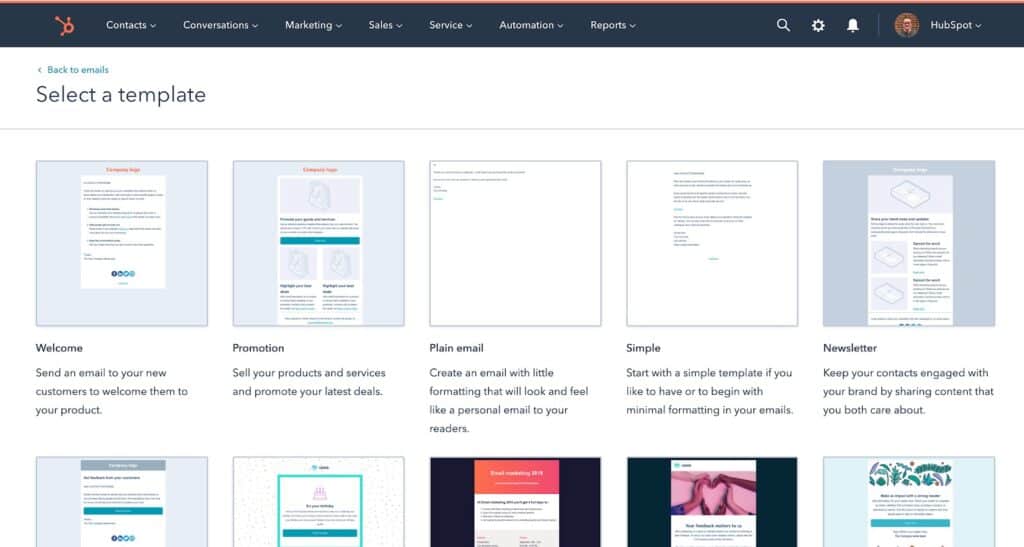
HubSpot literally invented the term “Inbound Marketing,” and they were one of the first to truly integrate search, social marketing, and email into one product to more effectively create and support engaging, responsive emails.
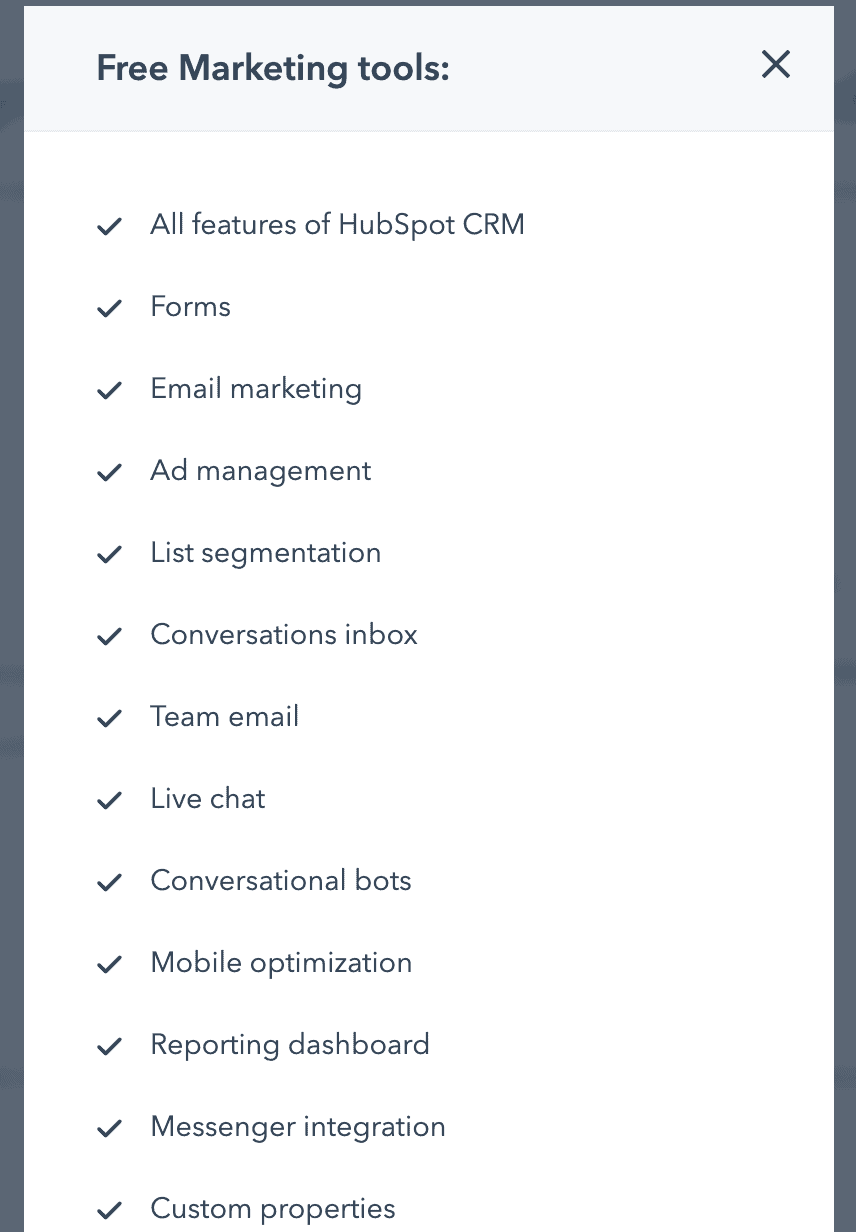
Are you starting your company from scratch? Do you have a super-thin profit margin? In either of these situations, you can benefit from HubSpot. Unlike many other email marketing providers, they do have a number of email marketing software tools that are free to use long-term, without a 14-day free trial, allowing up-and-comers to utilize the perfect tool without breaking the bank.
As long as you don’t need the features of a paid version, you can keep using HubSpot for free. So, what comes with free? Basic tools that’ll get you started. Best of all, when your company grows and needs change, you can stay with the same company by upgrading to their Starter plan without losing track of your customer journey.
Here’s a look at all of the free marketing tools that HubSpot offers:
What is confusing about HubSpot is that they have built separate products for Marketing, Sales, Service, Content, Data and Revenue, which you can buy on their own or as a bundle. Starter plans across those hubs sit under $100 a month, but the tier above Starter moves into the hundreds and then the thousands, and Professional and Enterprise both carry a mandatory one-time onboarding fee on top of the subscription.
When you want to go past the free tools, HubSpot pricing is based on which hubs you buy, how many seats your team needs, and how many marketing contacts you store. Marketing Hub Starter runs $9 per seat per month on annual billing and includes 1,000 marketing contacts. Professional jumps to $800 a month on annual billing, which covers three seats and 2,000 marketing contacts, plus a one-time $3,000 onboarding fee. Enterprise starts at $3,600 a month with a $7,000 onboarding fee. That gap between Starter and Professional is the part that catches people out, so price it honestly before you get comfortable on the free tools.
3. Constant Contact
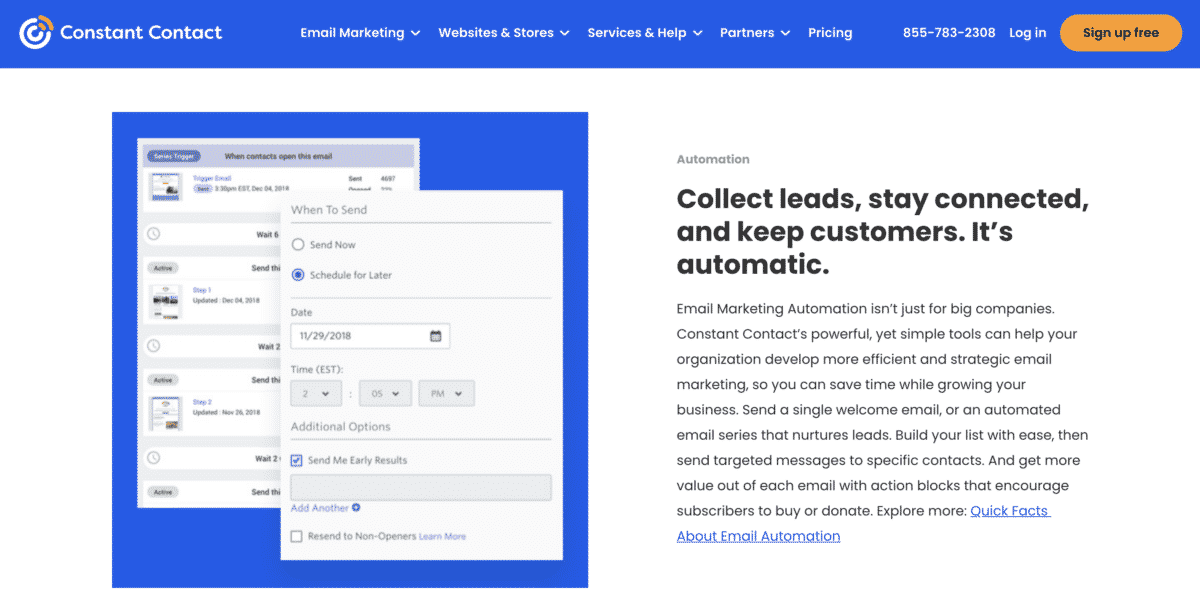
Constant Contact was the first email marketing solution that I ever used more than a decade ago, and they have been a staple product in the industry.
Make LinkedIn Your Best Source of Clients
My latest book helps professionals, entrepreneurs, and business owners turn LinkedIn from a static profile into a real source of clients and growth.
Maximizing LinkedIn for Business Growth gives you clear, practical steps to build a profile that gets noticed and a network that actually sends business your way.
Grab your copy on Amazon and put it to work this week. Click the cover or the button below to get started.

It’s another tool that’s built for even the smallest businesses, but scalable for use by medium-sized ones, and is easy to use, to boot. With both basic and advanced email marketing plans, there’s something for everyone at an affordable price.
My own observation shows that Constant Contact is super popular with nonprofits such as religious and community organizations. This isn’t surprising, because this company also offers Website and marketing consultation services. Rather than allow your email list to grow with junk contacts that you have to pay for, Constant Contact removes email addresses when customers consistently don’t open the emails. They also remove “burner” email addresses, saving you money and improving your engagement and click-through rate.
Here’s a snapshot of Constant Contact’s features:

As for Constant Contact pricing, the old two-plan Email and Email Plus structure is gone. There are now three tiers: Lite starts at $12 a month, Standard at $35 and Premium at $80, with those rates set at the smallest contact tier and every plan climbing as your list grows. Lite gives you one user and a single automation template. Standard adds three automation templates, segmentation and subject line testing, and Premium adds custom automations, unlimited users and 500 SMS messages a month. There is no free plan, only a trial, but prepaying for 12 months saves up to 15 percent, and nonprofits prepaying save up to 30 percent.
4. ActiveCampaign

This is the solution that I was using until quite recently and recommended my clients migrate over to.
For businesses that need an all-in-one marketing solution, ActiveCampaign is a great choice. That’s because they automate the entire email marketing cycle. At the same time, ActiveCampaign can be used to cover other sales and marketing tasks, as well. For example, you can input information from Salesforce into ActiveCampaign, and vice versa.
I also like the fact that they have an iPhone app that allows you to input new customer information into the system, even when offline. Despite its robust functionality, it’s easy to use, and I have found the customer service to be excellent. It’s no wonder that ActiveCampaign is popular with SMBs.
Here is a snapshot of ActiveCampaign’s features:

As for ActiveCampaign pricing, the plans are Starter, Plus, Pro and Enterprise, and every one of them is priced by how many contacts you store. At 1,000 contacts on annual billing, Starter runs about $15 a month, Plus $49, Pro $79 and Enterprise $145, and paying monthly instead of annually costs roughly 20 percent more across the board. Your monthly send allowance is tied to the same contact number: 10 times your contact count on Starter and Plus, 12 times on Pro and 15 times on Enterprise. There is no free plan, only a 14-day trial, though nonprofits get 20 percent off.
Unfortunately, ActiveCampaign becomes more expensive compared to its competitors when your contact list grows larger, especially if you want to take advantage of its key features, but until you hit 10,000 subscribers for your bulk emails, ActiveCampaign is one of the fullest-featured solutions that is also competitively priced.
5. Klaviyo

Klaviyo is an email marketing tool that allows you to send out all of your email marketing clearly and easily, maintaining a professional polish and not making your subscribers feel as though you are in constant contact with them. From creating subject lines that perfectly match your clients’ wants and needs, to segmenting your email marketing efforts to tailor-make all of the emails going out to potential customers, Klaviyo is a powerful email platform.
Gathering email addresses from mailing lists, existing sales, or potential sales, Klaviyo targets the individual demographic characteristics of your marketing audience to more effectively cater to their needs. By addressing a wide range of components–whether a customer usually shops sales or full price, what types of services or products a customer typically buys, and when customers typically shop–Klaviyo can more effectively provide a solid return on investment for SMS marketing and email marketing alike.
The range of features offered by Klaviyo makes it a powerful email marketing tool in order to target specific customer needs and personalize outgoing emails.
Klaviyo pricing is tiered according to the number of active profiles in your account, which since February 2025 means everyone who could receive an email from you rather than just the people you actually email. Up to 250 profiles is free, capped at 500 email sends per month. Paid Email plans start at $20 a month for 251 to 500 profiles, then climb with your list: roughly $30 at 1,000 profiles, $100 at 5,000, $150 at 10,000, $720 at 50,000 and about $2,300 at 250,000. SMS is billed separately through a credit system on top of whichever email tier you land on.
6. Kit
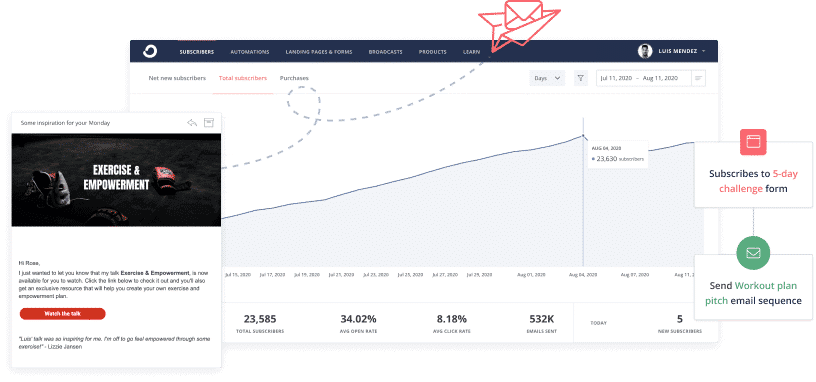
Kit, formerly known as ConvertKit, is the email marketing service I moved to a few years ago when they were the new and shiny email marketing solution used by a lot of bloggers. Since then, they have only become more popular with bloggers, due in part to their intuitive interface. Nevertheless, I migrated away from them because I didn’t feel that they innovated their product fast enough for my email marketing strategy needs.
Fast forward to more recently where, as mentioned in the pricing for ActiveCampaign above, their rates were competitive until you hit 10,000 subscribers. After hitting that, and realizing that Kit has innovated a great deal recently, I have moved back to Kit and haven’t looked back, even recommending it to some of my clients as an alternative to ActiveCampaign’s email designer based on their needs.
Simply put, if you are looking for an email marketing software tool that includes tagging and marketing automation to email client marketing campaigns, Kit might be the best choice out there for you.
When I moved from MailChimp, I noticed that graphical email templates were not one of Kit’s strengths. In fact, if you want to get your point across and think your subscribers would prefer plain-English, non-flashy email, you will enjoy the minimalist look of Kit’s emails. For this reason, Kit is a great choice for businesses that are more service-oriented, or who sell technical products and can easily make use of ready-made templates in an email marketing space. The design templates are perfect for niches where gimmicks are not wanted or appreciated. Otherwise, this program works like most other drag-and-drop email editor services.
Here’s what an overview of Kit’s features look like:
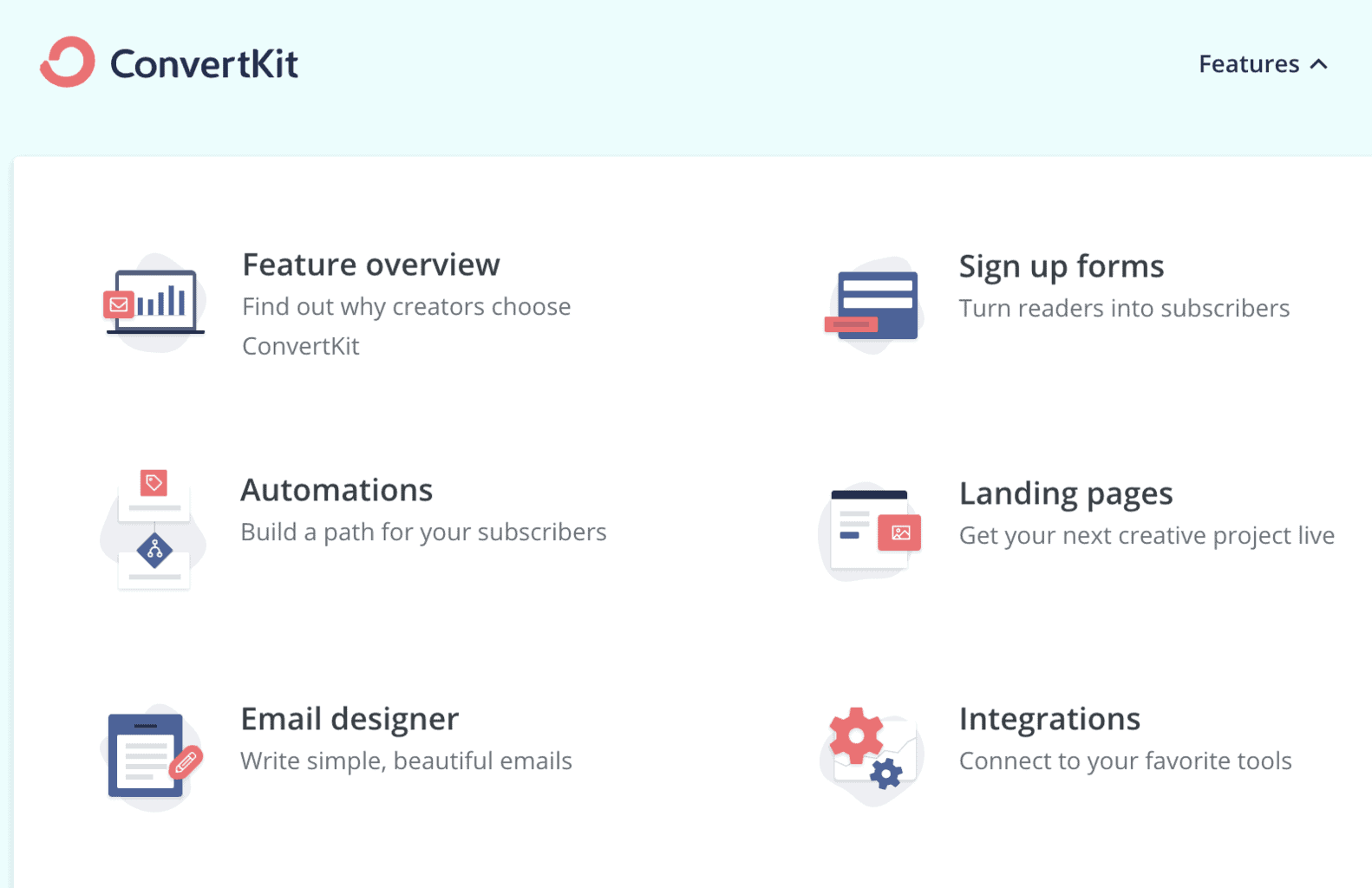
Kit’s free plan is far more generous than you might think: the Newsletter plan covers up to 10,000 subscribers with unlimited sends, though it limits you to a single automation. Paid pricing is still simple. The Creator plan runs $39 a month for up to 1,000 subscribers, $59 at 3,000 and $89 at 5,000, while Creator Pro starts at $79 a month at that same 1,000-subscriber tier. Annual billing takes roughly two months off either plan. One thing to watch: Kit raised Creator pricing from $29 in September 2025, so older quotes you find elsewhere are out of date.
For a further look at Kit features, check out this video I made on just that!
7. AWeber
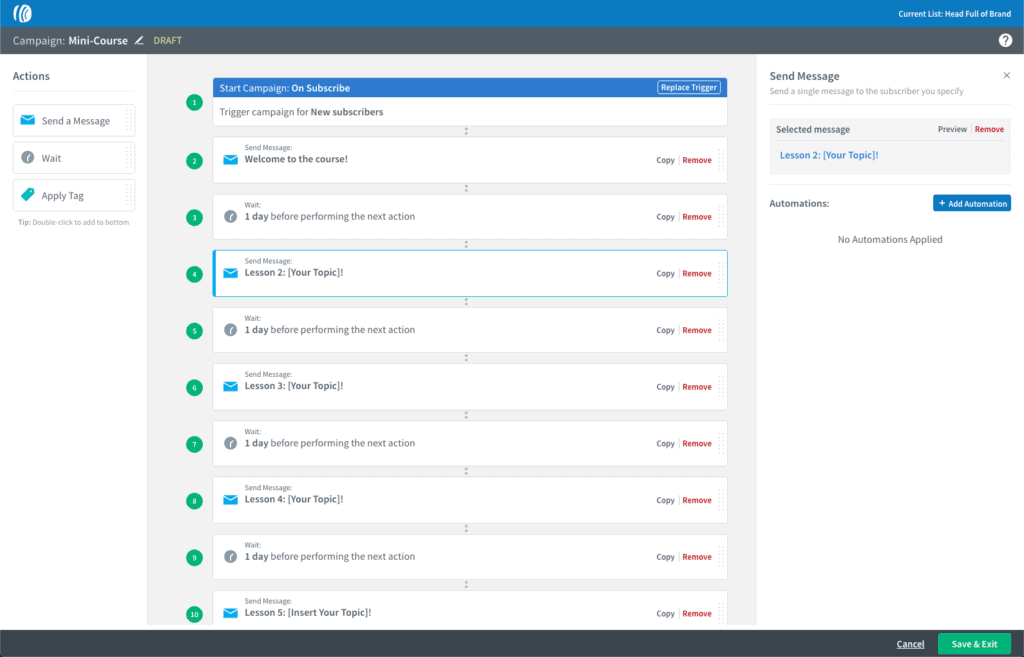
Another great SMB solution is AWeber. Unlike some other email marketing software tools, they market their services specifically for this market.
With AWeber, you have access to a variety of list-building materials, as well as drag-and-drop editor templates to create the perfect backdrop for your bulk emails’ content. Automation of emails is easy, to keep you working on more important things. There are also a variety of mobile apps to help send bulk emails away from the computer. I like the fact that AWeber allows you to collaborate with others using the same user account, which reduces the need to sync information from many sources.
Another selling point is the Pennsylvania-based customer service team, which is available 24/7. Do keep in mind, however, that this program ONLY does the email side of things. It does not offer a built-in CRM and does not provide Google Analytics and other common marketing processes, so these will need to be outsourced.
AWeber has a long-standing reputation for deliverability, and confirmed opt-in is a big part of why. What has changed is that confirmed opt-in is now a setting rather than a rule. You can switch it on or off separately for your sign-up forms and for imports, and AWeber turns it off by default on imported subscribers, so moving an existing list over does not force everyone to opt in again. Switching it off for API-based integrations takes a support request. Leaving it on for new sign-ups is still the healthier choice for your list.
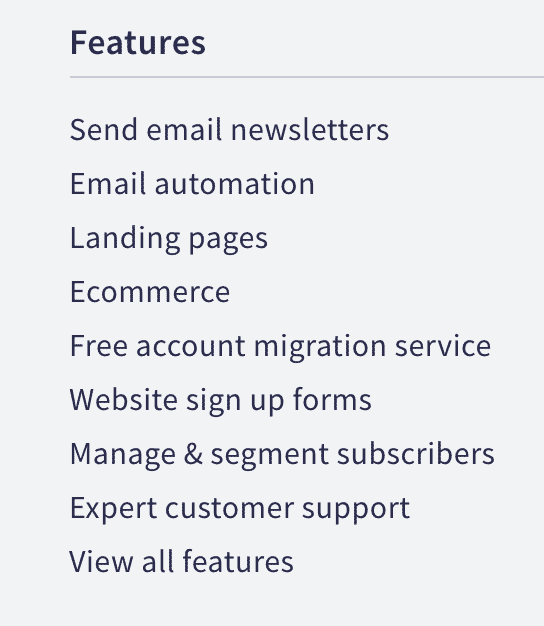
Here is a snapshot of Aweber features:
Pricing for AWeber is simpler than ActiveCampaign, though there are tiers now. A free plan covers up to 500 subscribers and 3,000 emails a month, with AWeber branding on what you send. Lite starts around $12.50 a month billed annually, or $15 billed monthly, at that same 500-subscriber level, and caps you at one list, three automations and three landing pages. Plus starts around $20 a month billed annually, or $30 monthly, and lifts those caps along with the branding. Both scale by subscriber count, and your monthly send allowance is 10 times your list size on Lite and 12 times on Plus.
8. MailerLite

I have recently started using MailerLite’s email marketing software platform and am a big fan of its simplicity and ease of use while delivering on the functionality of much more expensive solutions with tagging, automations, and pop-up forms.
For those of you who prefer a “no frills” email provider, MailerLite is a great option that has a limited-feature free plan for smaller lists. It also has a limit on how many monthly emails you can send, which makes it great for freelancers. Even the paid version has fairly limited functionality, however. Even so, there are some email and newsletter templates for customers to use. They also include basic automation features such as the sending of welcome and order confirmation emails, which are great to make sure you are reaching your target audiences immediately after signing up for your newsletters.
You would think, based on my description above, that MailerLite would be limited in functionality, but that’s actually not the case, as you will see below!

MailerLite has cut back the free plan that made it famous. It now covers 250 subscribers and 2,500 emails a month, down from 1,000 subscribers and 12,000 emails, and the paid tiers were renamed and repriced in the same round of changes. Comfort, the entry paid plan, starts around $12 a month for 500 subscribers and 5,000 emails, with three user seats and 24/7 email support. Power starts around $25 a month at that same list size and adds unlimited users, the custom HTML editor, pop-ups, more automation triggers and live chat support. Both climb with your subscriber count. MailerLite is still strong on cost-performance as a campaign builder, but the gap between it and the competition is narrower than it was.
9. GetResponse
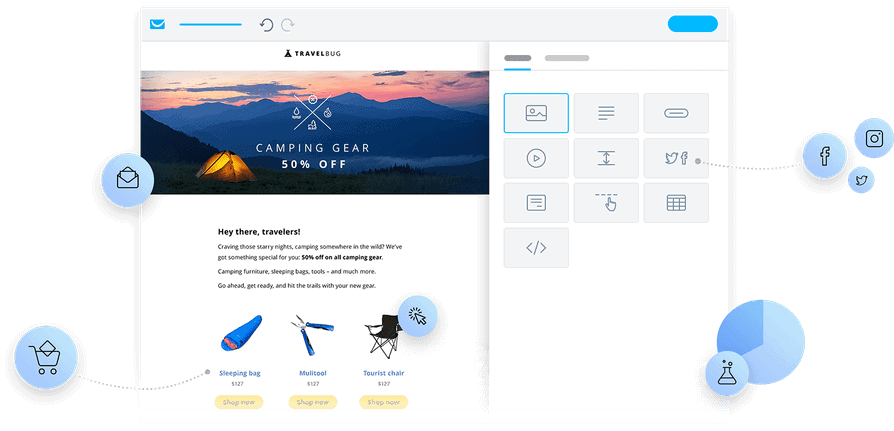
GetResponse is an email marketing service provider that I have started using recently and, while different than ActiveCampaign in terms of their features, provide a fully functional solution at a reasonable price–even as your subscribers grow.
Those of us who have a large email list and only want to send emails can really benefit from GetResponse. This is one of the oldest names in email marketing, and they’re still around for one important reason: ease of use. However, the program is getting more sophisticated now, and you have to pay more to get all the available features. For example, you’ll need a plus account or higher to integrate GetResponse with your social media accounts or generate autoresponders as part of your email strategy.
Core features include a number of mobile-friendly options, Shutterstock images, and some killer functionality, such as the inclusion of a webinar platform as well as the ability to create automated lead magnet funnels using their landing page and marketing automation functionality.
A snapshot of GetResponse’s features will give you a feel for the functionality that they support:

GetResponse pricing is more complicated than most because of everything they bundle in, and the plan lineup has changed. It is now Free, Starter, Marketer, Creator and Enterprise. The Free plan caps you at 500 contacts. For a list of 1,000 contacts on monthly billing, Starter runs $19, Marketer $59 and Creator $69, with annual billing taking roughly 18 percent off each. Prices climb with your contact count, so Starter is $29 at 2,500 contacts and $79 at 10,000. Know what you need before you buy, because the feature gates matter more here than the dollar figures. Starter gives you a single automation workflow, Marketer opens up unlimited automation and advanced segmentation, and webinars have moved up to Creator. I subscribed to what was then called the Plus plan because it included webinars, and I found it sufficient for what I was running.
10. Campaign Monitor

Want email analytics with your email campaign? How about a more personal touch from your email editor? Campaign Monitor delivers both, in spades. They’ll tell you what’s working, and what isn’t, so you can improve your pitch for the next round. Another strength is that they have both responsive emailing rules for customer segments based on past customer behavior, and they support customized emails to improve customer relationships.
Campaign Monitor also brags about their countdown clocks to create a sense of urgency. They also provide convenient features, such as the ability to allow you to see what an email is going to look like on different types of devices before you send it.
Campaign Monitor is now owned by Marigold, and in 2025 the plans were renamed and repriced. The three tiers are Lite, Essentials and Premier. At 500 contacts they run roughly $13, $31 and $171 a month, and all three climb with your contact count. Lite carries a monthly send cap of about five times your list size, while Essentials and Premier include unlimited sends. There is no free plan any more, only a trial. Compare both the pricing and the features against ActiveCampaign before you decide, because the gap between these two on cost has widened and the automation depth was never Campaign Monitor’s strong suit.
11. Zoho Campaigns
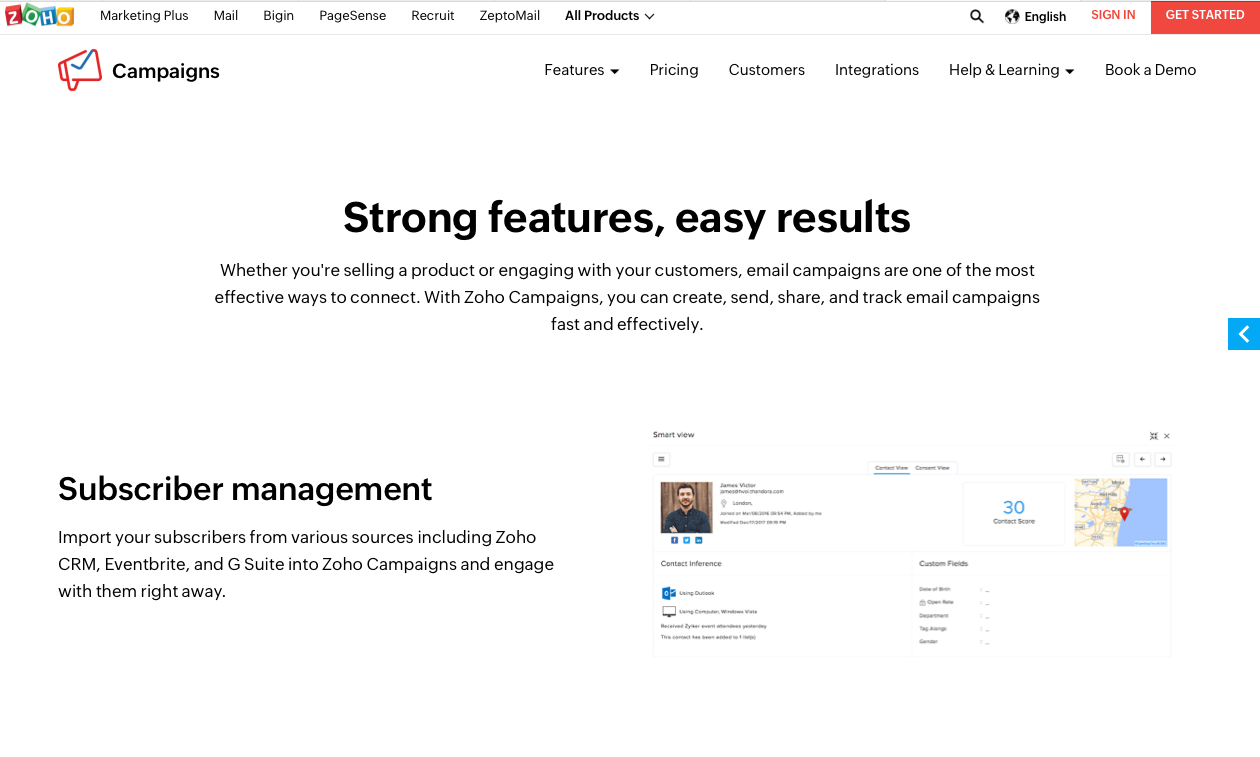
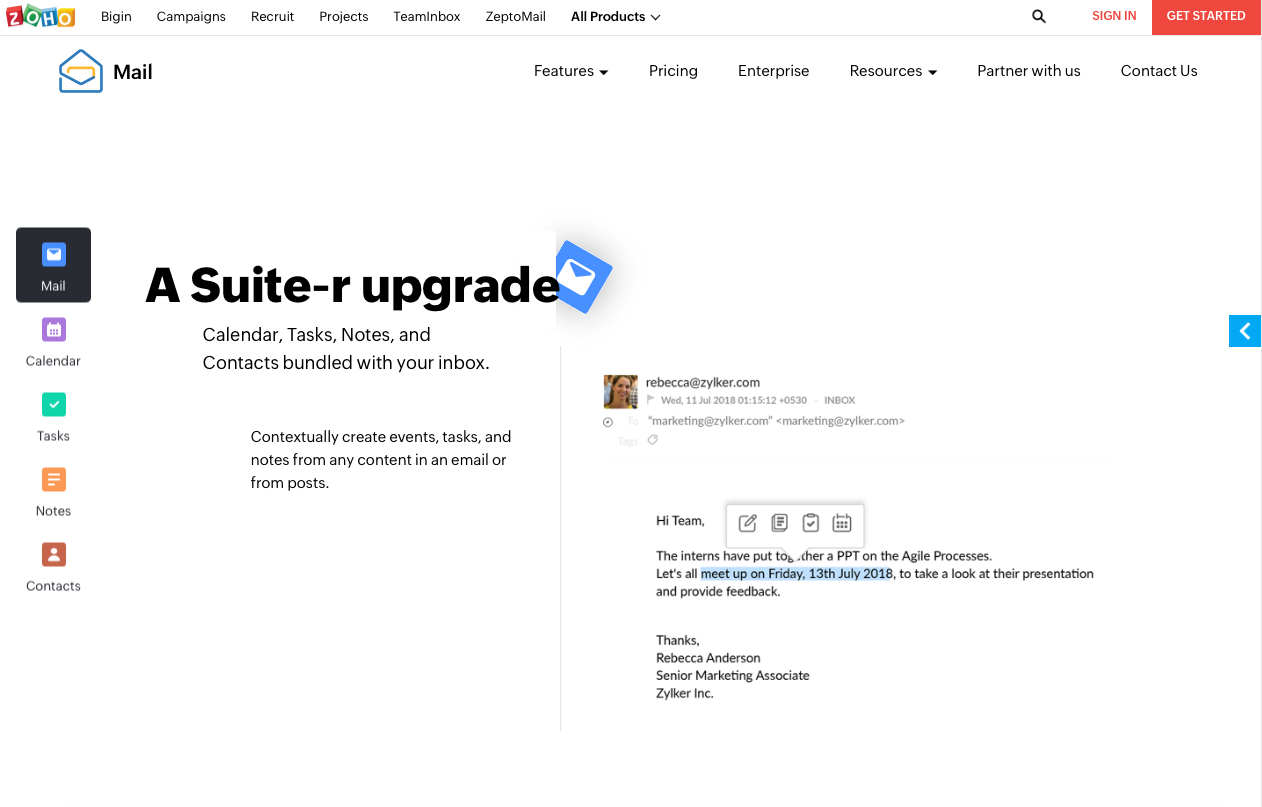
Zoho mail is a full-service email service. Through Zoho, you can craft an email newsletter, engage in customer relationship management, communicate with others inside of your organization, provide sign-up forms, and more. Zoho’s email marketing platform is just one facet of a larger service. From bulk emails to business and communication management tools, Zoho is a powerful tool for more established business in need of an email tool that can also manage email marketing campaigns.
Zoho campaigns offer drag-and-drop design options that allow you to create powerful marketing campaigns in record time. With plenty of pre-determined templates, different ways to measure email performance, and tools to create effective email campaigns based on feedback from past email clients, Zoho is a great option for established businesses that are looking to streamline products and apps, and are in search of an all-in-one email inbox, email marketer, and marketing automation platform.
Zoho Campaigns pricing no longer depends on whether you already subscribe to Zoho email. There is a free plan plus three paid options. The Forever Free plan covers up to 2,000 contacts and 6,000 emails a month with an admin plus four users, which makes it one of the more usable free tiers on this list.
Standard and Professional are both priced by contact count and include unlimited sends. Standard starts around $4 a month for 500 contacts, running about $31 at 5,000 contacts and $49 at 10,000, and supports up to 10 users. Professional starts around $5 a month for 500 contacts, about $45 at 5,000 and $70 at 10,000, and adds advanced segmentation, pop-up forms, dynamic content, email polls and delivery timed to each recipient’s time zone. Annual billing takes roughly 25 percent off either plan.
The third option is Pay As You Go, where you buy email credits instead of paying a subscription. One credit sends one email, and the per-email price drops as you buy larger blocks. It suits a company that mails a few times a year, though the credit route gives up the segmentation, signup forms and automation that come with the subscription plans. A dedicated IP address is a separate add-on at about $35 a month.
12. Brevo (formerly known as SendinBlue)

For companies that rely heavily on real-time contact with customers, Brevo is an excellent option. That’s because they offer quite a bit more than just email, without being an all-in-one email marketing software tool. Specifically, Brevo gives you the option of sending text messages, chatting with customers, and inserting a chatbot into your website. These chatbots report back to you as necessary. In other words, Brewvo is designed to meet a variety of customer communication needs.
Actually, when comparing MailerLite, Brevo was the closest comparison I could find, and I was very happy with the support I got with my product questions, even though I wasn’t a customer!
Here’s a quick snapshot as to what Brevo supports from a functionality basis:

Similar to the below Mailjet, Brevo is also a French company and also prices according to the number of emails you send rather than the number of subscribers you store, which means a big list you mail rarely costs you nothing to keep. The free plan allows 300 emails per day, roughly 9,000 a month, with unlimited contacts and Brevo branding on everything you send. Starter begins at $9 a month for 5,000 emails and rises with volume, hitting about $18 at 20,000 emails, though logo removal is a paid add-on at that level. The next tier up starts at $18 a month for the same 5,000 emails and brings in marketing automation, A/B testing and landing pages. Above that, Professional starts at $499 a month and is built for senders past 150,000 emails.
13. Omnisend
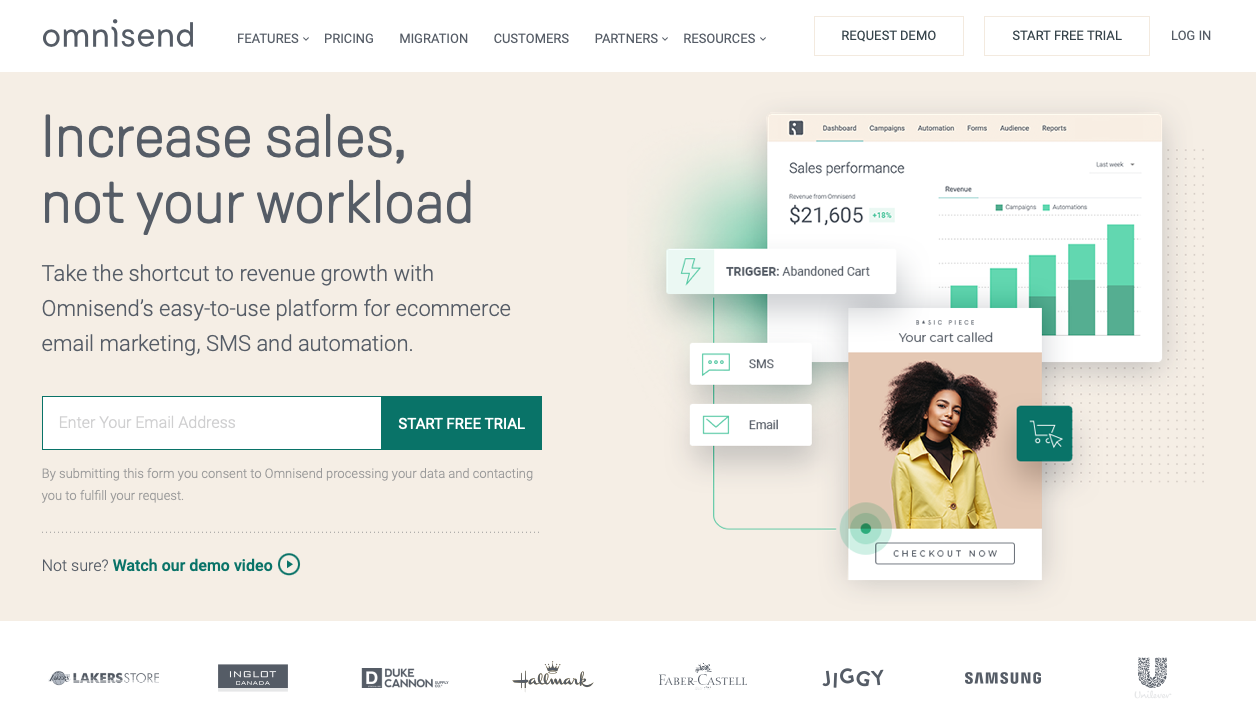
Omnisend is a full-service platform. Omnisend is an email marketing service that offers beautiful emails to drive e-commerce and transactional emails. Omnisend’s email marketing platform offers automation, marketing templates, pop-up menus and more. Omnisend allows you to be as customized as you want or as easy to build as you’d like, using what amounts to a drag-and-drop email builder to create transactional emails that are as easy to use as they are attractive.
Omnisend’s backend marketing email dashboard is fairly simple and straightforward and lacks some of the flair a newer and more youthful email marketing service might have but more than makes up for it with functionality. Like all other bulk mailing list services, you can alter subject lines, how many emails per day are sent, and how personalized emails actually are. Omnisend is great for email marketing efforts that are focused more on driving sales than building a stronger network.
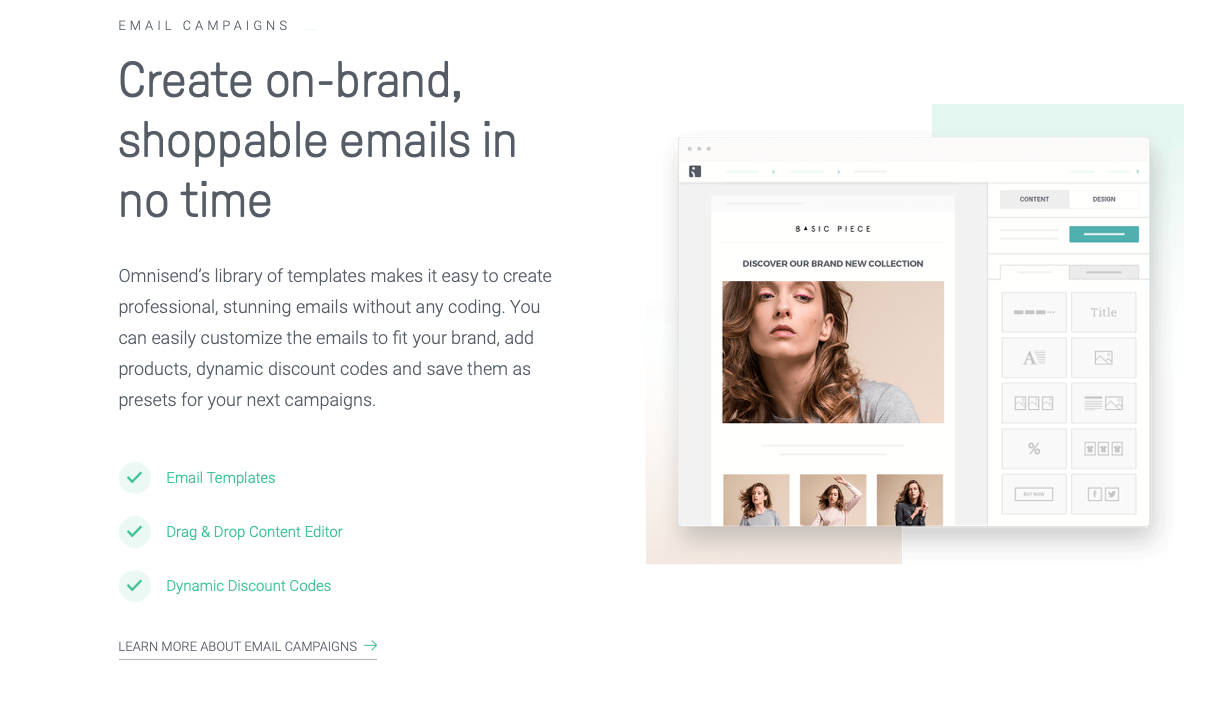
Omnisend pricing comes in three tiers plus a custom option, and all of them bill on how many contacts you store rather than how many emails you send. The free tier covers 250 billable contacts and 500 emails a month, and it is unusually complete, with automation, segmentation, popups and A/B testing all included. It is a real plan rather than a trial.
Standard starts at $16 a month for 500 contacts and gives you email credits equal to 12 times your contact count each billing cycle, which works out to 6,000 emails at that entry tier. It scales with your list, running roughly $25 at 1,000 contacts, $65 at 5,000 and $132 at 10,000. Pro starts at $59 a month at 2,500 contacts, removes the email cap entirely and bundles SMS credits equal to your monthly bill. One change to watch: on subscriptions started from May 4, 2026 onward, SMS is a Pro-only feature. Past 150,000 contacts, pricing is negotiated.
14. Benchmark

Need something with a permanently free option? Benchmark still has one, and it is more useful than most. The free plan covers 500 contacts and 2,500 emails a month, which is five times your contact limit, with one user seat and access to the core features including their AI writing tools. Your emails carry Benchmark branding. If you are just starting out, that is a real way to run a list while saving money, and there are paid tiers waiting if you grow into tens of thousands of subscribers.
Once you get your first paid plan, you can use everything Benchmark has to offer. For example, everyone gets drag-and-drop email design features. On the other hand, paid subscribers can do their photo editing in the program, rather than having to use Photoshop or Canva to do this first. There’s a full range of templates and other goodies, as well, and at first glance, Benchmark looks fairly easy to use to create compelling subject lines and fire off email sends quickly and easily.
Here’s a summary of Benchmark features:

If the free version is not enough for you, Pro pricing scales purely by contact count, with no features locked behind higher tiers. It starts around $14 a month at 500 contacts, runs about $37 at 2,500 and roughly $67 at 10,000. Paid plans lift your send allowance to 10 times your contact limit, support up to 10 users at $15 a month for each seat beyond the first, and annual billing takes 15 percent off.
15. Mailjet

Large teams with an IT department or well-established branding do well with Mailjet. In fact, this one is used by enterprise-level clients like Microsoft. However, they do perform for smaller businesses, too. Mailjet is one of the few email providers with STMP relays and direct API access, rather than just a slick user interface. They also have a text messaging feature to confirm transactions. Need GDPR and ISO compliance? Mailjet is certified in both protocols, so you can rest easy.
The below should give you a feel as to how more technical Mailjet’s solution is:

Mailjet, now part of Sinch, prices by the number of emails you send rather than the number of subscribers you store, across four tiers plus a custom option. The free plan gives you 6,000 emails a month, capped at 200 a day. Starter is $9 a month for 8,000 emails and lifts that daily cap. Essential is $17 a month for 15,000 emails, removes Mailjet branding and adds segmentation. Premium is $27 a month for the same 15,000 emails and adds automation, landing pages, advanced statistics and subaccounts. Essential and above carry unlimited contacts, and annual billing saves 10 percent. Watch one detail before you size a plan: unused email credits do not roll over month to month.
16. Moosend

Moosend is another email marketing company with a wide range of features that allow for a great deal of customization and automation features to make email marketing faster and smoother. Whether you are looking to reach out to existing customers to give details about a sale, send out a weekly newsletter, or reach out to a prospective customer, Moosend has a customizable template to suit your needs. Moosend’s edge over its competitors comes primarily from the number of email “triggers” the company has available, and the degree tracking the company can provide.
Moosend’s email software offers responsive email templates to attend to a business’ large scale of email marketing needs, and a high level of email deliverability rates. The most basic features of Moosend cover the bases of general email marketing, while the more comprehensive features–think audience segmentation, individual customization, site and email tracking, and rapid analyzation–take your email marketing to a new level and easily automates and simplifies email marketing overall and turns leads into customers.

Moosend offers a 30-day free trial with no credit card, covering up to 1,000 contacts. After that, the Pro plan starts at $9 a month for 500 contacts and scales by list size, running roughly $315 a month at 50,000 contacts and $5,840 at a million. Every paid tier includes unlimited email sends, which is what keeps it cheap for anyone mailing frequently. Paying six months up front saves 15 percent, annual billing saves 20 percent, and nonprofits get a further 25 percent off. If you only run campaigns a few times a year, Moosend also sells email credits outright instead of a subscription, which sidesteps the monthly bill entirely.
17. EmailOctopus
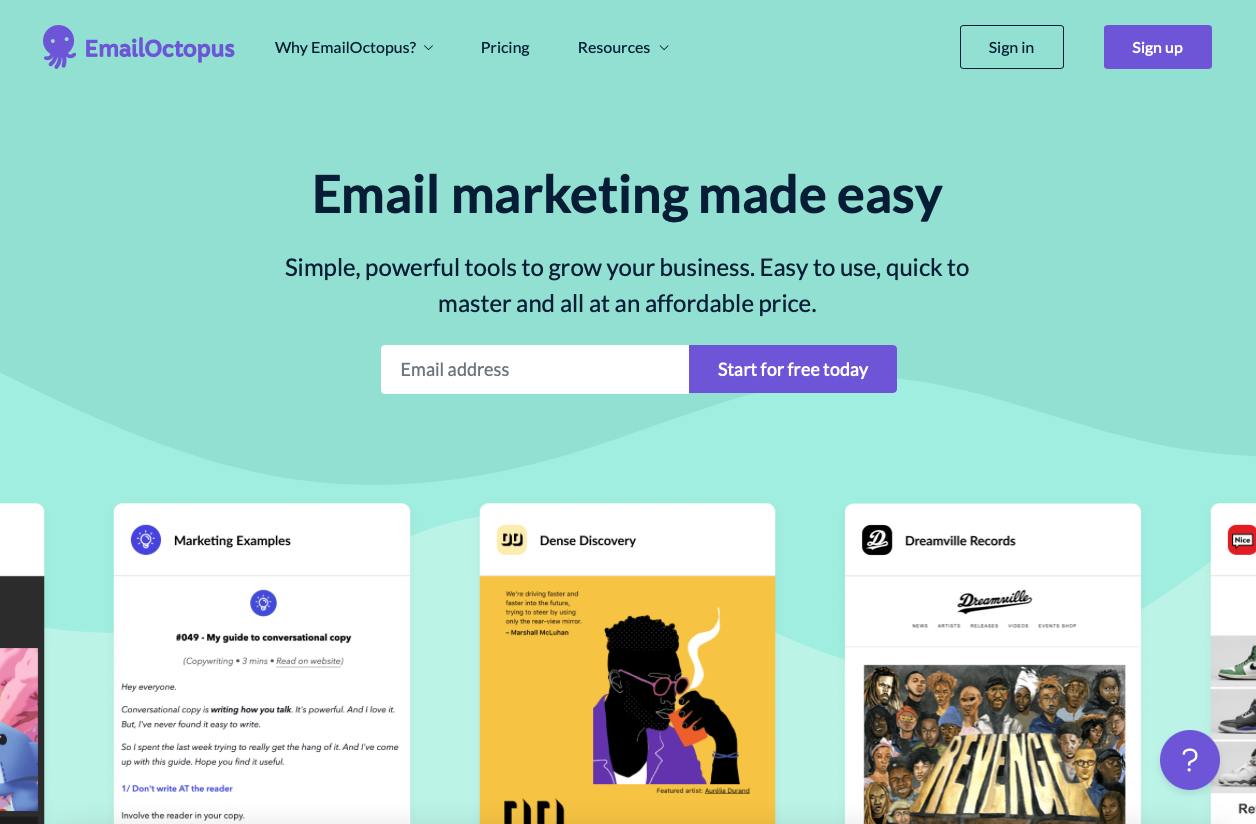
EmailOctopus is among the smaller operations out there. As a 100% independent startup, EmailOctopus is made up of a small team of workers, all devoted to providing customers with superlative quality, unmatched customer service, and award-winning support. With a sleek, open, and friendly design and site, EmailOctopus is a great company for smaller startups, bloggers, and other parties with an eye on design and simplicity to get their marketing message out there.
EmailOctopus is aimed toward growing an audience, rather than simply connecting with an audience. EmailOctopus is also designed to maintain sustainable and ethical principles, designing a business around the idea that email marketing should be simple, streamlined, good for the company, and good for the planet. If youthful flair and an eye on sustainability are in your wheelhouse, EmailOctopus may be the email marketing company for you.
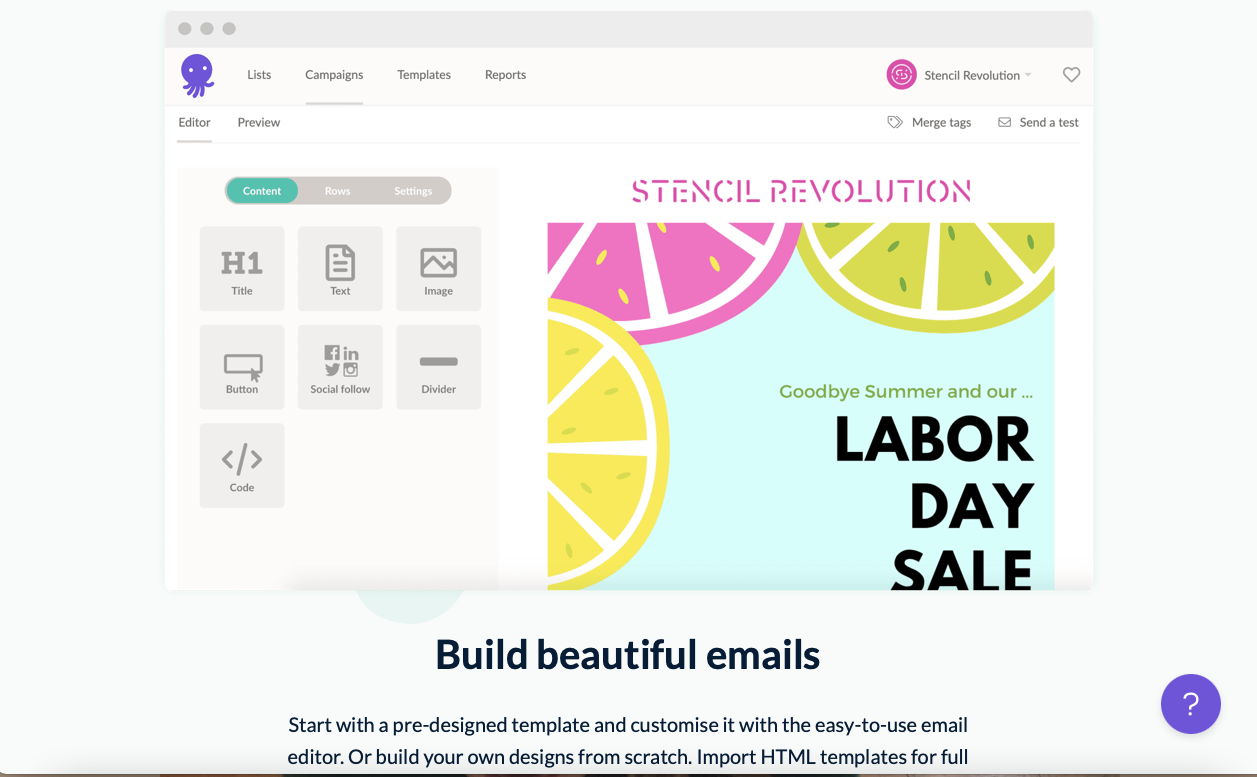
EmailOctopus has two different pricing tiers: the free version of the service and the Pro version of the service. Free EmailOctopus has very basic availability: up to 2,500 subscribers, 10,000 emails each month, 30 days’ worth of reports, and basic support.
The Pro version scales with the size of your list rather than your send volume, and the ladder is unusually gentle. It starts at about $10 a month for 500 subscribers, or $9 on annual billing, then runs roughly $20 at 2,500 subscribers, $31.50 at 5,000, $44.50 at 10,000 and $178 at 50,000. Send allowances sit at about 10 times your subscriber count. Pro removes EmailOctopus branding and gives you unlimited landing pages, forms, users and automations, plus permanent report history. Annual billing saves about 10 percent, nonprofits get 20 percent off for life, and lists above 500,000 subscribers are quoted individually.
18. Smaily

Smaily is one of the newer companies that I have been recently introduced to that I think bear mentioning on this list as another alternative. What differentiates Smaily is that they were created with the intention of making email marketing accessible to everyone and therefore is intended mainly for small and medium-sized businesses, but is also able to cater to the needs of bigger enterprises.
Smaily offers its users an easy-to-use tool to build beautiful custom newsletters without having to know anything about coding. A unique differentiator of Smaily is that you can even ask for some additional assistance beyond normal customer support, as they actually offer both copywriting and design services, as well. Once you’re done with the newsletter, it’s easy to import contacts onto your account, segment them, set up your campaign, and send it on its merry way.
What’s great for both your campaign results and budget: Smaily removes all inactive contacts and duplicates from your emailing list, so you don’t have to pay extra for them. Not every email service provider does this.
There’s a variety of automations to choose from and you can build your own automated workflows with as many steps as you desire. You’ll also be able to integrate Smaily with a lot of other third-party apps and platforms for easy data syncing.

If you have up to 2,000 active contacts, Smaily is free, with unlimited emails, unlimited users and a small Smaily logo in the footer. What the free plan leaves out is API access, automated workflows and advanced campaign analytics, so those are the real reasons to upgrade rather than list size alone. Past 2,000 contacts, the monthly plan is priced on the size of your contact list with no cap on sending, drops the logo and throws in half an hour of consultation each month. Send only occasionally and the credit option makes more sense: one credit point sends one email to one contact, and credits expire a year after purchase. Prices are quoted before VAT and vary by currency, so run your own list size through the calculator on the Smaily pricing page. Above 250,000 contacts you are into custom quotes.
Frequently Asked Questions
Which email marketing software do you use yourself?
My own list runs on ConvertKit, which rebranded to Kit in late 2024. I moved there from ActiveCampaign once my list passed 10,000 subscribers and the pricing gap opened up. I have also spent time recently in MailerLite and GetResponse, and I rate both for what they charge.
What is the best email marketing software for a small business?
The best tool is the one that covers the automation and forms you actually need at your current list size, without forcing you to buy a second product to fill a gap. MailerLite and AWeber are the simplest to run day to day, ActiveCampaign and GetResponse go deepest on automation, and HubSpot makes sense if you want your CRM in the same place. I go further on matching budget to features in my guide to email marketing for small business.
How much does email marketing software cost?
Almost every tool on this list prices on the number of subscribers you have, and entry plans for a list of 500 sit in the low tens of dollars per month. The number that separates these platforms is what you pay at 10,000 subscribers, which is where the gaps get wide. Treat the prices in each section above as the figures I recorded when I audited these tools, and confirm the current rate on the vendor page before you buy, since email marketing pricing moves constantly.
Are free email marketing plans good enough?
For your first few hundred subscribers, yes. Free plans from Mailchimp, MailerLite, Brevo, Benchmark and EmailOctopus will send your newsletter and give you basic reporting. What you give up is automation depth, template choice and sometimes your own branding in the footer, so treat a free plan as a starting point rather than a destination.
When should you switch email marketing tools?
Switch when your current tool blocks something your business needs, or when your bill stops matching what you get for it. The two triggers I see most often are automation you cannot build and email deliverability you cannot fix. Before you move, export your list, check whether the new platform requires re-confirmation, and expect to rebuild your automations by hand.
How to Choose the Best Email Marketing Software for Your Business
So, there you have it: My perspective on the best 18 email marketing software tools that exist.
Start with two numbers before you shop: how many subscribers you have now, and how many you expect to have in a year. Those two numbers eliminate most of this list on price alone. Then shortlist two tools, build the same welcome sequence in both free plans, and send it to a small segment of your own list. A week of that will tell you more than any feature comparison, including mine. I have changed platforms several times over the years, and every change came down to something my old tool would not let me build, never to a review I read.
Whichever tool you land on, the software is the smaller half of the job. What earns the ROI is the plan behind it, so pair your choice with my 5-step email marketing strategy playbook and a real system for building the list you are going to send to. If you want all of that in one place, grab my free Definitive Guide to Email Marketing and put it to work this week.
Actionable advice for your digital / content / influencer / social media marketing.
Join 13,000+ smart professionals who subscribe to my regular updates.

Neal Schaffer
Articles: 58610 Comments
Comments are closed.


Thank you Neal, a really useful article as am currently evaluating a new platform. Active Campaign is the one I had decided on and since then, I have been highly recommended ClickFunnels as the only way to go:) I am developing a membership site on WordPress. I am going to look into it but would appreciate your advice on it. What can Clickfunnels do that I can’t do on Active Campaign?:) As you were on topic, thought I would jump in here and get your advice????
ClickFunnels is an all-in-one landing page-centric website that can handle everything to do with your landing page, which include web hosting (you don’t need WordPress for ClickFunnels as it works as a stand alone), landing page creation, shopping cart, and email marketing. It also comes with a ton of funnel templates to help you easily launch your funnel-centric website.
ActiveCampaign only covers the email marketing aspect, and it would give you much more robust email marketing automation capabilities than ClickFunnels alone in my honest opinion. However, if you are going to use ClickFunnels, since you are paying for it you might as well use their email service.
I’m curious as to why you chose WordPress to run your membership site with instead of Circle?
Thanks for the list of tools. I have been using SendInBlue for the last couple of years and I am loving it. It is user friendly and the packages are so flexible for a beginner. I haven’t thought of switching to any other email marketing service so far. I am planning to go ahead with it for a few more years.
SendInBlue is a great platform for sure! I think the key is to find the best one for you that you feel comfortable with. But if you ever feel constrained by your current solution, that is the time to start looking around. Hopefully the article gave you some ideas to help you perform and email marketing software functionality audit!
Hey Neal,
Thanks for the list of tools. I have been using SendInBlue for the last couple of years and I am loving it. It is user friendly and the packages are so flexible for a beginner. I haven’t thought of switching to any other email marketing service so far. I am planning to go ahead with it for a few more years.
Regards,
Nirmal Kumar.
Thanks Nirmal! When researching email marketing software I was very impressed with SendInBlue as well, and it was between them and MailerLite for my “overflow” account. If you’re happy with your choice there is no need to change!
Thank you Neal, a really useful article as am currently evaluating a new platform. Active Campaign is the one I had decided on and since then, I have been highly recommended ClickFunnels as the only way to go:) I am developing a membership site on Wordpress. I am going to look into it but would appreciate your advice on it. What can Clickfunnels do that I can’t do on Active Campaign?:) As you were on topic, thought I would jump in here and get your advice????
Hey Roisin, thanks for the comment! I am actually publishing a podcast episode on email marketing advice from a tactical perspective in a few days so make sure you check out https://nealschaffer.com/podcast .
As for your question, this is the way I see it: If you want to have everything in one place – web / email + marketing automation, then ClickFunnels will serve you well. If you want to have your landing pages and email + marketing automation in one place, then ClickFunnels will serve you well. However, if you have your own WordPress site and/or you want to have more control over your marketing automation, I would choose ActiveCampaign, but that isn’t to say you might not be more successful with ClickFunnels. I just don’t like to over-rely on one solution.
I am also building a membership site, and my advice for you there would NOT to build it on WordPress or ClickFunnels but instead use one of the big three that I am looking into investing in as well: Teachable, Thinkific, and Podia.
Hope the advice makes sense. Excited to hear who you might choose!
We’re using Zendesk Sell, previously called Base, and I hate it. Tools are extremely limited (I can bold, italicize, and can add only URL links, not tel:)
This list is extremely helpful for me. I’m able to now share your summaries up the flagpole so when we normalize the economy, I can hopefully improve my outreach campaigns.
Thanks Neal!
Thanks David! I find a lot of companies use old technology and there is so much innovation going on in the space. Actually I tell my clients that COVID-19 is a perfect time to work on your backend so that when things are normal you will be ready to go. Good luck and I’ll be curious to hear what you chose!