
Crafting a successful email marketing campaign can be a challenge. Studying real-world examples can help inspire your own breakthroughs in email marketing by helping you gain insight into how leading brands captivate their audiences, drive engagement, and ultimately achieve results. In this guide, I have gathered 19 incredible email marketing examples, ranging from the first welcome email to re-engagement campaigns, to demonstrate best practices.
Email design, copywriting, and targeting all have their own best practices. As a Fractional CMO I have built and audited email programs across a lot of industries, and I made email one of the core threads in my book Digital Threads for a reason: it is the only channel where you own the audience outright. The examples below are the ones I keep coming back to when a client asks what good actually looks like.
Key Takeaways
✅ Automations do most of the work. Per Omnisend’s 2026 email marketing data, automated emails made up just 2% of sends but drove 30% of email revenue, earning 16 times more per send than scheduled campaigns.
✅ Three flows produce nearly all of that return. Abandoned cart, welcome, and browse abandonment together accounted for 87% of all automated orders, so build those three before you build anything else.
✅ Open rates are still climbing. The global average rose from 26.6% in 2024 to 30.7% in 2025, which means a campaign stuck in the low twenties has room to move. My running file of email marketing statistics tracks where the rest of the benchmarks sit.
✅ What transfers between brands is the ask, not the art direction. Dollar Shave Club’s referral request works because of what it tells the reader to do, and you could run the same play on a plain-text email.
✅ The 19 examples below are grouped by campaign type, from welcome and product launch through re-engagement, seasonal, abandoned cart, educational, promotional, milestone, user-generated content, and surprise campaigns.
What Makes a Successful Email Marketing Campaign?
There are many different types of email marketing, but all of these types have one thing in common: meeting your audience in their own space. While other marketing mediums have your audience come to you (think social media), email marketing delivers directly to consumers. Having a current or prospective customer’s email address can be a tremendous asset to reach your business goals, but an effective promotional campaign or newsletter is essential to make the most of that asset. I have put together a handful of the most vital components to develop an effective campaign below.
Targeted Messaging: Personalizing your email campaigns is an easy way to ensure you are carrying out an effective email marketing campaign. Segmenting your email list will make sure that you have the proper personalization effects in place. Ultimately, you want any promotional email or newsletter to resonate with your audience, so make sure that your email subscribers feel seen and recognized as much as possible.
Clear and Compelling Subject Lines: An effective subject line has about two seconds to earn its open while someone scans an inbox on a phone. Even a transactional email deserves one that works, because a confirmation nobody opens is a wasted touchpoint. If you want more patterns to borrow from, start with these email subject lines that earn opens.
Strong CTAs (Call to Action): A call to action is designed to guide your readers toward your desired action. Strong CTAs give clear and concise instructions, along with a clear idea of why your audience should follow through. Embedded links are ideal in your CTA, to make the call that much stronger and easier to follow through.
Visual Appeal and Design: Design holds attention that the subject line already won. A flashy layout will not rescue weak copy, but consistent visual treatment across every send makes your brand recognizable in a crowded inbox. Most of the brands featured below use a small, repeatable set of design decisions, which is exactly what the fundamentals of email marketing design come down to.
Analytics and Tracking: Copying a great example only pays off if you measure what it did for you. Track open rate, click-through rate, and conversion rate on every send, then compare each campaign against your own prior sends rather than an industry average. Open rate is the noisiest of the three thanks to Apple Mail Privacy Protection, so treat it as a directional signal and read my breakdown of what a realistic email open rate looks like before you panic about a dip.
Types of Effective Email Marketing Examples
Marketing emails are not a singular form of communication. There are many different types of effective email campaigns you can utilize to reach out to your audience via your preferred email platform. These emails all share the same goal of driving conversions, building relationships, and communicating effectively, but each offers its own unique take on email marketing.
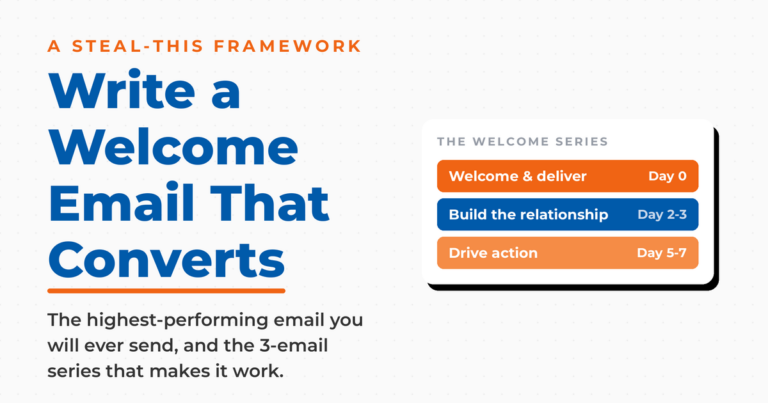
Welcome Emails: A welcome email makes the first impression and sets the tone for everything you send afterward. The best ones stay short, skip the wall of CTAs, and give the subscriber one clear reason to stay, usually a discount code or a piece of content they cannot get elsewhere. This is the single highest-return automation most businesses are missing, and I walk through the mechanics of a welcome email separately.
Product Launch Emails: Product launch emails are used to generate excitement for any new product or services you are launching. These can link to a blog post detailing how to use the product or service, a landing page for the service, or even a waitlist to further increase build up and generate hype.
Re-Engagement Campaigns: Re-engagement emails are used to win back subscribers who have grown inactive. These should always have a compelling email subject line, and should not be aggressive in their approach.
Seasonal and Holiday Emails: Seasonal and holiday emails offer a wonderful way to engage potential customers, as they can help drive engagement and increase sales. Conversion rates brought about by seasonal and holiday emails can help foster interest and create a base for customer loyalty.
Abandoned Cart Emails: A cart reminder catches a buyer who already decided they wanted the product and then got distracted. These convert better than almost anything else you send because the intent is already there, and a well-built abandoned cart email sequence often recovers revenue that would otherwise vanish silently.
Educational and Informative Emails: Educational and informative emails actually function as an email marketing tool, as well; sharing valuable content can help nurture relationships with your audience and can lend a greater sense of authority in your field. Informational emails do not necessarily need a call to action, but embedded links can link to products and services to help customers carry out the information offered. What goes inside them is its own skill, and this 13-point checklist on how to create the perfect email content walks from the goal to the call to action.
19 Inspiring Examples of Email Marketing Campaigns
Knowing the basics of email marketing can feel like only half the battle; many brands still struggle to implement the knowledge they have gained. To that end, I have put together a list of fantastic examples of email newsletters, product launches, and other campaigns to help illustrate how to effectively put your own campaign together.
Welcome Emails
1. Dollar Shave Club

Dollar Shave Club makes use of a simple design, offers clear information right off the bat, and immediately makes an organic referral request. Dollar Shave Club’s welcome email is excellent, in that it is not pushy or overbearing, but immediately establishes rapport and encourages users to refer the company in order to receive rewards.
2. Dropbox

Dropbox utilizes a straightforward approach in their welcome email, as well. The email briefly welcomes the new user, then offers an immediate CTA in the form of educating the user on how to set up their Dropbox account and begin using it. It does so in a set of three instructions that are clear and concise.
Product Launch Emails
3. Apple

Apple’s product launch emails are simple and straightforward from the beginning, enhancing the customer journey through consistency in branding. Product launch emails focus on visuals, which the brand is famous for, and provides plenty of hype and excitement for new products. Note that Apple does not offer special discounts to get their audience excited; instead, they rely on existing brand building and a description of each of the upcoming improvements and changes to products.
4. Nike

Nike’s simple approach placed a heavy emphasis on branding by using clean backgrounds and layouts and standard brand colors. By showcasing their products with a simple design, their audience is able to focus entirely on the product in question, and enjoy truly stunning product images. This allows the audience to focus in on the product itself without extra background noise.
Is Your Digital Marketing All Over the Place?
My latest book helps small businesses, entrepreneurs, and marketers bring search, email, and social together into one digital marketing strategy that actually compounds.
Drawing on my work as a Fractional CMO, Digital Threads turns complicated tactics into a clear, practical plan you can follow, whatever your budget or team size.
Grab your copy on Amazon and start weaving your own digital threads. Click the cover or the button below to get started.

Re-Engagement Campaigns
5. Duolingo

Duolingo is great at combining humor and sales, utilizing the sadness of the owl mascot–and his subsequent self-improvement–to encourage users to return to the app. These messages come both in the form of app messages and emails, and can help users quickly and easily revert back to using the app.
6. The Skimm

The Skimm is a news source that seeks to deliver concise and easy-to-digest news. Its win-back email reflects this idea, through friendly and well-branded email content. Their emails offer a clear call-to-action, and pose re-engaging with the publication as an act of service. The helpful tone and clean design draw readers in.
Seasonal and Holiday Emails
7. Starbucks

Starbucks encourages holiday excitement every year by bringing back seasonable favorites and sending out reminders when those favorites are due to arrive. Festive colors and seasonal offers accompany these emails, which helps audience members get into the holiday spirit–and pay the coffee giant a visit.
8. Modcloth

Modcloth’s holiday emails fit their persona as a fun, quirky brand perfectly, by focusing less on bright, festive colors and focusing more on clever phrases that rope the holiday into their standard advertising.
Abandoned Cart Emails
9: ASOS

ASOS focuses on product-forward emails in their abandoned cart campaigns, fusing customer service and sales. By showing the item in question front and center, and highlighting the possibility of free shipping and easy returns, ASOS helps customers feel as though their purchase is a no-brainer.
10. Tuft & Needle

Tuft & Needle could easily flounder in their approach, as mattress sales is not typically considered clever or engaging. Nevertheless, the brand uses wit and humor to encourage potential customers to select one of their products for checkout, helping customers easily re-engage.
Educational and Informative Emails
11. Shopify

Shopify sends out helpful, informative newsletters that maintain focus and offer clear calls to action. These emails maintain a conversational tone while offering useful tools for businesses.
12. Sephora

Sephora includes video tutorials and how-tos in their product emails, pulling double duty as both promotional content and informative content. These emails are excellent, as they help drum up interest in a product and detail how it can be used.
Special Offers and Discounts
13. Headspace

Headspace has made a name for itself as an app useful to improve the state of your headspace, and their promotional emails reflect this. They offer promotions with clear imagery and messaging, and deliver that offer in a simple CTA that matches standard brand messaging.
14. H&M

H&M’s offer was delivered in a simple few lines of text: get a certain amount off when you purchase gift cards. The promo email is a great example of an effective digital marketing strategy, as it delivered a promotion with ideas for who the promotion could be applied to, and the math required to fulfill the terms of the promotion.
Customer Appreciation and Milestone Emails
15. Grammarly

Grammarly uses stats and updates to make sure email recipients remain engaged with their service, and motivated to keep up their usage. Grammarly’s encouragement is well-branded and targeted, and ultimately benefits both the recipient and the brand.
16. Spotify

Spotify hit it out of the park with Spotify Wrapped. Fusing both milestone and customer appreciation emails, Spotify connected with their email audience by putting together users’ personalized data into a snapshot of their listening history. Wrapped continues to be used as a point of pride and reflection, while encouraging users to come back for more.
User-Generated Content Emails
17. Dormify

Dormify is one of the greatest email examples of utilizing UGC. Their eye-catching email campaign used real images from actual users, formatted to look like snapped Polaroids. In the email, they focused on potential savings and encouraged even more UGC from incoming customers to create a sustained loop of content creation.
18. Society6

Society6 puts UGC together with promotional content, with a great result: encouraging further likes and shares on their social platforms. In their own unique form of email marketing, Society6 showcases the items most frequently highlighted by customers in a month, of all time, and via user-generated content. These features encourage users to engage with the brand, and share their own products on socials.
Surprise and Delight Campaigns
19. Glossier

Glossier’s marketing email examples frequently demonstrate how the tone of your email can improve its reception, no matter the exact type of content being featured. Glossier’s non-promotional emails are designed to simply bring a smile to the faces of their audience members, with subtle links that lead to products. These creative emails encourage customer engagement and a positive customer experience in one fell swoop.
Best Practices for Creating Engaging Email Marketing Campaigns
As you go through the examples listed above and begin generating your own emails, make the process more likely to succeed using best practices in email marketing campaigns. These include:
Using Dynamic Content: Dynamic content is any content that is personalized according to user behavior and user preferences. Rather than sending out static emails, make sure you personalize emails according to your email segmentation, and address the many nuances found in your unique audience segments.
Incorporate Interactive Elements: Interactive features like polls, clickable carousels, and GIFs can all be engaging, and can help keep your audience interested. Even inactive subscribers can be tempted by interactive elements.
Keep It Short and Sweet: Minimalist design is often preferred, and this extends to your messaging. Use clear and concise messages to both capture and retain audience attention.
Optimize for Mobile: Although cold emails and emails as a whole were once primarily viewed on a computer, most people now check emails on mobile devices. Consequently, all of your designs should be mobile-responsive. This means loading quickly, fitting a smaller screen, and retaining formatting even while on a mobile device.
A/B Testing: A/B test different subject lines, calls to action, and designs to develop insights for your email campaigns. Different email marketing software will have different options for A/B testing, but even if you do not find this feature available with your email service provider, workshop your own A/B testing to help familiarize yourself with audience preferences and behaviors.
Frequently Asked Questions About Email Marketing Examples
A welcome series is the clearest example: a subscriber joins your list, receives an introduction email within minutes, then two or three follow-ups over the next week that introduce the brand and make a first offer. Dollar Shave Club and Dropbox, both covered above, run versions of this.
Automated flows beat scheduled campaigns by a wide margin, and abandoned cart, welcome, and browse abandonment are the three that produce most automated revenue. If you are choosing where to start, build the welcome flow first, since every new subscriber passes through it.
Three to five for a welcome series, two to three for cart recovery, and one or two for a seasonal promotion. Sequence length matters less than spacing and relevance, which is what drip email marketing is built to manage.
Look at the ask rather than the visuals. If you can describe what the email wants the reader to do in one sentence, and that action makes sense for your own audience, the example is worth adapting. Anything you cannot describe that simply is probably a design showcase.
Judge it against your own previous sends rather than an industry average, and weight conversion rate above open rate. Setting the measurement up before you send is part of building an email marketing strategy, and the email marketing best practices that follow from it are what keep results repeatable across campaigns.
Conclusion
Examining each of these inspiring email marketing examples can help you develop a stronger and more effective email marketing strategy. Using the insights I have outlined above, you can build campaigns tailored to your audience’s needs to encourage engagement, bolster brand loyalty, and continually drive results. Successful email marketing requires personalization, effective timing, and valuable content, all vital elements to make you stand out in often-crowded inboxes. When you are ready to plan your own sends, these ideas for your next email campaigns turn the same campaign types into emails you can write this week.