Editorial Note: I may earn a commission when you visit links that appear on my website.
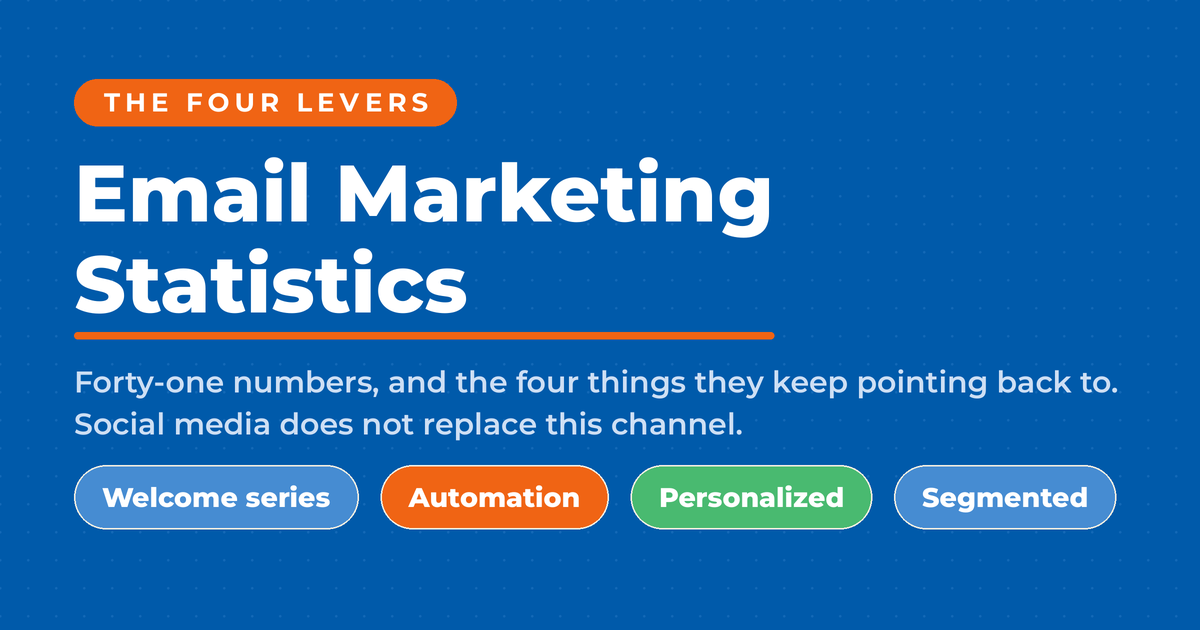
The Top 38 Compelling Email Marketing Statistics for 2027
It’s been predicted that there would be an end to email one day, but so far, email is still going strong more than 15 years after that famous prediction was made by Sheryl Sandberg of Facebook. Social media may have taken the marketing spotlight, but is email marketing still critical to today’s marketer? If so, how critical is it? I did some research on the most inspiring email marketing statistics so that we can use data to tease this out.
While marketers tend to focus on shiny new objects, it’s the true and tested forms of marketing that often get left behind by both B2C and B2B marketers. Email marketing is usually one of the highest ROI-providing forms of marketing, yet many companies don’t give it the priority it deserves. As part of your marketing strategies, are you including quality email marketing and marketing automation? If not, why? Our list of email marketing statistics will help you decide how much of your marketing mix should include email marketing, and how to structure your email campaigns to drive sales and reduce unsubscribe rates.
Note that if you do a search for email marketing statistics, there is A LOT of outdated information out there. Email stats from 2011 about how popular email is compared to social media just doesn’t fly today. I have done my best to try to find the freshest stats about the benefits of email marketing that are still relevant today, but if you find that one of them is outdated, please let me know and I will revise accordingly.
A note on dates: this list was refreshed in November 2026 with current research, and older stats that had no current equivalent were dropped.
Key Takeaways
✅ 70% of marketing leaders earn at least $10 for every $1 they spend on email. That return per dollar is why email deserves a bigger share of your budget than most companies give it.
✅ The average email click-through rate is more than 20 times the engagement rate on Facebook brand posts. Keep posting on social, but stop treating your list as the afterthought you get to on a slow week.
✅ Welcome emails open at 83.63%. The message a subscriber gets right after signing up is the most valuable one you will ever send, so treat it as a revenue asset instead of a receipt.
✅ More than 90% of marketers say segmentation improves email performance. Personalization gets you the open. Segmentation is what moves the revenue.
✅ Mobile is the main reading environment for most subscribers. Design for the small screen first, or most of your audience never reads past the subject line.
✅ 88% of people use email every day, and 55.2% check it before anything else in the morning. Your message lands in a place your audience visits daily without an algorithm deciding whether they see it.
Email marketing has a huge return on investment.
Let’s start this list of email marketing statistics with the stat that rules them all: ROI (return on investment).
Email marketing continues to rule on return on investment compared to other marketing avenues. Email marketing, despite email feeling obsolete to most, is still the most effective marketing channel around. The emails that a company sends drive customer engagement, traffic, retention, and loyalty.
From an ROI perspective, one data point suggests that
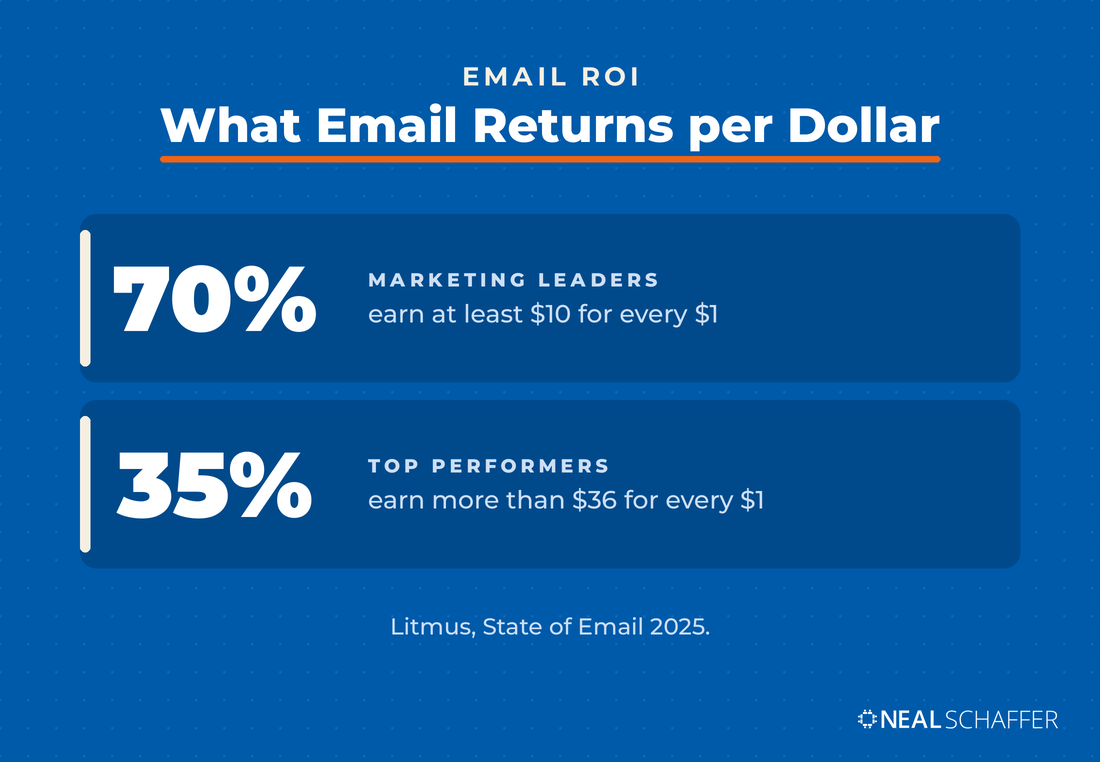
1.) 70% of marketing leaders earn at least $10 for every $1 spent on email, and 35% earn more than $36.
Our friends in the UK at the Data & Marketing Association found that
2.) Each £1 spent on email marketing returns almost £41, according to the DMA Marketer Email Tracker 2026.
That’s a pretty significant return on investment for B2C and B2B marketers alike. It’s even more remarkable when you consider the fact that marketing emails must often compete with the ubiquitous spam email messages.
If emails are structured carefully, they can be enjoyable to read and compel email engagement. Customers can keep up with the latest sale, but also learn about new products and services that are available. Think of email marketing as a great way to send advertisements directly to your customers’ inbox, where they don’t have to go looking for them. At the same time, this is great customer service, because everything your customers need to know is right there.
Email influences purchasing decisions
You’re probably wondering why email marketing has such great ROI. Actually there are two things we can point to:
From an expense perspective, email marketing is extremely cost effective. Think about it: For most small businesses, you can invest in a powerful email marketing software tool with marketing automation and the latest bells and whistles for a few hundred dollars a month, depending on the number of email addresses on your list.
Think about it: What is the ROI of a comparable $5,000 in Google or Facebook Ad spend compared to the number of touches you can achieve with tens of thousands of email subscribers on a repeated basis over the course of a year? There is no comparison on those email statistics!
From a revenue perspective, while we know that social media influences purchasing decisions, so does email marketing. How much so?
3.) 60% of US consumers with household incomes over $75,000 name email as their most preferred digital marketing channel, ahead of social media (50%) and text (34%),
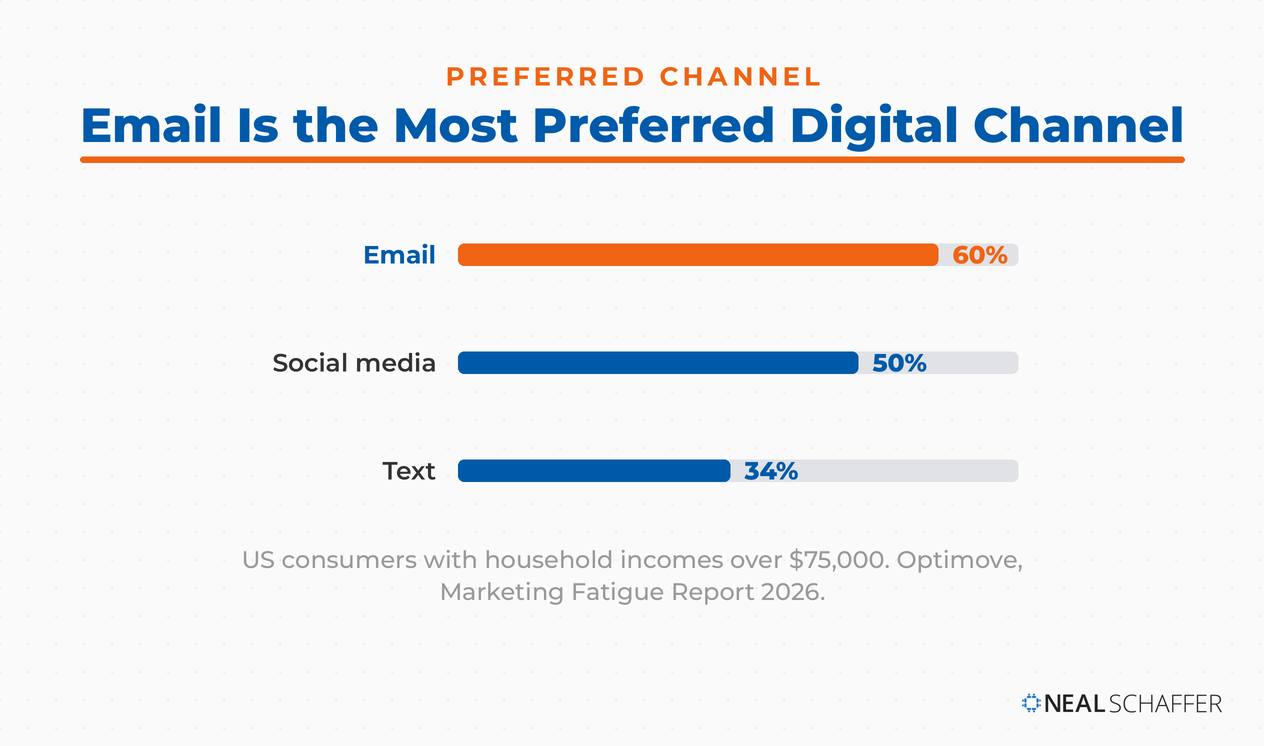
says Optimove’s Marketing Fatigue Report 2026.
Email marketing has a significant reach.
One of the great things about email is that it’s ubiquitous. So much so, that
4.) There are an estimated 4.73 billion email users worldwide in 2026.
5.) Email users are further estimated to pass 4.85 billion by 2027.
Given that this is over half the global population, including those unable to read, it is easy to see how email marketing has huge potential and a greater average return than other forms of marketing. After all, everyone has to purchase things for their everyday lives. Food, clothing, and a place to live are universal needs for human civilization.
In more developed areas, which are more likely to have internet access, everyday purchases are much more significant. Toys for children, consumer electronics, and household supplies are all things that most people purchase on a regular basis. Best of all, email is inexpensive. By sending emails, businesses of any size can advertise their goods and services at an affordable price and improve customer acquisition.
Wait! So should I choose email marketing over social media marketing?!?
First of all, compare what the two channels deliver today. In fact,
One Strategy to Connect All Your Marketing
My latest book helps small businesses, entrepreneurs, and marketers bring search, email, and social together into one digital marketing strategy that actually compounds.
Drawing on my work as a Fractional CMO, Digital Threads turns complicated tactics into a clear, practical plan you can follow, whatever your budget or team size.
Grab your copy on Amazon and start weaving your own digital threads. Click the cover or the button below to get started.

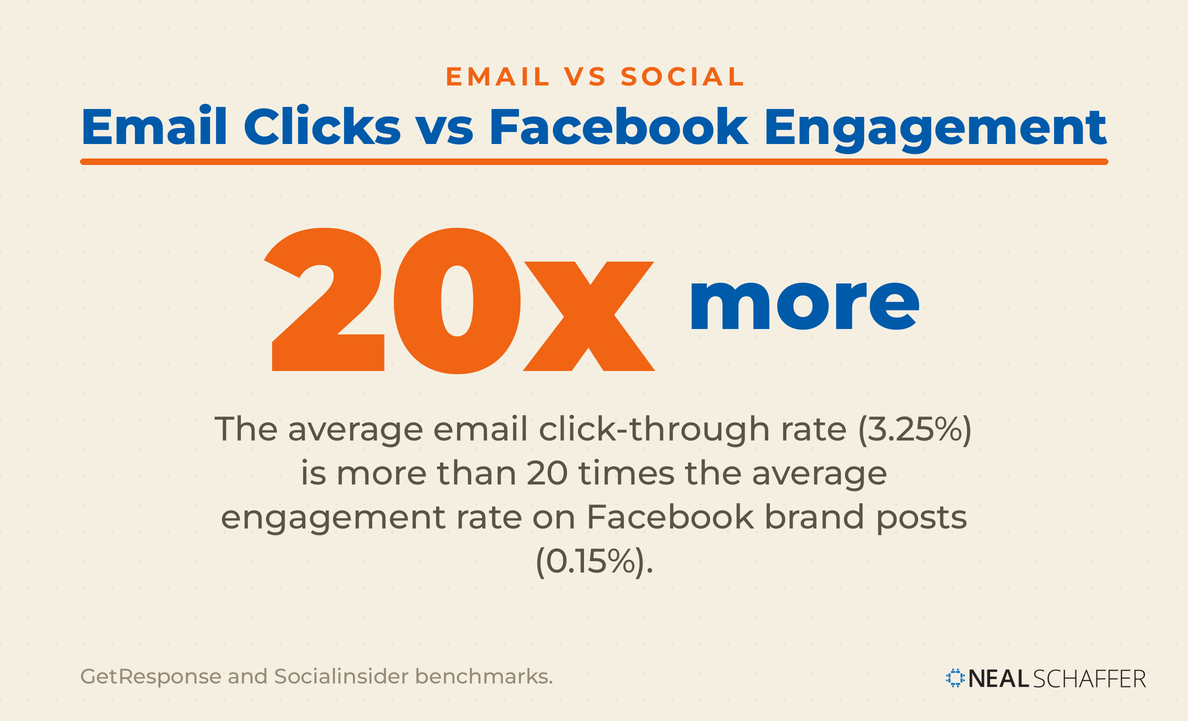
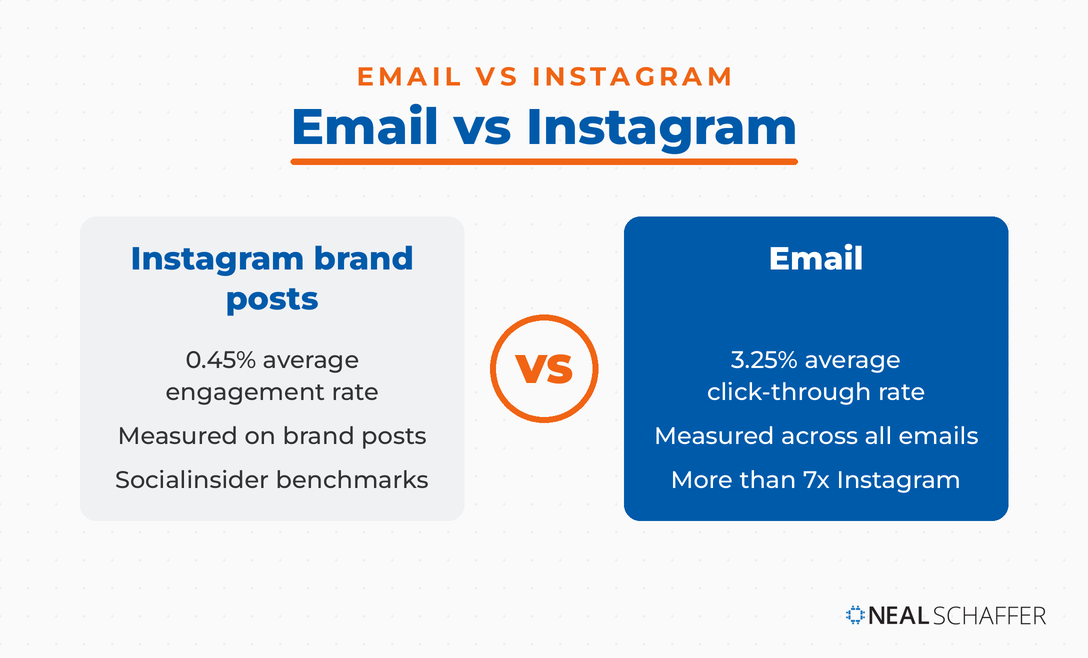
6.) The average email click-through rate (3.25%) is more than 20 times the average engagement rate on Facebook brand posts (0.15%).
It doesn’t stop there. If you look at additional data, this is what you see:
7.) Social media now counts 5.81 billion user identities, more than email’s roughly 4.73 billion users, though identities are not unique people
8.) The average email click-through rate is more than seven times the average engagement rate on Instagram brand posts (0.45%)
As a social media marketer, I would NEVER tell you to give up on social media marketing. I WILL say that if you are doing social media marketing, you MUST also be doing email marketing!
More recent benchmarks show the same gap:
9.) Email open rates rose for the fifth straight year in 2025, to 30.7% across Omnisend’s data.
and
10.) Posts on X average a 0.10% engagement rate per follower, against a 3.25% average email click-through rate.
In fact, there are ways in which email marketing can actually help your social media marketing, so it is not a competition between channels but how they might help complement each other.
Some industries lean harder on email than others. Email marketing for real estate agents, for instance, is how agents stay connected to long-cycle buyer and seller relationships between transactions.
Customers love their email
Part of what makes email marketing so successful is that more people prefer email communication than you might think. Customers are so committed to checking their email, that:
11.) 88% of people use email every day, and 39% check their inbox three to five times a day.
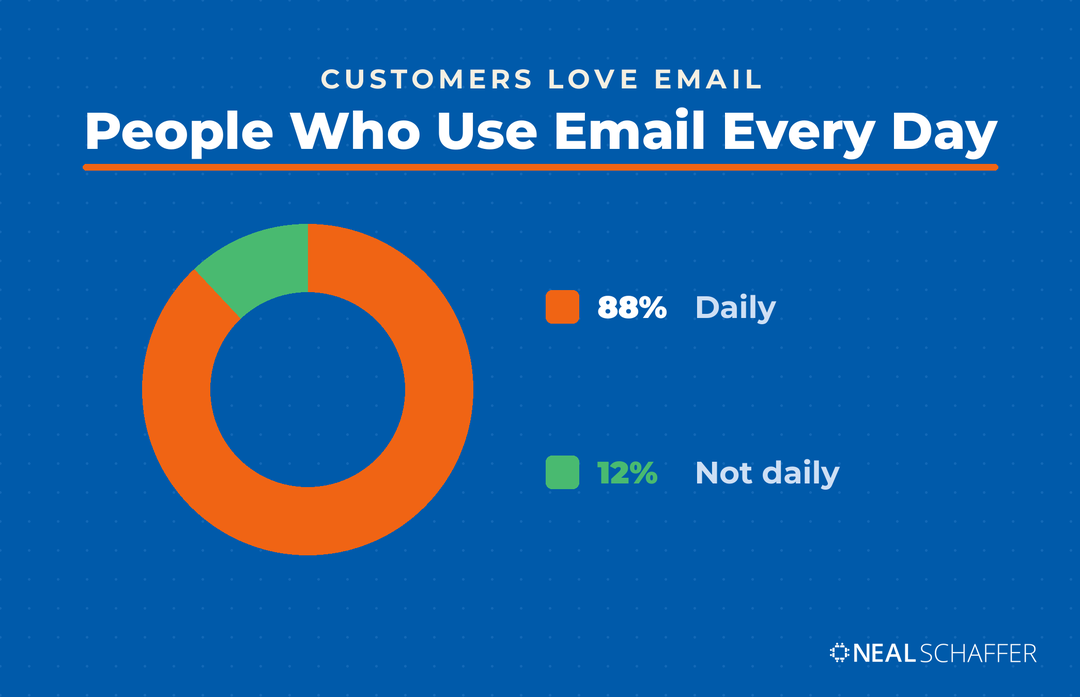
Although email can be considered something of a dinosaur among current marketing techniques, an email marketing campaign remains one of the most effective ways to deliver effective sales copy for both B2B marketers and B2C marketers. Email is almost ubiquitous, with 88% of people using email every day. Billboards, radio spots, social media platforms, and commercials cannot boast the bulk of email marketing stats, and including an email marketing strategy in your overall marketing plan is essential to effectively reach your target audience. Email newsletters can show an increase in revenue without having to be in constant contact with new and existing customers.
12.) 55.2% of us check it first thing in the morning.
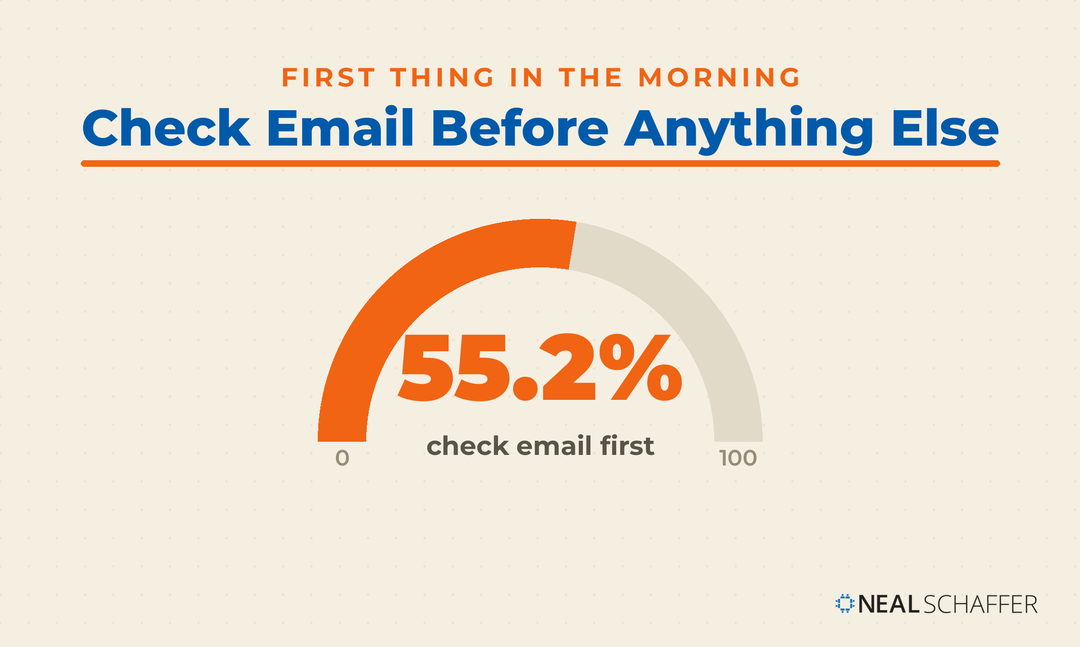
That’s before we check our Facebook, run an Internet search, browse through a blog post, or even watch the news. What this means for marketers, is that email is the first chance at reaching new customers, or nurturing an already-existing business relationship. In that first email read, people find out what’s awaiting them for the day.
These moments are great for marketing opportunities. When planning their day, your customers might want to know that you are having a sale on those all-important snow boots to replace the ones with holes in them. Or, they might need to have a hole in the fence patched up, and your email might inform them of opportunities to save. For an animal hospital, an email sent to clients about the latest pet health issue might meet a need at the most unexpected time. Whatever your business, getting to customers early in the morning helps to generate sales and increases your revenue per email statistics.
Email has one really great feature for most customers: It can be opened, read, and then returned to later. This means that if you have a really great sale going on, and the customer sees the email just before clocking on for work, it’ll be there when they have time to shop. Sure, it’ll get pushed down by new emails, but search functions and scrolling will allow it to be found again. This can be better than digging a flyer out of the trash. Or worse, throwing out useless “junk mail” that’s adding to clutter (provided your emails are not being shuffled to spam folders).
CSG’s 2026 State of the Customer Experience Report, a survey of 1,200 consumers, concluded that
13.) 73% of consumers prefer to hear from brands by email, far ahead of text (31%) and social media messages (22%) (source).
This works out well for marketers. Email is an environmentally sustainable method of communication, and it’s relatively cheap. Plus, we aren’t causing anyone to throw out their backs while carting a pile of catalogs off to the curb for recycling. Catalogs are OK for some uses, but they aren’t as important as they once were.
Shoppers who click through from email are more ready to buy than ever. In fact,
14.) 9% of email clicks turned into purchases in 2025, up 53% from 5.9% a year earlier (source).
Most likely, there’s more than one reason for this. First, buying things through email promotions can lead to impulse buying. If you’ve ever bought something because the company was offering a bonus gift, there’s a high chance you heard about it through your email address.
Another reason why this might be the case is the power of suggestive selling. People scroll through an email, see the great products on offer, and decide to buy even if they weren’t specifically looking to make a purchase that day. Offering a great deal is one of the best ways to get consumer dollars and increase email marketing ROIs.
Now let’s move on to email marketing statistics that provide us some tactical advice.
Email Marketing Success Begins with Your Welcome Email
As most of us know, ordering products and services online often involves being asked to “opt in” for marketing emails. The “opt in” process is a legal requirement for many jurisdictions worldwide that helps punish spammers. There are similar opportunities to sign up for email all over the Web. Typically, an emailing party will send you a welcome email shortly after signing up.
15.) Welcome and abandoned cart emails together drive 76% of the orders that automated emails generate (source).
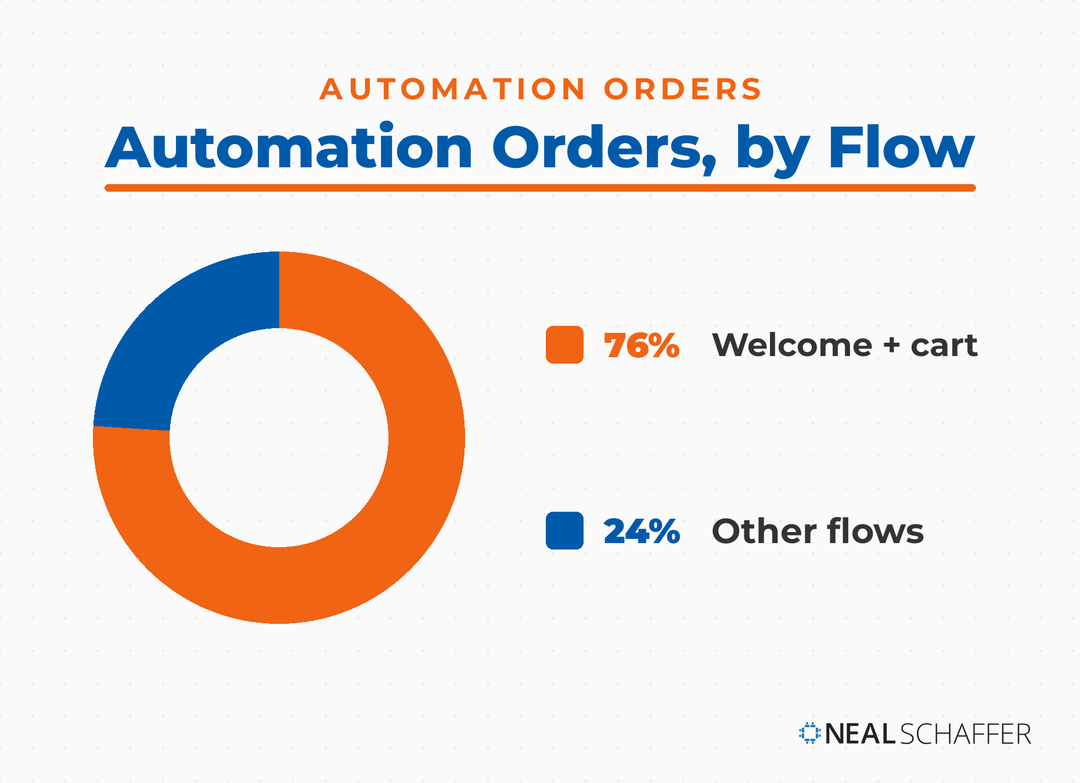
From this, we can see that people in your contact list respond well when you thank them for subscribing. Whether that’s in terms of an automated reciprocity or the result of an offer code you sent with the welcome, people tend to appreciate it. Plus, any offer code lets them save some money on the things they want. In many cases, this is the reason they signed up to be email recipients in the first place.
16.) Another reason for the success of welcome emails is probably the fact that they have an average open rate of 83.63% (source).
It almost goes without saying that emails which aren’t opened typically won’t result in a sale. One exception to this is if the subject line tells a customer everything they need to hear. This, of course, is unusual. Additionally, welcome emails are often anticipated by the email recipient because they just signed up.
An open rate above 80% is exceptional, but the broader benchmark for improving email open rates across your whole list takes more deliberate work on subject lines, sender reputation, and audience hygiene.
17.) Similarly, welcome emails are highly effective at earning clicks. In fact, they average a 16.6% click-through rate, about five times the 3.25% average across all emails (source).
That’s a lot of attention, folks. The bottom line here is that if you aren’t sending welcome emails, then you’re missing out. It’s also important to ensure that you maximize the selling opportunities presented by welcome emails by incentivizing purchases or follow ups as appropriate.
Remember, email marketing is about building a relationship, and while the welcome email is critical, it shouldn’t stop there. Plan a short welcome series rather than a single message.
In sales, there’s a saying: get “no” three times. This means that if someone tells you no, then you shouldn’t take it seriously until the third time. Until then, you might change their mind. The same logic applies to a welcome series: a few well-spaced emails give a new subscriber more than one chance to act.
Want that email opened? Think automation.
Since spam was one of the first automated forms of email, it’s easy to think that emails should be sent manually. However, manual emails take a lot of staff time, making them unsustainable marketing tools for the long term. With that said, manual emails aren’t as effective for marketing as automated ones. Limit manual emails to non-commercial communications like notes about the latest staff meeting. The numbers bear this out.
According to GetResponse,
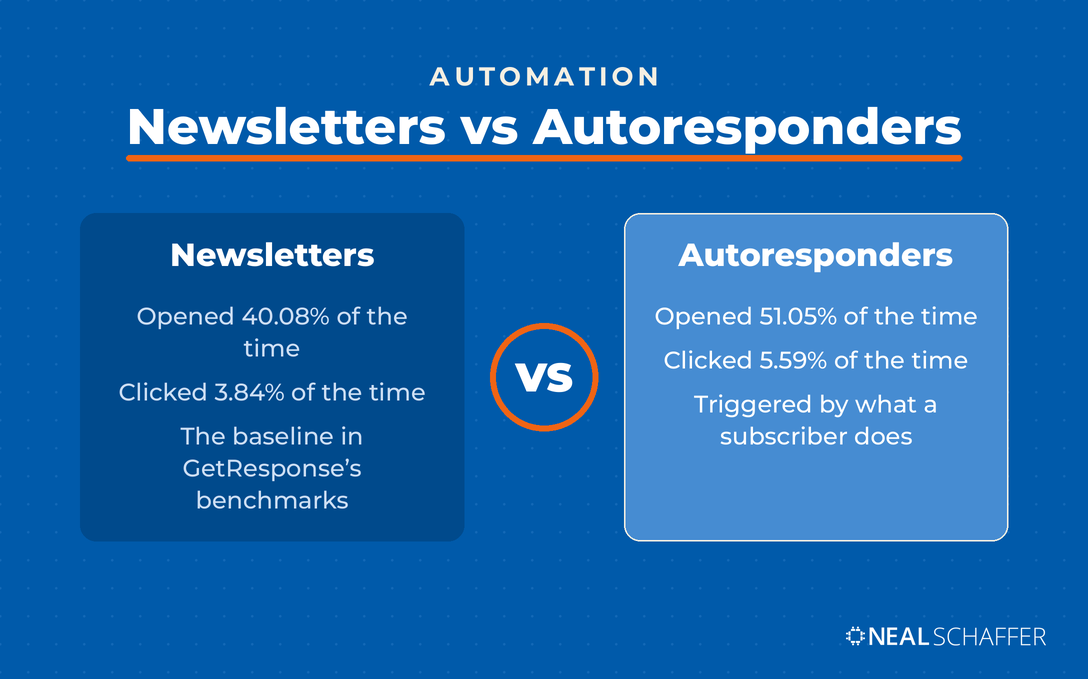
18.) Autoresponder emails are opened 51.05% of the time, compared with 40.08% for newsletters.
They also earn more clicks:
19.) Autoresponder emails earn a 5.59% click-through rate, compared with 3.84% for newsletters.
In fact, Omnisend’s 2026 report, covering 27 billion emails sent in 2025, found that
20.) Automated emails convert at 19 times the rate of campaign emails and earn $2.87 per send, compared with $0.18 for scheduled campaigns.
Automated emails, by definition, are those which are triggered by consumer behavior. For example, you might set the email program to send something if the customer browses your website, then leaves without buying anything. Customers are already interested in your product at this point, so you have a higher chance of making a sale. Also, you never know when offering a small discount will push the customer to “yes.” Many companies, large and small, use this technique to great effect and even to enliven inactive subscribers.
It should be no surprise, then, that
21.) Automations made up just 2% of all email sends, yet generated 30% of total email-driven revenue (source).
Welcome and abandoned cart flows do much of that work, as #15 shows.
What does this all mean? Email should be sent through automated systems if you want a higher rate of favorable responses. It would be interesting to know why this is, however. One reason could be that automated emails can be set to arrive at the appropriate time of day, regardless of team business hours. This means that a back office in India could set emails to go out just before work hours in the United States. With fine tuning, this could even be sensitive to time zones within the US and mobile users vs desktop users.
Another reason is that automated emails can be personalized by email marketing providers to a significant extent these days. It used to be that even plugging in a customer name on automated emails was difficult. Now, customization is much easier and it can even be done automatically. Automated emails are easy to time to customer behavior. A single email like an abandoned cart email, for instance, can arrive within moments of the customer closing their browser.
Moral of the story: you don’t have to send even a small percentage of emails manually in order to benefit. Unless you need to send a personal message, it’s best to write template emails and let your email provider do the rest of the work.
Speaking of personalization in email marketing, because it can be done through savvy email marketing software and it is extremely powerful from the recipient’s perspective, here are some email marketing statistics to help guide your strategy.
Get Personal
In customer service, it has long been a maxim that people hate being just a number. We’re numbers often enough, whether it’s waiting in line at the deli counter, getting our driver’s license renewed, or filing our taxes. However, most private businesses can’t treat their customers like a number. Poor service and impersonal treatment lead people to go elsewhere. This tendency even shows up in email marketing:
Customizing email copy, and providing personalized offers, is one of the most important predictors of email success in B2B marketing emails and B2C emails alike. In fact, Twilio’s 2024 State of Customer Engagement Report found that
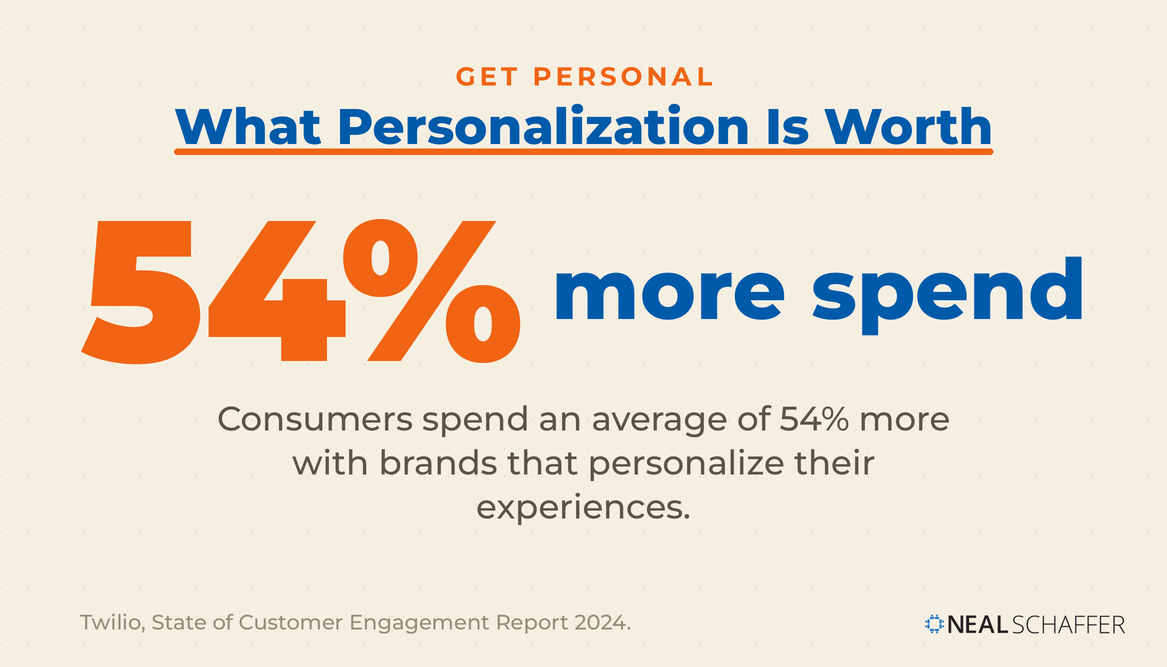
22.) Consumers spend an average of 54% more with brands that personalize their experiences (source).
This stat brings up another important point about personalization in email: Customers don’t respond the same way to various offers landing in their email inbox. For instance, some customers might prefer a gift with purchase or free shipping, while others are partial to a percentage off their order. Depending on the brand or overall product category, these preferences can change. For some customers, the preference can be influenced by the mood they’re in. Either way, personalization of offers allows a brand to try and push the right buttons for each customer.
It’s no surprise, then, that
23.) 89% of business leaders believe personalization is crucial to their business’s success over the next three years
Yet the simplest tactic does less than you might think:
24.) Mid-market brands put the recipient’s first name in just 3.35% of their subject lines, and Klaviyo’s research suggests the first name alone won’t do much for open rates.
Think about that for a minute. A first name is easy to add, which is exactly why it no longer stands out. Personalizing emails beyond the name gives your company a chance to tailor the email to a particular customer’s tastes. Within a product line, certain things appeal to different customers. A woman is less likely to buy men’s clothes. She might buy some for a significant other, but not in the same quantity as she buys women’s clothes for herself. The same is true for men and women’s clothes.
Personalization is easier to picture once you’ve seen it done well. Studying real email marketing examples from brands that get the tone right tends to short-circuit the trial-and-error phase.
25.) 97% of marketers used at least one interactive element, such as video, GIFs, or polls, in their marketing emails in 2025
While these interactive elements aren’t necessarily personalized, you can imagine how impactful your email marketing could be if they were! It’s important to note that personalization in an email isn’t all that different from the customer experience in a small family business. Use the same mechanic for your car every time you change the oil, and the mechanic knows more about how your specific car works in the event of a larger repair. Go to a particular insurance agent over the years, and he or she will be better able to recommend the right insurance policy when your circumstances change. Walk into the same pharmacy for every prescription, and the pharmacist will often head for that customer envelope as soon as he sees you. Personalizing emails is the same basic thing, just for email marketers.
Segmentation further builds upon the power of personalization
Personalization is critical to your success in email marketing, and fortunately most modern email marketing software solutions, including the one that I use, offer varying degrees of marketing automation functionality. One of the critical functionalities is to be able to dynamically generate segments and then automate campaigns, in a personalized and relevant way, to communicate with those in the given segment.
Personalized campaigns are more effective, and marketers give segmentation even more credit. Specifically,
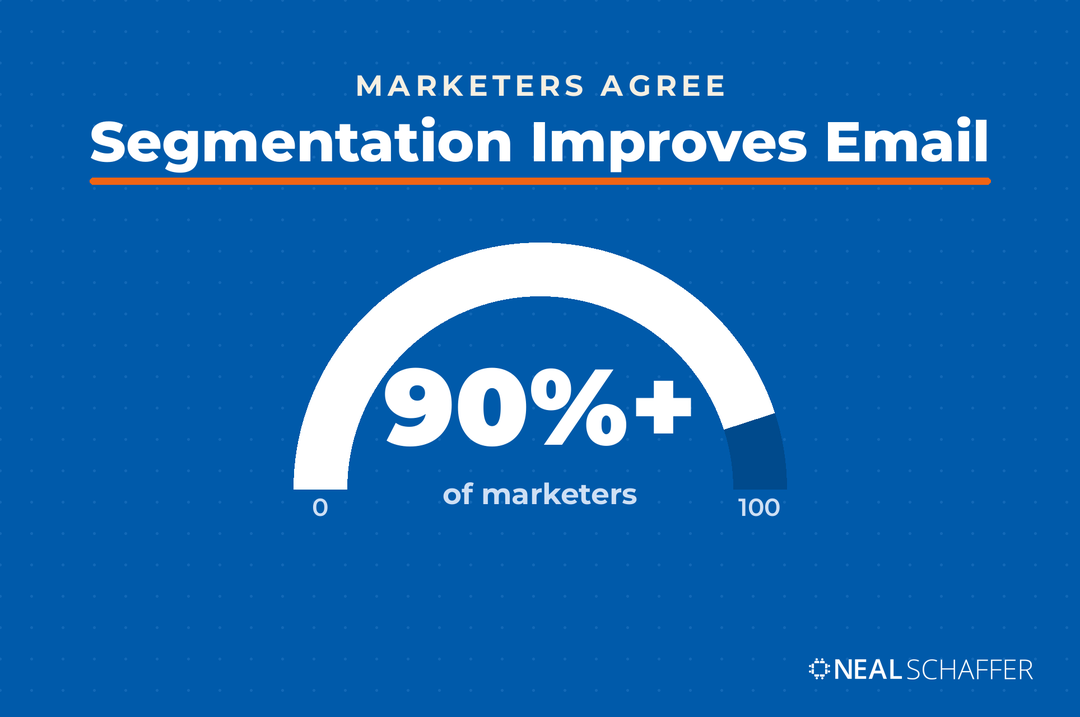
26.) More than 90% of marketers say segmentation improves email performance
Needless to say, just like anything else in marketing, your message needs to be both personalized AND relevant.
Want that email link clicked? Think buttons.
27.) Buttons are the interactive element marketers use most often in their emails, at 35%, according to Litmus
Beware the Spam Filter
When designing an email marketing campaign, everyone worries about being thought of as spam. That’s not surprising, given that:
28.) 44.99% of global email traffic was spam in 2025.
For the purposes of this statistic, spam includes unwanted marketing emails. That means that if you aren’t getting permission from your customers before sending them an email, you’re spamming them. However, emails that pertain to existing business relationships, or voluntary subscription to your email list, do not qualify as spam.
In a related matter, email privacy laws are popping up all over the world. The European GDPR and a similar law in California have made not getting permission a potentially expensive matter. As a result, it is recommended that any business which might be affected by such regulations do an opt-in email campaign. This also gives you a chance to see who is still interested in your products and services. After all, why pay to keep sending emails to someone who’s not interested anymore?
Don’t fear emojis
Remember when using emojis in business communication was considered unprofessional? Not so much nowadays. In fact, plenty of brands now use them:
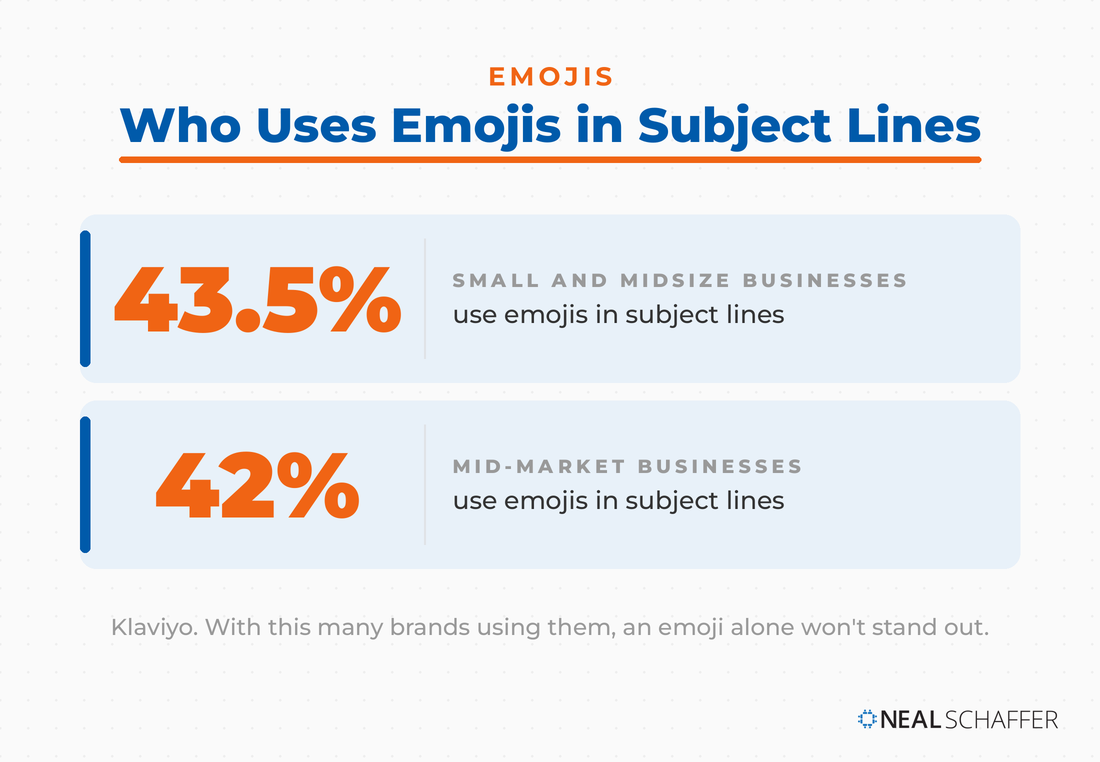
29.) About 42% of mid-market businesses and 43.5% of small and midsize businesses use emojis in their subject lines.
With that many brands using them, an emoji alone won’t edge out your competition. Where emojis can help is their ability to stop the eye as it moves down a page of emails. If your customer is like most people, promotional email subjects are skimmed to see which ones might be interesting or important. Just be careful that they don’t come off the wrong way, or look like the one everyone else is using.
There’s another reason why emojis might be so successful: they help an email seem more personal. Let’s face it, marketing (and business in general) can seem so impersonal. Everyone is trying to market their goods and services, and especially in marketing, it’s all about the numbers. The focus is on so many emails per click, that many clicks per sale, and whether a particular target is met. If you aren’t careful, that constant drive for numbers can make your campaign seem like just another attempt at getting the customer’s money. Instead, emojis and customization show the customers that they are valuable to your company, and not just a number or potential paycheck.
Emojis aside, the broader craft of writing email subject lines that actually get opened is one of the highest-ROI skills in email marketing.
Don’t forget mobile
Did you know that:
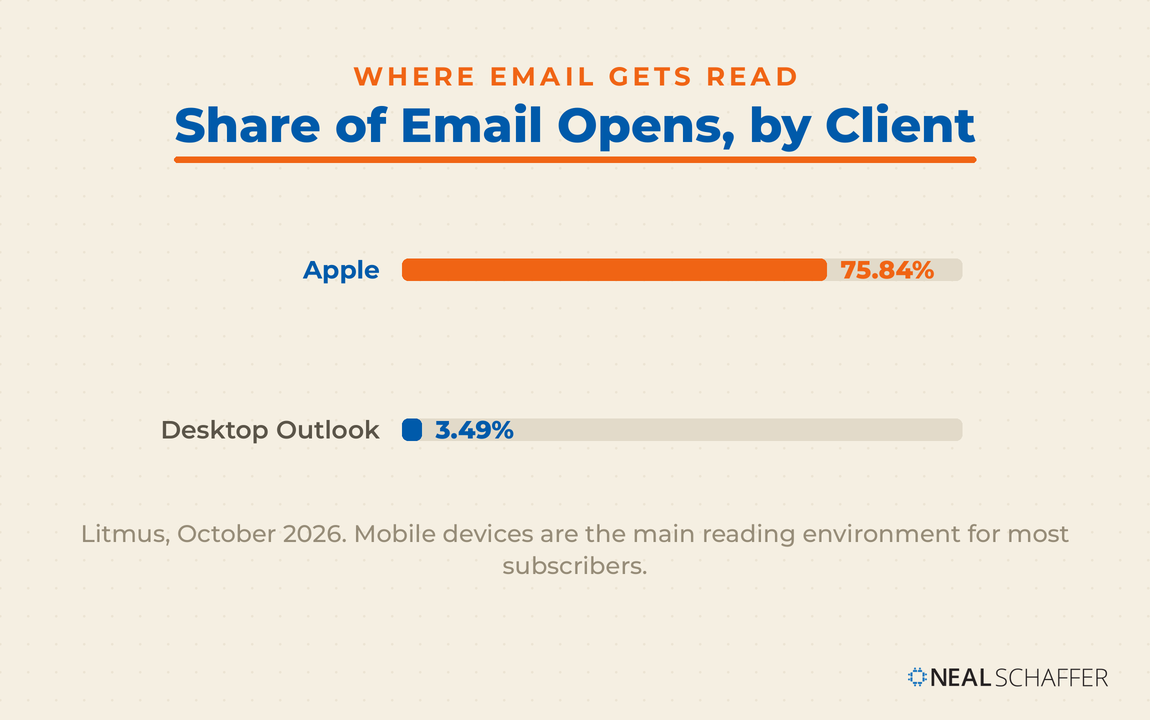
30.) Apple accounts for 75.84% of email opens, and Litmus says mobile devices are the main reading environment for most subscribers
Most of us remember when mobile email was innovative. First, it was Blackberry in 1999, and when Apple introduced the iPhone in 2007. With these inventions, mobile email became an innovation, and then finally mainstream. With the current statistics, it’s safe to say that mobile email has come a long way. Now, it seems like everyone walks around town with a smartphone, and with it, their email accounts.
It was only a matter of time before this happened. Consider that:
31.) 61% of people mainly check email on a mobile device.
32.) Desktop Outlook accounts for just 3.49% of the email opens Litmus tracks.
Needless to say, if you are not thinking mobile-first in terms of your email communication, your success will suffer over the long run.
Speaking of early mobile email, remember how they originally would only display text? Most customers don’t have that limitation anymore, but there’s still a principle to remember. Smartphones are like computers with tiny screens, and often, really expensive internet access. As a result, sending a lot of flashy pictures in email, or including a video in it, might not be the best way to get a click-through. If a customer can’t read the email when they open it on their mobile device, there’s no guarantee they’ll try again with their computer or tablet. It’s OK to use these things, and in fact many marketers do but are conscious of how it will look on that tiny screen.
Selling to businesses? Use newsletters.
Perhaps it’s no surprise that:
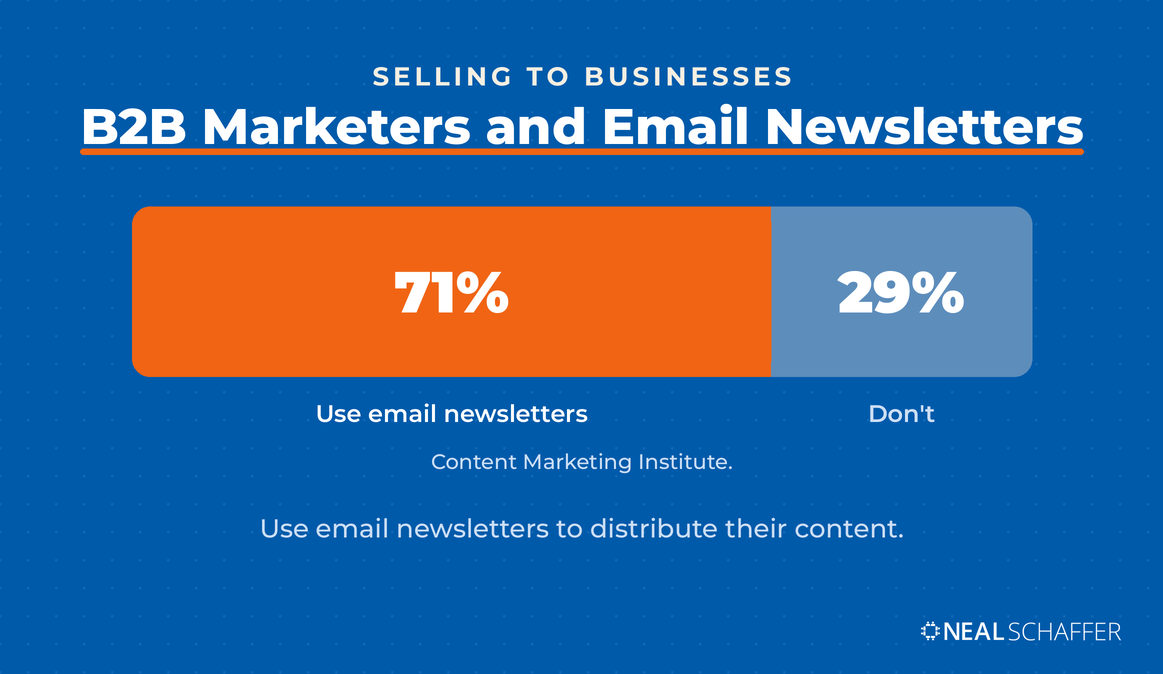
33.) 71% of B2B marketers use email newsletters to distribute content.
After all, newsletters are the ultimate opportunity to tell subscribers about what’s going on in your company. Maybe you’re launching a new product, or releasing an update to your tried-and-true software solution. Either way, chances are that your customers want to know about it. That update might be the thing that makes them finally want to upgrade their software or equipment. Or, the new product could make life easier at their company.
Of course, newsletters are good for more than just advertising new stuff. If anything, they’re awesome because you have time to do more than advertise. You never know when a change in management might be of interest to customers, or if that investment in clean energy resonates with the eco-conscious public. No matter what you put in newsletters, make sure it’s something that will help you stand out from the crowd. It’s a great opportunity to define your brand message.
Ecommerce company? Automated abandoned cart emails are your besties.
We’ve all received those automated emails letting us know that we still have items in our shopping cart that we “forgot” to purchase. Did you know how effective they can be for ecommerce marketers?
There are some amazing email marketing statistics that prove the incredible ROI of using email marketing automation for the singular objective of reaching out to those who put products or services into the shopping cart on your website but never purchased for whatever reason. Omnisend’s 2025 data shows that:
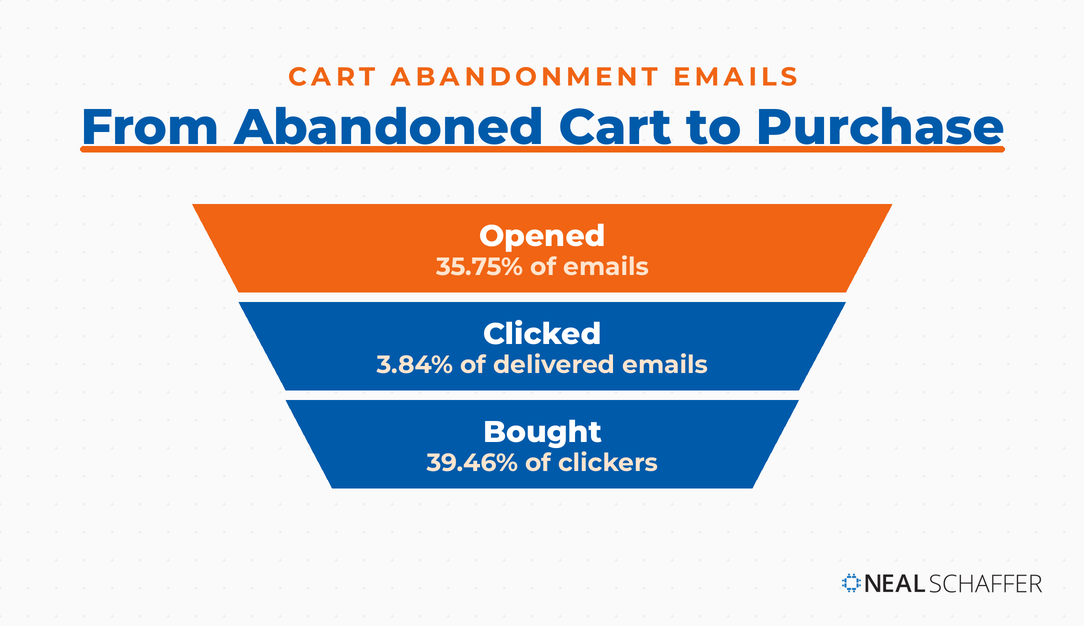
34.) More than a third (35.75%) of cart abandonment emails are opened.
35.) 3.84% of delivered cart abandonment emails earn a click.
36.) 39.46% of the shoppers who click a cart abandonment email go on to buy.
The end result?
37.) Sending three emails to those who abandon their carts results in 69% more orders.
Beyond cart abandonment, the broader playbook for ecommerce email marketing spans welcome series, post-purchase flows, win-back campaigns, and product-recommendation emails.
Beyond the count, the design and timing of each abandoned cart email determines whether the sequence actually recovers revenue or just nags the buyer back out the door.
Email marketing yields quick results
Do I need to provide you with more email marketing statistics to prove my point about the ROI of email marketing? How about this one:
Want marketing results now? Use email. One reason is that:
38.) Nearly half (46.89%) of email opens happen within six hours of sending, and 21.20% happen in the first hour.
Take a look at the marketing emails you’re getting from others, and you’ll see that a lot of them announce limited-time offers. Especially in those situations, it is essential that the email is opened soon after it’s sent. After all, it’s no use if the email is opened after the event is over. However, if your business is large enough, there might be time zone issues. For example, if you send emails overnight, then the chances are they won’t get opened until morning. Then again, get the customer as their feet hit the floor, and you just might beat the competition.
Another reason email yields quick results is that it helps keep the customer’s mind on your brand. The old saying, “out of sight, out of mind” comes into play here. Only it’s the opposite: keep your company, or your products, at the forefront of consumer awareness, and they’re more likely to buy your products instead of purchasing from the competition. For retail, of course, email marketing can also introduce a consumer to something they didn’t know they wanted…yet. You never know unless you try. Email is the fastest way to do that.
One of the most amazing aspects of email marketing is that, despite its high ROI, it does not necessarily require a costly investment in software. In fact there are many capable free email marketing services that exist that would be perfect if you are a startup or small business.
Frequently Asked Questions About Email Marketing Statistics
What is the ROI of email marketing?
In the Litmus 2025 State of Email survey, 70% of marketing leaders said they earn at least $10 for every $1 they spend on email, and 35% earn more than $36. In the UK, the DMA Marketer Email Tracker 2026 puts the return at almost £41 for every £1 spent. Two independent data sets pointing the same way is about as strong a case as you get for a marketing channel.
How many people use email worldwide?
There are about 4.73 billion email users worldwide in 2026, according to Radicati estimates, with the total expected to pass 4.85 billion by 2027. That is more than half the global population. Turning that reach into an audience you actually own starts with knowing how to build an email list.
Are automated emails worth setting up?
Yes. In GetResponse benchmarks, autoresponder emails open at 51.05%, against 40.08% for newsletters. Omnisend’s 2026 report found automated emails convert at 19 times the rate of campaigns and generate 30% of email revenue from just 2% of sends.
Do welcome emails perform better than regular campaigns?
Yes, by a wide margin. Welcome emails open at 83.63% and earn a 16.6% click-through rate in GetResponse benchmarks, roughly five times the 3.25% average across all emails. My guide to writing a welcome email covers what belongs in that first send.
How do I keep my marketing emails out of the spam folder?
Start with permission, because 44.99% of global email traffic was spam in 2025, according to Kaspersky, and unwanted marketing email adds to that problem. Asking for the opt-in works in your favor rather than against it. The technical side is covered in my guide to email deliverability.
How quickly do people open marketing emails?
Nearly half of all opens, 46.89%, happen within six hours of sending, and 21.20% come in the first hour, according to GetResponse benchmarks. That makes email the fastest channel you have for a limited-time offer or a same-day announcement. Send early enough in your audience’s day that the window is still open when they get to it.
Ready to Turn These Email Marketing Statistics Into ROI?
Now that we’ve discussed the value of email marketing, I sincerely hope you can use these statistics to guide your strategy for the year.
Ready to turn these numbers into a plan? A focused email marketing strategy ties together the welcome series, automation, personalization, and segmentation pieces this post just covered. For a broader playbook tying email into the rest of your digital marketing, grab a free preview of Digital Threads. And if your team needs outside help building a coordinated email and content strategy across channels, my Fractional CMO services might be a fit.
Get A High ROI From Your Email Marketing
We respect your privacy. Unsubscribe at anytime.
DIY your digital marketing with AI.
Practical advice on social, content, influencer, and search marketing, plus the AI tools that make each one easier. Join thousands of founders and business owners who read it.