
Content creation can sometimes feel like drawing water from an empty well. We’ve all experienced that frustrating moment when inspiration seems to have abandoned us completely—staring at a blank screen, watching the cursor blink mockingly, and struggling to generate even a single worthwhile idea.
As someone who advises businesses on their content strategy, I’ve seen this creative block happen to both novice bloggers and seasoned content teams, and, yes, even myself. The pressure to consistently produce high-quality, engaging content can overwhelm even the most creative minds.
But here’s the good news: you don’t need to reinvent the wheel every time. Sometimes, the most effective content follows proven structures that audiences already respond to. Successful content often takes familiar formats and adds your unique perspective and expertise.
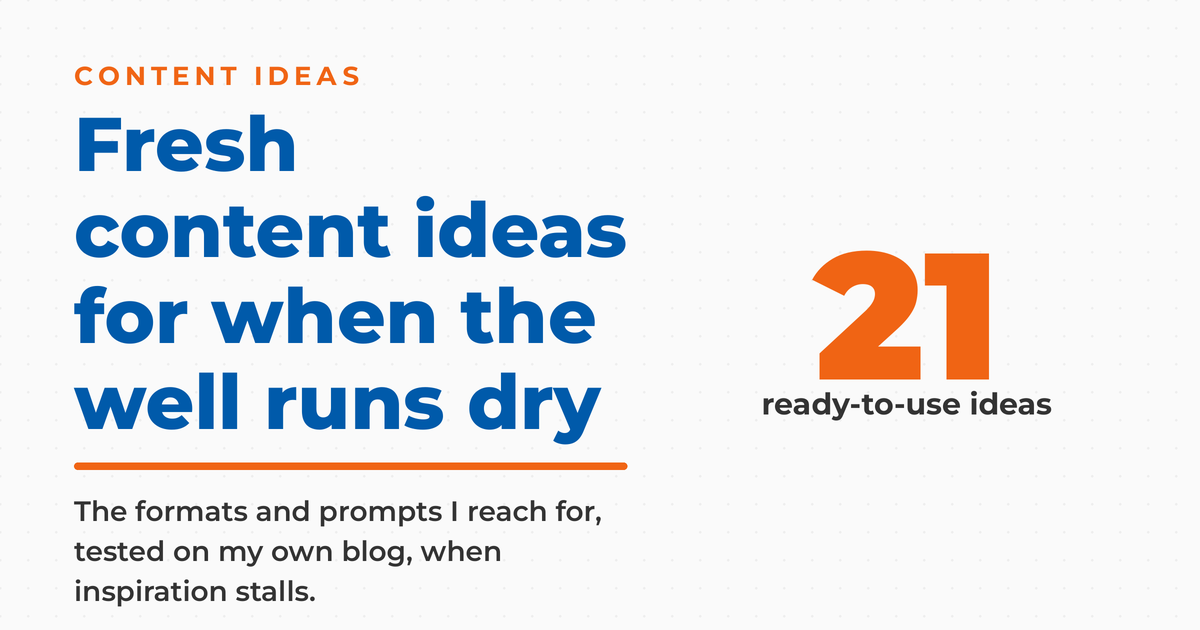
Here are 21 fresh content ideas organized into strategic categories that you can implement immediately, each backed by research that demonstrates their effectiveness. These approaches will help you maintain consistency even when original inspiration runs low.
Key Takeaways
✅ Creative dry spells hit everyone. You don’t need to reinvent the wheel every time — proven content formats let you keep publishing consistently even when inspiration runs low.
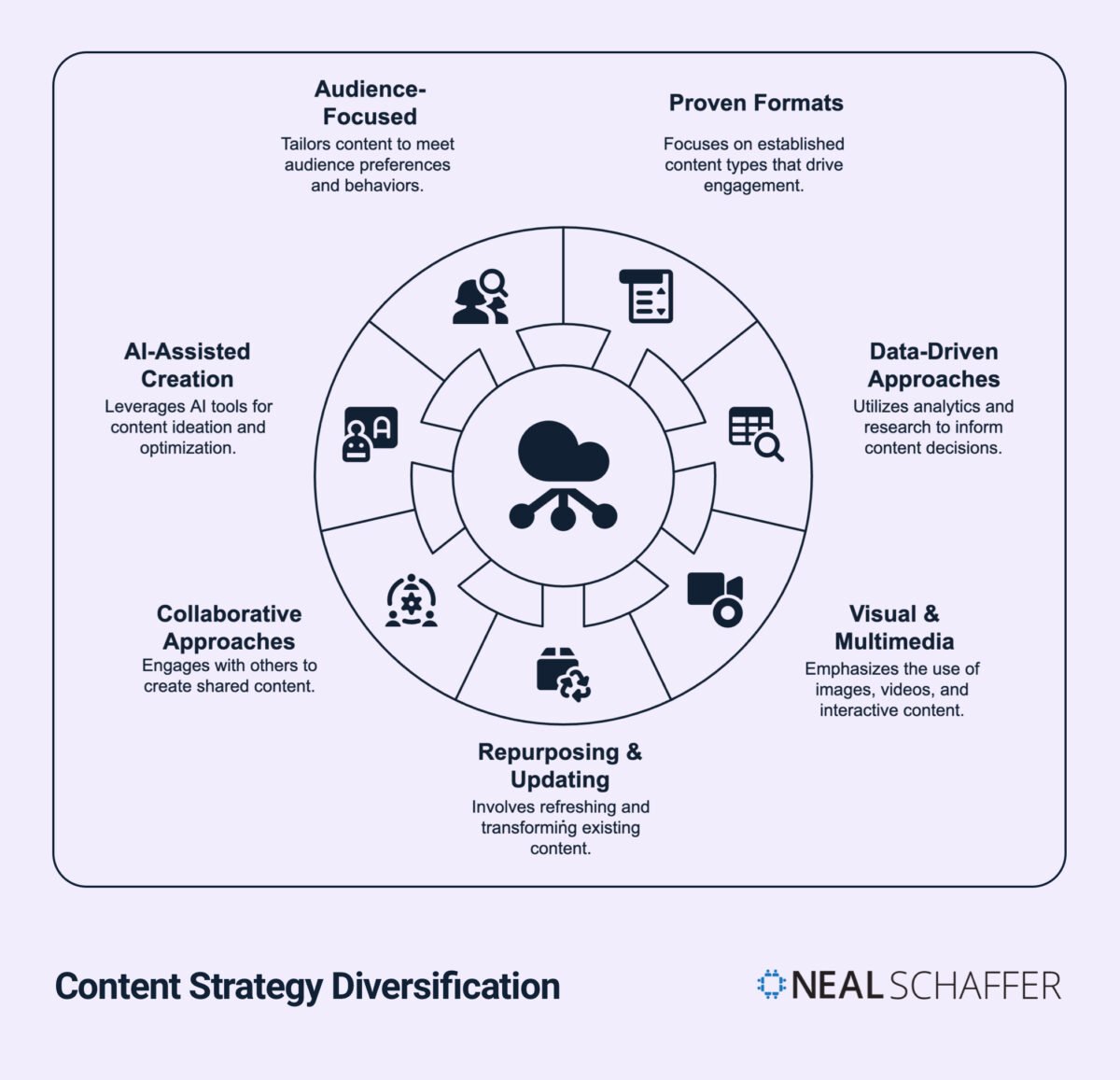
✅ The 21 ideas are organized into strategic buckets: proven formats, data-driven approaches, visual and multimedia, repurposing and updating, collaborative content, AI-assisted creation, and audience-focused content.
✅ Data-driven content earns trust and backlinks. Blogs that feature original research see 41% better results than those without it.
✅ Repurposing beats starting over. Updating high-performing legacy content is 2.8 times more effective than creating new content from scratch.
✅ Match your content mix to your audience preferences, resources, and goals, then measure performance every month and adjust based on the data.
Leveraging Proven Content Formats
When creativity falters, turning to formats with proven success rates makes strategic sense. These approaches work because audiences are already familiar with their structure, making the content more accessible and easier to consume.

1. Create Definitive How-To Guides
How-to guides remain a content marketing cornerstone because they directly address specific problems your audience needs to solve. These instructional pieces remain consistently popular, with 76% of bloggers using how-to articles as a core content strategy.
What sets exceptional how-to content apart is its thoroughness and clarity. Don’t just skim the surface—create the definitive resource that walks readers through every step of the process with clear instructions, visuals, and troubleshooting advice.
Implementation tip: Identify the most common questions your customer service team receives, then create comprehensive guides answering each one. These pieces solve real problems while establishing your authority.
2. Develop “Everything You Need to Know” Comprehensive Guides
When your audience seeks complete understanding of a topic, comprehensive guides deliver exceptional value. Research shows that “Everything You Need to Know” posts consistently attract the highest organic traffic compared to other content formats.
These in-depth resources serve as the go-to reference in your niche, positioning you as the authority on the subject. The key differentiator is comprehensiveness—covering everything from basic concepts to advanced applications.
Implementation tip: Choose a cornerstone topic in your industry that causes confusion, then create a structured guide that progresses from foundational concepts to advanced applications.
3. Develop Problem-Solution Frameworks
Everyone faces challenges they need to overcome. Content that clearly identifies a problem, explains why it matters, and presents actionable solutions creates immediate value.
This format works particularly well because it follows the natural thought process people use when seeking information online: identifying their problem and looking for solutions.
Implementation tip: Listen to your audience’s pain points through social media comments, forum discussions, and customer support interactions. Then create content specifically addressing these challenges with clear, step-by-step solutions.
Data-Driven Content Approaches
In a world of content saturation, original data and insights help your brand stand apart. Data-driven content not only attracts attention but also earns trust and backlinks, creating lasting value.
| Data-Driven Content Type | Primary Benefit | Implementation Complexity | Backlink Potential |
|---|---|---|---|
| Original Research Studies | Unique insights no one else has | High | Excellent |
| Data Visualizations | Complex information made accessible | Medium | Very Good |
| Industry Benchmarks | Comparative insights for decision-making | Medium-High | Good |
| Trend Analysis | Forward-looking perspective | Medium | Good |
This table highlights how different data-driven approaches can fit into your content strategy based on your resources and goals.
4. Conduct Original Research and Surveys
Creating your own research gives you unique information nobody else has—the ultimate content differentiator. Blogs that feature original research see 41% better results than those without it, making this approach particularly valuable.
Even small organizations can conduct meaningful research. Consider surveying your email list, analyzing your customer data (anonymized), or partnering with industry groups to gather insights.
Implementation tip: Start with a focused research question that addresses an information gap in your industry. Even a survey of 100 relevant professionals can yield valuable insights if the question matters to your audience.
5. Create Industry Benchmarks and Comparisons
People constantly wonder how they compare to others—making benchmark content inherently compelling. Analyze industry standards, average performance metrics, or typical pricing structures to help your audience understand where they stand.
Is Your Digital Marketing All Over the Place?
My latest book helps small businesses, entrepreneurs, and marketers bring search, email, and social together into one digital marketing strategy that actually compounds.
Drawing on my work as a Fractional CMO, Digital Threads turns complicated tactics into a clear, practical plan you can follow, whatever your budget or team size.
Grab your copy on Amazon and start weaving your own digital threads. Click the cover or the button below to get started.

This approach works because it provides context for decision-making and helps readers evaluate their current position objectively.
Implementation tip: Identify 5-10 key performance indicators in your industry, gather comparative data, and create content that helps readers understand what “good” looks like and how to improve.
6. Develop Detailed Case Studies with Measurable Outcomes
Real-world examples with specific results demonstrate practical applications of your ideas. Case studies work because they transform abstract concepts into concrete evidence of success.
The key to effective case studies is specificity—real numbers, clear methodologies, and honest reporting of both successes and challenges.
Implementation tip: Document your most successful client engagements, focusing on the initial challenge, your solution approach, and the measurable results achieved. Include specific metrics and direct quotes from stakeholders.
Visual and Multimedia Content
Visual content cuts through information overload and communicates complex ideas quickly. For audiences with limited time and attention, visual elements make your content more accessible and shareable.
7. Create Image-Rich Posts that Illustrate Key Concepts
Visual elements dramatically improve content performance. Research shows that blog posts with seven or more images gain 555% more backlinks than those with fewer visuals.
Effective visuals aren’t just decorative—they should clarify concepts, illustrate processes, or present data in more digestible formats.
Implementation tip: Audit your existing text-heavy content and identify opportunities to transform complex explanations into simple visuals. Screenshots, annotated examples, and process diagrams can dramatically improve comprehension.
8. Incorporate Video Summaries or Demonstrations
Video content continues to dominate engagement metrics across platforms. Adding video elements to your blog posts can increase traffic by 82%, making this a high-impact enhancement to your content strategy.
You don’t need professional-grade production for effective video. Simple screen recordings, talking-head explanations, or product demonstrations can add tremendous value.
Implementation tip: Start by creating 2-3 minute video summaries of your most popular blog posts, highlighting key takeaways in a visual format. This gives your audience choice in how they consume your content.
9. Develop Interactive Infographics or Data Visualizations
Interactive elements increase engagement by transforming passive reading into active participation. When readers can manipulate variables, explore scenarios, or customize information to their specific situation, they become more invested in your content.
This approach is particularly effective for complex topics with multiple variables or scenarios to consider.
Implementation tip: Start with static infographics if interactive development is beyond your current capabilities. Focus on making complex information immediately understandable through thoughtful visual organization.
Content Repurposing and Updating
Smart content creators know that creating new material isn’t always necessary. Often, your existing content contains untapped potential that can be realized through strategic updates and transformations.
Content repurposing strategies help you extract maximum value from your creative efforts while maintaining consistent publishing schedules.
10. Update and Expand High-Performing Legacy Content
Revitalizing existing content is not just efficient—it’s strategically sound. Updating old posts is 2.8 times more effective than creating new content from scratch.
This approach works because you’re building on content that already has proven appeal, established search rankings, and existing backlinks.
Implementation tip: Identify your top-performing posts from 1-2 years ago, then update statistics, add new insights, expand on key sections, and refresh examples to make them current again.
11. Transform Content Across Different Formats
Each piece of content you create can exist in multiple formats to reach different audience preferences. A single topic could become a blog post, video, podcast episode, infographic, and social media series.
For marketing-focused blogs, the sweet spot for word count typically falls between 2,500-3,000 words to achieve optimal search visibility and audience engagement.
Implementation tip: Identify your most comprehensive blog posts and transform them into different formats. Start with the simplest transition for your team—perhaps converting written content into slide decks or creating audio versions.
12. Create Themed Content Compilations
Curating your existing content into themed collections provides new value without requiring entirely new creation. These compilations help readers find related content easily while demonstrating the depth of your expertise on specific topics.
This approach works especially well for complex subjects that benefit from multiple perspectives or sequential learning.
Implementation tip: Identify 5-7 related pieces from your content library, then create a new framing piece that explains how they connect and guides readers through them in a logical sequence.
Collaborative Content Approaches
Collaboration lightens your creative burden while bringing fresh perspectives to your content. Working with others—whether industry experts, customers, or complementary brands—can inject new energy into your content program.
13. Feature Expert Interviews and Roundups
Expert perspectives add credibility and variety to your content. Beyond bringing new voices to your platform, this approach helps you build relationships with industry influencers and tap into their audience when they share the content.
Implementation tip: Create a simple template of 5-7 questions on a timely industry topic, then reach out to relevant experts via email or LinkedIn. Compile their responses into a comprehensive roundup article that showcases diverse perspectives.
14. Accept High-Quality Guest Contributions
Guest content brings fresh ideas to your platform while reducing your creation workload. Approximately 73% of blogs accept guest posts as part of their content strategy, mine included.
The key to success is maintaining strict quality standards while providing clear guidelines that align with your audience’s interests.
Implementation tip: Create detailed contributor guidelines that outline your expectations for topic selection, content quality, originality, and supporting evidence. Start by inviting contributions from individuals you already know produce quality content.
15. Co-Create Content with Complementary Brands
Partnering with non-competing companies that target similar audiences creates mutual benefits. Research shows that multi-author blogs are perceived as 63% more credible than single-author publications.
This approach allows you to tap into your partner’s expertise and audience while sharing the content creation workload.
Implementation tip: Identify 3-5 complementary businesses in your space and propose a joint content project—perhaps a research study, webinar, or co-authored guide—that serves both your audiences.
AI-Assisted Content Creation
Artificial intelligence tools have transformed content creation, helping overcome creative blocks and streamlining production processes. Used strategically, AI can enhance your content quality while reducing the time investment required.
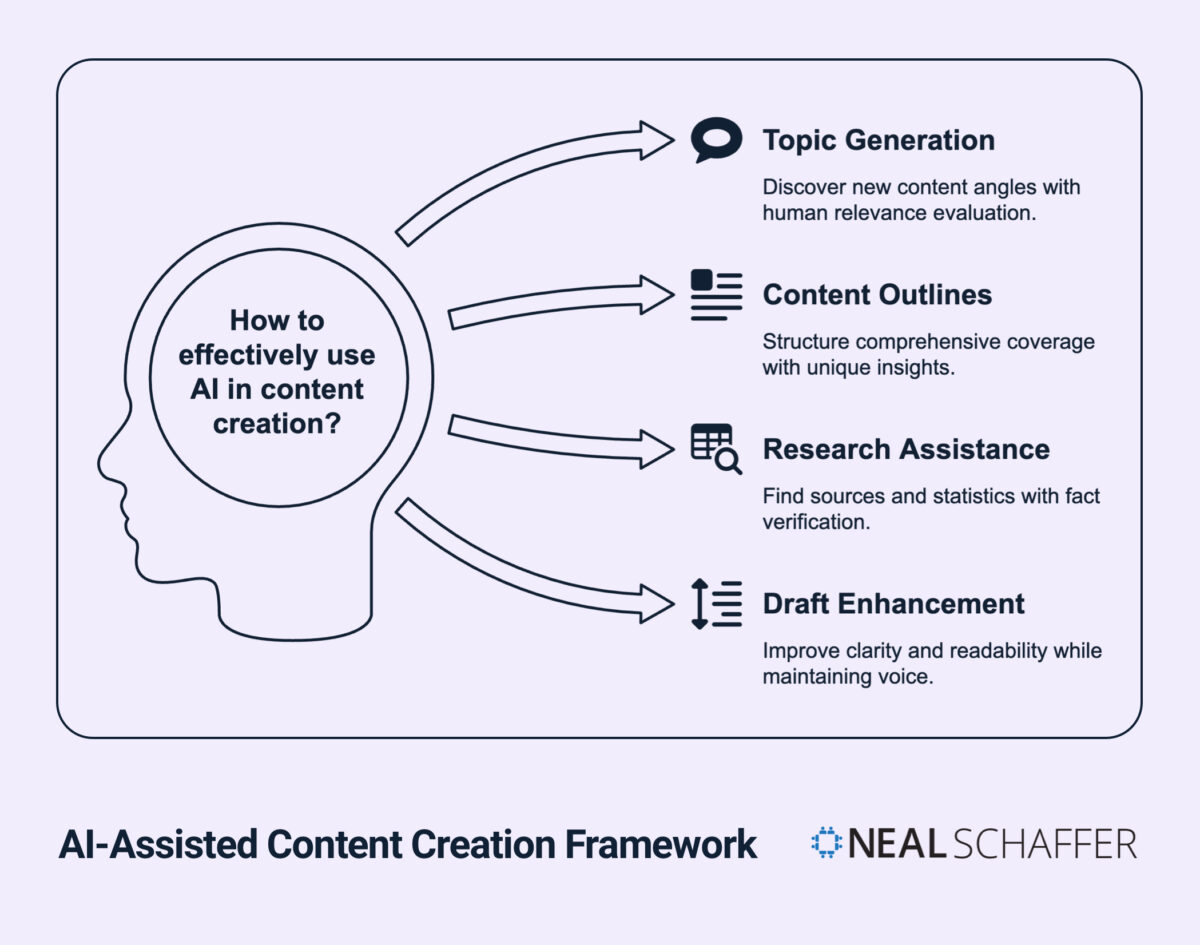
| AI Content Application | Best Used For | Human Input Still Needed |
|---|---|---|
| Topic Generation | Discovering new content angles | Relevance evaluation, strategic selection |
| Content Outlines | Structuring comprehensive coverage | Adding unique insights, experience-based knowledge |
| Research Assistance | Finding relevant sources and statistics | Fact verification, context interpretation |
| Draft Enhancement | Improving clarity and readability | Maintaining authentic voice, ensuring accuracy |
This table outlines how AI tools can support different aspects of your content creation process while highlighting where human expertise remains essential.
16. Use AI for Content Ideation and Outlines
AI can help overcome the initial blank page hurdle by suggesting topics and creating structured outlines. About 65% of content marketers now use AI for various content tasks, with ideation being a primary application.
The key benefit is generating numerous possibilities quickly, which you can then refine based on your audience knowledge and business objectives.
Implementation tip: Use AI tools to generate 20-30 potential topic ideas, then filter them through strategic criteria: audience relevance, business goals alignment, competitive opportunity, and your unique expertise.
17. Employ AI for Research Assistance
Gathering information is often the most time-consuming part of content creation. AI tools can accelerate research by finding relevant statistics, summarizing longer sources, and identifying key points from multiple references.
This approach allows you to focus your time on adding original insights rather than basic information gathering.
Implementation tip: Use AI to create a research brief on your topic, then verify the information, add your original perspective, and incorporate your firsthand experience to create truly valuable content.
18. Leverage AI for Content Optimization
Once you have a draft, AI tools can help refine it for better performance. Applications include readability improvements, SEO suggestions, headline testing, and identifying content gaps.
This application works well because it enhances human-created content rather than replacing the creative process entirely.
Implementation tip: After creating your content draft, use AI tools to identify improvement opportunities, but maintain editorial control over final decisions to preserve your authentic voice and expertise.
Audience-Focused Content
Creating content that addresses specific audience needs is the surest path to engagement. These approaches focus directly on what your audience is actively seeking or struggling with.
19. Develop Question-Based Content Addressing Common Pain Points
Questions reveal exactly what information your audience seeks. Since 73% of online readers skim rather than read word-for-word, question-based formats help them quickly find relevant information.
This approach works because it mirrors how people actually search for information online—by asking specific questions they need answered.
Implementation tip: Use tools like AnswerThePublic or review Q&A sites like Quora to identify the most common questions in your niche. Then create content specifically structured to answer these questions clearly and comprehensively.
20. Create Timely Content Around Industry News and Trends
Timely content demonstrates your brand’s relevance and industry awareness. Content tied to current trends and news generates 94% more views than evergreen content alone.
This approach positions you as a current and reliable information source while capitalizing on topics already generating interest.
Implementation tip: Set up a system to monitor industry news sources, influencer conversations, and trending topics. When relevant trends emerge, quickly create content that adds your unique perspective or practical application advice.
21. Explore Audio and Podcast Content Formats
Audio content reaches audiences in situations where reading isn’t possible—during commutes, workouts, or household tasks. About 45% of content creators see improved audience engagement after adding audio formats to their strategy.
This approach extends your content’s reach to different contexts and learning preferences without requiring entirely new topic development.
Implementation tip: Start by creating audio versions of your most popular blog posts. This lets you test the format with minimal additional creative effort while potentially reaching new audience segments.
Niche-Specific Content Strategies
While the 21 ideas above apply broadly across industries, different niches may benefit from specialized approaches. Food blogs, for example, earn a median income of $9,169 per month by focusing on highly visual recipe content with personal storytelling elements.
| Industry Niche | Highest-Performing Content Types | Unique Considerations |
|---|---|---|
| B2B Technology | White papers, solution comparisons, ROI calculators | Technical accuracy, decision-maker focus |
| Healthcare | Patient education, treatment explanations, provider credentials | Compliance requirements, accessibility needs |
| E-commerce | Product guides, gift lists, visual showcases | Purchase-intent alignment, seasonality |
| Financial Services | Educational content, calculators, decision frameworks | Regulatory requirements, trust-building focus |
This table outlines how content strategies may need adjustment based on your specific industry vertical. Consider these variations when implementing the core ideas from this article.
Choosing the Right Content Mix for Your Audience
With 21 different content approaches to consider, the key question becomes: which ones are right for your specific situation? The answer depends on several factors unique to your business and audience.
| Content Type | Best For | Resource Requirements | Performance Metrics |
|---|---|---|---|
| How-To Guides | Practical, solution-seeking audiences | Medium (expertise + clear instruction) | Traffic, time on page, return visits |
| Data-Driven Content | B2B, decision-makers, analysts | High (research capability) | Backlinks, shares, credibility |
| Visual Content | Complex topics, busy audiences | Medium-High (design skills) | Engagement, shares, comprehension |
| Collaborative Content | Network expansion, credibility building | Medium (relationship management) | New audience reach, partnerships |
This table can help you align content types with your specific business goals and available resources.
For optimal results, consider these factors when selecting content approaches:
- Audience preferences: Different industries and demographics respond better to certain content types
- Available resources: Some approaches require specialized skills or tools
- Content goals: Whether building authority, generating leads, or increasing engagement
- Content gaps: Areas where competitors are underserving your shared audience
- Performance data: Which content types have historically performed best for your brand
The most effective strategy typically involves a balanced mix of different content types, allowing you to serve various audience segments and achieve multiple business objectives simultaneously.
Implementing Your Content Strategy
Having a list of ideas is just the starting point. The real value comes from strategic implementation that aligns with your overall marketing objectives.
Effective content marketing directly contributes to sales growth when properly aligned with your business goals and customer journey.
Here’s a practical framework for putting these ideas into action:
- Audit your existing content to identify gaps and opportunities
- Map content ideas to specific business goals (awareness, lead generation, conversion)
- Prioritize ideas based on impact vs. effort analysis
- Create a balanced quarterly content calendar with different content types
- Establish clear success metrics for each content piece
Remember that consistency matters more than perfection. A steady stream of good content outperforms occasional perfect pieces in building audience relationships.
Measuring Content Performance
Creating content without measuring its performance is like navigating without a compass. Strategic measurement helps you understand which approaches resonate with your audience and deserve further investment.
Focus on metrics that align with your specific business goals:
- Awareness metrics: Traffic, social shares, new visitors
- Engagement metrics: Time on page, scroll depth, comments
- Lead generation metrics: Conversions, form completions, downloads
- SEO metrics: Rankings, backlinks, organic traffic
- Revenue impact: Attributed conversions, influenced pipeline, customer retention
The most successful content strategies evolve based on performance data. Set aside time monthly to review what’s working and adjust your approach accordingly.
Over 72% of successful content marketers regularly measure content performance, making this a critical differentiator between high-performing and average content programs.
Frequently Asked Questions
Identify and understand your target audience first. Research their interests, values, and challenges, focusing on psychographics as much as demographics, so every idea speaks to what your audience actually cares about and wants to return for.
Updating high-performing legacy content is 2.8 times more effective than creating new content from scratch, because you build on posts that already have proven appeal, established search rankings, and existing backlinks. Refresh the statistics, add new insights, and expand the key sections.
Yes. Blogs that feature original research see 41% better results than those without it. Even a focused survey of around 100 relevant professionals can yield insights no one else has, giving you the ultimate content differentiator.
For marketing-focused blogs, the sweet spot for word count typically falls between 2,500 and 3,000 words to achieve optimal search visibility and audience engagement.
No. AI works best for ideation, outlines, research assistance, and draft optimization, but human input is still needed for relevance evaluation, fact verification, original insight, and maintaining an authentic voice.

Conclusion
Creative dry spells happen to everyone, but they don’t have to derail your content marketing momentum. The 21 ideas presented here provide a versatile toolkit for maintaining consistent, high-quality content even when original inspiration runs low.
Remember that content creation isn’t about constant innovation—it’s about consistently delivering value to your audience. Often, the most effective approach is applying proven formats to your unique expertise and audience needs.
I encourage you to bookmark this resource and return to it whenever you feel stuck. Start by implementing just one or two new approaches that align with your current goals and resources. Then gradually expand your content repertoire as you build confidence and capabilities.
If you’re looking for more guidance on developing effective content, how can you write blog posts that truly engage your target audience while driving meaningful business results? My blog offers numerous resources to help you elevate your content marketing approach.