
Instagram is at the top of the social media food chain, and every IG ninja knows that hashtags are the real deal.
Hashtags can make or break your exposure on Instagram; they are that powerful. If you want to stop being invisible on Instagram, you must learn how to use Instagram hashtags properly – and to be honest, it’s not that hard.
All you need to do is learn the basics, add a little bit of creativity, and voila! You will start seeing the growth you crave.
Unfortunately, many don’t know how to leverage hashtags for better exposure– they just sprinkle random or popular hashtags at posts and pray it triggers engagements. But sadly, it doesn’t work like that.
Every Tom, Dick, and Harry would have millions of likes and comments on every post if it did.
This naivety is why new brands find it challenging to establish a presence on Instagram and struggle to stay afloat in the pool of competition.
Many questions surround the use of hashtags on Instagram, but don’t worry; this article will answer those questions.
Key Takeaways
✅ Instagram caps hashtags at five per post. The platform announced the change in December 2025, replacing the old thirty-tag allowance on captions for posts and Reels, and said that fewer targeted hashtags work better than long lists of generic ones. Any advice built around ten, fifteen, or thirty tags is out of date.
✅ Hashtags classify your content, they do not expand its reach. That is the reasoning behind the cap, and Instagram head Adam Mosseri has said as much in a run of public statements: tags are a good way to tell people what a post is about and they help with search, but on their own they do not improve distribution.
✅ Nobody can follow your hashtags any more. Instagram removed hashtag following at the end of 2024, so a tag no longer delivers your post to a subscribed audience. It only helps the people who go looking for that tag themselves.
✅ Five slots means every tag has to earn its place. One branded tag, two or three niche community tags a real person would actually search, and a tag that names the topic will do more for you than five broad ones that everyone else is already using.
✅ The caption is doing the work the tags used to claim credit for. Say what the post is about in plain words at the top of the caption. Strong Instagram captions and a working grasp of the Instagram algorithm are worth more than any five tags you could pick.
Why are hashtags so important anyway? Aren’t they just words?
A hashtag is a word or phrase with the # sign in front of it, and its job is to label what a post is about. That label still does real work, but it is not the reach engine it was treated as for most of the last decade.
Here are the three things hashtags still do for an Instagram account, along with the one thing they no longer do.
They make your post findable in search
When someone taps a hashtag or types one into Instagram search, they see posts carrying that tag. That is the discovery route hashtags still own, and it is a narrower one than the old advice suggested.
Say a clothing brand tags a post #slowfashionbrand. Anyone searching that term can find the post, and the tag also tells Instagram what the post covers, which is the job Instagram itself says tags actually do.
What changed is the size of the promise. A tag no longer drops your post into the feed of everyone subscribed to it, because hashtag following is gone. It puts your post in front of people who go looking, which is a smaller and far better qualified group.
Pick your tags on that basis. A term someone would realistically type into the search bar beats a term with an enormous post count that your content has no chance of surfacing in.
They bring in people who came looking
Someone who finds you by searching a tag arrived on purpose. That tends to be a warmer visitor than a passive scroller, and the comments, saves and follows that come out of tag searches usually reflect it.
Branded tags are the clearest case. Create one, ask customers and partners to use it, and it becomes a running collection of posts you can reshare and a simple way to find everyone talking about you. It also gives you something to build a campaign around, which is why a branded tag and an Instagram giveaway work so well together.
Hashtags may help you discover the latest industry trends
Hashtag search is a research tool even when you never add a single tag yourself. Tap a term in your niche and you can see what people are making, which formats keep showing up, and where the conversation has moved since you last looked.
Open Instagram search, type the term, and switch to the Tags result. Scroll the top posts, then open a few accounts that keep appearing and look at which tags they are using now. Searching by picture rather than by word covers the other half of that research, and this guide to Instagram image search walks through the routes that work when you have an image and no caption to go on.
That research is where your five tags should come from. Reading a tag before you use it is also how you avoid picking up a term that has drifted into a meaning you did not intend.
How Do I Utilize Hashtags to Promote my Content?
Now that you understand the prowess of hashtags, the next line of action is to apply them. But before that, there’s a lot to learn- including knowing where to use your hashtags.
Places where you can use hashtags on Instagram
Instagram Feeds
This is your main profile page, and everything you post here stays there for good unless you delete it. Since Instagram’s five-tag cap took effect, you can use up to five hashtags in the caption of a feed post, down from the thirty the platform allowed for years.
Turn LinkedIn Into a Real Growth Channel
My latest book helps professionals, entrepreneurs, and business owners turn LinkedIn from a static profile into a real source of clients and growth.
Maximizing LinkedIn for Business Growth gives you clear, practical steps to build a profile that gets noticed and a network that actually sends business your way.
Grab your copy on Amazon and put it to work this week. Click the cover or the button below to get started.

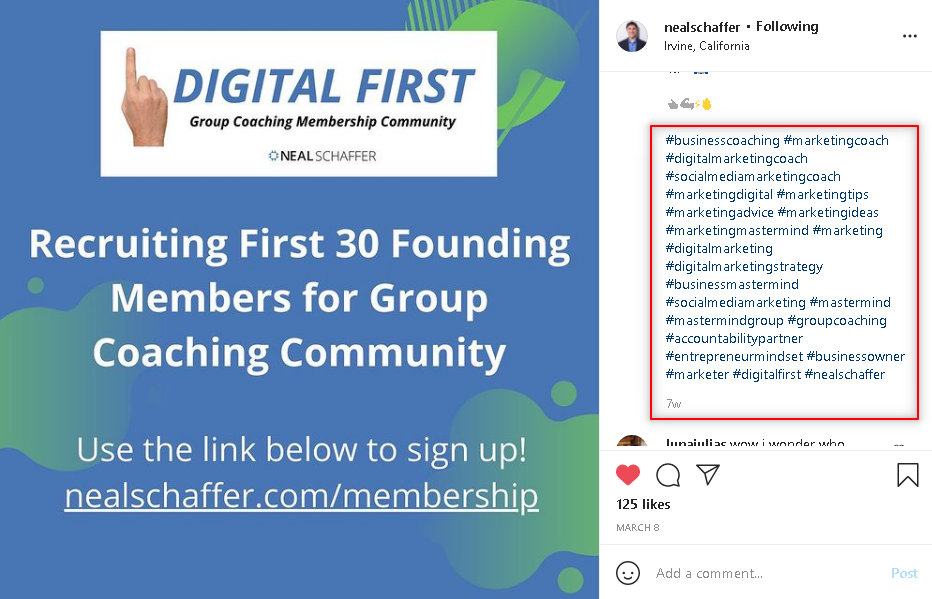
Five tags is not many, so each one has a job to do. Do the research, pick the ones that describe this specific post rather than your account in general, and skip the broad tags that everyone else in your niche is already using.
Instagram Stories
Instagram Stories is a feature that allows users to post content that vanishes after 24 hours. These posts will be visible to your followers and some people you follow, but to boost your chances of exposure, you can add hashtags to the mix.
Add them as a hashtag sticker, or type them into a text box and shrink the text down so it sits out of the way. Keep the number small and keep them accurate to what is on screen, because a story hashtag labels your content for anyone browsing that tag rather than pushing the story out to a wide new audience.
Reels
Reels are where video lives on Instagram now. The platform shut down the standalone IGTV app in 2022, folded its video formats into the main app, and said at the time that it would keep investing in Reels instead.
Creators use Reels for the same jobs IGTV once handled: tutorials, behind-the-scenes footage, event coverage, and episodic content tied to a brand. If video is a real part of your plan, this guide to Instagram Reels covers the format in full.
The hashtag rules on a Reel are the same as on a feed post. The caption takes up to five, so pick tags that describe the video itself instead of padding the caption with every term in your niche.
How Do I Find the Best Hashtags in my Niche?
It would be out of place and quite unprofessional to use an energy drink hashtag in a clothing brand post. Avoid doing this at all costs. There are way better hashtags to use. All you need to do is find them.
Check out posts from other brands in your industry.
One of the best ways to discover traffic-generating hashtags is to take a look at the posts of your competitors and superiors in the industry.
Some may see this as lazy and unethical, but please – it’s not like they invented all those hashtags.
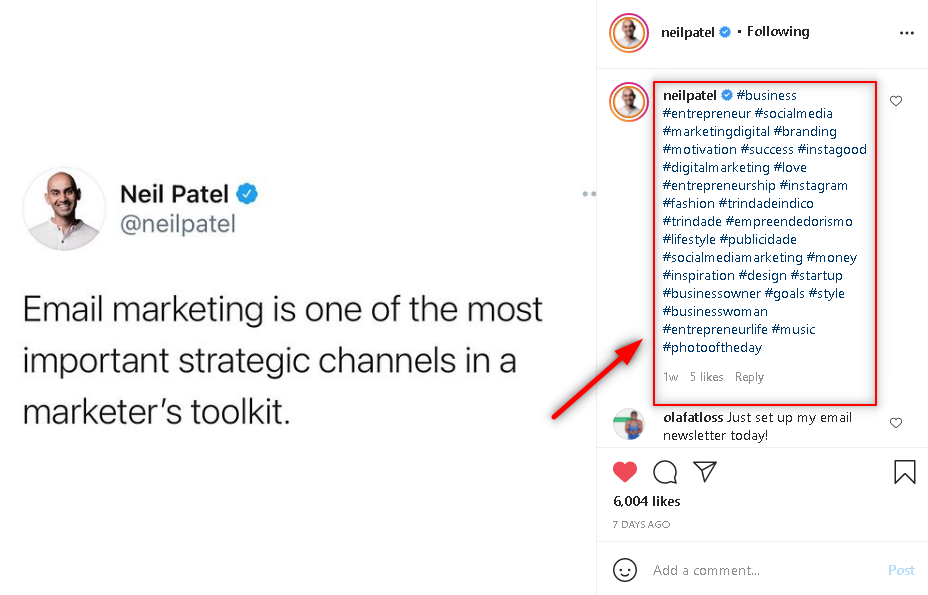
It is perfectly fine for you to take a cover from their books – in this case, hashtags from their posts – and use it in yours.
If those hashtags generate engagements for your competitors and superiors, you can expect that they will have the same effect on your posts.
Research the hashtags industry influencers are using.
Like Elon Musk to Cryptocurrency, Coles Sprouse to fashion, and Soccerbible to football, every industry has influencers or leading figures that drive discussions and create trends.
They often create or use hashtags that everyone interested in that niche responds to, and this is why you must find out what hashtags these top Instagram influencers are currently using.
You can do this by searching for a generic word like football in the search tab – you will find a boatload of posts using that particular word as hashtags.
Scroll through and locate the prominent accounts, then check the other hashtags they use. And just like that, you can find the hashtags that will push your content to possible stardom.
Pro tip: Ensure that the hashtags from these sources don’t have multiple interpretations that may confuse your target audience.
Brainstorm
Never underestimate the power of brainstorming, especially when it comes to stuff relating to your niche.
You’re the expert, and your journey in the industry must have exposed you to some knowledge. Use this knowledge to generate simple but effective hashtags that will drive engagements.
Pro tip: Search Instagram and other social media platforms to check if your hashtags have been used before.
If they haven’t been used, that means they are new, and you may have to modify them – especially if your brand is just rising in the ranks. Only established brands have a higher chance of success when it comes to inventing new hashtags.
Lastly, you can take advantage of Instagram hashtag generators like Hashtagsforlikes, Kicksta, and Ingramer.
8 Ways to Use your Instagram Hashtags for More Exposure
Learning how to use Instagram hashtags for more exposure is vital to your Instagram growth; these tips should help.
1. Complement your Insta Stories with hashtags
Stories are worth tagging, as long as the expectation is set correctly. A story hashtag will not push your content out to a wide new audience, and the sticker itself eats space on a screen that people move through fast.
What it does do is label the story for anyone browsing that tag, and it gives location and event tags somewhere useful to sit. A local business posting from its own neighborhood, or a brand posting from a trade show, has a real reason to tag it.
Add one or two, position the sticker so it does not cover the part of the frame that matters, and skip it altogether when the story is a quick internal update rather than something you want strangers to find.
2. Encourage your followers to use your hashtags
Sometimes, all it takes to get people to do something is to tell them. You can apply this logic by explicitly asking your followers and prospective audience to use a hashtag or a set of hashtags in their posts.
Think of it as a friendly call to action. You can throw in little incentives like mercs or shout-outs on our page. And you definitely should use power words to entice them further.
This will encourage existing followers to use your hashtags a lot more, thereby driving exposure for your content.
3. Stay away from Banned Hashtags.
Hashtags are incredible and all, but some of them are bad news. Hashtags get banned after multiple reports of bot spamming, abuse, association with inappropriate content, and basically anything that goes against the Instagram rules.
Posts with such hashtags become invisible to the Instagram community – they are hidden from the mainstream Instagram Feeds – and no one wants that because it would look like your post doesn’t even exist.
Plus, using too many banned hashtags concurrently may cause Instagram to flag or shadowban your account. In some cases, you may permanently lose the account. There’s no official list of banned hashtags, but know that there are probably thousands of them.
Banned hashtags are why you must research your hashtags properly before using them in your posts. To check if a hashtag has been flagged, head to the Explore tab, type in the hashtag in context and click on search.
If it is a banned hashtag, you will see this message above the posts, “Recent posts for this hashtag are hidden because some posts may not follow Instagram’s Community Guidelines.”
If you’ve noticed a dip in your engagements, you might be using at least one banned hashtag repeatedly. Edit such posts, find the banned hashtag and delete it.
4. Include hashtags in your first comment
Posting your hashtags in the first comment rather than the caption keeps the caption clean and readable. Treat it as a formatting preference, though, because placement is not a reach lever.
It allows readers to focus on your post and caption instead of a horde of hashtags.
5. Leverage Trending Hashtags
Hashtags and trends are like bread and jam – they combine perfectly to give a satisfying outcome. Sometimes, hashtags may act as trends.
Almost every activity or movement on social media today comes with a hashtag – think of them as channels to exposure, especially when they start to garner attention on the internet space.
Leveraging trending hashtags is not a cakewalk, but it isn’t exactly rocket science – all you have to do is find the trending hashtags on the pages of leading figures in your niche and use them in your posts – that’s all.
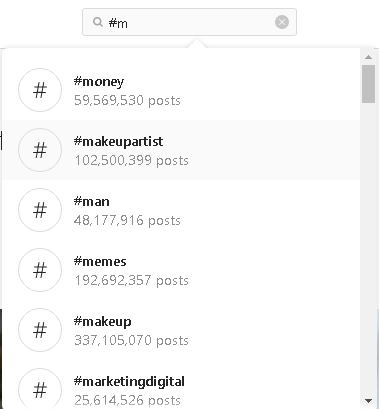
A trending hashtag is your ride to exposure – one you cannot afford to miss. But just like a boat won’t take you to space, not every trending hashtag will take you to exposure.
You must choose hashtags that represent your niche, brand, or goals, or else your content will end up on the screens of audiences that can’t relate to it.
6. Avoid Using Repetitive Hashtags
Laziness gets even the best of us, and you may find yourself using the same old hashtags on every post. In simple terms, this is wrong – at least according to Instagram’s community guidelines.
The rules clearly state that posting repetitive content or comments, which may include hashtags, is wrong.
And you must do well to avoid being culpable. If you do this, the algorithm may flag your account as a spam station and therefore restrict the publicity of your content.
Repetition is a typical Instagram hashtag mistake, but now you know better. Always try to use new and relevant hashtags on all your posts – it makes your content unique and in sync.
7. Hashtags should always match your Instagram Posts
This point is a close cousin to the last one – and you will do well to stick to both. There’s hardly any one-size-fits-all when it comes to hashtags. So, always create unique and specific hashtags for your posts.
Repeating the same hashtags will not only alert the algorithm of possible spamming activity, but sometimes, such hashtags do not relate to the post in any way.
Imagine posting French fries but using hashtags like #burgerislife #pretzelsarethebomb, and #pizzalover – there’s absolutely no correlation.
Yes, your content may pop up in the timeline of IG users searching for content on those hashtags, but when they do find your posts, they may be disappointed and most likely will not engage it.
When it comes to hashtags, it is never about exposure to a lot of people. It is about exposure to the right audience, and using relevant hashtags on your posts makes sure of that.
Another thing worth doing is creating posts that awe readers, then add powerful hashtags to them. This way, you can have viral content. Because according to a stat, content that awe readers have a 34% chance of going viral. Adding hashtags to this type of content will increase the likelihood of making them viral.
8. Create Hashtags for your Business
Have you thought about branding your business with a custom hashtag? If you haven’t, then you definitely should.
Yes, it might be challenging to get a large audience to notice it first, but in combination with other generic hashtags, your audience will start to see a correlation. And before you know it, your custom hashtag is a symbol of your business.
Your brand hashtag should be catchy, relatively short, and must also relate to your business.
You can always add a little bit of humor, sarcasm, or fun elements that social media users love to feed on. Before you know it, everyone will be wondering, “Who came up with this hashtag?”
Frequently Asked Questions About Instagram Hashtags
Five, in the caption of a post or a Reel. That limit replaced the thirty-tag allowance in December 2025 and rolled out gradually across accounts, so older guidance recommending ten to fifteen hashtags per post no longer applies.
Not on their own. A tag tells the platform and the reader what your post covers, which helps when someone searches for it, but distribution now rides far more on the content itself than on the tag list underneath it. Five well-chosen tags will serve you better than a wall of generic ones.
Instagram’s announcement of the five-tag limit names the caption on posts and Reels. Putting tags in the first comment still buys you a cleaner caption, so treat the placement as a readability decision rather than a reach tactic.
The five-tag announcement addresses captions on posts and Reels. Stories still take hashtag stickers, and the same discipline applies: a small number that describe what is actually on screen, used alongside everything else in your Instagram Stories routine.
Yes, though the job has changed. A branded tag is now less a discovery tool and more a way to collect user-generated content, track a campaign, and give customers a simple way to tag you. The same shift has played out on other platforms, which is why X (Twitter) hashtags now function as a search tool rather than a reach lever.
Conclusion
Instagram is an online jungle and knowing how to use Instagram hashtags makes you an apex predator.
Deploying the ideal hashtags will keep your content and page visible to millions of followers and prospective customers – all you have to do is understand the basics and avoid making mistakes that may affect your account.
Using Instagram hashtags the right way could lead to more Instagram likes, comments, followers, and improve the overall engagements. It is a way of optimizing your Instagram marketing similar to choosing the best time to post on Instagram for maximum engagement but much more powerful as you can see from this article.
Author Bio
This guest post was written by Olusola David. Olusola is the founder and CEO of Torchbankz.com, an eCommerce entrepreneur and blogger with keen interest in eCommerce. After starting his online business journey with Dropshipping, he now shares his trial and error experience of many years with new aspiring entrepreneurs. He writes about eCommerce, from starting a Shopify dropshipping store to building a sales funnel for your business.