
Digital is a must for any company that wants to develop its reputation and brand image in China. The integration of digital technology in the Chinese population gives brands new platforms for promotion. Digital platforms have become an integral part of the lives of individuals. WeChat, the largest social network in China, reported 1.44 billion combined Weixin and WeChat monthly active users as of June 2026, according to Tencent’s second quarter results.
That is an audience no brand entering China can ignore, and a WeChat marketing case study is the quickest way to see how other companies have reached it. The five campaigns below all ran before this post was first published in 2017, so read the follower counts and view averages as a snapshot of that moment and the tactics as the part that carried forward.
In this article, we’ll introduce brands that have successfully implemented their digital communication strategy on the platform through the format of a WeChat marketing case study.
Key Takeaways
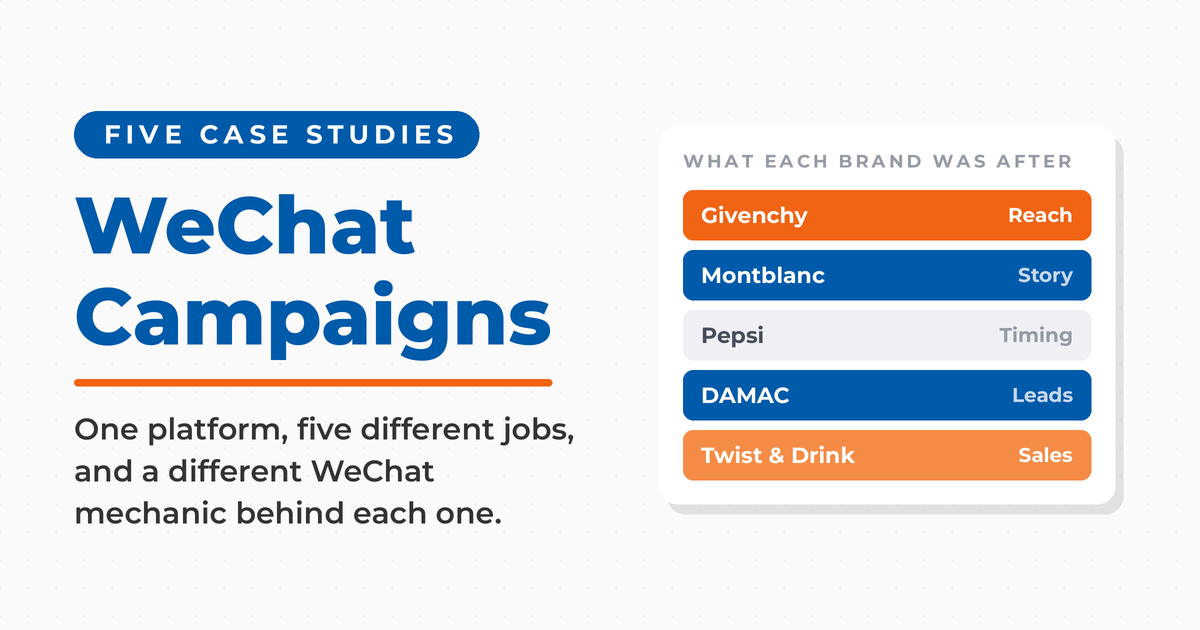
✅ A single KOL post can clear inventory faster than a paid campaign. Givenchy’s limited edition sold out in 12 minutes after Mr. Bags posted about it, and his WeChat audience sat at 1.2 million followers.
✅ Storytelling and interaction work better together than apart. Montblanc split its campaign in two, telling the brand’s history through Hugh Jackman and then letting users customise a pen and share the result with their own WeChat contacts.
✅ Timing a campaign to a Chinese holiday does real work. Givenchy launched days before Valentine’s Day and Pepsi built its game around Chinese New Year, both reaching people who were already thinking about gifts.
✅ H5 pages are the lead generation workhorse on WeChat. DAMAC Properties paired a welcome page with styled H5 pages and grew to 3,000 followers in six months.
✅ A WeChat Store turns a brand account into a sales channel. Twist & Drink built a cast of bottle mascots aimed at Chinese mothers, ran a game around them, then sold directly in the app, with the campaign reaching 250,000 people.
WeChat is an integrated ecosystem
The WeChat application was created in 2011 by Tencent. It’s a free instant messenger mobile application with multiple functions. This social network is completely integrated into the Chinese daily life. To see how it compares with Zhihu, Douyin, Toutiao and Xiaohongshu, start with this rundown of the five Chinese platforms brands build campaigns around.
Nicknamed “The WeChat Times”, it’s often used as a search and source of information. Employers use it as well, posting openings to Moments and public accounts, which this guide to hiring in China with WeChat walks through.
WeChat is more than just an application, it’s an entire ecosystem with significant growth and sales potential for any company wishing to expand its business in China. It is also not the only app competing for those users. A set of smaller, community-based networks has grown up alongside it, and this roundup of WeChat alternatives among the social media apps used in China shows which audience each one holds.
5 successful marketing campaigns on the Chinese super app, Wechat
The Givenchy partnership With Mr. Bag
Givenchy has partnered with one of the most influential influencers (Key Opinion Leader (KOL) in China to promote a limited edition handbag. Tao Liang, known on the web as Mr. Bags, who has a Wechat audience of 1.2 million followers. This is a perfect way for brands to get a relevant, fashion-oriented community.
A post was published on Tao Liang’s WeChat account referring to the partnership with Givenchy promoting the 80 limited edition handbags which sold for 15,000 RMB per bag.
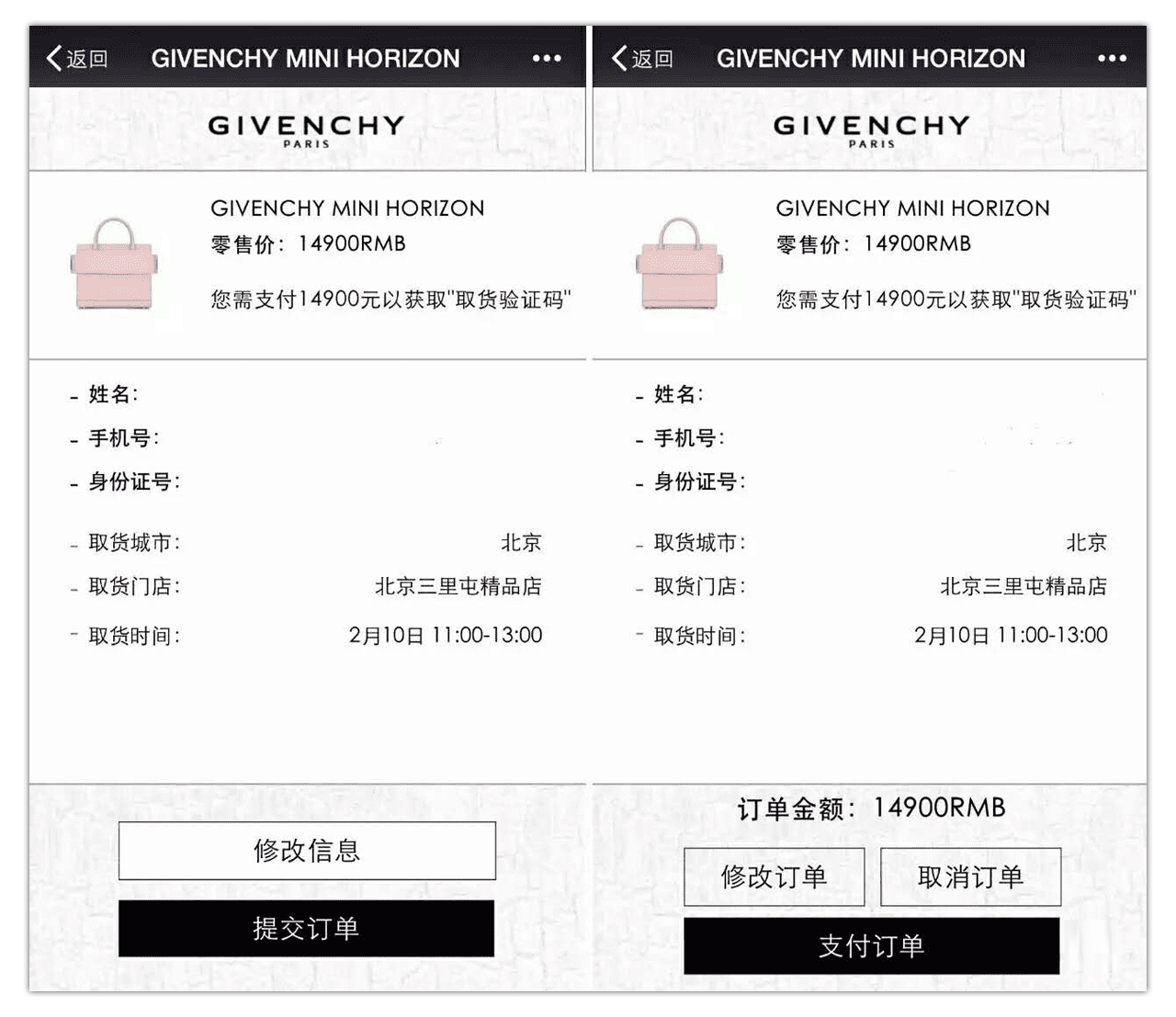
Givenchy took advantage of the digital environment to offer its consumers an offer in alignment with their luxury purchasing habits. They made a limited edition bag that gives an image of prestige and exclusivity. Using WeChat to promote the brand is a suitable strategy in view of the digital tendency of China.
They decided to launch the bag campaign a few days before Valentine’s Day. The Chinese are known for giving gifts at significant events. Now the choice for the launch date is even more profound.
This was very successful for the brand. In just 12 minutes they sold out their entire collection. This positive buzz helped strengthen the brand and increase its image. The same approach shows up well outside China, and these influencer marketing case studies cover brands running creator partnerships on Western platforms.
Montblanc: Storytelling
The brand used WeChat to promote its style collection. Montblanc had already used the platform to promote its Moon phase which was very successful.
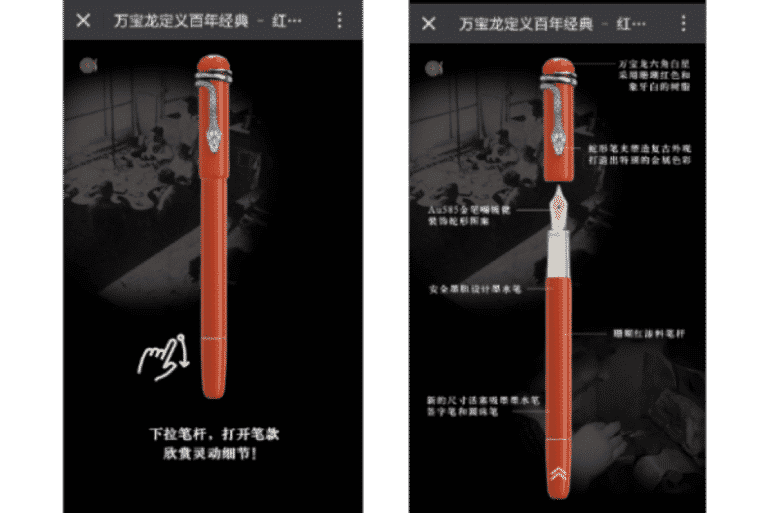
This marketing campaign was divided into 2 parts:
The first part was to tell people about the history of the brand. This is often used in luxury industries. For his campaign, Montblanc used a famous personality, Hugh Jackman to tell the story of the brand.
On Wechat, users could see a letter written in Chinese saying, “Art cannot change the world, but it can change the way people think – and people can change the world.”
The second part of the campaign focused on the ability to engage the consumer in the brand experience. The user could customize his Montblanc pen by choosing the color. Then share their creation on WeChat.
Pepsi: H5 game
The used the Chinese New Year for its promotion.
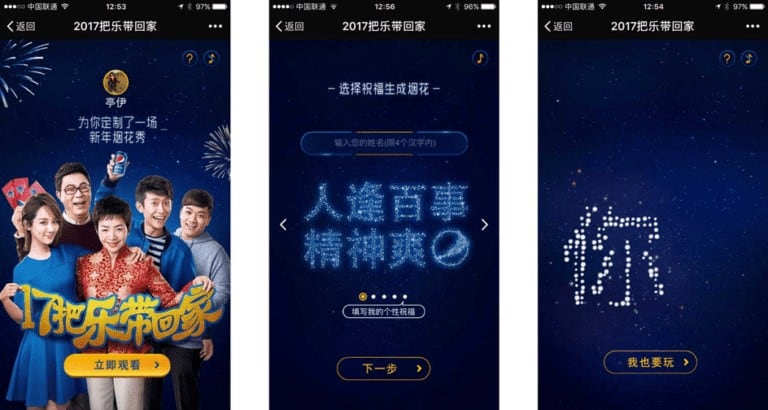
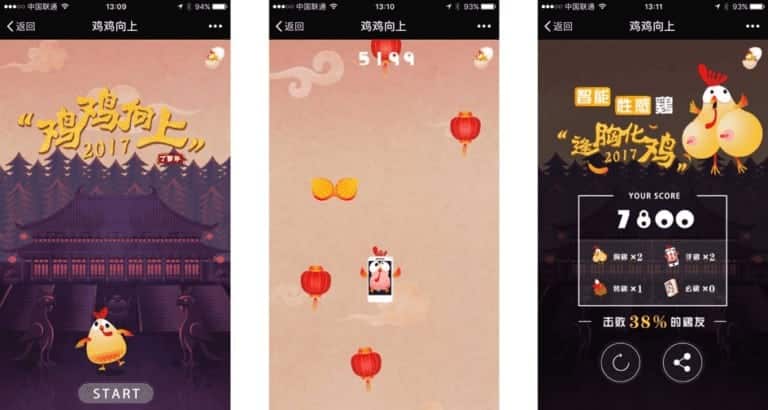
A page and H5 game allowed the users to send fireworks to wish a Happy New Year or play a game symbolized by a rooster, the Chinese sign associated with 2017.
The creativity and simplicity of the campaign allowed users to share with their loved ones during the event. A mini game was the perfect thing because the Chinese are big consumers of video games, especially on mobile.
Damac Properties: Lead generation
Damac Properties, is a real estate development company located in the Middle East and Dubai. The agencyprovides its clients with unique living concepts as well as dream homes.
This campaign presented the company. DAMAC had a welcome page on its WeChat account and created stylish H5 pages.
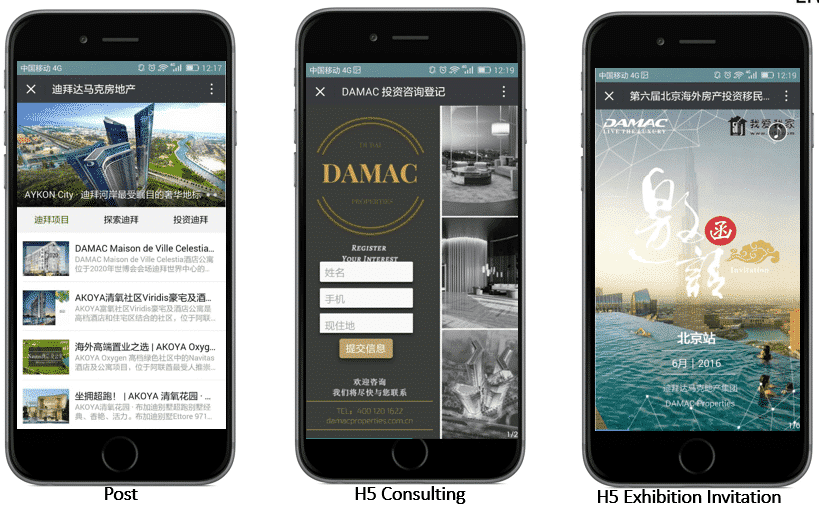
The results for the company are very promising:
- Average views 1200+ and 80+ “I like”
- 3,000 followers within 6 months
- Prospective new customers
- High conversion rate
Twist & Drink: Game
Twist & Drink is a beverage brand for children, created in Austria in 1973. These beverages are made with natural mountain spring water and have a fruity flavor. Their bottles have bright colors and unique design.
Before entering the Chinese market, Twist & Drink had no reputation and reputation is everything for brands in China. The brand strategy was implemented little by little to reach the desired success. Starting from zero recognition is the problem any company faces in a new market, which makes building brand awareness the first job rather than a byproduct of the campaign.
The brand has positioned itself on social networks like WeChat to promote its products. It created a colorful and animated world and referenced its products in Wechat. The bottles became mascots that spoke directly to mothers in China. Each bottle had its own characteristic and personality that let children recognize themselves in one of the mascots. The kids interact directly with the final consumer, their parents.
The brand initially launched a game on WeChat. The game was based on the different characters and users compete to collect the most points in the Twist & Drink Arena.
In the application, the parents can access the online store to buy products directly. A contest was launched, allowing consumers win prizes if they win. More information here.
Twist & Drink, like many brands, have developed a Wechat Store which allows fans to buy directly from the official brands.
E-Commerce strategy: B2C and B2D (business to distributors) should launch a WeChat store.
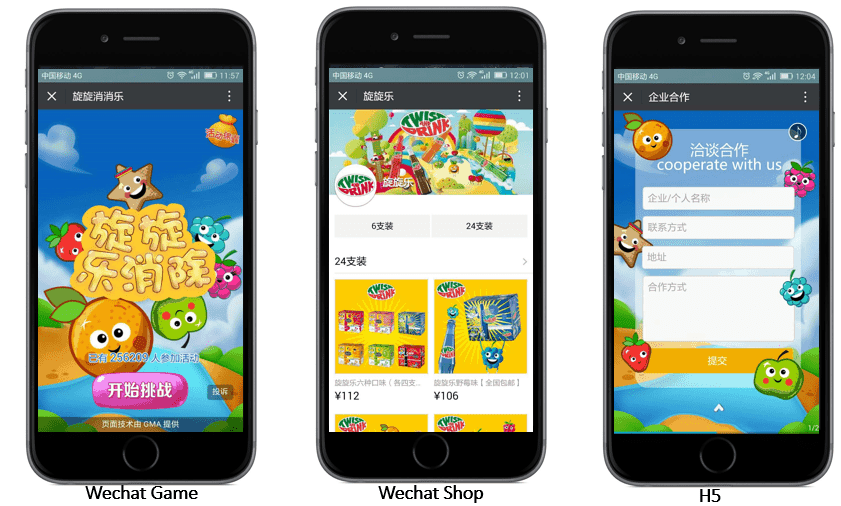
In terms of results:
- Average of 600 views and 40+ “I like”
- + 3600 followers in 6 months of campaign
- Exposure to 250,000 people
Frequently Asked Questions About WeChat Marketing
An H5 page is a mobile web page built to open inside the WeChat app, used for games, welcome screens and campaign landing pages. Pepsi built its Chinese New Year game as an H5 experience, and DAMAC Properties used H5 pages to present the company to prospective buyers.
No. Givenchy’s sell-out came through a single KOL post, but Pepsi, DAMAC Properties and Twist & Drink grew their accounts through games, H5 pages and in-app commerce instead. A KOL partnership brings reach quickly, while the other route builds it over months of campaigning.
A local partner is the safer choice for most foreign brands entering China. Account setup, H5 builds and store approvals all work differently from Western platforms, and someone who already knows those steps removes most of the guesswork.
The tactics hold up better than the numbers. Follower counts and view averages from these campaigns reflect WeChat as it was when they ran. The moves behind them are still the core of WeChat marketing, from KOL partnerships and holiday timing to H5 interaction and selling inside the app.
What These WeChat Marketing Case Studies Teach Foreign Brands
Every campaign above started from the same three things. An official account, a reason for people to open it, and something to do once they arrived. Givenchy had a KOL, Pepsi had a game, DAMAC Properties had H5 pages, and Twist & Drink had a store. Pick the mechanism that matches what you sell, build that one properly, and add the others once the account has an audience worth spending on.
Then get help with the parts that do not translate. China’s digital ecosystem works nothing like the Western one, and a local partner who already understands account setup, H5 development and store approvals will get a brand to launch faster than any amount of reading. For the wider picture of where WeChat sits among the apps Chinese consumers actually use, start with this guide to Chinese social media. For the strategy that sits behind campaigns like these, Neal Schaffer’s free preview of Digital Threads covers how search, email and social work together.