Discover the Influencers Your Business Already Has
Get the first chapter of The Age of Influence free, and learn how to work with influencers of every size.
These days, influencer marketing is more than just a passing fad. Instead, it has become one of the most important aspects of consumer marketing, because people tend to trust a creator they follow more than they trust a brand’s own ads.
Of course, marketing professionals have noticed, and influencer budgets keep growing, as the budget section below shows.
With all of that said, there’s a lot more to an influencer marketing strategy than just asking a bunch of cool people to give you a shoutout. Here’s what it takes to be successful.
✅ Influencer marketing runs on trust. People who follow a creator tend to believe that creator more readily than they believe a brand’s own advertising.
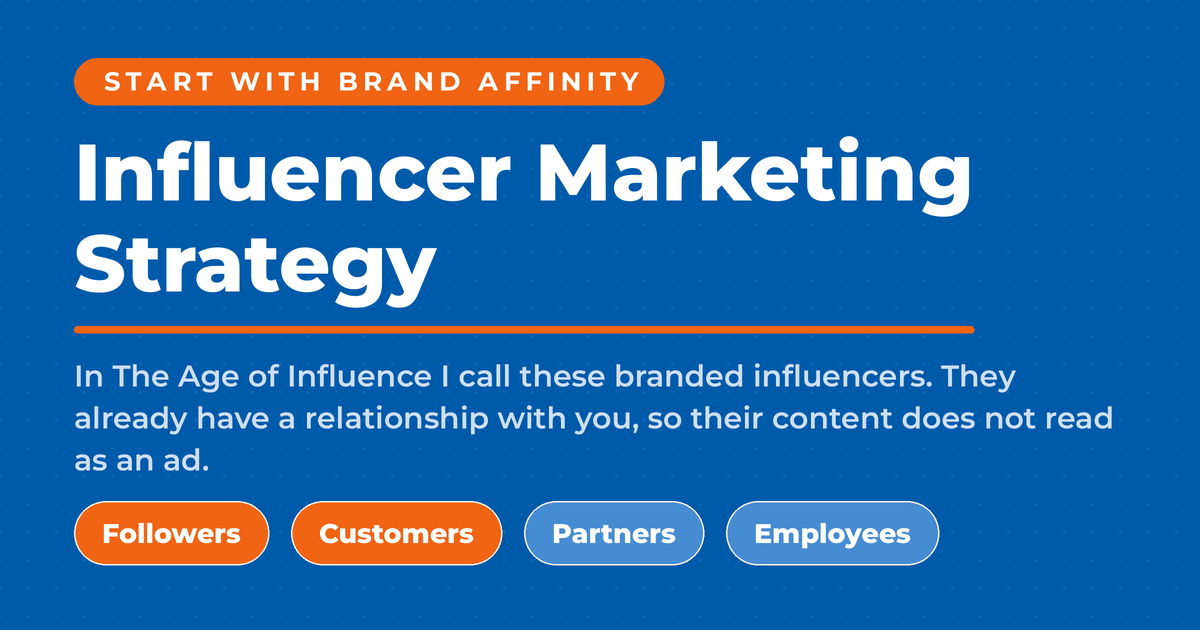
✅ Your best influencers may already know your brand. In The Age of Influence I call these branded influencers, and they fall into four groups: your followers, your customers, your partners, and your employees.
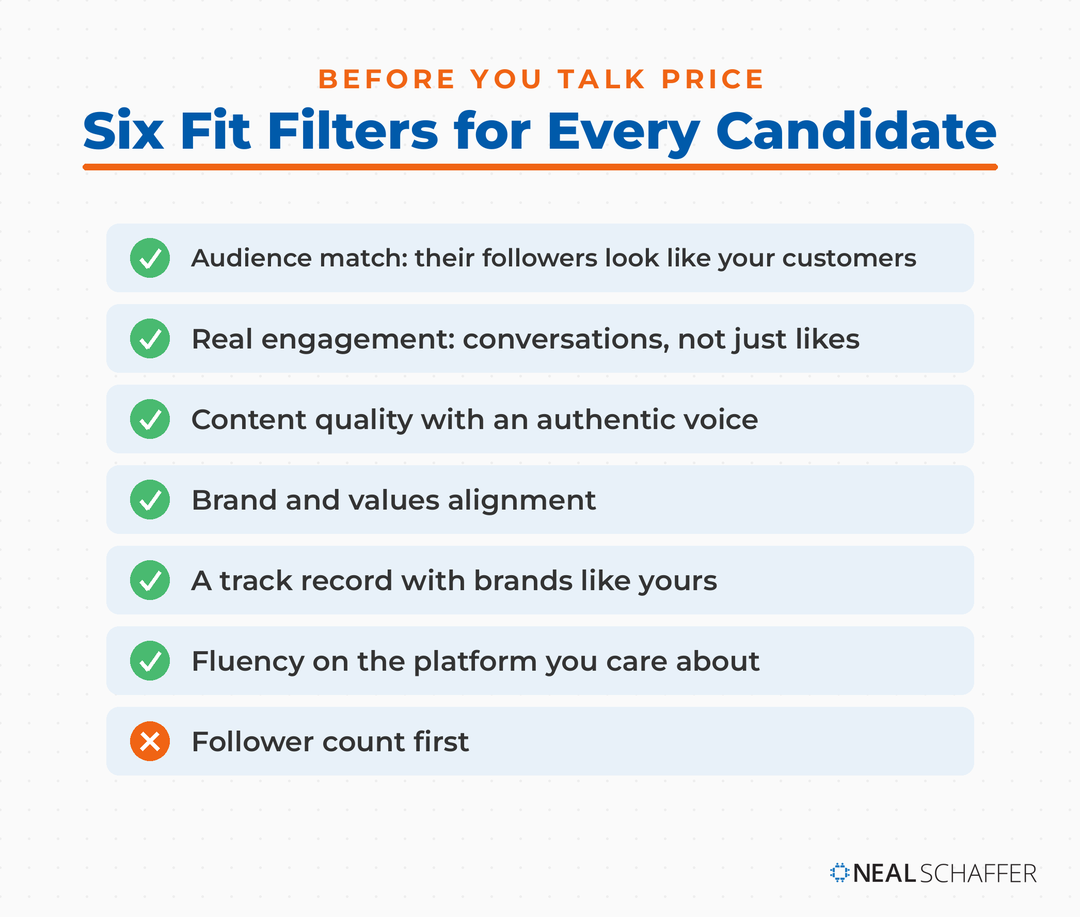
✅ From what I have seen, fit predicts results far better than audience size does. Whether their followers look like your customers, and whether the comments carry real conversation, will tell you more than a follower count ever will.
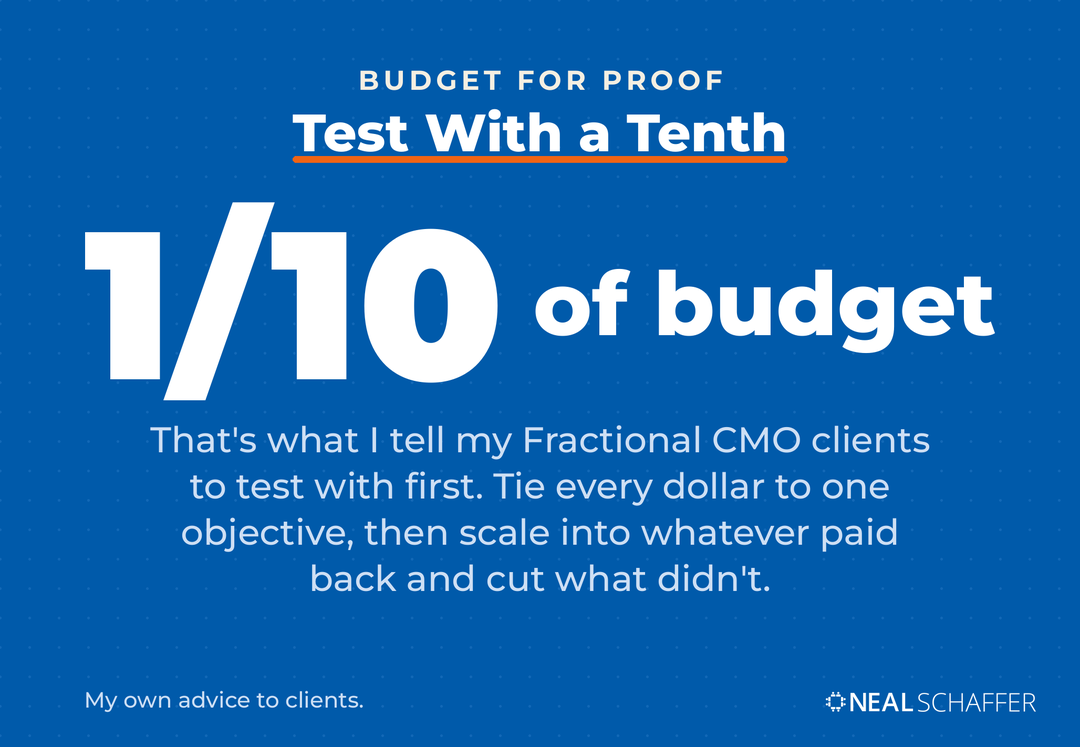
✅ Start small and earn the right to spend more. I tell my Fractional CMO clients to attach every dollar to one objective, test with about a tenth of the marketing budget, then scale into whatever paid back.
✅ Pick one platform and build a real system around it. Creator sourcing, creative testing, and measurement on a single channel will usually beat a thin presence spread across five networks.
✅ Gifting and recognition often do the job of a cash fee. Nano and micro influencers will frequently work for product or a gift card, which is why they are a sensible place to run your first campaign.
For a detailed definition check out my video below:
Simply put, influencer marketing is collaborating with other social media users and content creators for relationships of mutual benefit. For brands, the benefits can be one or more of the goals discussed above. Influencers are usually compensated with cash, free product, or both. You’ll base compensation on your goals, the amount of work involved, number of followers, and social network.
The mindset for successful influencer marketing is fostering a long-term, collaborative, win-win relationship. If you have a great influencer marketing strategy, then you’ll attract quality people to work with you. Likewise, working with many of the same influencers long term allows them to know and represent your brand better. This feeds into better outcomes overall.
Having a quality influencer marketing strategy can boost your company’s sales and overall objectives. For example, an influencer can help by:
Of course, making your targets through influencer marketing requires them to do some work. Influencers help boost your brand in several ways, many of which should also be part of your influencer marketing strategy:
Check out this video for more background on these benefits and an influencer marketing strategy in general:
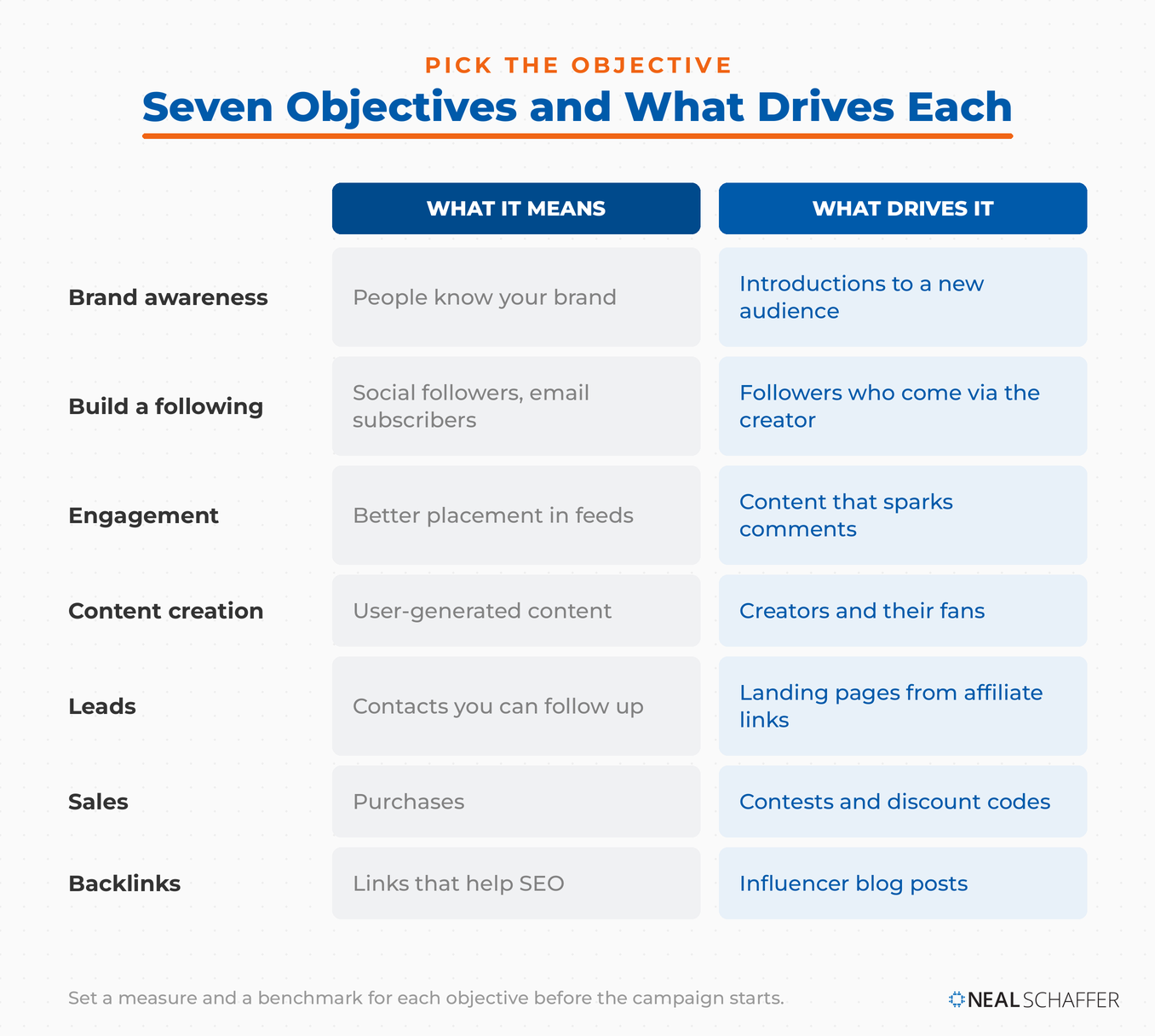
Forming an influencer marketing strategy requires that you know what is beneficial for your brand. In many cases, you will want to pursue many of these different goals across different marketing campaigns. And for some campaigns, there can be more than one objective. These will help you design the campaign.
How will you measure their success? For each of the above objectives, create a way to measure success and architect your influencer marketing campaigns appropriately. One example could be the number of entries to a contest, viewers for video content, or sales from an affiliate campaign. Have a benchmark that represents good performance. These metrics will help you evaluate current influencers and fine tune your influencer marketing strategy.
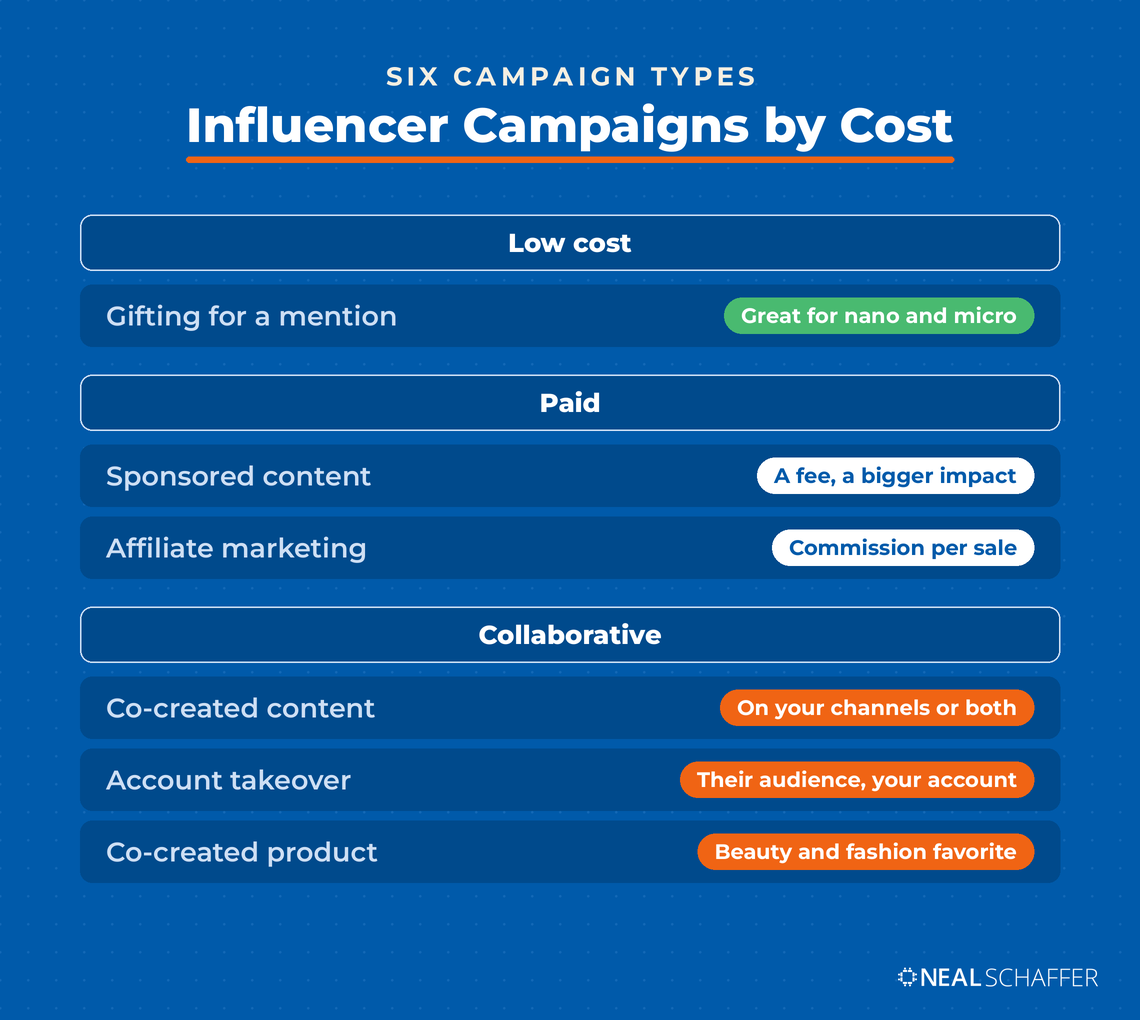
Another consideration when forming your influencer marketing strategy is what kind of campaigns you want to run. While it’s understandable to try just one at first if you’ve never used this technique before, a good influencer program will typically try multiple campaign types. If you want to see how these play out before committing to one, I have collected influencer marketing examples from brands that have already run them.
There are many types of people who might be considered social media influencers. Let’s dig into each category.
Social media influencers are often content creators who have built a sizable community around a common topic of interest. They often work with brands as a natural extension of their social media presence.
For instance, bloggers and podcasters discuss what they’re passionate about, but also mention their favorite products. YouTubers are similar, in that they can add a mention of great products in their video. In many cases, for these types of influencers, the sponsorship is an actual commercial. However, affiliate agreements and other campaigns work too.
Social media celebrities are people who make great content on social media and are therefore recognized for their work. In many cases, they’ll talk about their lives. Once someone gets a large enough social media following, they become a type of celebrity.
Authors, industry experts and thought leaders are sought out for what they know or what they run. For instance, Steve Jobs was an industry expert in computing, and much of his work is still celebrated. In other niches such as business, it’s often the thought leaders who control the show, since techniques are often based on theories. And lastly, the authors share knowledge through books. As a result, they become influential in their field.
Let’s also look at influencers in terms of brand affinity. Those without affinity prior to that first collaboration I’ll call an unbranded influencer.
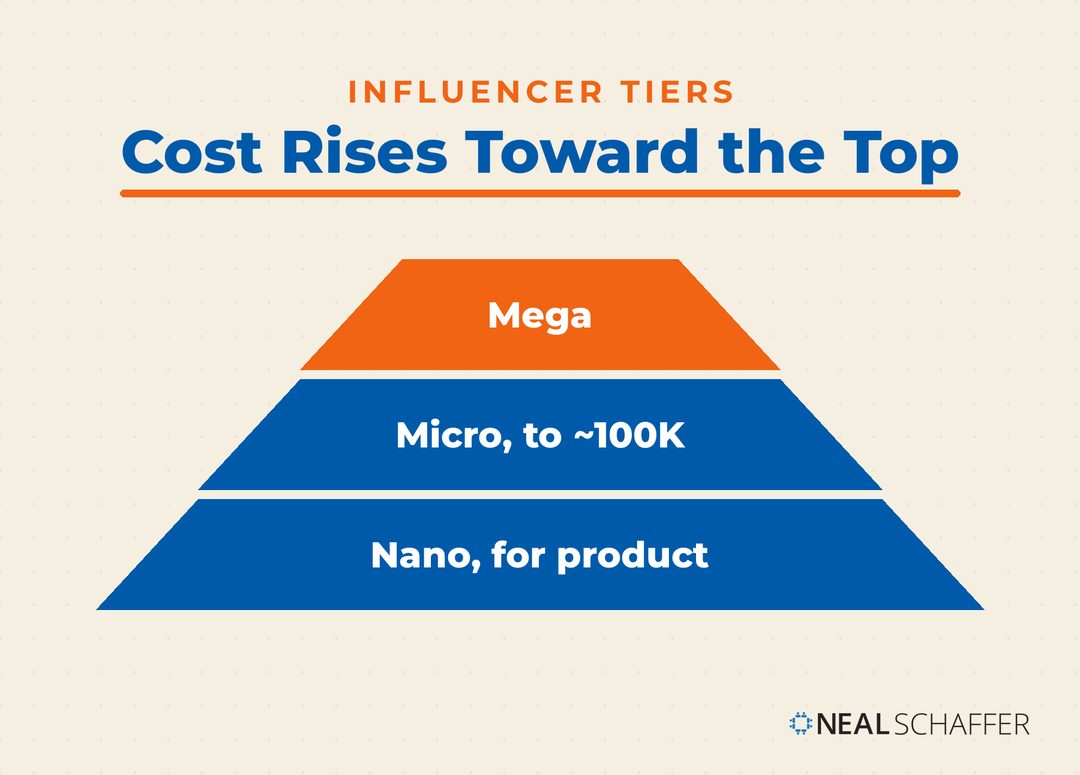
Be careful how much you spend on unbranded influencers, people who may not know you and vice-versa. One of the best ways to blow your influencer marketing budget is by paying too much. And the easiest way to pay too much is to go with an influencer with a large following. For example, if you are in the beauty industry, then one of the biggest influencers out there is Kylie Jenner. She has millions of followers and is classed as a mega influencer or celebrity. Want her to pitch your product? Hopper HQ’s 2024 Instagram Rich List estimated her rate at about $2.4 million per sponsored post. For long established beauty brands, that might be OK. For a small, niche company, it’s way too much.
On the other hand, there are some nano influencers that will work for the price of freebies. A few will charge a little bit more, but as a rule, these influencers are highly effective. This is true, because they still have a lot of passion for what they’re doing. While they’re starting to have a business, it isn’t like their feed is full of a bunch of advertising. Quality tends to be high, and followers are highly engaged. In addition, their prices haven’t gotten very high yet, because they aren’t popular with brands. Best of all, nano influencers can be effective for large and small brands alike.
Between mega influencers and nano influencers, we have micro influencers. These people have several thousand to about 100,000 followers. In many cases, these influencers have a large enough audience to reach a lot of people, but the price is still reasonable.
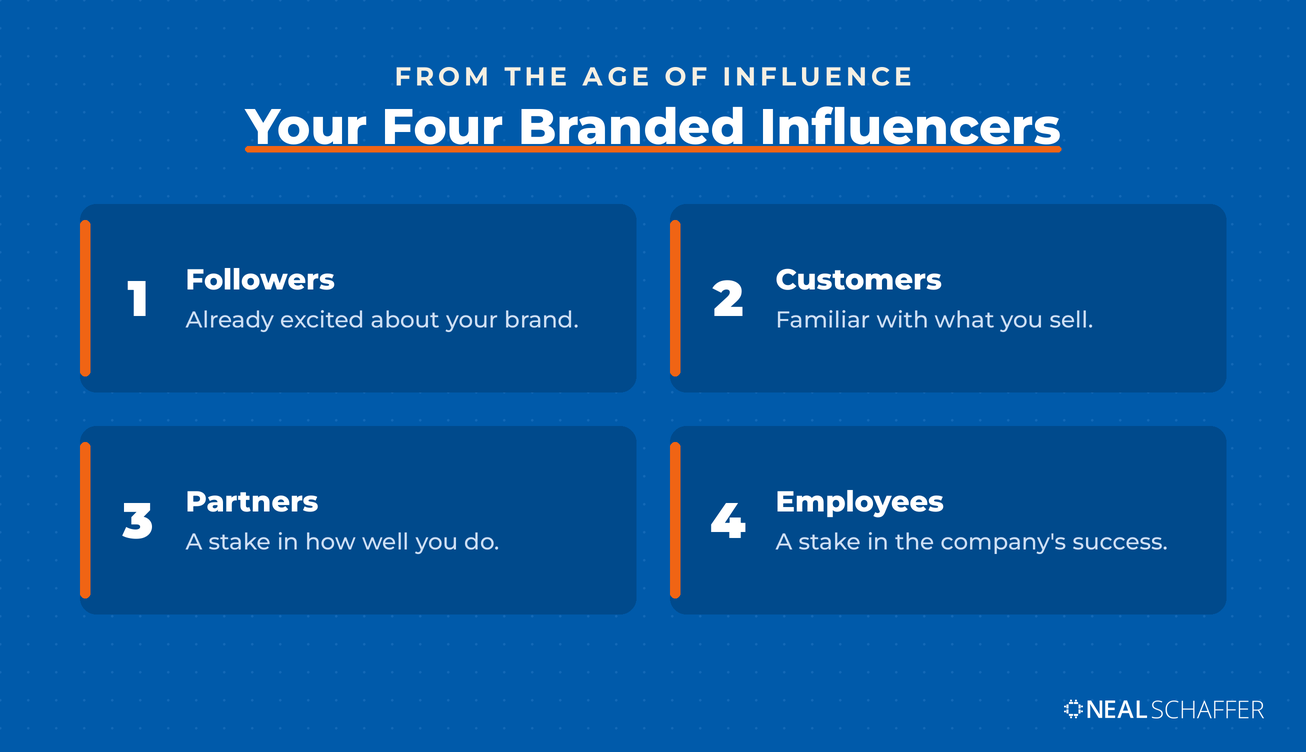
Finally, in The Age of Influence, I introduce the concept of focusing on any of the above that have brand affinity for you. Let’s call them branded influencers. These are your Followers, Customers, Partners, and Employees. I call them branded because they already have some relationship with your brand or company, even if only as a follower. In the case of partners or employees, they have a stake in how well your company does. Followers and customers are typically excited and familiar with your brand.
The difference in working with branded vs. unbranded influencers is huge. While you might not get the type of potential impact if you were to work with a social media celebrity, the content that is published by your branded influencers is authentic enough that it doesn’t look like a blatant advertisement to those who see it, making the actual content impactful for those who see it.
Of course, even the best influencer marketing strategy is useless if you can’t find the right influencers to collaborate with. As a general rule, you want someone whose niche appeals to your target audience. For most influencers, the audience should be similar. However, it’s normal for someone to have people outside your target. Here, there’s potential to find a whole new market you didn’t anticipate. However, you also don’t want to pick an influencer with an irrelevant audience.
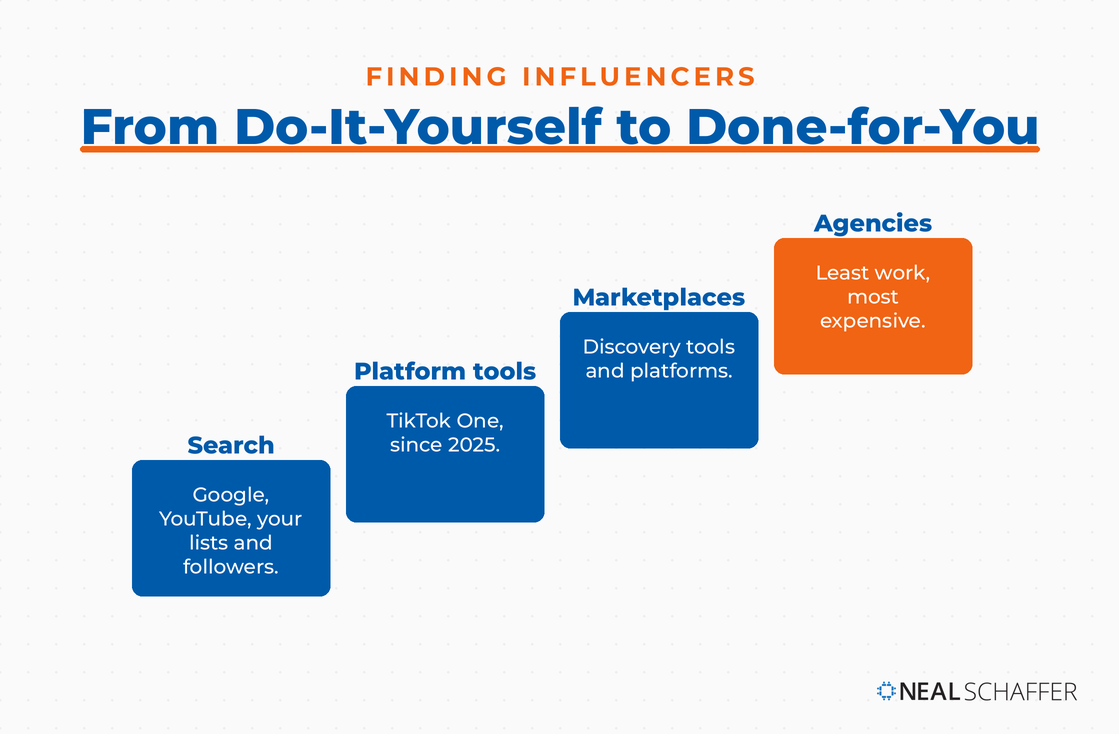
Google, YouTube, social media, your customer database, your email list, your followers, and your employees can all turn up influencers. For searching Google and social media, try using relevant keywords. Then, observe who has a following in your niche. Similarly, followers, email subscribers and employees with a large number of social media followers are potential influencers. The same goes for those who are industry/thought leaders and writers.
TikTok is an example of a social media site with its own platform for finding creators, so you can bypass third-party apps: TikTok One, which replaced its Creator Marketplace in 2025.
There are influencer marketing discovery tools and marketplaces you can use. Some of them are largely self-service, where you can choose an influencer through multiple search criteria and do most of the work yourself. On the other hand, others keep the majority of interactions on the platform.
You can always hire an agency to help, but they will often use the same tools and platforms mentioned above. With that said, agencies can be convenient, since you do little more than talk about your influencer marketing strategy, approve content, and write a check. If you’re just starting out, it’s an OK but expensive option. When you do reach the point of choosing one, I have a separate post on which influencer marketing agencies are worth shortlisting and what kind of brand each one suits best.
I have another post where I get into this more extensively, but here are some basics on reaching out to influencers. It’s important to show influencers that you are interested in them before asking for a collaboration so that you can get the best chance of a reply and beneficial treatment – influencers are human beings, after all. About the only exception to this is influencer marketplaces, where influencers are offering their services openly.
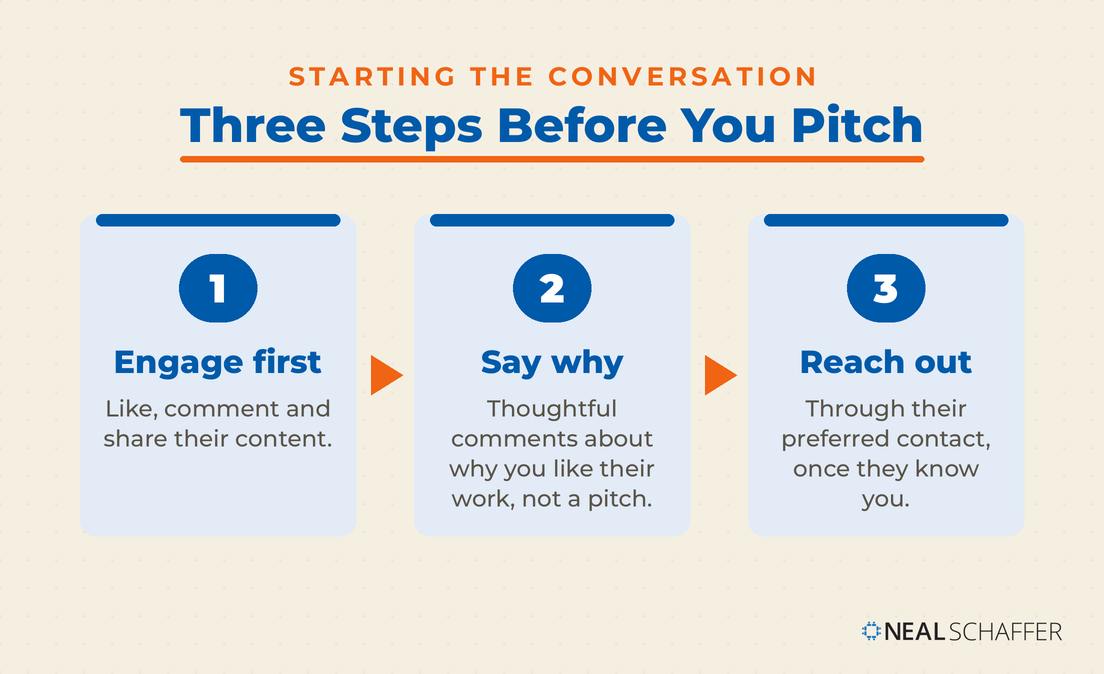
First, interact with the influencer’s content. For instance, you might like their picture of the latest family get together. Or their latest crafting technique. Indicate this by liking, commenting, or sharing. This increases their engagement rate and shows you care.
Positive attention from brands, or even followers, helps influencers improve. Show you’re genuinely interested through thoughtful comments. It’ll demonstrate that this person is more to you than a potential pitch.
Influencers are busy people and get contacted by LOTS of brands. If you want to get their attention, show that you contact them via their preferred method, which is most often written directly on their social media profile or contact page on their website.
Don’t just randomly try to slide into the DM at your first opportunity. Only do so after you’ve been engaging with them for some time and hopefully they’ve recognized your engagement! Otherwise, your request can be considered spammy.
Part of any influencer marketing strategy is building lasting relationships with influencers. As a rule, the more any influencer works with your brand, the more invested they can become in your success. And this isn’t only true with employees or partners. Rather, unbranded influencers get a certain enjoyment out of seeing clients succeed. Here’s how to build long term relationships.
First, do you need to pay influencers $$$ at all? Recognition and gifting can go a long way, especially if they already have brand affinity for you. Employers can give a gift card, for instance, or a brand can give something for a review. This tends to be inexpensive, but it works best for nano or micro influencers.
Second, have an influencer agreement in place. This outlines what you expect the influencer to do, and how you intend to compensate them. In addition, you’ll want to specify what level of content approval you require.
Third, make sure that the activities you and the influencer agree on are aligned with your strategy. One of the worst things you can do is have mismatched goals. It’s a great way to get content that you can’t use or that is less effective, and that you have to pay for. In addition, you need to safeguard your brand from rogue influencers.
A handful of disciplines separate influencer programs that work from programs that waste money. Pick partners on fit instead of follower count, brief them for authenticity, concentrate your spend on one platform you can win, and measure returns honestly. Get those right and most of the hard part is done. The rest is execution.
Confidence in this channel is high right now. The latest Influencer Marketing Hub benchmark found 72% of brands planning to raise their influencer budgets by 50% or more this year. That is good news for the industry, but it is not a reason to overspend on day one.
I tell my Fractional CMO clients to tie every dollar to a specific objective, then start small and earn the right to spend more. A tenth of your marketing budget is plenty for a first round of testing. Once you can point to real returns, scale into what worked and cut what didn’t. The fastest way to sour on influencer marketing is to write a big check to one large account before you have any evidence it pays back.
Follower count is the easiest number to inflate and the least predictive of results. When I evaluate a potential partner, follower count is close to the last thing I look at. What matters more:
Run every candidate through those filters before you talk price. It also points you toward the right tier, since which influencer tier fits each goal is a strategic decision, not just a budget one.
When I wrote The Age of Influence, the whole argument was that influence works when it sounds like the creator, not like your ad copy. That principle drives how you brief. Give creators guidelines, not scripts. Bring them into the planning conversation instead of handing down a shot list. Partner with people who already like your product, so the enthusiasm is real. Over-direct the content and it stops working, because audiences can smell a brand puppeteering a creator from a mile away.
Some content formats consistently outperform for influencer collaborations: tutorials and how-tos, day-in-the-life features, behind-the-scenes looks, reshared user-generated content from creators, and creator-led challenges. Video carries most of this now, so weight your plans accordingly.
On platform choice, resist the urge to be everywhere. Most brands do far better naming one primary platform and building a real system around it: creator sourcing, creative testing, and measurement. Let the other channels play supporting roles. A focused bet you execute well beats a thin presence spread across five networks.
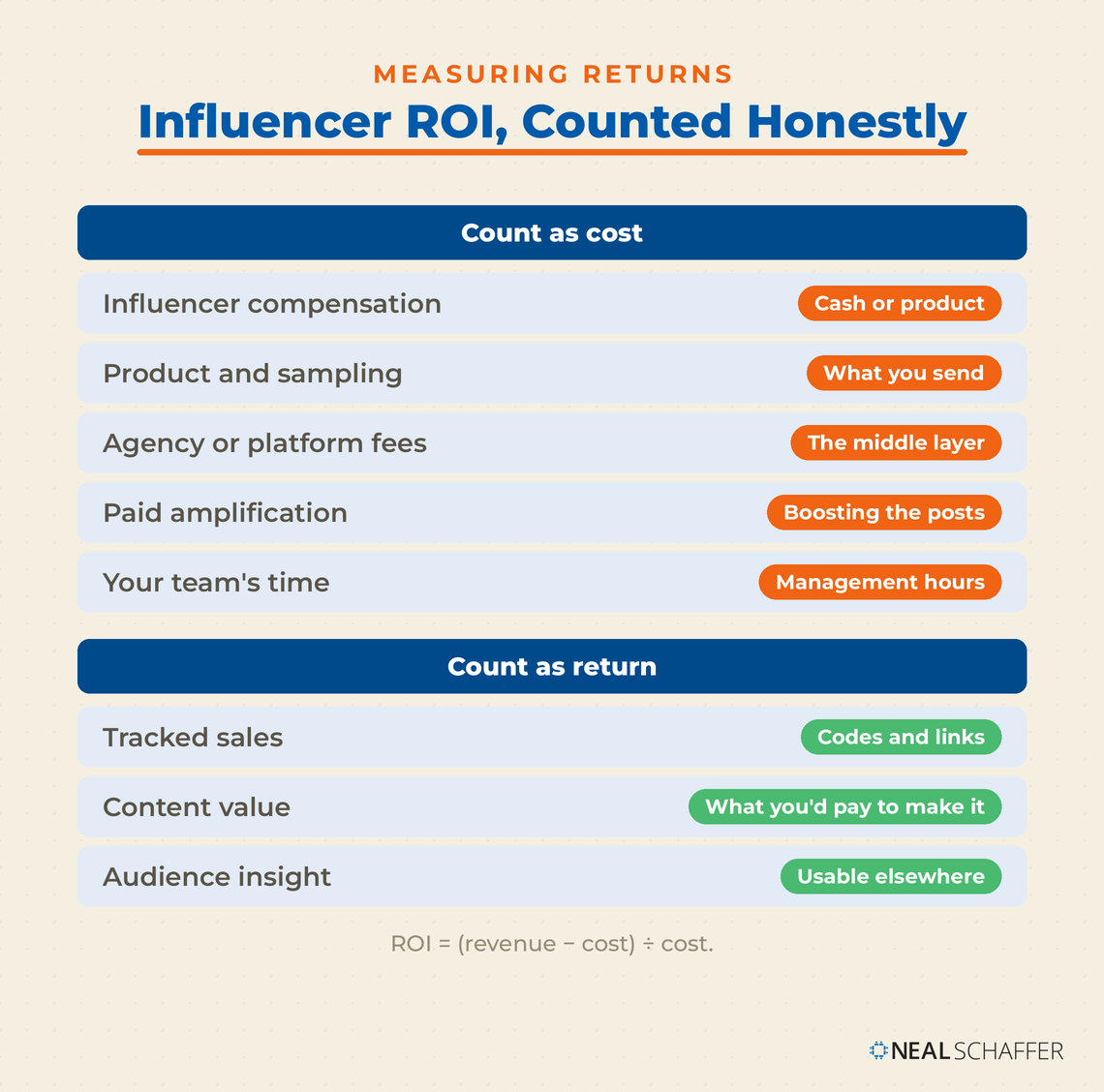
Influencer marketing earns its budget when you can show the math, so count both sides honestly. On the cost side, include:
On the return side, capture more than last-click sales:
The basic calculation is straightforward: subtract total cost from total revenue, then divide by total cost. Discount codes and affiliate links are the simplest way to attribute results, which is exactly why most programs lean on them first.
Once you’ve finished a campaign, it’s time to measure performance of each influencer and how they contributed to your campaign objectives. Your criteria for success will depend on the campaign goals, and where the campaign fits into your influencer marketing strategy. For instance, the number of impressions, likes, or sales.
Once you have data, you create a baseline and realize which influencers deliver great ROI. It’s always good to experiment with new influencers to see if they can outperform your average, always increasing the effectiveness of your influencer marketing strategy. After all, a fresh face helps introduce your brand to new people as the audience changes.
Finally, it’s sometimes necessary to cut people from your influencer marketing program. Some people aren’t good at selling things, even if they have a lot of followers. Or, they might not be getting a good enough ROI. Remember, as important as personal relationships are, it’s still a business decision.
Finally, I’d like to look at the different kinds of influencer marketing tools. These help you make your influencer marketing strategy go from theory into reality. Since I have an extensive post that describes individual tools, I’ll give an overview of tool types here.
These are useful for many different aspects of social media marketing. Listening tools look for your brand across social media, then report the results to you. So, if a creator talks about your brand, you’ll see this on your reports. In many cases, this will help you find influencers. It’s also a great way to monitor campaign effectiveness.
A blogger outreach tool will monitor blogs in your niche or topic, then show who is talking about your kind of product. Or for certain niches, the overall subjects relevant to your products. Then, you can reach out to the right people in the right place to get a collaboration.
This kind of tool does what it says: help find influencers. The scope of most searches includes both bloggers and social media creators. Discovery tools are a great shortcut when extensive searches aren’t an option. Plus, they’ll look in multiple places faster, saving time.
These are discovery tools with an ecommerce emphasis. In particular, they’ll comb through your email and customer lists, in addition to standard social media searches. The idea is to find people who already have brand affinity or help sell your kind of products.
Also called influencer platforms, these tools are a place to go and meet influencers. Depending on the type of marketplace, there are different levels of collaboration available on the site. For instance, some primarily facilitate meetups, while others handle most of the transaction.
Finally, there are influencer tools where you do little work other than paying the bill. Here, the agency will select an influencer for you based on your influencer marketing strategy, niche, and budget. If you’re a busy marketer trying to do everything at once, they can be a godsend.
Start with roughly a tenth of your marketing budget and treat that first round as a test. I tell my Fractional CMO clients to attach every dollar to one objective, then scale only into the campaigns that show a return. Writing a big check to one large account before you have any evidence is the fastest way to sour on this channel.
Recognition and gifting go a long way, especially with people who already have some affinity for your brand. From what I have seen, a gift card or a product for review works best with nano and micro influencers, whose rates have not climbed yet and who are not saturated with brand offers. Once you move up the tiers, expect to pay cash and to put an influencer agreement in place that spells out deliverables and content approvals.
Subtract your total cost from the revenue the campaign generated, then divide the result by that cost. Count everything on the cost side, including influencer compensation, product and sampling, agency or platform fees, any paid amplification behind the content, and your own team’s time. On the return side, add the value of content you would otherwise have paid to produce, not only the sales you can trace to a discount code.
I would start with nano and micro influencers, because their audiences are engaged and their prices are still reasonable. A mega influencer can run into seven figures for a single Instagram post, as the Kylie Jenner figure above shows, which only makes sense for a brand with a matching budget. Match the tier to the goal you set rather than to the size of the audience.
In an age where people are desensitized to traditional marketing, influencer collaborations are more important than ever. However, like other types of marketing, an influencer marketing strategy is critical for success, and a strategy built once and left alone will drift as the influencer marketing trends shift underneath it. Fortunately, by following this guide and related articles on my website, you’ll get a good foundation for what it takes to succeed.
There is no cookie cutter approach to creating an influencer marketing strategy that delivers high ROI. Hopefully the above advice helps you craft or optimize your strategy. For more advice, check out my book The Age of Influence or download a free preview here.
We respect your privacy. Unsubscribe at anytime.
Practical advice on social, content, influencer, and search marketing, plus the AI tools that make each one easier. Join thousands of founders and business owners who read it.

Comments are closed.


Hi Neal,
Thanks for the amazing content. I appreciate your effort in this. I agree with you Social platforms like facebook or twitter were once used for communicating only but now these platforms are developing gradually and we need to flow with the change to continue. We should always cope up with the current situation prevailing like- it’s a pandemic going on. We need to attract audiences by certain things they need during this period. Social influencers play quite a good role in marketing on social platforms. I would like to hear more from you on which social platform is best to hire social influencers to advertise our product.
Thanks for the comment Michael. And the answer to your question depends on what you are looking for from the influencer, where your target audience is in social media, etc. No easy answer!