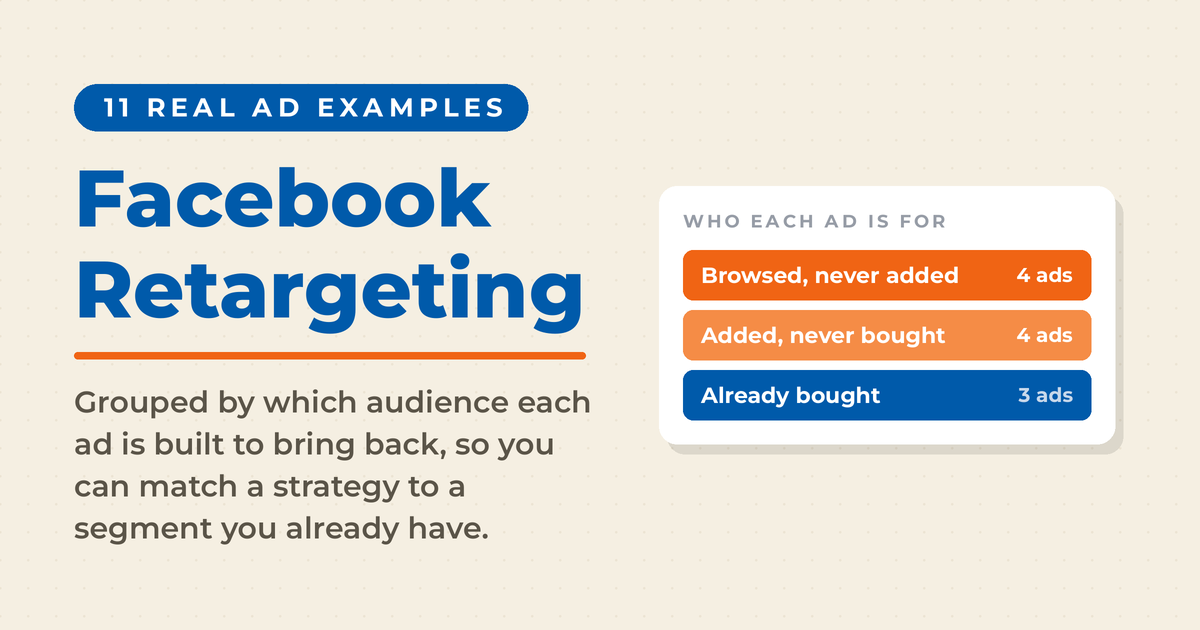

There is a lot that we can learn from looking at Facebook ad examples, and when we apply them to the power of retargeting, the sky is the limit in terms of our Facebook ads ROI.
The reasoning is simple:
Did you know that 96% of your website visitors leave without buying because they are not ready yet?
To make a buying decision, they might need additional information. So, visiting your website is often a part of their pre-purchase research. According to Hubspot, people need 8 touch points with a company before making a purchase.
Don’t want to lose these potential customers?
With retargeting ads, you can keep your brand in front of potential customers who haven’t bought from you yet.
Keep reading this article to discover the best Facebook retargeting ad examples to follow by looking at real-life Facebook ad examples that will inspire you to create your effective Facebook ad campaign.
Key Takeaways
✅ Retargeting works because most first-time visitors are not ready to buy yet, so the ad’s job is to bring back an audience that already knows you rather than to introduce your brand from scratch.
✅ Your strongest retargeting audiences come from data you already own: Facebook pixel events, uploaded customer lists, product catalog activity, and offline data, layered with Meta’s own engagement signals.
✅ Match the message to the buyer journey stage. Someone who watched 75% of a video needs information, while someone who abandoned a cart needs a reason to finish, usually a time-bound offer.
✅ The angles that repeat across these 11 examples are personalization from browsing activity, dynamic product ads, urgency, social proof, objection handling, and discounts.
✅ Exclude purchasers from your acquisition retargeting and give them their own cross-sell and upsell campaigns instead of paying twice to reach the same person.
✅ Watch ad frequency and audience overlap. Ad sets that reach the same people bid against each other in the auction, push conversion costs up, and burn through creative faster.
5 benefits of retargeting
Retargeting is the display of ads to those who are already familiar with your product or brand. These users have interacted with your company’s channels, but haven’t completed the conversion action. The goal of retargeting is to return these users and push them to buy.
Let’s outline the key benefits of adding retargeting to your marketing strategy.
Higher CTRs
First, users are more likely to interact with retargeting ads. The benchmark everyone quotes comes from Invesp, which put retargeted ad click-through at 0.7% against 0.07% for standard display, a tenfold gap, alongside a finding that retargeted visitors are 70% more likely to convert. Read that as a directional reference rather than a current number, because it dates to the display-ad era and has not been re-measured at that scale since. The figure that actually matters is your own: run one retargeting ad set and one cold prospecting ad set on the same creative, then compare the click-through rates side by side.
More chances to get a conversion
With retargeting, you can increase the likelihood of desired conversions. As data shows, customers who see retargeting ads are more likely to buy than those who don’t.
Lower CPA
The next important benefit of retargeting is lower cost per acquisition or CPA. It’s usually cheaper to retarget users who’ve already shown an interest in your product than to attract a cold audience. How much cheaper depends on your industry, and the current Facebook ads cost benchmarks give you the CPC and CPM averages to measure your own retargeting numbers against.
Reduced CPA, in return, results in increased ROI.
Accelerating the buyer journey
Retargeting helps drive your prospects down your sales funnel. By nurturing them on the way toward a purchase, you can speed up their buyer journey and get the desired results faster.
Building trust with the audience
Launching retargeting ad campaigns is good for building trust with your audience. The more touchpoints with your brand people have, the more credibility you get.
Sounds convincing enough to launch retargeting as your next Facebook ad campaign, right?
The power of Facebook retargeting ads
According to research, marketers use Facebook the most and also believe it produces the best ROI out of any social media site. Why is that?
First, Facebook has an impressive user base, though the honest version of that claim needs a date attached to it. Meta stopped publishing Facebook-only user counts after 2023, and the last figure the company disclosed was 3.07 billion monthly active users and 2.11 billion daily active users as of December 2023. Since then Meta reports one combined audience metric, Family daily active people across Facebook, Instagram, Messenger and WhatsApp, which reached 3.60 billion on average for June 2026. Facebook cannot be pulled back out of that combined number, so any current claim that Facebook has some exact number of users is either the 2023 figure recycled or a third-party estimate. For an advertiser the practical point is unchanged: the audience is large enough that your retargeting pool is limited by your own site traffic, not by the platform.
So, there is a great potential to reach people who are already familiar with your brand on this platform.
Make LinkedIn Your Best Source of Clients
My latest book helps professionals, entrepreneurs, and business owners turn LinkedIn from a static profile into a real source of clients and growth.
Maximizing LinkedIn for Business Growth gives you clear, practical steps to build a profile that gets noticed and a network that actually sends business your way.
Grab your copy on Amazon and put it to work this week. Click the cover or the button below to get started.

Second, Facebook provides incredibly precise targeting opportunities. You can use two types of audience sources for your retargeting campaigns:
- Your sources;
- Meta sources.
Your sources may include:
- A Facebook pixel installed on your website,
- Your app activity data;
- Your product catalog data;
- Your customer lists;
- Data from offline sources.
Facebook pixel enables collecting the audiences of people who have interacted with your website. These audiences may include those who have visited specific pages on your website or performed a specific action. Getting the pixel firing correctly and mapping those events to usable audiences is the step most advertisers rush, and this walkthrough on how to set up Facebook ads retargeting covers the sequence from pixel install through campaign launch.
A common scenario is to target those who have added a product to the cart but haven’t completed an order. For such a Facebook ad campaign, you need the audience collected based on the “Add to cart” event triggered. To avoid ineffective spending, be sure to exclude the audience of purchasers from your remarketing efforts.
You can also upload a customer list to Facebook and reach them further with a relevant offer.
Meta sources include data on the interaction with your content collected by Facebook and Instagram. With these sources, you can target people who:
- Watched your videos;
- Interacted with your Facebook/Instagram pages;
- Participated in your events;
- And others.
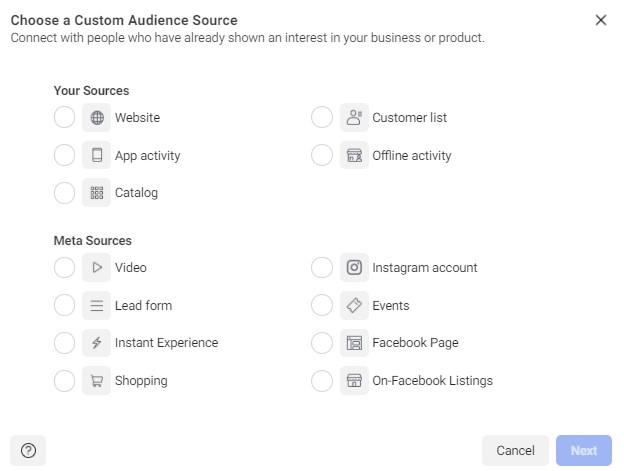
Such a variety of sources allows for more granular audience segmentation.
11 Facebook Ad examples of proven Facebook retargeting strategies
Now, let’s get into the most exciting part — the top-performing Facebook retargeting strategies!
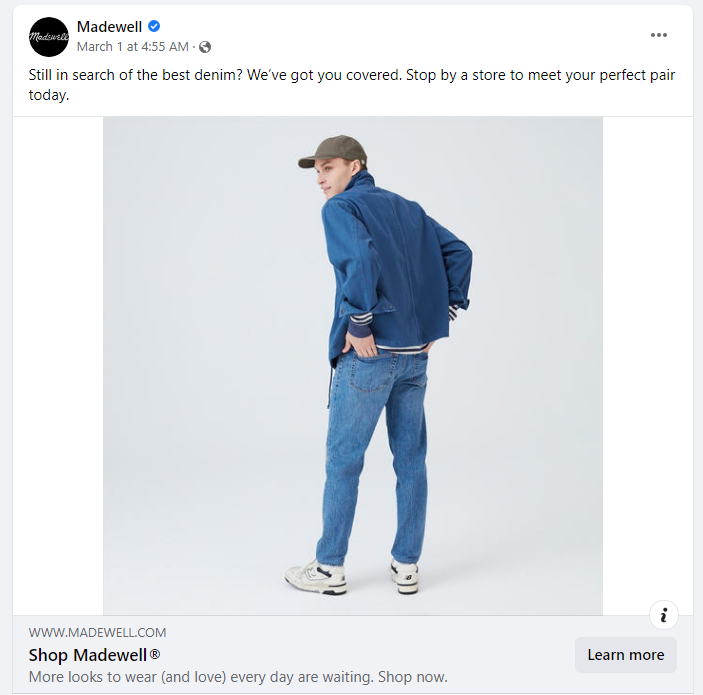
#1 Showing ads based on a user activity
In today’s crowded digital space, brands have to compete for the attention of potential customers. Personalization of ads helps companies stand out from the crowd. According to Accenture, 91% of customers are willing to buy from brands providing personalized offers.
To ensure your Facebook ad campaign matches your audience’s interests, leverage user activity data. With Facebook pixel, you can collect the audience of people who have visited certain product pages. Then, you can lure them back to your website by featuring the products they looked at in your ads.
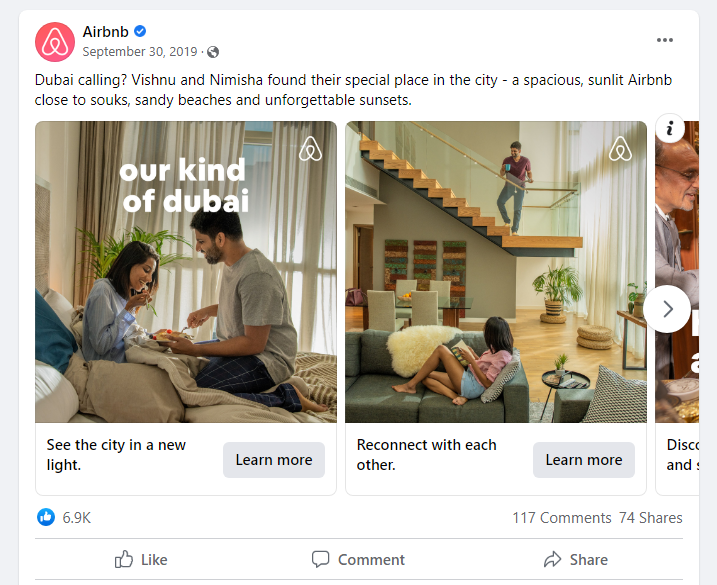
What are more ways to provide a personalized experience in retargeting? You can offer additional content to users showing interest in certain products. Booking services like Airbnb are actively utilizing this strategy. Having spotted a user’s interest in a certain geographic location, they offer recommendations on what to see and what to book there.
#2 Using dynamic retargeting
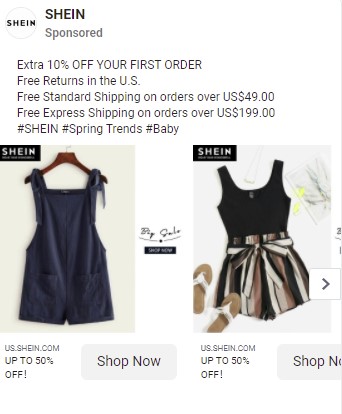
Do you have a solid catalog of products? Facebook Dynamic Ads will save you tons of time and effort!
Upload your product catalog to Facebook to create a custom audience. Once you do, you can reach your website visitors with ads showing relevant items. These can be the products users looked at, or the items complementary to what they have bought already.
Facebook dynamic retargeting does all the heavy lifting for you by providing the relevant content based on a user’s behavior. Dynamic Ads are one entry on a longer list of formats, and this breakdown of how each Facebook ad format works covers the objective each one is built for.
#3 Creating a sense of urgency
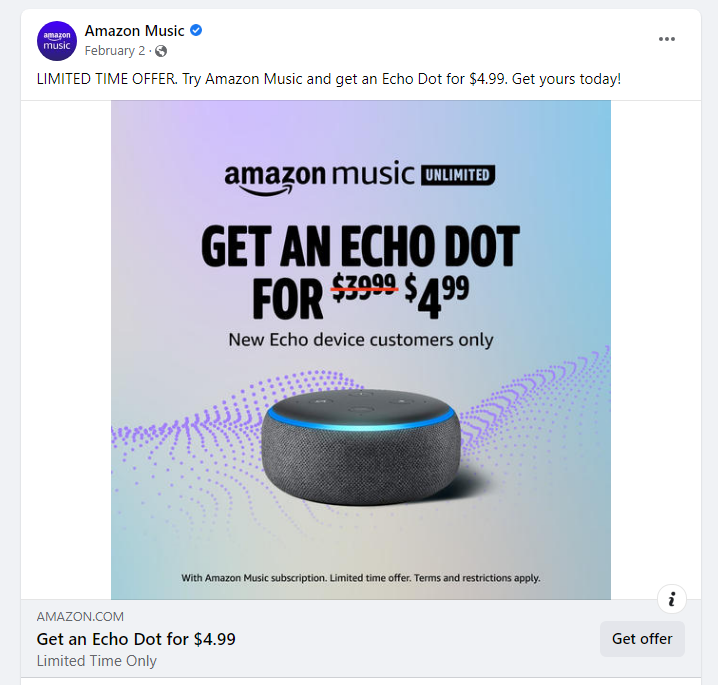
Another proven retargeting strategy is playing on the fear of missing out (or FOMO). To create a sense of urgency, you can highlight the following points in your Facebook ad campaign:
- Limited-time offer;
- The products sell out fast;
- Limited seats are available.
FOMO can motivate your potential customers to head back to your website and complete a purchase.
#4 Highlighting the shipping times
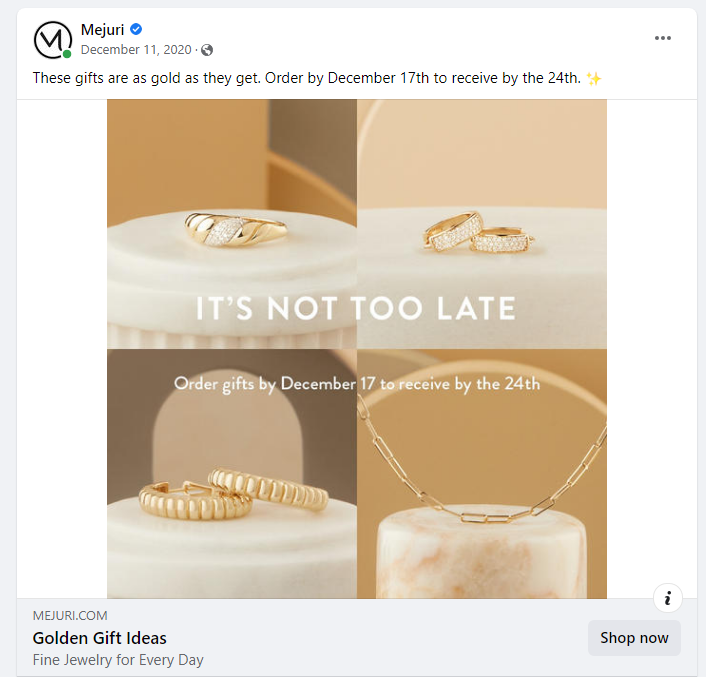
It’s not a secret that shipping time is one of the greatest concerns among online shoppers. Letting your customers know the delivery dates right in the ads can do wonders for your conversion rates!
When seeing the exact date, people often visualize the items arriving, which can make them feel like they’ve already bought them. This approach is especially effective when targeting last-minute gift shoppers. So, why not test this Facebook ad campaign strategy during a holiday season?
#5 Providing extra arguments in favor of your brand
As mentioned at the very beginning of this post, your customers don’t convert from the first visit because they are not ready yet. Often, they need additional arguments to convince them to buy from you. Give them those arguments in your retargeting ads!
Think of the major concerns that might keep your customers away from buying your products. These concerns may relate to:
- Price;
- Guarantees;
- Shipping and delivery;
- Return policy;
- Customer support.
Once you’ve identified what can make your customers hesitant about buying from you, handle these potential objections in your ads.
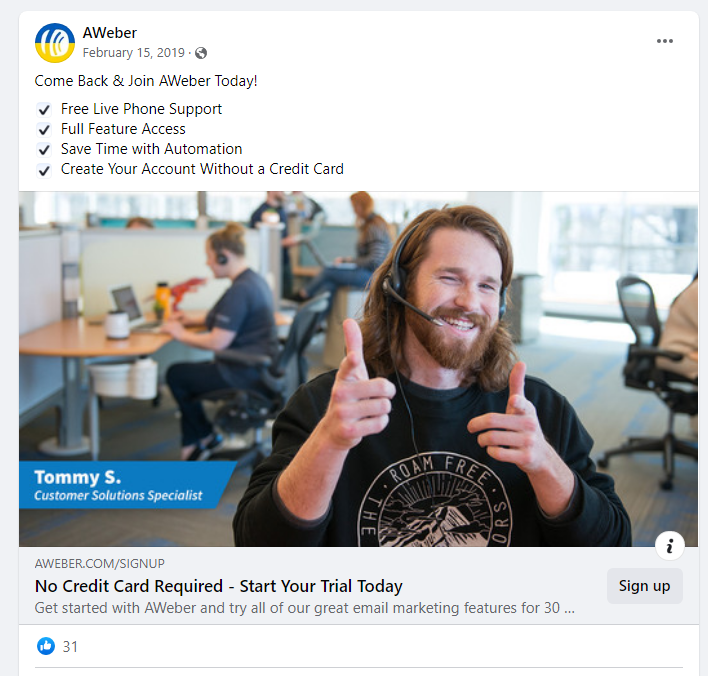
A good idea is to illustrate the benefits your customers will get when buying from you. You can do it by providing estimates of time or monetary savings when using your product.
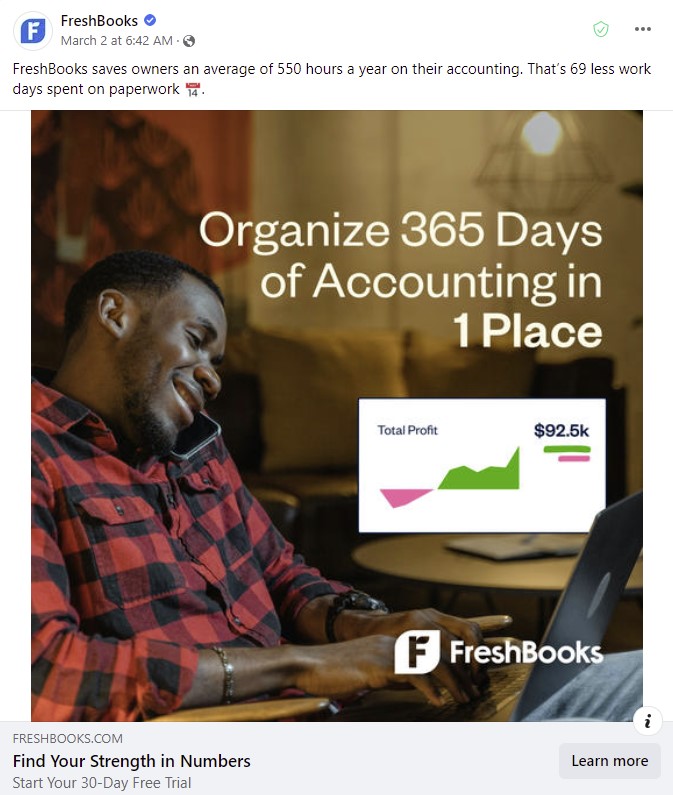
#6 Using social proof
As studies show, 92% of customers are looking for social proof and check online reviews before buying a product. Why not provide social proof in your retargeting ads?
To make your ads trustworthy, leverage reviews, testimonials, and other forms of UGC related to your product or services. Here are some ideas on implementing this strategy:
- Add a customer’s quote to your ad copy;
- Use a video testimonial as your ad creative;
- Make a carousel of screenshots with customer reviews on independent resources.
Partnering with influencers is a proven way to get relevant user-generated content. When choosing the right partner, it is worth checking their TikTok and Instagram engagement rate.

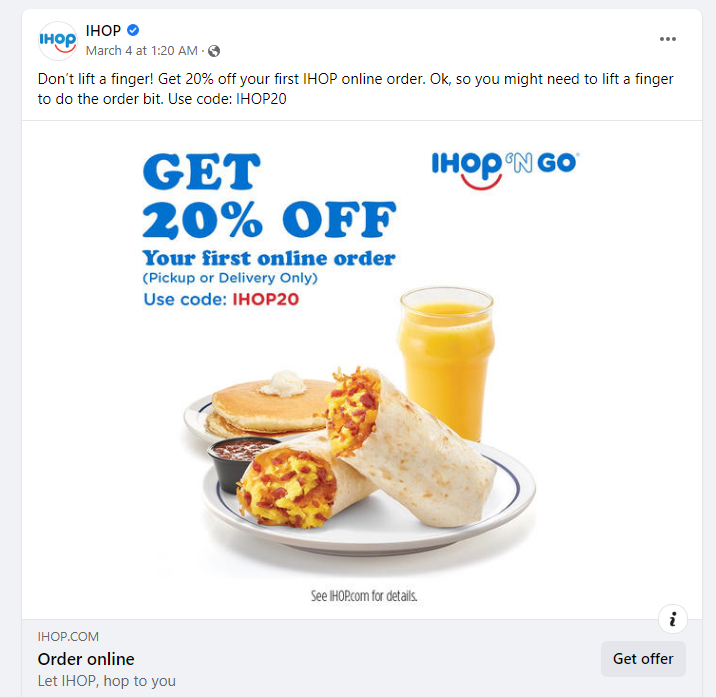
#7 Offering a discount
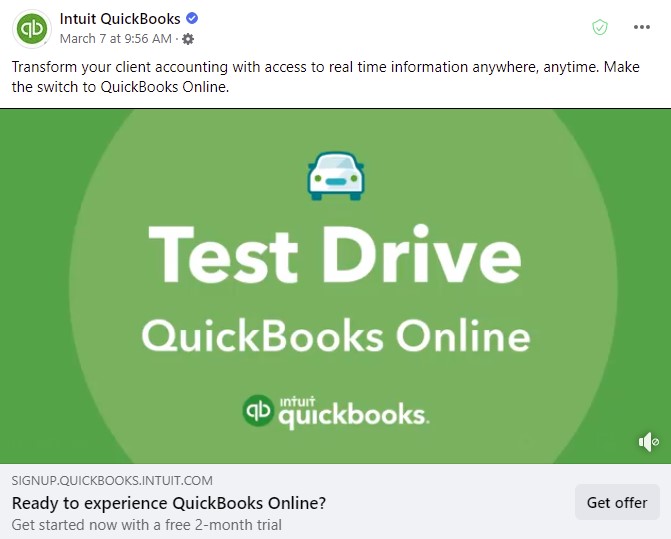
Everyone loves special offers. So, if you retarget your hesitant customers with a discount, chances are they will head back to your site to complete an order. To increase the likelihood of conversation, make sure your special offer is time-bound.
The size of a discount may differ depending on a customer’s buyer journey stage. Try different offers for your warm and hot audience and see what works best for each segment.
#8 Encouraging to complete a checkout
The best-documented figure on cart abandonment comes from Baymard Institute, which averages 50 separate studies to a rate of 70.22% and has seen that number hold steady for close to two decades. Seven in ten carts walking away sounds like a disaster until you notice Baymard’s other finding: 42% of those shoppers abandoned simply because they were browsing and not ready to buy, which is exactly the audience retargeting exists to bring back. With Facebook pixel, you can target the following segments of users:
- Those who have added a product to the cart but haven’t proceeded to checkout;
- Those who have started the checkout but haven’t completed an order.
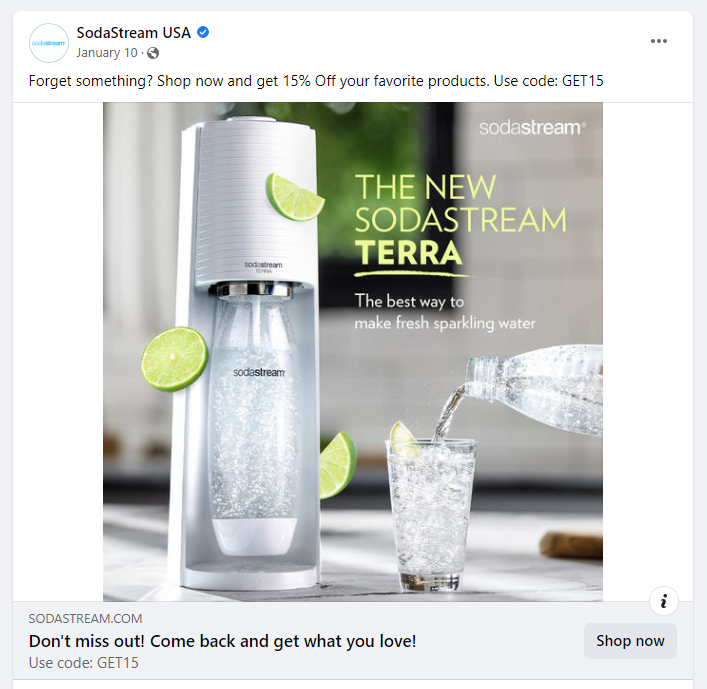
To motivate a user to proceed with order completion, you can offer a discount. Don’t forget to set a time restriction for a special offer, so you can play on FOMO. Pair that ad with an abandoned cart email sequence and you reach the same shopper in two places, for a fraction of what winning a brand new customer would cost.
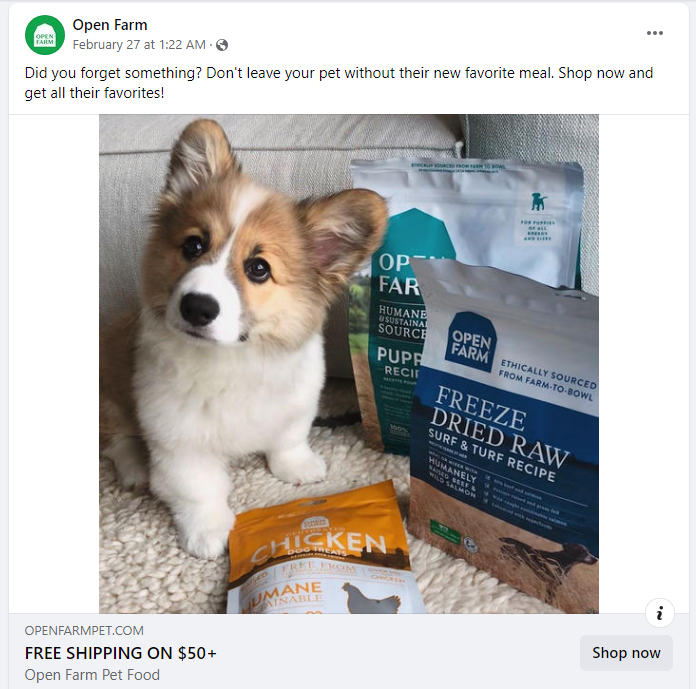
#9 Leveraging cross-selling and upselling opportunities
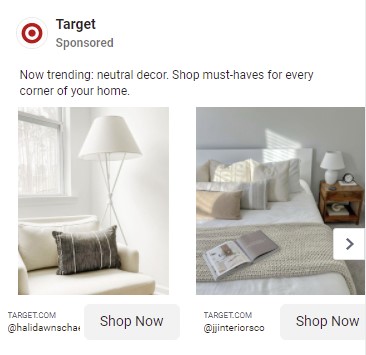
As we’ve mentioned already, savvy marketers exclude purchasers from their remarketing campaigns. Why not reach out to them and offer complementary products or services?
Here are the two common ways to set up such a Facebook ad campaign:
- Manually — by targeting the visitors of certain product pages;
- By leveraging the power of dynamic retargeting.
For a wide product range, the latter will be the best option.
#10 Re-engaging old customers
One more application of retargeting is driving retention of the existing customers. Increased retention, in turn, drives repeat sales. According to Oracle NetSuite, it is five times more expensive to attract new users than to retain existing customers. As Bain & Company’s research findings show, even a 5% growth in customer retention can drive profits by up to 95%!
To nudge customers who have been inactive for a while, upload an email list from your CRM to Facebook and create a custom audience to target. Depending on your business specifics, you can select the contacts based on different criteria, for example:
- Customers who haven’t purchased from you for the last 3 months;
- Customers who haven’t opened your latest emails.
To keep your audience up-to-date, be sure to upload a fresh list from time to time.
Wondering what to offer to your past purchasers in retargeting ads? Here are a few message ideas for your Facebook ad campaign:
- New products or features announcement;
- Offering cross-sells or upsells relevant to a customer’s previous orders;
- Limited-time discounts to incentivize customers to come back to your site.
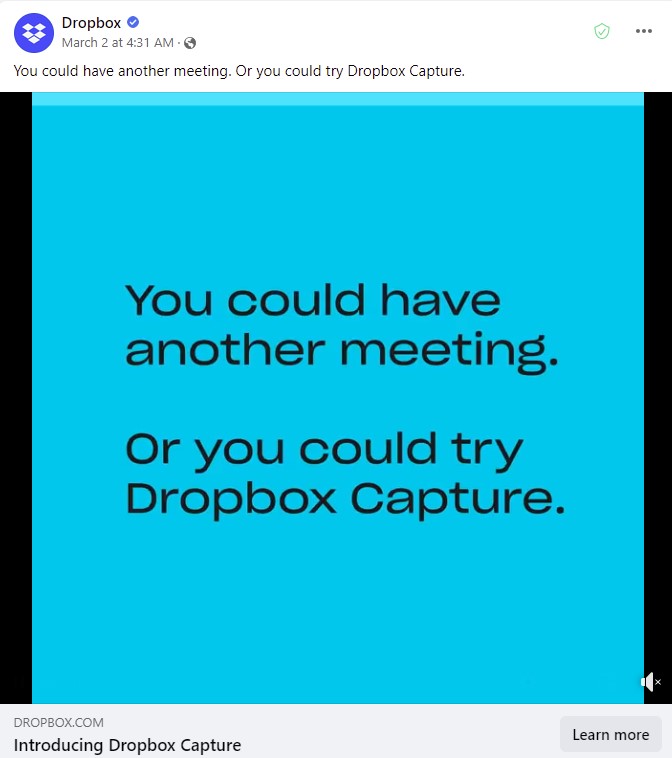
#11 Reaching out to gated content downloaders
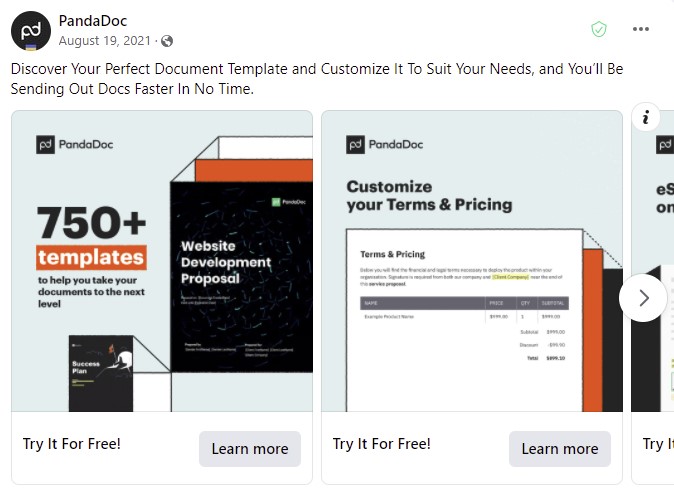
Do you have a list of users who have downloaded some of your content or visited your webinars in exchange for leaving their emails? If yes, be sure to reach this valuable segment of a warm audience.
Since they’ve already expressed interest in your branded content, don’t hesitate to retarget them to move them down your sales funnel. You can offer them a free trial or a discount for your products or services.
3 Additional Facebook Ads pro tips to keep in mind
We hope the Facebook ad examples we have covered in this article will be useful for you. In addition, it is worth checking the external tools for Facebook ads.
Now, we’d like to share extra pro tips on running Facebook retargeting campaigns.
Keep track of your ad frequency
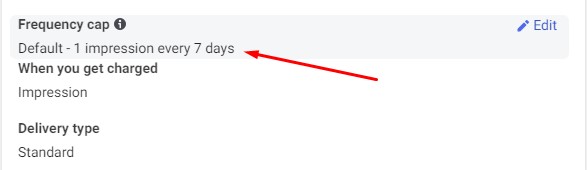
To ensure the desired performance of your Facebook retargeting campaigns, keep an eye on ad frequency. Frequency stands for the average number of times a user sees your ad. The higher the frequency, the more chances to annoy your customers.
To prevent ad fatigue (a situation when users are seeing your content too often), make use of a frequency cap. Another proven tactic is to refresh your ad creatives on time.
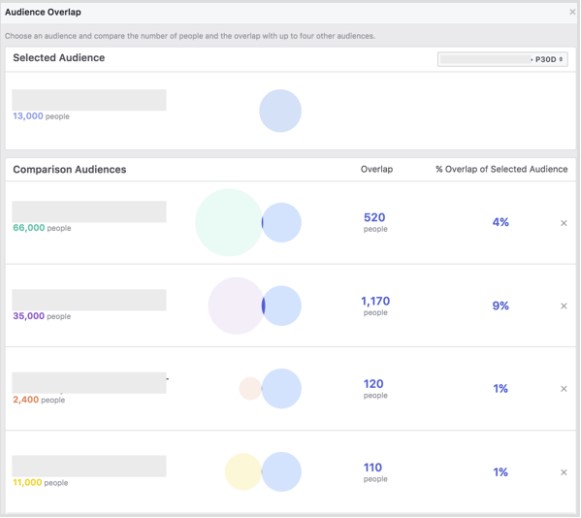
Avoid audience overlap
Another aspect to keep track of is potential audience overlap. If you run more than one retargeting campaign, chances are you are reaching the same people in different ad sets.
Here are the potentially harmful consequences of audience overlap:
- Ad sets may compete against each other in ad auctions;
- You may have to pay twice for the attention of the same audience;
- The conversion costs may increase.
To check if your custom audiences overlap:
- Go to the Audiences section of your ad account;
- Open The “Actions” drop-down menu;
- Select “Show Audience Overlap”.
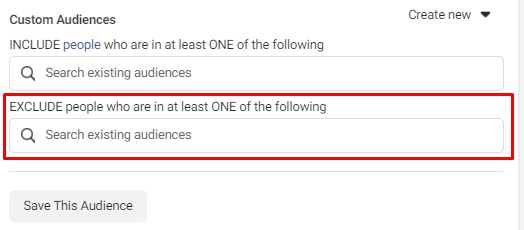
To avoid reaching out to the same people in different ad sets, use the “Exclude” feature when setting up the targeting options.
Use different messages for warm and hot audiences
Finally, it is important to distinguish between warm and hot audiences. These segments of your audience have different buyer’s journey stages. So, for each segment, it is worth crafting customized marketing messages and a call to action.
Say, users who have watched your videos at 75% might need additional info about your products or services. For those who have abandoned their shopping carts, an ad with a discount coupon may be a good reason to proceed to checkout.
Frequently Asked Questions About Facebook Retargeting Ads
Retargeting shows ads only to people who have already interacted with your brand, whether by visiting your site, watching your videos, or engaging with your Facebook or Instagram page. A regular prospecting ad goes to a cold audience that has never heard of you. The difference changes the creative brief: a retargeting ad removes one specific objection instead of introducing the company.
You create a Custom Audience from a source you control, most often the Facebook pixel on your site, a customer list uploaded from your CRM, product catalog activity, or app events. Meta sources let you add people who watched your videos or engaged with your page and events. Exclude anyone who has already converted so you are not paying to reach existing buyers.
Dynamic product ads pulled from your catalog do the heavy lifting for ecommerce, because they show each person the items they actually viewed. For service businesses and lead generation, ads that answer an objection about price, guarantees, or delivery usually beat generic brand creative. Test a discount version against a social proof version before you scale either one.
Watch the frequency metric in Ads Manager and set a frequency cap so one user does not see the same creative over and over. Rising frequency alongside a falling click-through rate is the standard signal of ad fatigue. Refreshing the creative is usually a faster fix than raising the budget.
If you run several retargeting campaigns off overlapping sources, the same people land in more than one ad set and end up bidding against you in the auction. Check for this under Audiences using the Show Audience Overlap action, then apply the Exclude option in your targeting so each ad set gets its own segment.
Now that you’ve studied these Facebook Ad examples, it’s time to implement!
When implemented wisely, Facebook retargeting can be a powerful weapon to boost your online sales and increase your ROI. The amazing targeting options of this platform enable reaching customers at each stage of their buyer journey. At each stage, you get a chance to move them further down your marketing funnel.
Ready to start your next Facebook retargeting campaign? Start implementing the strategies we’ve covered in these Facebook ad examples and see what works for your audience best.
Author Bio
David Morneau is the co-founder and CEO of inBeat Agency, a hybrid micro-influencer marketing SAAS/agency that helps brands scale their marketing efforts. He has helped over 200 DTC brands to date.