
Content marketing and SEO aren’t separate strategies competing for your budget. They’re interdependent forces that amplify each other when you use them correctly.
SEO gets your content found. Content marketing gives search engines something worth ranking. Together, they create sustainable organic traffic that compounds over time.
Most businesses treat these as separate departments with different goals. That’s expensive and inefficient. When you align content creation with search optimization from the start, you build visibility and engagement simultaneously. Your content addresses real user needs while meeting the technical requirements that search engines use to determine rankings.
I’ve been teaching these principles at Solvay Brussels School in Vietnam and working as a Fractional CMO with clients who struggle to connect these dots. The integration challenge comes up constantly. And in my book Digital Threads, I devoted significant sections to how content marketing and SEO must work as a unified system rather than competing priorities.
You need to understand how these strategies work together. Not as buzzword concepts, but as practical tools that drive measurable business results.
Key Takeaways
✅ Content marketing provides the material that SEO needs to rank, while SEO ensures that content reaches its intended audience through search visibility
✅ Organic search drives the majority of trackable website traffic, making SEO-optimized content essential for sustainable growth
✅ Quality content naturally attracts backlinks, which remain a top ranking factor in search algorithms
✅ Keyword research should inform content topics from the start, not be applied after content is created
✅ Google’s E-E-A-T guidelines reward content that demonstrates genuine experience, expertise, authoritativeness, and trustworthiness
What Is the Difference Between SEO and Content Marketing?
SEO (Search Engine Optimization) focuses on technical optimization and discoverability, including keyword targeting, site structure, page speed, mobile responsiveness, and earning backlinks. Content marketing creates valuable material that attracts and retains your target audience through blog posts, videos, guides, and case studies.
The confusion comes when people treat these as separate functions. SEO teams focus on rankings. Content teams focus on engagement. Both miss the bigger picture.
What works is integration. Content marketing that ignores search intent gets buried. SEO without quality content gets penalized. Search engines rank content that serves users best, and understanding SEO basics is the first step toward making that happen.
| Aspect | SEO | Content Marketing |
|---|---|---|
| Primary Goal | Search visibility and organic traffic | Audience engagement and relationship building |
| Key Metrics | Rankings, organic traffic, backlinks | Engagement, shares, conversions, brand awareness |
| Time Focus | Long-term ranking improvements | Consistent value delivery over time |
| Core Activities | Technical optimization, keyword research, link building | Content creation, storytelling, distribution |
SEO answers “how do people find us?” Content marketing answers “why should they care?” Both questions matter for sustainable growth.
Why Do SEO and Content Marketing Work Better Together?
SEO and content marketing complement each other by combining user engagement with search optimization. According to BrightEdge’s channel research, paid and organic search are responsible for 68% of all trackable website traffic. When you separate these strategies, both underperform.
Content without SEO lives in obscurity. You create brilliant guides that nobody finds because they don’t rank for relevant searches. Your target audience searches for solutions while your content sits on page five of search results.
SEO without content hits algorithmic walls. You optimize existing pages but have nothing new to attract links or target additional keywords. Your competitors publish regular content and gradually overtake your rankings.
Integration solves both problems. Your content targets actual search queries from day one. Your SEO strategy has fresh material to optimize and promote.
How Integration Amplifies Results
Keyword research informs content topics. You discover what your audience searches for, then create content that answers those queries completely. This is the foundation of effective SEO content creation.
Quality content earns natural backlinks. According to Backlinko’s analysis of 11.8 million search results, the #1 result in Google has an average of 3.8x more backlinks than positions #2-#10. Other sites reference your material because it’s authoritative. Those backlinks improve your domain authority and rankings across all pages.
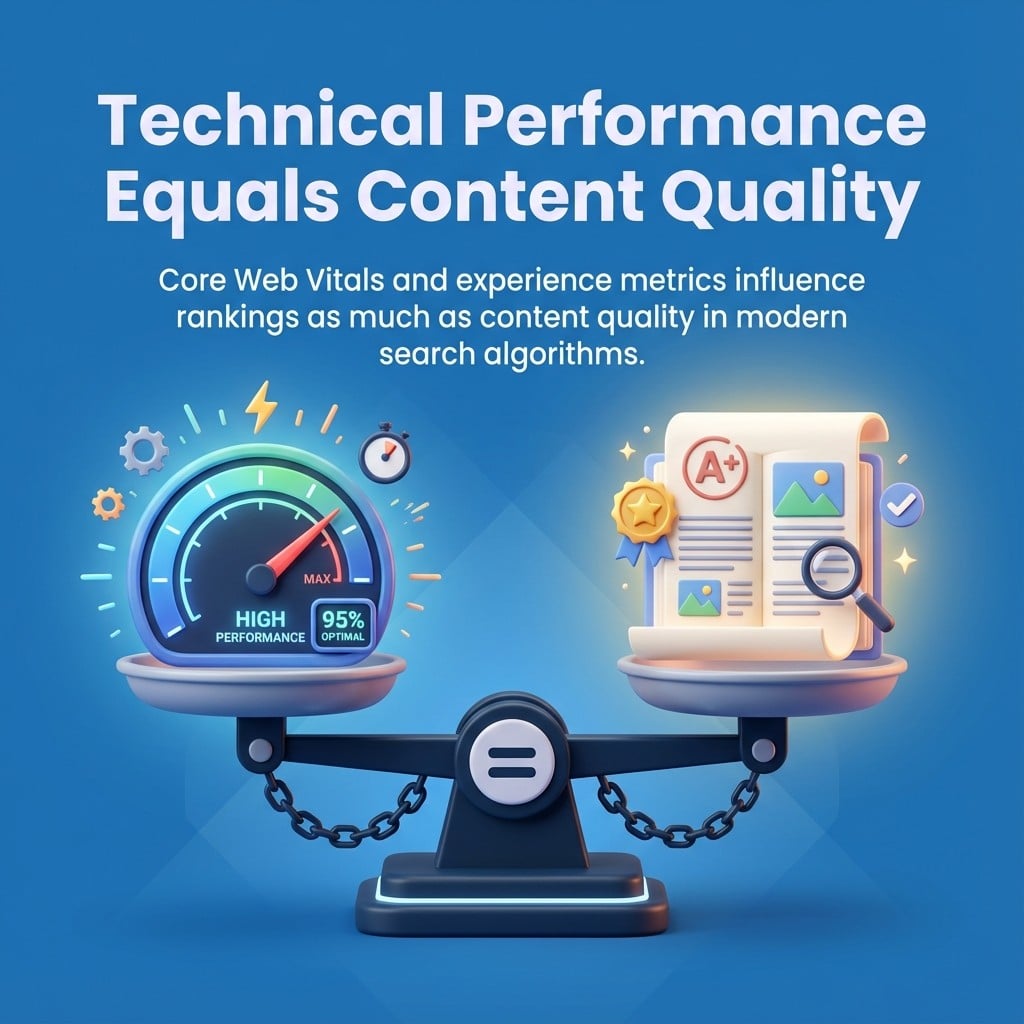
User experience optimizations like fast loading times and mobile-friendly design enhance SEO rankings and content retention. Technical improvements help both discovery and engagement.
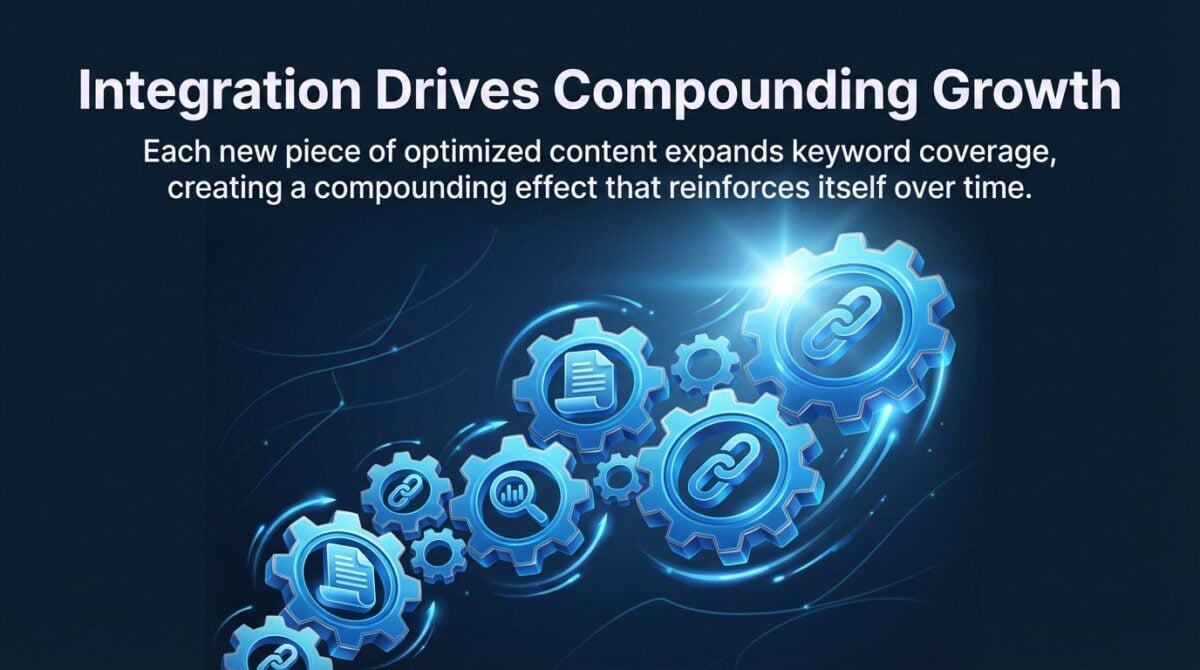
This creates a compounding effect. Each new piece of optimized content expands your keyword coverage. Better rankings drive more traffic. More traffic generates more backlinks and social shares. The cycle reinforces itself.
How Does Content Marketing Support SEO Efforts?
Content marketing provides the raw material that SEO needs to function. You can’t optimize what doesn’t exist.
Regular content creation expands your keyword coverage. Each blog post, guide, or video targets different search queries. Over time, you rank for hundreds or thousands of relevant terms instead of just your homepage keywords. Developing a solid content strategy ensures this expansion happens systematically.
According to Digital Silk’s research, businesses that blog get 55% more website visitors on average than those that don’t. Fresh content signals site activity to search engines. Regular publishing shows your site is maintained and current. This freshness factor influences rankings, especially for time-sensitive topics.
Is Your Digital Marketing All Over the Place?
My latest book helps small businesses, entrepreneurs, and marketers bring search, email, and social together into one digital marketing strategy that actually compounds.
Drawing on my work as a Fractional CMO, Digital Threads turns complicated tactics into a clear, practical plan you can follow, whatever your budget or team size.
Grab your copy on Amazon and start weaving your own digital threads. Click the cover or the button below to get started.

What Content Formats Build SEO Authority?
Long-form guides establish topical authority. When you thoroughly cover a subject, search engines recognize your expertise. These comprehensive resources rank for multiple related keywords simultaneously. Learning how to do SEO effectively means understanding which formats work best for your goals.
| Content Format | SEO Benefit | Best Use Case |
|---|---|---|
| Long-form guides (2,000+ words) | Ranks for multiple related keywords, establishes topical authority | Educational topics, how-to content |
| Data-driven research | Attracts backlinks from journalists and researchers | Industry reports, original surveys |
| Video content | Captures featured snippets and video results | Tutorials, product demos |
| Interactive tools | Generates ongoing traffic and natural backlinks | Calculators, assessments |
| Case studies | Builds E-E-A-T signals, demonstrates experience | B2B audiences, service businesses |
Data-driven content earns links from journalists and researchers. Original research, surveys, and case studies provide quotable statistics that other sites reference.
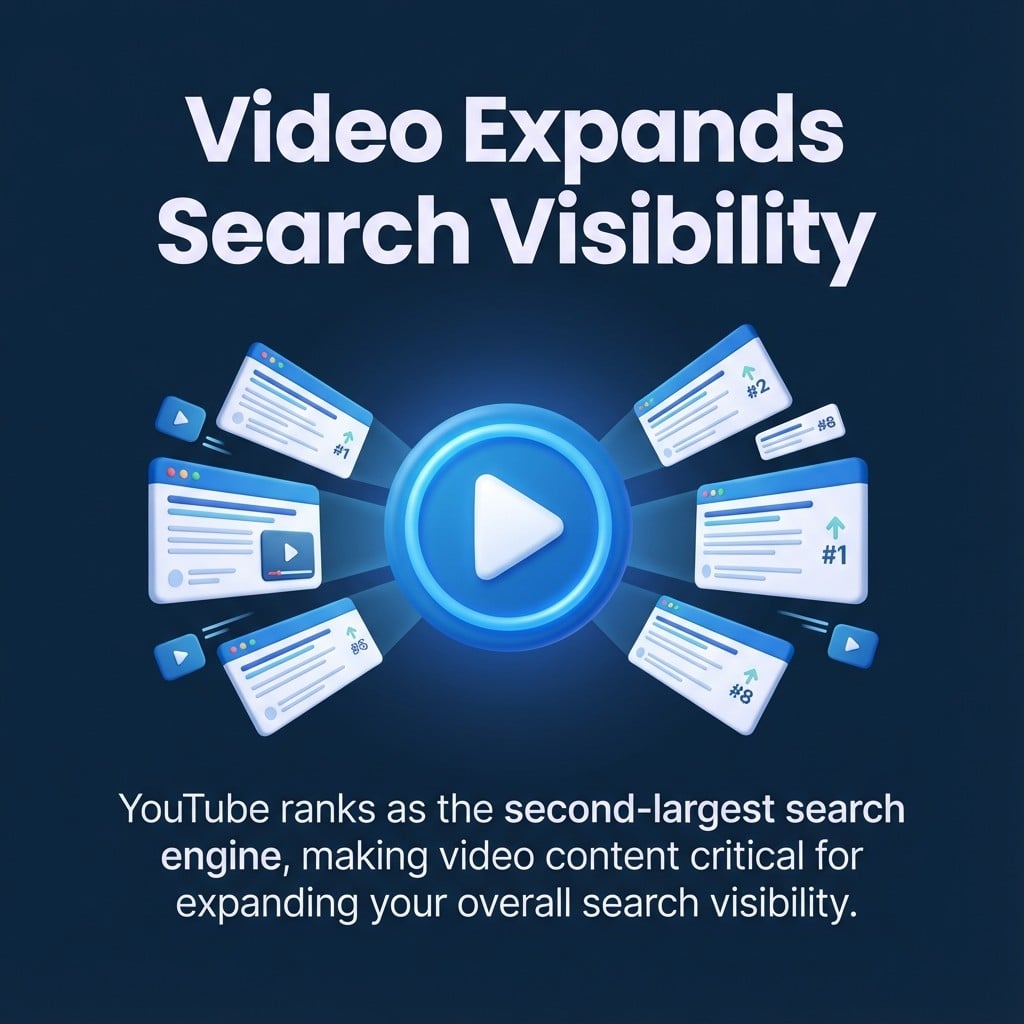
Video content captures featured snippets and video results. YouTube ranks as the second-largest search engine, so optimized videos widen your reach considerably. I’ve discussed YouTube SEO strategies that can help your video content perform better in search.
What Are the Essential Components of an SEO Content Marketing Strategy?
Your strategy needs clear alignment between SEO goals and content objectives. Start with these foundational elements.
Define your target audience specifically. Who searches for solutions you provide? What problems do they face? What language do they use when searching?
Map their buyer journey stages. What information do they need at awareness, consideration, and decision stages? Create content for each phase. Understanding the benefits of content marketing at each stage helps you prioritize effectively.
Building Your Strategic Framework
Your content planning should flow from keyword research. Identify high-value search terms, then plan content to target them systematically.
Create a content calendar that balances quick wins and long-term plays. Target some low-competition keywords for fast rankings. Pursue competitive terms with thorough content over time.
Develop content clusters around pillar topics. Create detailed pillar pages for broad topics, then supporting articles for related subtopics. Link these together strategically to build topical authority.

According to Siege Media’s content marketing research, 90% of content marketers plan to use AI in their 2025 strategies, an increase from 83.2% in 2024 and 64.7% in 2023. I’ve written extensively about AI for SEO and how it can support your content creation without replacing human judgment and expertise.
How Do You Conduct Keyword Research for Content Marketing?
Keyword research reveals what your audience actually searches for. Without this data, you’re guessing at topics. Using a proper keyword research tool makes this process more systematic.
Start with seed keywords. List 10-15 core terms relevant to your business. These are broad topics your target audience cares about.
Expand using keyword research tools. Ahrefs, SEMrush, and Moz provide search volume, competition, and related keyword suggestions. Google’s Keyword Planner offers free basic data. Check out my guide to the best SEO tools for recommendations.
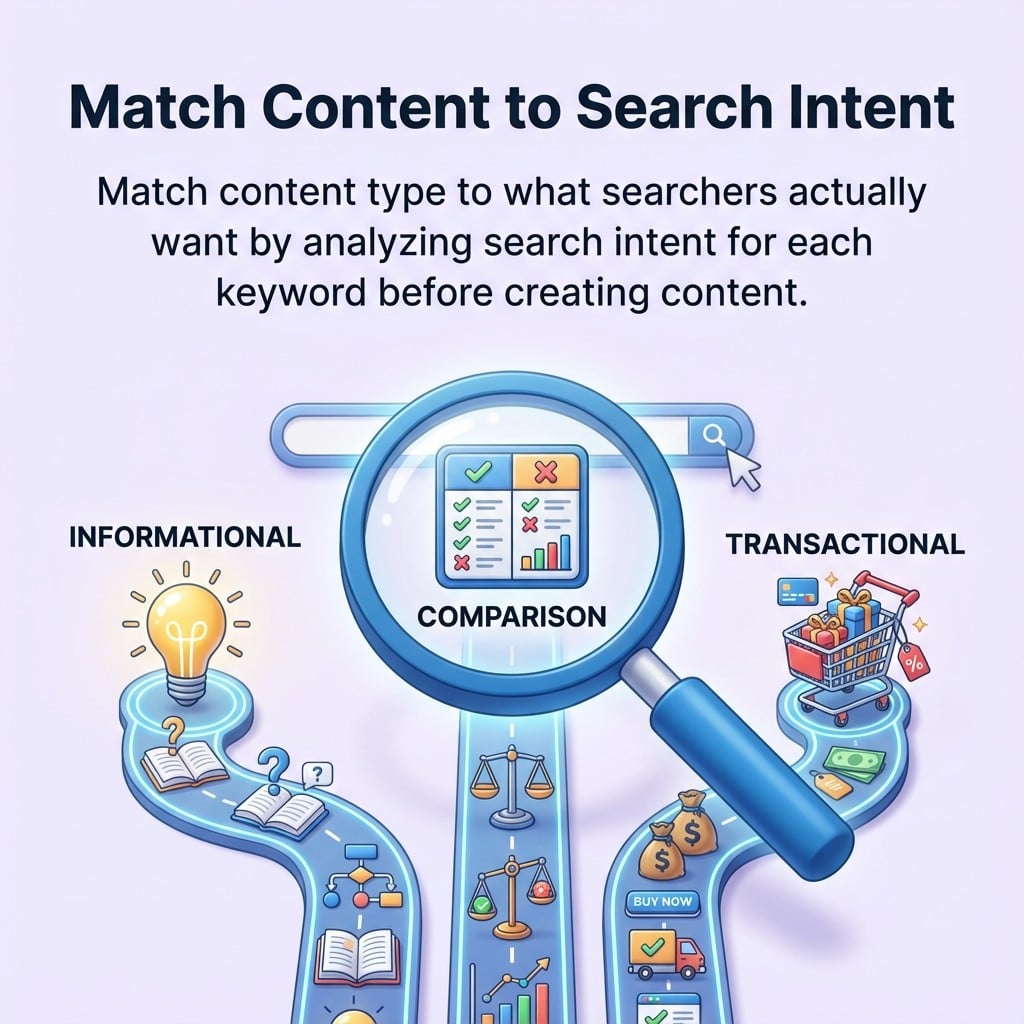
Analyze search intent for each keyword. Does the searcher want information, comparison, or to buy? Match your content type to the dominant intent.
| Search Intent | Content Type | Example Keywords |
|---|---|---|
| Informational | Blog posts, guides, how-to articles | “what is content marketing,” “how to improve SEO” |
| Navigational | Landing pages, brand content | “HubSpot login,” “Ahrefs pricing” |
| Commercial | Comparison articles, reviews | “best SEO tools,” “content marketing platforms” |
| Transactional | Product pages, service pages | “buy SEO services,” “hire content writer” |
Prioritizing Keywords for Maximum Impact
Evaluate keywords across three dimensions: search volume, ranking difficulty, and business value.
High search volume indicates demand. But competition often scales with volume. A keyword with 10,000 monthly searches means nothing if you can’t rank on page one.
According to Backlinko’s keyword research, longer keywords tend to attract more clicks: search terms that are 10-15 words long receive 1.76 times more clicks than single-word queries. Look for long-tail keywords with clear intent. “Marketing automation software for small business” has lower volume than “marketing software” but targets a more specific need.
Assess your realistic ranking potential. If your domain is new, target keywords where top-ranking pages have similar authority. Gradually pursue more competitive terms as you build credibility. For more on targeting the right terms, see my post on SEO keywords.
How Do You Create High-Quality, SEO-Optimized Content?
High-quality content solves problems completely. It answers questions thoroughly. It provides value that users can’t find elsewhere. This is the essence of writing quality content that performs.
Start with search intent analysis. Examine the top-ranking pages for your target keyword. What format do they use? What subtopics do they cover? What questions do they answer?
Your content needs to match or exceed that standard. Don’t just replicate what exists. Find gaps in existing content and fill them. This is what content optimization is all about.
According to Semrush’s State of Content Marketing report, 67% of small business owners and marketers use AI for content marketing or SEO. But automation works best when guided by human strategy and editorial judgment. Understanding AI-generated content helps you use these tools effectively without sacrificing quality.
Content Elements That Drive Rankings and Engagement
Structure your content for scannability. Use clear headings, short paragraphs, bullet points, and visual breaks. Most readers skim before committing to full reading.
Include relevant images, charts, and multimedia. Visual content increases engagement time. Original graphics earn backlinks when other sites reference them.
Provide actionable takeaways. Abstract information without practical application disappoints users. Give readers specific steps they can implement immediately.
Update content regularly. According to Siege Media’s research on content refresh rates, higher keyword difficulty (KD) requires more frequent updates. Keywords with a KD of 0-10 are refreshed every 1.74 years, while those with a KD of 90+ are updated every 0.87 years on average. Search engines favor fresh, current information. Set a schedule to review and update your top-performing content. A content audit can help you identify which pieces need attention.
What Are the On-Page SEO Best Practices for Content?
On-page SEO ensures search engines understand and rank your content properly. These technical elements work alongside your writing.
Optimize title tags with target keywords near the beginning. Keep titles under 60 characters so they display fully in search results. Make them compelling enough to earn clicks.
Write descriptive meta descriptions that encourage clicks. While not a direct ranking factor, higher click-through rates improve rankings. Include your target keyword and a clear value proposition. Understanding meta tags for SEO is essential here.
Use header tags hierarchically. H1 for page title, H2 for main sections, H3 for subsections. This structure helps both readers and search engines understand your content.
| On-Page Element | Best Practice | Impact on SEO |
|---|---|---|
| Title tag | Include primary keyword near beginning, under 60 characters | High (direct ranking factor) |
| Meta description | Compelling copy with keyword, under 160 characters | Medium (affects CTR) |
| H1 tag | One per page, includes primary keyword | High |
| Header hierarchy | Logical H2/H3 structure | Medium |
| URL structure | Short, descriptive, includes keyword | Medium |
| Internal links | Descriptive anchor text, link to related content | Medium-High |
| Image alt text | Descriptive, includes keywords where natural | Low-Medium |
Technical Optimization Checklist
Include target keywords naturally in the first 100 words. This signals topic relevance immediately without keyword stuffing.
Optimize images with descriptive file names and alt text. Use keywords where relevant but prioritize accurate descriptions for accessibility.
Internal linking connects related content across your site. Link to relevant pages using descriptive anchor text. This distributes authority and helps users discover more content.
Ensure mobile responsiveness. Most searches happen on mobile devices. Your content must be readable on small screens with fast load times. Technical SEO handles these foundational elements.
Improve page speed. Compress images, minimize code, use browser caching. Google PageSpeed Insights identifies specific improvements.
How Do You Build Backlinks Through Content Marketing?
Backlinks remain a critical ranking factor. According to Ahrefs’ SEO statistics compilation, Google says that backlinks are one of its top three ranking factors. Content marketing earns these links naturally through value creation.
Create link-worthy assets. Original research, detailed guides, free tools, and unique data naturally attract editorial links from other sites. My guide to link building covers these strategies in depth.
Promote your content strategically. Share with relevant communities, journalists, and influencers who might reference your work. Outreach works when you’ve created genuinely valuable resources.
Guest posting on authoritative sites builds both backlinks and audience reach. Choose publications your target audience reads. Provide content that serves their readers.
Earning Links Without Manual Outreach
Publish data and statistics that others reference. Industry reports, survey results, and benchmark data get cited frequently. I maintain SEO statistics and content marketing statistics posts specifically because they attract natural links.
According to Ahrefs’ backlink growth study, most of the #1 ranking pages tend to get followed backlinks from new referring domains at a pace of between +5% and +14.5% per month. Create guides that cover topics thoroughly and become reference material that accumulates links over time.
Develop tools and calculators. Interactive resources generate ongoing traffic and links. A mortgage calculator, ROI estimator, or sizing guide provides utility that static content can’t.
Focus on quality over quantity. One link from an authoritative site in your industry carries more weight than dozens from low-quality directories. For more on the off-site factors that influence rankings, see my post on off-page SEO.
How Do You Measure SEO Content Performance?
Track metrics that indicate progress toward your business goals. Vanity metrics distract from what matters.
Organic traffic shows search visibility growth. Monitor overall traffic trends and track individual page performance. Identify which content drives the most visitors.
Keyword rankings reveal visibility for target terms. Track your position for primary and secondary keywords. Watch for ranking fluctuations that signal needed optimizations.
Engagement metrics indicate content quality. Bounce rate, time on page, and pages per session show whether content meets user expectations. High bounce rates suggest misaligned search intent.
Conversion and Revenue Attribution
Set up goal tracking in Google Analytics. Measure how organic traffic converts to leads, sales, or other business objectives. Understanding the content marketing funnel and ROI helps you connect content to business outcomes.
Calculate customer acquisition cost from organic search. Compare SEO investment against customer lifetime value from organic channels.
According to Blogging Wizard’s analysis of Semrush data, 70% of very successful companies and 68% of successful companies measure their return on investment on content. This is in comparison to 46% of minimally successful companies and 56% of unsuccessful companies who measure ROI on content.
Analyze the full customer journey. Most conversions involve multiple touchpoints. Attribution modeling reveals how SEO content contributes throughout the buyer journey.
What Mistakes Undermine SEO Content Marketing?
Keyword stuffing damages both readability and rankings. Search engines penalize obvious over-optimization. Write naturally and include keywords where they fit contextually.
Ignoring search intent wastes effort. Creating transactional content for informational queries frustrates users. Match content type to what searchers actually want.
Thin content provides insufficient value. Short, superficial articles rarely rank for competitive terms. Cover topics thoroughly or don’t cover them at all.
Neglecting technical SEO limits content performance. Slow page speeds, mobile issues, and poor site structure prevent even great content from ranking well.
Strategic Mistakes to Avoid
Publishing inconsistently stalls momentum. Sporadic content creation doesn’t build the authority or keyword coverage needed for strong organic growth.
According to SEO.com’s analysis of search results, 60% of the pages in Google’s top 10 search results are over three years old. Ignoring content updates leaves opportunities on the table. Your top-ranking pages gradually lose position as competitors publish fresher content. Regular updates maintain rankings. Creating evergreen content that you maintain over time is a smart long-term play.
Focusing solely on new content neglects optimization opportunities. Sometimes improving existing content delivers faster results than creating something new.
Copying competitors without differentiation won’t outrank them. Find unique angles, deeper research, or better presentation that gives users reason to choose your content.
What Does the Future Hold for SEO and Content Marketing?
Content must address both humans and AI systems for visibility. According to Search Engine Land’s guide to Google core updates, Google’s core updates increasingly reflect its broader use of AI-powered technologies, such as the multitask unified model (MUM) and the search generative experience (SGE), to better understand content relationships and user intent. Each core update moves Google’s ranking systems toward evaluating semantic context and topical authority, rather than relying solely on traditional keyword matching.
According to WordPress VIP’s analysis of Google’s updates, Google’s announcement claims that following the March 2024 update, search users will “now see 45% less low-quality, unoriginal content in search results.” The emphasis on E-E-A-T (Experience, Expertise, Authoritativeness, Trustworthiness) continues to grow in importance.
AI tools streamline content production but don’t replace strategy. Use AI to scale research and drafting. Apply human judgment for quality control and strategic direction. Explore AI SEO software options to see what might fit your workflow.
Adapting Your Strategy for What’s Next
Focus on topic authority over individual keywords. Search engines understand semantic relationships between concepts. Covering topics thoroughly across multiple pieces of content builds authority that lifts all related pages.
According to Search Engine Journal’s E-E-A-T guide, for brands and content creators, the key is to use AI to assist and enhance human-created content, not replace it entirely. AI can help with research, outlining, and even drafting, but the final content should always be reviewed, edited, and enhanced by a human expert with real-world experience.
Build authentic expertise and authority. According to Google’s official E-E-A-T documentation, search ranking evaluation now includes E-E-A-T: experience, expertise, authoritativeness, and trustworthiness. Establish your credibility through consistent, quality publishing and industry recognition.
Invest in sustainable strategies over quick wins. Algorithm updates penalize manipulative tactics while rewarding genuine value creation. Focus on serving users well. Rankings follow naturally.
Frequently Asked Questions
Technically yes, but results will be limited. SEO can optimize existing pages, but without fresh content, you’ll struggle to expand keyword coverage, earn natural backlinks, or establish topical authority. Most successful SEO strategies require ongoing content creation.
Most content takes 3-6 months to reach its ranking potential, though this varies based on domain authority, keyword competition, and content quality. Lower-competition keywords can rank faster, while highly competitive terms may take a year or more.
Both. Content that’s well-written but ignores search intent won’t be found. Content that’s keyword-stuffed but poorly written won’t convert or earn links. The goal is quality content strategically optimized for search.
Review your top-performing content at least annually. Highly competitive content may need updates every 6 months. Look for outdated statistics, broken links, new developments in your industry, and opportunities to expand coverage.
Not inherently. Google evaluates content quality regardless of how it’s produced. AI-assisted content that provides genuine value can rank well. Low-quality AI-generated content that lacks originality or expertise will struggle, especially after Google’s recent algorithm updates targeting “scaled content abuse.”

How Should You Get Started With SEO Content Marketing?
The integration of SEO and content marketing isn’t optional anymore. It’s how you compete for visibility in saturated markets. Start by aligning your keyword research with content planning. Optimize every piece for both search engines and human readers. Measure what matters and refine based on results.
If you’re ready to take your content marketing and SEO strategy to the next level, grab a free preview of Digital Threads to see how these principles fit into a complete digital marketing framework. For those wanting hands-on guidance, my Digital First Group Coaching Community provides direct access to help you implement these strategies. And if your organization needs strategic marketing leadership, learn about my Fractional CMO services to see how we might work together.
Your next step is simple. Review your existing content through an SEO lens. Identify your best-performing pages and optimize them further. Find content gaps where you should be ranking but aren’t. Build from there systematically.